Biography
Cheikh Hamidou Kane
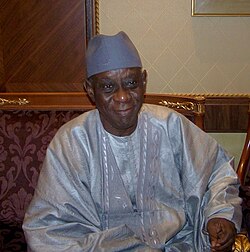
Cheikh Hamidou Kane, a Senegalese writer whose novel L’Aventure ambiguë (1961) has spanned generations of readers around the world, passed away in Dakar during the night of October 3 to 4, 2026, at the age of 981. His death prompted exceptional tributes; President of the Republic Bassirou Diomaye Faye described his work as belonging to the « heritage of Senegal, of all Africa » and defined his legacy as « opening up to world knowledge without losing anything of what we are »2. Through this portrait, we explore the life of a spirit who embodied — far more than any fictional character — the tension between Muslim heritage and Western modernity.
A child of Fouta, rocked between the Quran and French class
Born on April 2, 1928, in Matam, in the northern region of Senegal, Cheikh Hamidou Kane belongs to the Peulh (or Pulaar) people through his maternal family and descends from a lineage of traditional chiefs and ulémas (religious scholars) of the Diallo clan3. His birth name, conforming to Peul tradition, is Samba Kane — the same fictional first name « Samba Diallo » he gave to the hero of his first novel, creating an intimate link between life and work4. Very early on, his parents sent him to a Quranic school where he learned the precepts of Islam from masters as rigorous as Thierno Moktâr Gadio in Saldé4. This traditional Islamic education, rooted in the values of the Diallobé people, deeply marked the child and would become the central theme of his entire literary work.
At nine years old, it was thanks to the determined energy of his aunt Binta Racine Abdoulaye that he joined the French school, becoming a student in Saint-Louis and then at Lycée Lamine Gueye (former Van Vollenhoven) in Dakar3. There, he crossed paths with men who would become historical figures: Alioune Diop, future founder of the review Présence Africaine; Thierno Ba, minister and playwright; Abdoulaye Wade, future President of Senegal5. This double education — Quranic then French — is not a mere biographical detail: it will be the fabric of his entire existence and the literary engine behind L’Aventure ambiguë.
L’Aventure ambiguë, a fundamental novel of a generation
In 1951, at twenty-three years old, Kane obtained his baccalaureate in philosophy and left Dakar for Paris6. He joined the prestigious Lycée Louis-le-Grand, then studied law and philosophy at the Sorbonne6. He earned two bachelor’s degrees — one in law, one in philosophy — before joining the École nationale de la France d’Outre-Mer (ENFOM), this institution that trained future administrators of the French colonies7. It was during these Parisian years, between 1952 and 1958, that he began writing what would become L’Aventure ambiguë. He frequented French intellectual circles and collaborated with the review Esprit, meeting future African leaders such as Aimé Césaire, Félix Houphouët-Boigny, and Joseph Ki-Zerbo3.
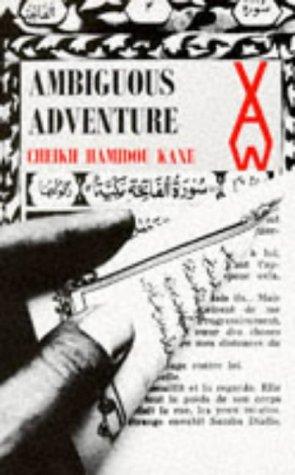
L’Aventure ambiguë, published by Julliard editions in 1961, tells the journey of Samba Diallo, a young Peulh from an aristocratic family in Fouta, sent to French schools and then to Paris. The novel is a masterpiece of postcolonial literature, winning the Grand Prix littéraire d’Afrique noire in 19626. Chinua Achebe hailed it as « one of the greatest African novels ever written »8, and the English translation published in 2012 by Penguin Random House, with a preface by Nobel laureate Wole Soyinka, earned it renewed international interest8. Translated into more than forty languages, it is studied in high schools and universities across the entire African continent1.
Did you know? Kane wrote L’Aventure ambiguë in 1952, but it took nine years for the novel to be published6. The book addresses the « clash of civilizations » well before Samuel Huntington’s formula, exploring the dilemma of a young African educated in both worlds but belonging completely to neither4.
From ink to urns: the career of a state servant
While L’Aventure ambiguë made Kane’s literary glory, his true vocation was always public service5. Returning to Senegal in 1959, he joined the administration on the eve of independence7. In March 1960, he was appointed governor of the Thiès region; a year later, General Commissioner for Planning and then Minister of Planning and Cooperation5.
But it was internationally that his action took on an exceptional dimension. Between 1962 and 1974, he directed the regional office of UNICEF for sub-Saharan Africa — based first in Lagos, Nigeria, then in Abidjan, Côte d’Ivoire, supervising operations in about twenty countries5. From 1974 to 1976, he was vice-president of the Centre de recherches pour le développement international (CRDI) in Ottawa5. He returned to Senegal as Minister of Industrial Development and Crafts in 1978, then Minister of Planning and Cooperation from 1981 to 1988, under the presidencies of Senghor and Diouf7.
This double life — writer and high-ranking official — makes him a unique figure in African intellectual history1. He was close to Senghor (who had been his teacher in France) and Mamadou Dia; he regretted the 1962 rupture between the two men, whom he considered complementary1.
The second novel and the legacy of a thinker
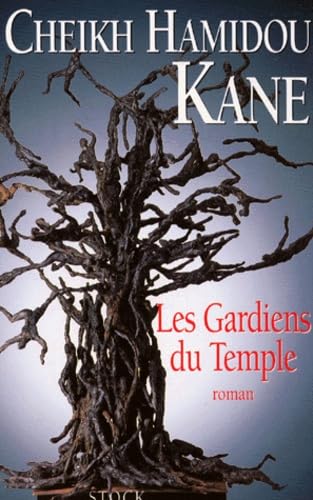
After more than thirty years of literary silence, Kane publishes Les Gardiens du temple with Stock editions in 19956. This second novel, conceived as the sequel to L’Aventure ambiguë, addresses the tensions between tradition and modernity in a fictional African country, five years after independence4. In 2019, he receives the Grand Prix des Mécènes, rewarding his entire body of work and his commitment6.
In his final years, Kane, settled in the Plateau district in Dakar, became a kind of « living memory » of independent Senegal1. He received students, journalists, and politicians, recalling meetings with Senghor, Cheikh Anta Diop, Aimé Césaire, and other major figures of twentieth-century Africa5. He was also recognized internationally: a key guest at the International Literature Festival of Berlin in 20109, he remained a mirror held up to contemporary generations facing the same questions: how to open oneself to the world without betraying oneself? How to absorb modern knowledge without losing one’s identity1? As The New York Times wrote upon his death, Kane « embodies the living memory of his country and the consciousness of a bygone era »10.
Bibliography
Novels
| Year | Work |
|---|---|
| 1961 | L’Aventure ambiguë — Julliard, Grand Prix littéraire d’Afrique noire 1962 |
| 1995 | Les Gardiens du temple — Stock |
Sources
-
Afrolegends, « So Long to Cheikh Hamidou Kane, and the Ambiguous Adventure », October 6, 2026. https://afrolegends.com/2026/10/06/so-long-to-cheikh-hamidou-kane-and-the-ambiguous-adventure/ ↩︎ ↩︎ ↩︎ ↩︎ ↩︎ ↩︎
-
RFI, « The Senegalese writer Cheikh Hamidou Kane — died at 98 », October 4, 2026. https://www.rfi.fr/fr/culture/20261004-l-%C3%A9crivain-s%C3%A9n%C3%A9galais-cheikh-hamidou-kane-auteur-de-l-aventure-ambigu%C3%AB-est-mort-%C3%A0-l-%C3%A2ge-de-98-ans ↩︎
-
Casa África, « Cheikh Hamidou Kane », https://www.casafrica.es/es/persona/cheikh-hamidou-kane ↩︎ ↩︎ ↩︎
-
BBC Afrique, « Five major aspects of Cheikh Hamidou Kane », October 5, 2026. https://www.bbc.com/afrique/articles/cj75p60e4dq2o.lite ↩︎ ↩︎ ↩︎ ↩︎
-
Association UN-CHK, « History and patron », https://www.unchk.sn/linstitution/presentation/historique-et-parrain ↩︎ ↩︎ ↩︎ ↩︎ ↩︎ ↩︎
-
Africultures, « Cheikh Hamidou Kane — Person File », https://africultures.com/personnes/?no=3432 ↩︎ ↩︎ ↩︎ ↩︎ ↩︎ ↩︎
-
Britannica, « Cheikh Hamidou Kane », updated October 2026. http://www.britannica.com/biography/Sheikh-Hamidou-Kane ↩︎ ↩︎ ↩︎
-
Penguin Random House, « Ambiguous Adventure » (trans. Katherine Woods, afterword by Wole Soyinka), 2012. https://www.penguinrandomhouse.com/books/214268/ambiguous-adventure-by-cheikh-hamidou-kane ↩︎ ↩︎
-
International Literature Festival Berlin, « Cheikh Hamidou Kane — author biography », https://literaturfestival.com/en/authors/cheikh-hamidou-kane/ ↩︎
-
The New York Times, « Cheikh Hamidou Kane, Author of Seminal Anticolonial Novel, Dies at 98 », October 5, 2026. https://www.nytimes.com/2026/10/05/obituaries/cheikh-hamidou-dead.html ↩︎