Biography
Biography of Osvalde Lewat
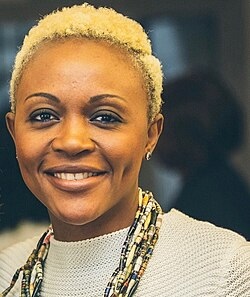
French-Cameroonian writer, photographer and documentary filmmaker, Osvalde Lewat interrogates issues of identity, exclusion and power in each of her works. After more than twenty years dedicated to documentary cinema — including the award-winning Land Rush, recipient of the Peabody Award 1 — she published her first novel in 2021, Les Aquatiques, awarded the Grand Prix panafricain de littérature and the Kourouma Prize. Her cross-disciplinary and coherent approach rejects fixed categories: photography, documentary and the novel are for her merely different « supports » to explore the same subject, humanity confronted with alterity.
In Brief
| Full name | Osvalde Lewat 2 |
| Birth | 17 September 1976, Garoua (Cameroon) 3 |
| Nationalities | Cameroonian, French 4 |
| Field | Novel, documentary, photography, journalism |
| Notable works | |
| Awards | Grand Prix panafricain de littérature (2022), Kourouma Prize (2022), Académie française Rayonnement Prize for the promotion of the French language and literature (2022), Peabody Award 5 |
| Website | osvaldelewat.com |
Key Dates
| Year | Event |
|---|---|
| 1976 | Birth in Garoua, Cameroon 3 |
| Diploma from Sciences Po Paris and ESSTIC Yaoundé (School of Journalism) 6 | |
| 2000-2012 | Production of six documentaries: Le Calumet de l’espoir, Itilga, Un amour pendant la guerre, Au-delà de la peine, Les Disparus de Douala, Une affaire de nègres 7 |
| 2011 | Release of Sderot, Last Exit, documentary on the film school in Sdérot (Israel) 8 |
| 2012 | Land Rush, co-directed with Hugo Berkeley, receives the Peabody Award 5 |
| 2015-2021 | Photography exhibitions: Paris (Galerie 29, Galerie Marie-Laure de l’Ecotais), New York, Marseille, Ostend; Lumières africaines at Galerie Françoise Livinec (2021) 9 |
| August 2021 | Publication of Les Aquatiques, first novel, by Les Escales editions 10 |
| 2022 | Les Aquatiques wins the Grand Prix panafricain de littérature, Kourouma Prize and Académie française Rayonnement Prize 11 |
| 2023 | Release of MK, L’Armée secrète de Mandela, broadcast on Arte 12 |
| August 2026 | |
| 2026 | Finalist for the Prix des 5 continents de la francophonie with Les Aquatiques 13 |
Childhood and Education: Literature as a Compass
Osvalde Lewat was born in Garoua, a city in northern Cameroon. Daughter of the director of a Cameroonian subsidiary of the French group Pechiney (specialized in aluminum transformation) and a teacher, high school principal, she grew up in an environment where reading and cinema were family habits. Her mother introduced her to literature very early, instilling a passion that would guide her entire artistic life.
She studied at Sciences Po Paris, where she trained in political science and journalism, then joined ESSTIC (École supérieure des sciences et techniques de l’information et de la communication) in Yaoundé, a Cameroonian journalism school 6. Her training in image continued at Fémis, the prestigious Parisian film school, and INIS (Institut national de l’image et du son) in Montreal 14. These three paths — politics, journalism and image — formed the foundations of a multidisciplinary career.
Photographer: A Gaze on Africa, Asia and the Middle East
Before turning to cinema, Osvalde Lewat developed a photographic practice exhibited in Africa, Europe and America. Her works explore African cultures as well as the urban landscapes of the Middle East and Asia.
Her album Couleur Nuit — texts by Yannick Vigouroux and Lye Yoka, introduction by Atiq Rahimi — constitutes a visual summary of her shoots 9. Between 2015 and 2021, she exhibited in Paris (Galerie 29, Galerie Marie-Laure de l’Ecotais), New York, Marseille and Ostend. In 2021, Lumières africaines was presented at Galerie Françoise Livinec 9.
Documentarian: “Asking questions of the world”
It is in documentary filmmaking that Osvalde Lewat forges her signature. Between 2000 and 2012, she directed a dozen films that share a common thread: interrogating invisible violence, exclusions, and resistances 7.
Her first documentaries — Le Calumet de l’espoir (2000), filmed with indigenous populations in Ontario 15; Itilga : Les destinées (2001); Un amour pendant la guerre (2005), filmed in the Democratic Republic of Congo 7 — set the stage for an engaged cinema, attentive to ordinary lives crushed by history.
Au-delà de la peine (2003) relates the testimony of Owono Pierre, known as Léppé, who was arbitrarily imprisoned in Cameroon in 1969. Les Disparus de Douala (52 minutes, 2007) plunges into the horror of “disappeared children” in Douala: nine minors abducted by a special unit of the Cameroonian police following an accusation 7.
Une affaire de nègres (2009) — also known by its English title Black Business — focuses on the raids and executions of Black men in Douala under the guise of fighting grand banditry 7. Sderot, Last Exit (2011), an 80-minute documentary, films the film school in Sderot, a city in southern Israel located 2 km from the border with Gaza 8.
Land Rush (2012), co-directed with Brit Hugo Berkeley, is a BBC Storyville production that investigates land grabs in Mali and the Great Lakes region 1. This documentary won the prestigious Peabody Award in 2012, one of the most honorable distinctions in American television 14.
In 2023, MK, L’Armée secrète de Mandela (88 minutes), broadcast on Arte, sheds light on an obscure aspect of the fight against apartheid: the creation of uMkhonto we Sizwe (MK), the armed wing of the African National Congress (ANC) founded in 1961 by Nelson Mandela 12. The film pays tribute to the forgotten heroes of South African liberation through the narratives of former combatants.
Literature: the novel as a mirror of exclusions
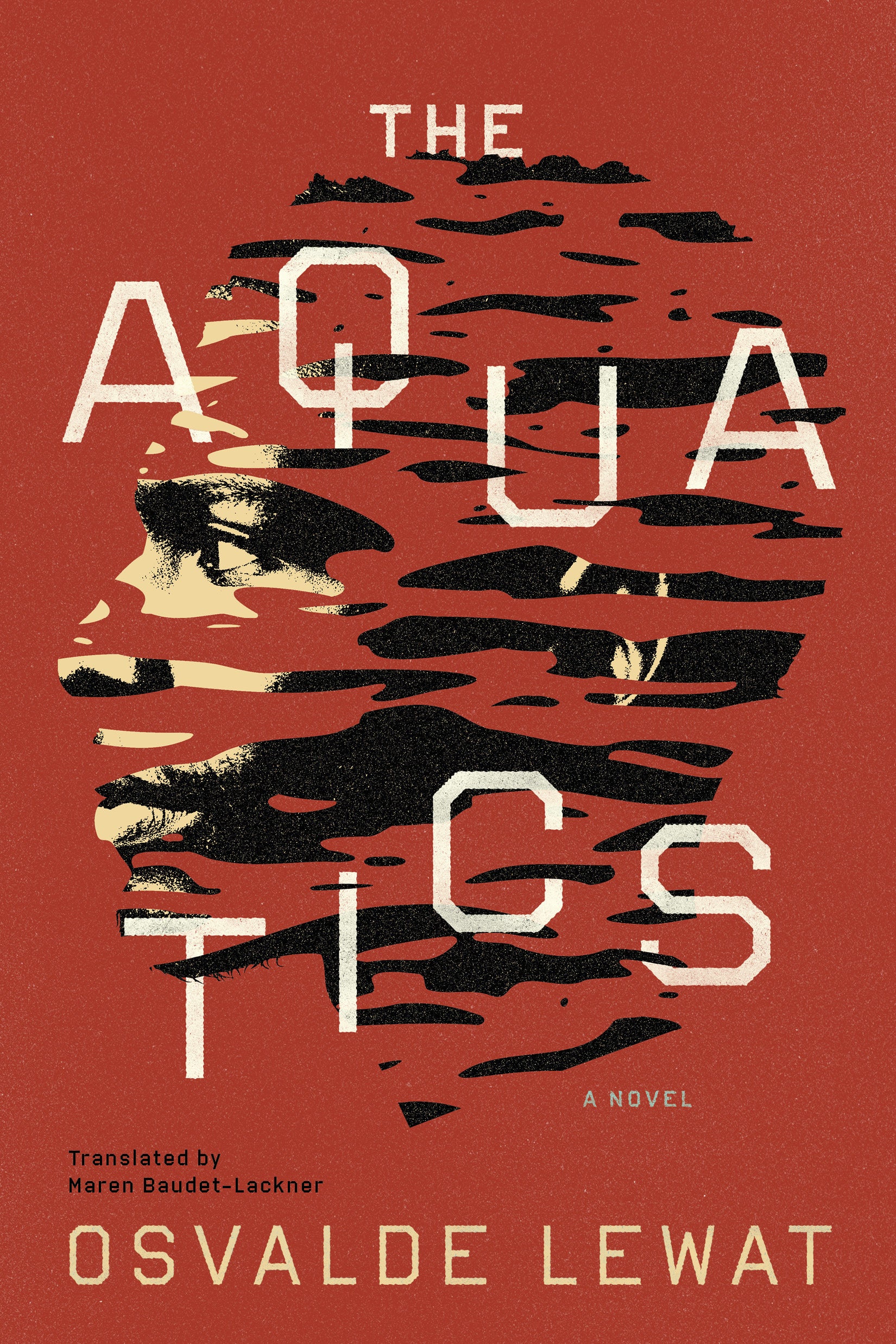
Osvalde Lewat’s first novel, Les Aquatiques [les-aquatiques] 10, was published in August 2021 by Les Escales editions. The story follows Katmé Abbia, a teacher and mother of two children married to a politician in full ascent. Her best friend since high school, Samy — a tormented sculptor — is arrested and imprisoned for homosexuality in the fictional country of Zambuena, where homosexuality is a crime 16. Katmé finds herself confronted with a moral dilemma: help Samy at the risk of compromising her husband’s political career.
Les Aquatiques is a novel that is both an interior portrait of a woman revealing herself to herself and a reflection on power games in a contemporary African society 13. A powerful writing style alternates the harshness of reality and cold humor in this work. The book won the Pan-African Literature Grand Prix, the Kourouma Prize, and the Académie française du rayonnement prize, all in 2022 11. It has been translated into Japanese, English, Portuguese, and German 17. In 2026, it was among the finalists for the Prix des 5 continents de la francophonie 13.
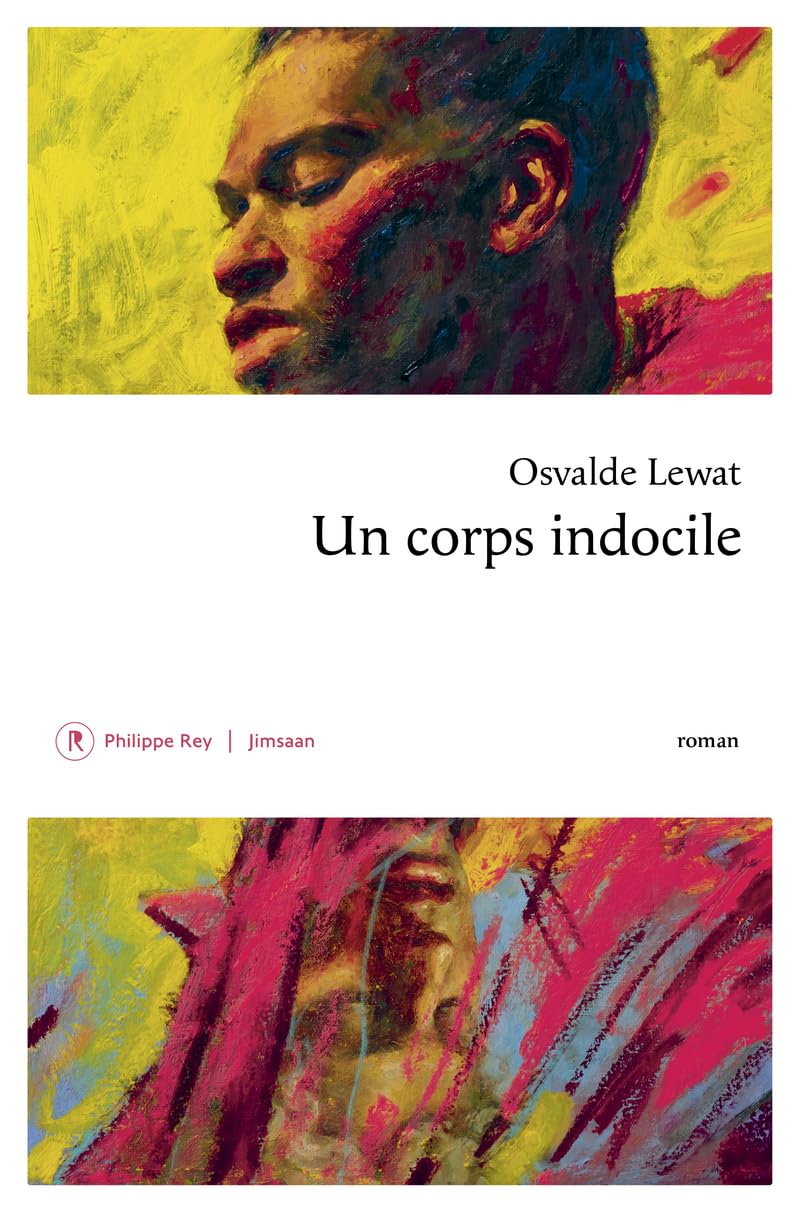
Two years later, Un corps indocile [un-corps-indocile] (Philippe Rey editions, 2026) explores the question of identity through a young Parisian tailor of African origin, Deffo 18. The novel navigates between Europe, China, and Africa.
Commitment: the Mwinda Workshops and writing as “denunciation”
In 2020, Osvalde Lewat founded with Véronique Cazeneuve the association Ateliers Mwinda, dedicated to audiovisual and literary training for high school students in sub-Saharan Africa. Through cinema, writing, and the production of short films and documentaries, the association aims to “highlight the creativity, sense of observation, and storytelling of young Africans 19”. The godfather of the first edition, which took place in Cameroon, is former international footballer Lilian Thuram 19.
In an interview granted to Hans & Sándor, Osvalde Lewat summarizes her approach as follows: “Writing can and must serve something. I have the naivety to believe that if… My literary horizon is to ally the useful with the sublime” 20. She adds: “If we were to assign me a mission, I think I would stop writing. The role of the artist is, among other things, to ask questions, to look at the world with lucidity and without complacency.”
Legacy and influence
Osvalde Lewat embodies a new generation of African artists who refuse confining disciplinary categories. From engaged documentary to social novel, passing through exhibition photography, she weaves a coherent discourse on alterity and power relations. Her work, translated into several languages and awarded across the Francophone world, interrogates exclusion mechanisms while affirming the diversity of contemporary African voices.
Sources and references
-
BBC Storyville, “Land Rush”, Land Rush, 2012. https://africanfilmny.org/films/land-rush/ ↩︎ ↩︎
-
“Osvalde Lewat”, Africultures, https://africultures.com/personnes/?no=5803, accessed 17 September 2026. ↩︎
-
Catherine Fruchon-Toussaint, “Osvalde Lewat, revelation and metamorphoses of a woman in Central Africa”, RFI Littérature sans frontières, 17 September 2021. https://www.rfi.fr/fr/podcasts/litt%C3%A9rature-sans-fronti%C3%A8res/20210917-osvalde-lewat-r%C3%A9v%C3%A9lation-et-m%C3%A9tamorphoses-d-une-femme-en-afrique-centrale ↩︎ ↩︎
-
“Osvalde Lewat”, Wikipedia, https://fr.wikipedia.org/wiki/Osvalde_Lewat, accessed 17 September 2026. ↩︎
-
“Why Poverty? — Land Rush”, The Peabody Awards, https://peabodyawards.com/award-profile/why-poverty/. ↩︎ ↩︎
-
“Osvalde Lewat”, Africultures, https://africultures.com/personnes/?no=5803. ↩︎ ↩︎
-
“Osvalde Lewat – Filmography”, Africultures, https://africultures.com/personnes/?no=5803. ↩︎ ↩︎ ↩︎ ↩︎ ↩︎
-
“Sderot, second class”, Africultures, https://africultures.com/films/?no=13871. ↩︎ ↩︎
-
“Osvalde Lewat – Exhibitions”, Africultures, https://africultures.com/personnes/?no=5803. ↩︎ ↩︎ ↩︎
-
Les Escales, “Les Aquatiques”, Lisez.com, https://www.lisez.com/livres/les-aquatiques/9782365695640. ↩︎ ↩︎
-
Le Point, “Prix Kourouma for Osvalde Lewat”, 20 May 2022, https://www.lepoint.fr/culture/prix-kourouma-pour-osvalde-lewat-20-05-2022-2476479_3.php. ↩︎ ↩︎
-
“MK, the secret army of Mandela”, Africultures, https://africultures.com/films/?no=24436. ↩︎ ↩︎
-
“Les Aquatiques” by Osvalde LEWAT — Prix des 5 continents, Organisation internationale de la Francophonie, https://www.francophonie.org/les-aquatiques-dosvalde-lewat-2545. ↩︎ ↩︎ ↩︎
-
“Osvalde Lewat”, Wikipedia, https://fr.wikipedia.org/wiki/Osvalde_Lewat. ↩︎ ↩︎
-
“Le Calumet de l’espoir”, Africultures, https://africultures.com/films/?no=12834. ↩︎
-
Catherine Fruchon-Toussaint, “Osvalde Lewat”, RFI, op. cit., note 3. ↩︎
-
Osvalde Lewat, Les Aquatiques, éd. Les Escales; translations into Japanese, English, Portuguese and German confirmed by distribution sites Amazon (US) and BnFA. ↩︎
-
“Un corps indocile”, éd. Philippe Rey, 20/08/2026; Libération, “Un corps indocile, the tailor stitched by Osvalde Lewat”, 4 Sept. 2026, https://www.liberation.fr/culture/livres/un-corps-indocile-le-couturier-couture-dosvalde-lewat-20260904_YGYYQUJBUJGRHOLFJKGHTOGYOU/. ↩︎
-
“Les Escales”, “Les Aquatiques”; RFI, op. cit., note 3. Lilian Thuram, patron of the first edition of the Ateliers Mwinda in Cameroon. ↩︎ ↩︎
-
Hans & Sándor, “Osvalde Lewat: ‘Writing can and must serve a purpose’”, 6 June 2022, https://www.hansetsandor.fr/2022/06/osvalde-lewat-grand-prix-panafricain-de-litterature-ecrire-peut-et-doit-servir-a-quelque-chose/. ↩︎