40 years of Comorian literature
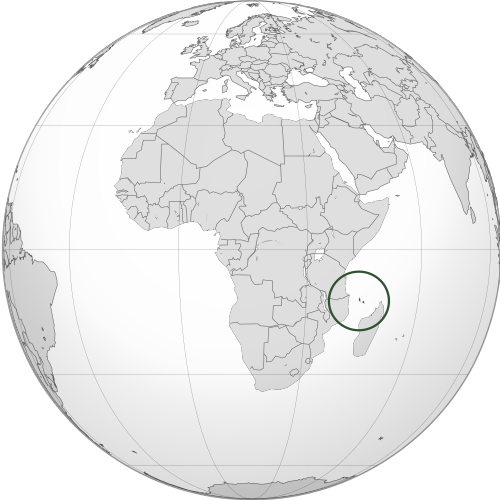
In February 2026, the Paris Trade Exchange hosted a celebration themed “40 years of Comorian writing and memory,” bringing together authors, publishers, and readers around the gradual recognition of a literature long scattered across the three islands of the archipelago1. This event echoes a stimulating renewal: French-language Comorian literature itself celebrated its fortieth anniversary with the publication in 1985 of La République des imberbes by Mohamed Toihiri, considered the first Comorian novel2. Four decades later, authors such as Ali Zamir and Touhfat Mouhtare carry these voices onto international stages.
From village gatherings to Parisian publishing
Comorian literature was not built in university corridors but around campfires. Its foundation is oral: traditional gatherings transmit tales, legends, and historical narratives in shikomori3. It was not until the 1980s that this oral tradition began to be transcribed, first by linguists and ethnographers such as Mohamed Ahmed-Chamanga4. Born in 1952 in Ouani, on the island of Anjouan (Ndzouani), this INALCO teacher published Comorian tale collections in the 1990s, notably Contes comoriens de Ngazidja : au-delà des mers, with L’Harmattan. He thus laid the foundations of a literary writing—and not merely ethnographic5.
The founding moment of French-language written Comorian literature occurred in December 1983 with the publication, in Paris, of a short story collection developed by students from ASEC—the Association des Étudiants et Stagiaires des Comores6. Five years later, Mohamed Toihiri took an additional step: his La République des imberbes was published by L’Harmattan in 19852.
Did you know? Coralie Frei, born on October 12, 1951, in Anjouan, is considered the first Comorian writer7.
The pioneers: literature, engagement, and identity
The founders of Comorian literature share a major characteristic: they write in French, the language of the former colonizer, to tell their own story. Mohamed Toihiri (1955, Mitsoudjé, Grande Comore) is a novelist and playwright. After La République des imberbes (1985), he published Le Kafir du Karthala (1992) with L’Harmattan, a novel that explores the difficulty of the Comorian intellectual facing traditional-modernity divides2. He is also the author of La Route du mystère (1997) and Splendeurs et misères d’un bigame (2000).
Salim Hatubou (1972-2015, Hahaya, Grande Comore) embodies the figure of the writer-broker8. Novelist, storyteller, and workshop facilitator, he received two writing grants from the Centre national du livre and was named in 2001 among “the hundred who make Marseille” by Marseille L’Hebdo8. His work, ranging from Le Sang de l’obéissance (1996) to Hamouro (2005), blends narration and popular memory. He exported Comorian tales as far as Japan9. Aboubacar Saïd Salim (1949, Moroni) completes this founding trio: novelist and short story writer, he published Le Bal des mercenaires (2003), a brutal account of the dictatorship inspired by mercenary adventures that shook the archipelago10.
Mahamoud M’Saidie (1966, Ngazidja) is the poet and essayist of this first generation7. Other authors emerged at that time: Saindoune Ben Ali in poetry, Nassur Attoumani (1954, Moroni)—a multi-genre writer—and Soeuf Elbadawi (1970), playwright and author of Moroni Blues / Chap. II11.
A literature in anger: contemporary voices
From the 2010s onward, the Comorian literary scene internationalized. Ali Zamir’s (1987, Mutsamudu) novel, Anguille sous roche, published in 2016 by Le Tripode, marks a turning point. Winner of the Senghor Prize for first novels, this 320-page book written in a single sentence follows the voice of a young girl from Anjouan fleeing her island’s violence toward Mayotte10. The style, close to Comorian orality and blending humor, brutality, and lyricism, captivated critics12. Translated into several languages, the work is studied in universities10.
Touhfat Mouhtare (1986) embodies a new wave7. Her first novel, Vert cru, was published in 2018. Her second work, Le Feu du milieu (2022), won the Alain Spiess Prize for second novels13. In 2025, The Fire Within—English translation by Rachael McGill with Dedalus Africa—became the first Comorian book translated into English, recounting the initiation of a young servant girl obsessed by a mysterious woman12. This international recognition places Comorian literature on the radar of global editorial boards.
Other notable voices: Mohamed Ahmed Bacar Rezida (1981, Anjouan), doctor and novelist, explores political thriller with La Rédemption des iguanes (2018), a fictionalized account of a coup d’état in the Comoros12; Kader Mourtadhoi (1987, Mohéli), prolific poet with eight collections since 20147; and Nassuf Djailani (1981), co-founder of the magazine PROJECT-îles, author of Comorian Vertigo (2017) in English14.
A fragile ecosystem, a dynamic diaspora
Despite its advances, Comorian literature faces structural obstacles. The issue of reading is central: as Mohamed Toihiri observed in 2005, « Comorians do not read because we are governed by temple merchants who prefer to tax books at customs, rather than signing the Florence Convention »14. The Comorian State has not signed this UNESCO convention which exempts cultural publications from customs duties.
The Comorian diaspora plays an essential role as a publishing bridge: Paris, Marseille, and Mayotte concentrate the publishing houses — L’Harmattan in Paris, KomÉdit and Comores Éditions in Moroni, La Bouquinerie de Passamainty in Mayotte7. Authors write from the Comoros, France, or the Indian Ocean — and this multiple mobility nourishes a literature that is « hybrid, in motion »12.
This literature is characterized by its obsessive relationship with history and power. As Saindoune Ben Ali, author of the collective Djando la Waandzishi, emphasizes: « This literature does not directly pose the problem of a relationship with History. It proceeds indirectly in a quest for understanding presences »10. Recurring themes — geographical amputation with Mayotte, successive coups d’État, the figure of the exiled intellectual — form a powerful literary haunting10.
With the Chezani literary festival15, the February 2026 Parisian celebration1 and growing translations, French-language Comorian literature enters a new phase of maturity — less confined to the status of « small island literature » than fully recognized as a major voice of Oceanian Francophonie.
Sources
-
Thalf Sall, « Quarante ans de littérature comorienne : célébrer l’écriture, la mémoire et l’imaginaire », Notre Voix, 29 janvier 2026. https://www.notrevoix.info/info/articles/quarante-ans-de-litterature-comorienne-celebrer-l-ecriture-la-memoire-et-l-imaginaire ↩︎ ↩︎
-
Dr Ahmed Bacar Rezida, « Comores, une littérature en colère », Masiwa, 11 août 2025. https://masiwa-comores.com/comores-une-litterature-en-colere/ ↩︎ ↩︎ ↩︎
-
« Chronique d’une littérature comorienne naissante », Hommes & Migrations, n° 1215, 1998. https://www.persee.fr/doc/homig_1142-852x_1998_num_1215_1_5373 ↩︎
-
Mahmoud Ibrahime, « Qu’est-ce que la littérature comorienne ? », Éditions Cœlacanthe, 24 janvier 2014. https://www.editions-coelacanthe.com/single-post/2014/01/24/quest-ce-que-la-litt%C3%A9rature-comorienne ↩︎
-
Mohamed Ahmed-Chamanga, Contes comoriens de Ngazidja : au-delà des mers, Paris, L’Harmattan, 1999. ↩︎
-
« Les Littératures francophones de l’archipel des Comores », Classiques Garnier. https://classiques-garnier.com/les-litteratures-francophones-de-l-archipel-des-comores-bibliographie.html ↩︎
-
« Liste d’écrivains comoriens », Wikipédia. https://fr.wikipedia.org/wiki/Liste_d%27%C3%A9crivains_comoriens ↩︎ ↩︎ ↩︎ ↩︎ ↩︎
-
« Salim Hatubou », Wikipédia. https://fr.wikipedia.org/wiki/Salim_Hatubou ↩︎ ↩︎
-
« Salim Hatubou exporte le conte comorien au Japon », Éditions Cœlacanthe, 3 janvier 2014. https://www.editions-coelacanthe.com/single-post/2014/01/03/salim-hatubou-exporte-le-conte-comorien-au-japon ↩︎
-
Saindoune Ben Ali, « Littérature comorienne : thématiques et hantises », Africultures. https://africultures.com/litterature-comorienne-11588/ ↩︎ ↩︎ ↩︎ ↩︎ ↩︎
-
« Littérature comorienne : de la fable à la politique », Africine. https://www.africine.org/index.php/analyse/litterature-comorienne-de-la-fable-a-la-politique/2533 ↩︎
-
Ainehi Edoro, « 9 Books to Introduce You to African Island Nation Literature », Brittle Paper, 14 janvier 2026. https://brittlepaper.com/2026/01/9-books-to-introduce-you-to-african-island-nation-literature/ ↩︎ ↩︎ ↩︎ ↩︎
-
« Touhfat Mouhtare », Haus der Kulturen der Welt (HKW), Berlin. https://www.hkw.de/en/programme/contributors/touhfat-mouhtare ↩︎
-
« Entretien croisé de trois auteurs des Comores », Kashkazi n°14, novembre 2005. Publiée sur Muzdalifa House, 15 juillet 2022. https://muzdalifahouse.com/2022/07/15/15906/ ↩︎ ↩︎
-
« Festival littéraire de Chezani : une réussite ! », Masiwa, 24 août 2025. https://masiwa-comores.com/festival-litteraire-de-chezani-une-reussite/ ↩︎