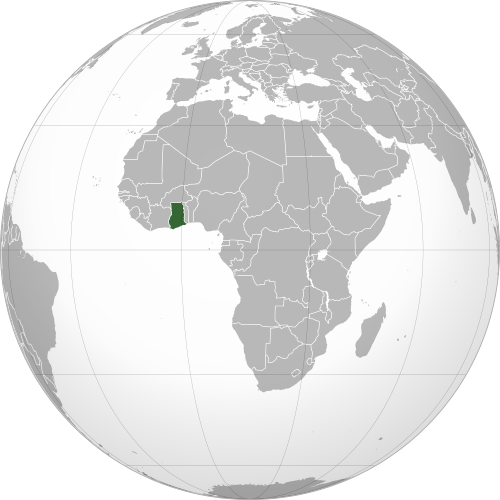
Ghanaian Literature: From Oral Polyphonies to the Epic of Yaa Gyasi
Hook: The small West African nation of Ghana, home to 34 million people, produces literature of surprising vitality. It gave the world the first English novel published by an African author in 1911, a pioneer of feminist theatre in 1965, and the phenomenon Homegoing, Yaa Gyasi’s best-seller that has sold over one million copies1. How did a literary scene suffering from a glaring lack of local publishers manage to hold its place in the global arena?
Africa is often imagined as a continent of speech and gesture, far from books. Ghana has refuted this image for over a century. Its literature—a blend of orature (the art of transmitting stories orally), colonial heritage, and sharpened postcolonial voices—weaves a narrative that crosses borders2. From the first pan-African work published in English to the literary festivals of Accra that gather hundreds of readers every year3, Ghana has constantly demonstrated that literature is not a luxury, but a collective construction site. Yet, the Ghanaian scene is far from perfect: its writers juggle with the scarcity of local publishing houses, dependence on foreign funding, and a book market that struggles to organize itself4.
From Forest Polyphonies to the Brass of the Press
Ghana possesses a rich and multifaceted oral tradition. Adangme, Ewe, Ga, and Fante storytellers have transmitted foundational myths, moral fables, and dynastic genealogies for centuries5. This oral narrative culture—which early 20th-century anthropologists dubbed orature—forms the invisible foundation of written literature. Ghanaian writers have not broken with it; they have reinvested it in English, French, and local languages.
The decisive turning point occurs in 1911 with Ethiopia Unbound—“Unbound Ethiopia”—by Joseph Ephraim Casely-Hayford. This novel, published in London, is today considered the first novel written in English by an African6. Casely-Hayford blends pamphlet, fiction, and history to defend the unity of the continent and the right of black peoples to self-determination7. One can imagine the shock: a native of the Gold Coast—the colonial name for Ghana—was drafting a pan-Africanist pamphlet in London, while Ghana would not become independent for fifty-six years later. The work has since been the subject of a recent critical university edition published by the University of Wisconsin, which re-examines its stakes for the 20th century8.
After Ethiopia Unbound, an emerging local press. The national radio program Voices of Ghana (1955–1957), accompanied by a written publication, is one of the first on the African continent to broadcast original literary texts9. It serves as a showcase that introduced Ghanaian audiences to poems and short stories by local authors—and prefigured what modern Ghanaian literature would become.
Did you know? Ghana was nicknamed the “Gold Coast” during colonial times. This name, forged by the Portuguese in the 15th century to evoke the rich gold deposits of the coast, was actually diverted from local populations for the benefit of European merchants10. The country’s name changed in 1957, but the legacy remains: Ghanaian literature has often worked to overturn this logic of diversion.
Founding Figures: Between Ngoma and Accra
The first half of the 20th century saw talents emerge that laid the milestones for a distinct national literature. Joe de Graft, playwright and historian, invented plays that blend precolonial history with modern theatre11. Efua Sutherland (1924–1996) is undoubtedly the most complete figure of this generation: poet, playwright, author of children’s books, cultural activist, and founder of the Accra Drama Studio12. Her play The Marriage of Anansewa (1975) draws inspiration from the myth of Ananse—the trickster spider from Akan folklore—to construct a hybrid play where traditional storytelling fuses with modern drama13. Sutherland also adapted Edufa (1967), a Ghanaian variant of the Greek play Alcestis, to prove that European theatre can be inculturated14.
The post-independence generation (Ghana gained its freedom in 1957) gave rise to more incisive voices. Ayi Kwei Armah (born in 1939 in Takoradi) published in 1968 The Beautyful Ones Are Not Yet Born (“The Beautiful Ones Have Not Yet Been Born”), a dark novel about postcolonial disillusionment15. The scene described is that of a new country which, ten years after independence, sees its elites reproduce the same corruptions as the colonizers16. The book was published in the famous African Writers Series collection by Heinemann, which disseminates African voices throughout the continent17.
Ama Ata Aidoo (1942–2023) marks this same period with an equally powerful imprint, but from the side of feminist theatre18. Born into a royal Fante community, she is the first African woman to publish a play in English: The Dilemma of a Ghost (“The Dilemma of a Ghost”), written during her studies at the University of Ghana in 196419. This play explores the cultural shock between a young woman educated in England and the Ghanaian reality she discovers upon returning20. Aidoo won the Commonwealth Writers’ Prize in 1992 with her novel Changes: A Love Story (“Changes: A Love Story”)21. She also served as Minister of Education between 1982 and 1983, founded the Mbaasem Foundation in 2000 to support African female writers, and received the Nelson Mandela Prize for Poetry in 198722. In May 2023, her passing shook the global literary community23.
The Digital Golden Age: New Talents and Parallel Circuits
The 2000s marked a turning point: Ghanaian literature diversified and conquered markets that were not originally its own. Nii Ayikwei Parkes (born 1976), a British-Ghanaian poet and author, published Tail of the Blue Bird in 200924. This first novel — a police thriller dressed as a fable — was shortlisted for the Commonwealth Writers’ Prize and translated into French, where it won the Prix Baudelaire and the Prix Laure Bataillon, two of France’s most important literary awards for translation25. Parkes, who now works at the Brighton Festival, is also recognized for his poetry: his poem Tin Roof was selected for the “Poems on the Underground” initiative in London in 200726.
The most recent generation belongs to Yaa Gyasi (born 1989). Her debut novel, Homegoing (2016), tells the story of two half-sisters from Ghana — one married to a British colonist, the other sold into slavery — and follows their descendants over three centuries27. Gyasi received an advance of more than one million dollars, and her book won the National Book Critics Circle Award, the PEN/Hemingway Award, the Vilcek Prize, and was named by Oprah Winfrey among her favorite books28. The novel was cited by the BBC as one of the hundred most influential novels in history29. With Transcendent Kingdom (2019), she confirmed a talent that places Ghana on the global map of historical fiction30.
Kwei Quartey (born in Ghana, living in California) is another pillar: a retired doctor and thriller author, his series featuring Inspector Darko Dawson — Wife of the Gods (2004), Children of the Street (2006) — plunges suspense into Ghanaian folklore31. Peace Adzo Medie, with His Only Wife (“Sa seule épouse”), explores the realities of arranged marriage in contemporary Ghana32.
The Work in Progress: An Ecosystem to Build
What particularly distinguishes Ghanaian literature today is the vitality of its associative ecosystem. The Writers Project of Ghana (WPG) has organized since 2017 the Pa Gya! festival — a multi-day annual event in Accra featuring readings, workshops, competitions, and exhibitions33. In October 2026, the tenth edition will mark a decade of permanent presence34. The Ghana International Book Fair, organized by the Ghanaian government, celebrated its 23rd edition in August 202635. The Ghana Association of Writers holds its own festival, Gawbofest36. Independent labels such as Tampered Press, Church of Poetry, Nadeli Creative Company, and Contemporary Ghanaian Writers Series publish and promote local voices37. LOATAD, the Library of Africa and the African Diaspora, offers writing residencies38. The Poetry Association of Ghana structures a generation of poets39. The Caine Prize (AKO Caine Prize), although international, regularly passes through Ghana for its writing workshops40.
However, a structural problem persists: Ghana does not possess a complete local literary industry. The lack of literary agents, specialized fiction publishers, and independent publishing houses prevents new talents from publishing locally41. Funding comes massively from foreign cultural organizations — Goethe-Institut, British Council, EU, Embassy of Ireland — and books are often printed abroad before being re-imported42. This dependency weakens the creation chain: if the industry is not built, discussions remain at the stage of exchanges without becoming careers43.
Despite these obstacles, Ghana is ahead: the capital Accra concentrates the bulk of the network, but WPG and Caine Prize programs also reach cities outside the capital44. The country already counts more than 34 million inhabitants — a market that, if better served, could produce sales of several hundred thousand copies45.
Did you know? Voices of Ghana, the 1955-1957 radio program, was broadcast by the Ghana Broadcasting Corporation. It was the first national literary program on the African continent — a record that Nigeria itself did not reach until later46.
A Future to Write
Ghanaian literature has traversed more than a century of evolutions: from forest narratives to the pages of Homegoing, from Pa Gya! workshops to Brittle Paper columns47. It is the result of a community that, despite a fragmented ecosystem, managed to create its own structures — festivals, residencies, prizes, independent presses — and export its voices to the world48. The question for the coming years is simple: when will Ghanaian publishing houses start selling to international publishers, rather than the reverse? Ghana has the writers, readers, and institutions to shift the balance49. The rest will come as the industry consolidates.
Sources and references
-
BBC News, “Ghanaian novelist Yaa Gyasi among winners of the American Book Awards”, 2016; Wall Street Journal, article by Jennifer Malley on Homegoing, 2016. ↩︎
-
Wikipedia, “Ghanaian literature”, accessed in 2024; Stepahnie Newell, Literary Culture in Colonial Ghana, Indiana University Press, 2002. ↩︎
-
Writers Project of Ghana, “Pa Gya! A Literary Festival in Accra”, pagya.com, 2026 edition. ↩︎
-
Elizabeth Johnson, “Ghana and the Literary Industry”, PEN Transmissions, November 2022. ↩︎
-
Stephanie Newell, Literary Culture in Colonial Ghana: How to Play the Game of Life, Indiana University Press, 2002. ↩︎
-
Wikipedia, “Ethiopia Unbound”, accessed in 2024; Mint Editions reprint, 2022. ↩︎
-
Jeanne-Marie Jackson & Adwoa Opoku-Agyemang, Ethiopia Unbound: A Critical Edition, University of Wisconsin Press, 2024. ↩︎
-
University of Wisconsin-Madison, “Ethiopia Unbound — A Critical Edition”, 2024. ↩︎
-
Jeffrey Dodd, review of Voices of Ghana, 2nd Edition, Canadian Journal of African Studies, 2020. ↩︎
-
Historical sources on Gold Coast colonial naming, Britannica, “Gold Coast (British colony)”. ↩︎
-
Wikipedia, “Joe de Graft”, accessed in 2024. ↩︎
-
Britannica, “Efua Sutherland”, accessed in 2024. ↩︎
-
Encyclopedia Britannica, article Efua Sutherland, 2024. ↩︎
-
JSTOR, “Orature, Tradition, and Community in Efua Sutherland’s Foriwa”, Research in African Literatures, 1978. ↩︎
-
Wikipedia, “The Beautyful Ones Are Not Yet Born”, accessed in 2024. ↩︎
-
Journal of African Studies, analysis of The Beautyful Ones Are Not Yet Born, 2010. ↩︎
-
Heinemann African Writers Series, official catalogue, heinemann.com. ↩︎
-
BBC News, “Ama Ata Aidoo: Ghana’s famous author and feminist dies”, 31 May 2023. ↩︎
-
Wikipedia, “Ama Ata Aidoo”, accessed in 2024; Encyclopædia Britannica, “Ama Ata Aidoo”. ↩︎
-
The Conversation, “Ama Ata Aidoo: the pioneering writer from Ghana left behind a string of feminist classics”, 2023. ↩︎
-
Commonwealth Writers’ Prize, 1992 results; Wikipedia, “Changes: A Love Story”. ↩︎
-
Mbaasem Foundation, official site, mbaasem.org; Nelson Mandela Poetry Prize 1987. ↩︎
-
The Guardian, “Author Ama Ata Aidoo, ‘an inspiration to feminists everywhere’, dies aged 81”, 2 June 2023. ↩︎
-
Poetry Archive, “Nii Ayikwei Parkes”, poetryarchive.org. ↩︎
-
Poetry Archive, “Nii Ayikwei Parkes”; Prix Baudelaire and Prix Laure Bataillon, 2010. ↩︎
-
Peepal Tree Press, “Nii Ayikwei Parkes”, peepaltreepress.com. ↩︎
-
Wikipedia, “Homegoing (Gyasi novel)”, accessed in 2024; Time Magazine, Sarah Begley, “one of the summer’s most-anticipated novels”, 2016. ↩︎
-
National Book Critics Circle, John Leonard Award 2016; PEN/Hemingway Award 2017; Vilcek Prize 2020. ↩︎
-
BBC News, “100 most influential novels”, 5 November 2019. ↩︎
-
Penguin Random House, “Yaa Gyasi — Transcendent Kingdom”, 2019. ↩︎
-
Soho Press, “Kwei Quartey”, sohopress.com; Wife of the Gods, 2004. ↩︎
-
BookBrowse, “Contemporary Ghanaian Women Writers”, 2024. ↩︎
-
Writers Project of Ghana, “Pa Gya!”, writersprojectghana.com. ↩︎
-
Instagram @writersprojectghana, Pa Gya 2026 announcement, October 2026. ↩︎
-
Brittle Paper, “The 23rd Ghana International Book Fair is coming to Accra”, June 2026. ↩︎
-
Facebook GAWBOFEST, Ghana Association of Writers festival announcement, 2025. ↩︎
-
PEN Transmissions, Elizabeth Johnson, “Ghana and the Literary Industry”, November 2022. ↩︎
-
LAPL, “Discover the Writers Project of Ghana Collection”, 2024. ↩︎
-
PEN Transmissions, Elizabeth Johnson, “Ghana and the Literary Industry”, November 2022. ↩︎
-
AKO Caine Prize, “2022 Writing Workshops”, ako-caine.org. ↩︎
-
Elizabeth Johnson, PEN Transmissions, “Ghana and the Literary Industry”, November 2022. ↩︎
-
Goethe-Institut Ghana, “PaGya 2026”, goethe.de/ins/gh; PEN Transmissions, Elizabeth Johnson. ↩︎
-
Elizabeth Johnson, PEN Transmissions, “Ghana and the Literary Industry”, November 2022. ↩︎
-
AKO Caine Prize, “2022 Writing Workshops — locations outside Accra”, 2022. ↩︎
-
World Bank, “Ghana population 34 million”, 2024. ↩︎
-
Jeffrey Dodd, “Voices of Ghana, 2nd Edition”, Canadian Journal of African Studies, 2020. ↩︎
-
Brittle Paper, “Explore African Literature”, brittlepaper.com. ↩︎
-
PEN Transmissions, Elizabeth Johnson, “Ghana and the Literary Industry”, November 2022. ↩︎
-
World Bank, population Ghana; PEN Transmissions, Johnson. ↩︎