Biography
Geoffrey Oryema
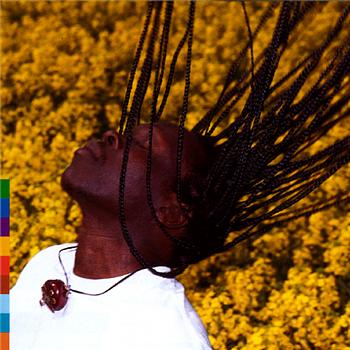
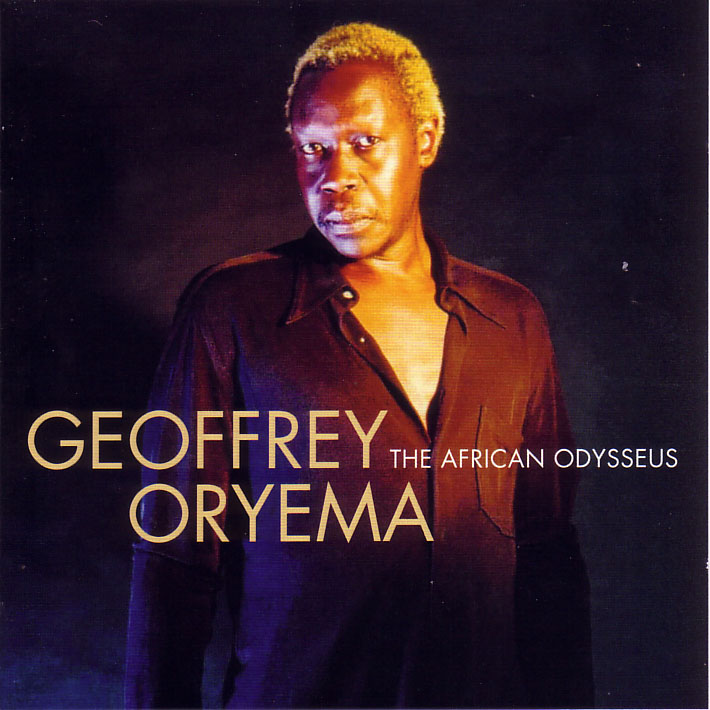
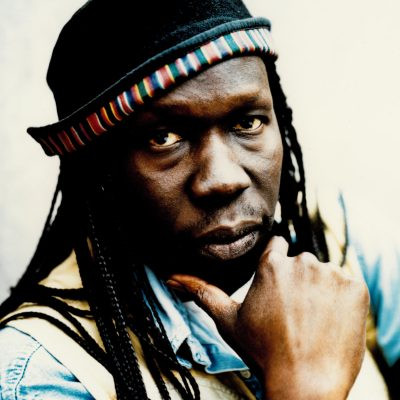
Hidden in the trunk of a car, he crosses the 400 kilometers separating Uganda from Kenya in February 1977, at twenty-four years old. Fleeing the dictatorship of Idi Amin after the assassination of his father, Geoffrey Oryema does not yet imagine that this departure will launch an international career within the Real World label. Forty years of exile, six albums and a music where the nanga (Acholi harp) and electric guitar cross: Oryema will have spent his life linking two shores.
In brief
| Full name | Geoffrey Oryema |
| Birth | 16 April 1953, Soroti (Uganda) |
| Death | 22 June 2018, Lorient (France), cancer |
| Field | World music / Afro-pop-rock |
| Emblematic works | Exile, “Ye Le Ye”, Beat the Border |
| Awards | Victoire de la Musique (1996), Coup de Cœur Académie Charles Cros 2019 |
Key dates
| Year | Event |
|---|---|
| 1953 | Birth in Soroti; son of Colonel Erinayo Wilson Oryema and Janet Manjeri Acoyo |
| 1960s-70s | In Kampala, he learns the nanga, lukeme (thumb piano), flute and guitar |
| 1976 | Writes The Reign of Terror, a play denouncing the excesses of the Amin regime |
| February 1977 | Assassination of his father; he flees in the trunk of a car, crosses Kenya and then Paris |
| 1978-1988 | Precarious work in Paris; hired by Victoria Chaplin’s troupe |
| 1990 | Release of Exile on Real World, produced by Brian Eno; “Ye Le Ye” becomes the theme for Le Cercle de Minuit |
| 1993-94 | Beat the Border: twelve weeks at number one on Billboard World Music; Woodstock 94 |
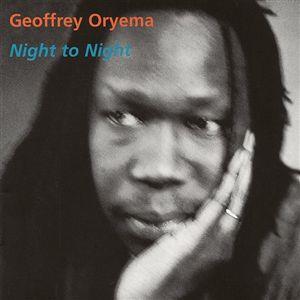
| 1996 | Victoire de la Musique with the group KOD; album Night to Night |
| 2010 | From the Heart, recorded in Paris, Moscow and London; “La Lettre” at the United Nations |
| December 2016 | First return to Uganda after forty years, concert in Kampala |
| 22 June 2018 | Death in Lorient; ashes scattered at Anaka, ancestral Acholi land |
Youth, theatre and a broken destiny — from Kampala to Paris
Geoffrey Oryema grew up in Kampala in a family of the Ugandan intellectual elite. His father, an English teacher and officer who became minister, transmitted to him the Acholi pentatonic music; his mother directed the national dance troupe. Around him, poets and storytellers animated the evenings. But at high school, young Geoffrey also discovered the Rolling Stones and Californian flower-power, a current that would mark his entire career in counterpoint with the nanga and lukeme.
First attracted to theatre, he joined the Uganda Drama School and founded his own troupe, Gong Gong. At the beginning of the 70s, his plays were inspired by Brecht and Grotowski: an absurd theatre mixing tribal sounds and improvisations, which already prefigured his music.
In February 1977, destiny turned. His father disappeared in what was nothing other than a political assassination ordered by the regime of Idi Amin. “We had to live day by day with, under our eyes, what was happening on the street,” Oryema recalls. At twenty-four years old, he fled hidden in the trunk of a car for four hours and reached Paris via Kenya. In France, the first years were precarious: odd jobs, nights in Parisian clubs. In 1978, he appeared on French television; in 1977, the Centre culturel français de Nairobi hosted his play Le règne de la terreur. It was towards the mid-80s that his musical life turned: his demos reached the programmers of WOMAD, Peter Gabriel’s festival. The British artist invited him to the Real World Records headquarters in Bath and produced with Brian Eno his first album, Exile (1990), which became an instant classic of world music. The international press gave him the nickname African Leonard Cohen. Oryema sings in Acholi, Swahili, Kiganda and French, mixing traditional instruments (nanga, lukeme) with electric guitar.
Success and affirmation — from WOMAD to the United Nations
Beat the Border (1993) propelled Oryema onto the American stage, where the album remained at the top of Billboard World Music for twelve weeks. He toured the United States with Peter Gabriel, performed at Woodstock 94 and opened for Téléphone in France. In 1996, he won the Victoire de la Musique with the group KOD (Manu Katché, Tonton David) for the soundtrack of the film Un Indien dans la ville, whose hit “Chacun sa route” made Tonton David known to the general public. His third Real World album, Night to Night (1996), was praised by critics as the summit of his hybrid art.
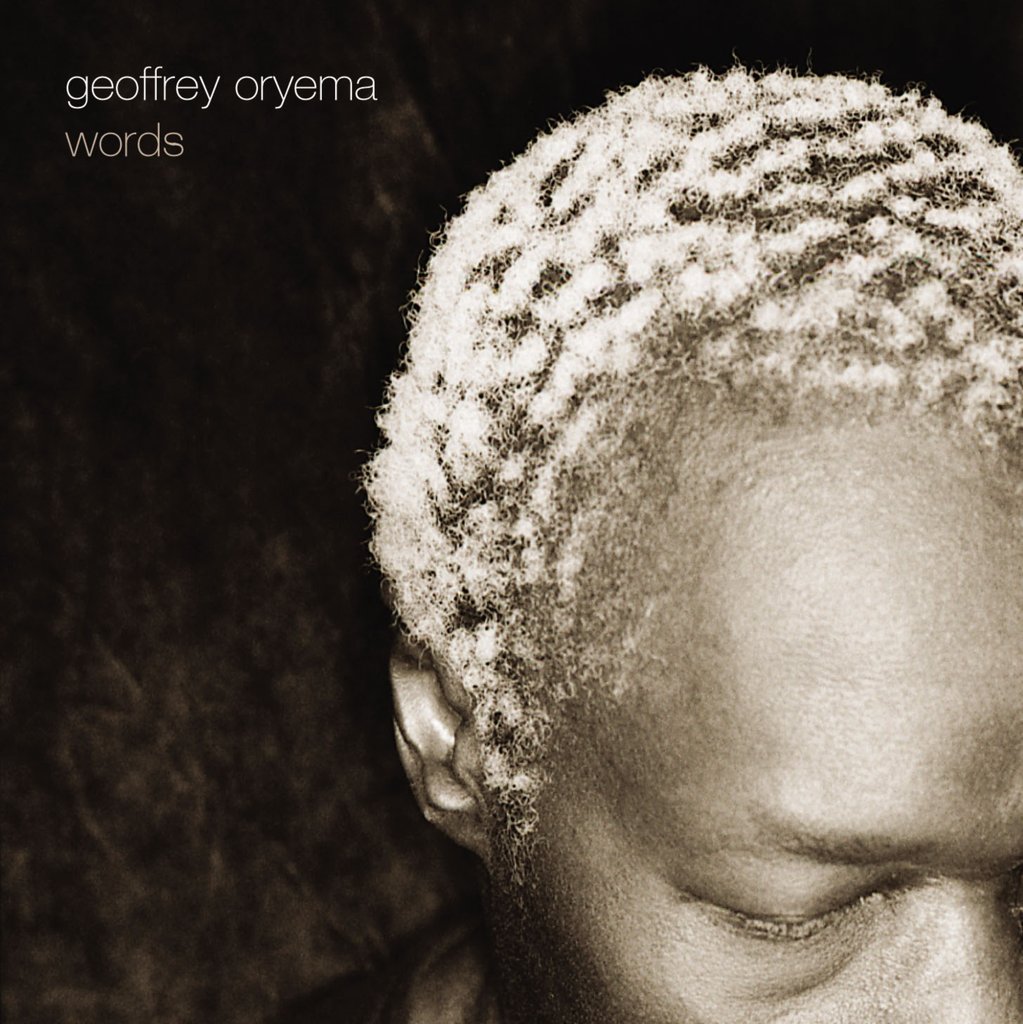
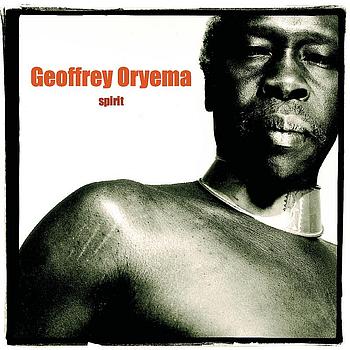
Oryema then moved to Sony International (Spirit, 2000; Words with Melanie Gabriel, 2004), and finally recorded From the Heart (2010) with bassist Tony Levin. On 12 October 2010, he performed “La Lettre” before the General Assembly of the United Nations in New York, imploring Ugandan rebel chiefs to cease fighting. On 17 December 2016, forty years after his departure, he set foot on Ugandan soil for a concert in Kampala. “Those were tears of joy,” he wrote in an interview, speaking of the emotion of returning home.
Major works
| Work | Year | Why it is essential |
|---|---|---|
| Exile | 1990 | First album on Real World, produced by Brian Eno; “Ye Le Ye” becomes the theme for France 2 |
| Beat the Border | 1993 | Twelve weeks at number one on Billboard World Music; entry into the United States |
| Night to Night | 1996 | Summit of Oryema’s hybrid art; participation by Lokua Kanza and Daniel Lanois |
| Words (with Melanie Gabriel) | 2004 | Return to sources with Peter Gabriel’s son; traditional instruments and modern pop |
| From the Heart | 2010 | Last album, recorded in Paris, Moscow and London with Tony Levin; “La Lettre” at the United Nations |
Heritage and influence
Geoffrey Oryema dies on June 22, 2018 in Lorient. His wife Regine and his children Ajoline, Chantal, and Oceng (also a musician) survive him. The Académie Charles Cros awards him in memoriam a Coup de Cœur Musiques du Monde on March 20, 2019. Peter Gabriel pays tribute to Real World by noting that Geoffrey Oryema was one of the label’s most beloved artists; Bob Ezrin describes him as gentle, charming, and deeply passionate.
His music paved the way for African artists who, like Lokua Kanza or Richard Bona, blend traditional roots with Western modernity. His songs in Acholi and Swahili kept the languages of his youth alive and educated generations of listeners about the continent’s intelligence.
Sources and references
- « Geoffrey Oryema », Wikipedia (English), https://en.wikipedia.org/wiki/Geoffrey_Oryema, accessed November 16, 2025.
- « Geoffrey Oryema », Wikipedia (French), https://fr.wikipedia.org/wiki/Geoffrey_Oryema, accessed November 16, 2025.
- « Oryema (Geoffrey) », RFI Biography, https://www.rfi.fr/fr/musique/20180628-oryema-geoffrey, accessed November 16, 2025.
- « Geoffrey Oryema, la douceur contre la douleur », RFI Music, https://musique.rfi.fr/musique-africaine/20180626-geoffrey-oryema-world-music.html, accessed November 16, 2025.
- Angel Romero, « Artist Profiles: Geoffrey Oryema », World Music Central, https://worldmusiccentral.org/artist-profiles-geoffrey-oryema/, accessed November 16, 2025.
- « After 40 Years in Exile, Ugandan Musician Geoffrey Oryema Returns Home », Face2Face Africa, https://face2faceafrica.com/article/geoffrey-oryema, interview, accessed November 16, 2025.
- « Geoffrey Oryema, 1953-2018 », Real World Records, https://realworldrecords.com/news/geoffrey-oryema-1953-2018, accessed November 16, 2025.
- « Décès du musicien ougandais Geoffrey Oryema à 65 ans », BBC News Africa, https://www.bbc.com/afrique/region-44593430, accessed November 16, 2025.
- « Geoffrey Oryema, auteur compositeur chanteur », Ofpra – Famous Refugees, https://www.ofpra.gouv.fr/les-refugies-celebres/geoffrey-oryema-auteur-compositeur-chanteur, accessed November 16, 2025.