Musical History of Liberia
Monrovia is still asleep, but in the clubs of Sinkor and Paynesville, the speakers are already rumbling. In Liberia, music has never ceased reinventing itself — from the guitar picking of Kru sailors, which shaped all of African highlife, to the kolokwa flows of hipco that carry the anger and joys of Monrovia’s youth. How did a country torn by two civil wars manage to give birth to a unique musical genre — hipco — and see its artists cross West African borders?
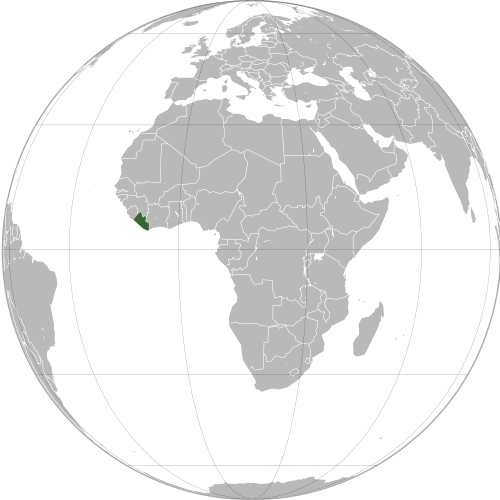
The musical history of Liberia is that of a crossroads. Between Sierra Leone, Guinea, and Côte d’Ivoire, Liberia has long played the role of a bridge between Africa and America: the Americo-Liberians, descendants of freed slaves settled there since 1822, brought their gospel and Protestant hymns; the Kru sailors, who departed on Western merchant ships, returned with rhythms that inspired all of West African highlife [1]. This double root — African and diasporic — gives Liberia a distinct musical identity.
From Kru Sailors to Highlife: The Origins (1918-1980)
Highlife, this music born on the West African coasts from the fusion of European instruments and African rhythms, owes a large part of its existence to Kru sailors. These fishermen and seamen from southern Liberia crossed the Atlantic on British and American ships between the late 19th century and the early 20th. On deck, they played Spanish guitar, banjo, pennywhistle, and harmonica using a thumb-and-index finger plectrum technique [2]. This method, close to the playing of the Manding kora, inspired Ghana’s first highlife guitarist, Kwame Asare, in 1926 [3]. According to several Liberian witnesses, it was in Liberia that highlife saw the light of day before being taken up and amplified by the Ghanaians [4].
In parallel, palm-wine — acoustic music played in taverns, a mix of local rhythms and Caribbean influences — took root between 1918 and 1920 among the Kru people of Grain Coast [5]. Brass bands playing quadrilles, foxtrots, and calypsos animated the streets of Monrovia. The scene remained nonetheless dominated by American music — R&B and rock’n’roll — on the national radio, ELBC.
In the 1950s, recordings began to appear in Monrovia. Morris Dorley (1946-1996), nicknamed the “father of Liberian music,” then imposed a unique sound on the country. Born in Bomi County, member of the Gola people, Dorley learned congoma (traditional hand piano) at sixteen before receiving a guitar from an American benefactor [7]. He formed the Sunset Boys, a group that became the first Liberian formation to achieve massive success with “Grand Gedeh Oh! Oh!” at the end of the 1960s. This title, the first purely Afro-Liberian composition to hit the airwaves, was played during President William Tubman’s birthday celebration in 1969: Dorley became the first Liberian artist to perform before a head of state [8].
His presence at Festac 77, the world festival of black arts in Lagos, earned him an award and continental recognition. Dorley recorded more than six compilation albums during the 1970s at Monrovia’s ABC studio — Bilo Lolo, Mena Mouna, Rally Time, The Sound of Liberia — before moving to Studio 99 in the early 1980s [8]. His style fused electric highlife, Caribbean merengue, and palm-wine techniques, sung in bassa, vai, gola, and kpelle [4].
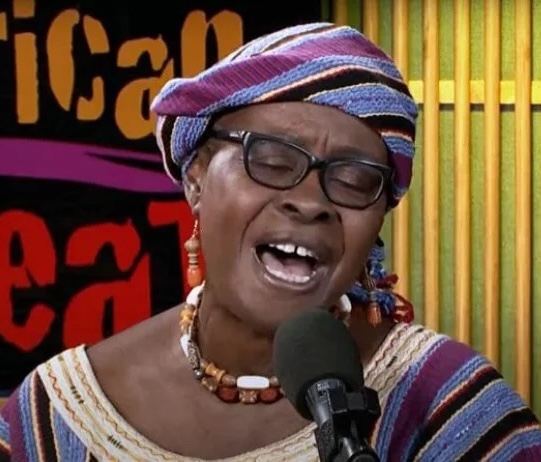
Other figures emerged. Yatta Zoe was the country’s first female star, with more than twenty singles [3]. Miatta Fahnbulleh, from an influential political family, toured the continent alongside Hugh Masekela and carried messages of social justice in her songs [9]. Fatu Gayflor, nicknamed the “golden voice of Liberia,” member of the Troupe Culturel National, defended traditional musics [10]. The group Zack & Gebah wrote “Sweet Liberia,” an anthem at the end of the 1980s that crossed ELBC airwaves [11].
In 1963, President Tubman created the Cape-Palmas Military Band (CPMB), a 56-musician orchestra directed by Israeli military chief Aharon Shefi, who performed highlife, military marches, and Liberian folk musics during the 1964 presidential inauguration [12].
Studio 99 and the renaissance of hipco (1983-2026)
In 1983, Ghanaian producer Faisal Helwani opened Studio 99 in the Sinkor neighborhood of Monrovia — the country’s first multi-track recording studio [9]. The facility proved decisive: the team produced twenty-four cassette albums in two years, featuring artists who became references — Morris Dorley, Fatu Gayflor, Caesar Gartor, Yatta Zoe, Miatta Fahnbulleh [9]. But Helwani refused to pay royalties to the artists. In 1985, musicians stormed the studio, confiscating all equipment in a historic protest. The cassette, becoming the sole recording format, definitively replaced vinyl [13].
The civil war that broke out in 1989 and lasted fourteen years pulverized the scene. Most artists fled — to Accra, Lagos, Washington, London. Zack & Gebah, Dave GQ, Big Steve would never regain their pre-war aura [11].
Meanwhile, Monrovia saw something new emerge. In the 1990s, an embryonic hip-hop scene, influenced by New York rap, sprouted in the capital’s clubs [4]. This street hip-hop metamorphosed into hipco — a properly Liberian style sung in kolokwa, the patois born from the fusion of English with about fifteen local languages. The co in the name refers to kolokwa, an essentially oral language [5]. The genre was officially founded in 2002-2003 by DJ SummerTime, MC Switch and Detrench [15]. The first major artists — Takun-J, Bucky Raw, DenG — turned it into a political genre, denouncing corruption and injustice [16]. From 2004, hipco became the most popular music genre in Liberia [5]. In 2014, UNICEF collaborated with hipco artists to produce songs about Ebola virus prevention [17].
With peace restored, the Liberian scene rebuilt itself in layered waves. Hipco persisted with MC Caro, DenG and Takun-J, while afropop invaded the airwaves. The most remarkable artist of this recent period is C.I.C. (Maurice Tosh Gayflor). Born in a Baptist choir in Brewerville, he became the star in 2015 with “Jon Buttay”, an afropop piece sung in kolokwa that invaded streets and clubs [18]. He won the Artist of the Year award at the MTN Liberia Music Awards in 2018 and again in 2024, and published his second studio album in July 2025, Local Champion, a 15-track LP blending afropop, reggae, drill and amapiano, featuring Nigerian rapper Dremo [18].
JZyNo crossed the continental threshold in 2023 with “Butta My Bread”, featuring Ghanaian Lasmid, which became a major hit [19]. The single “Sofaya”, released in April 2026 with Wendy Shay, marked the culmination of this trajectory [19]. Kobazzie (Korte Dorbor Bazzie), nicknamed the “Lorma Boy” of Voinjama, has fused afropop and afrobeats since his nomination at the Liberia Music Awards 2016 [20].
The female scene also carries this renaissance. Fatu Gayflor maintains her musical activism [10]. Tokay Tomah, from the Troupe National, released six albums before her death in 2007; her legacy paved the way for a new generation [19]. Miatta Fahnbulleh released “Amo Sake Sa” in 2025, placing her historic voice in the contemporary afrobeats distribution — a living bridge between decades [19]. MC Caro launched his own label, Helebor Entertainment, in 2026 [19]. Behind the singers, an army of producers — Dr. Base, Kellzbeat, Flexzbeat — and video directors — Jackie Russ, Kenzo Debo — shapes the Liberian sound as the world discovers it [19].
From the invisible influence of Kru sailors, whose guitar picking resonated as far as Ghana and Nigeria, to hipco carrying the cries of Monrovia’s youth, Liberian music has never ceased dialoguing with the world while preserving its own idiom — kolokwa, gbema, palm-wine. The generations that survived the war made this music an instrument of resilience.
Founding figures of Liberian music
| Figure | Period | Genre | Note |
|---|---|---|---|
| Kru Sailors | ~1918-1920 | Palm-wine / proto-highlife | Ancestors of West African guitar picking [3] |
| Morris Dorley | 1946-1996 | Electric highlife, palm-wine | “Father of Liberian music”, Festac 77 [8] |
| Yatta Zoe | 1970-1980s | Highlife | First Liberian female star [3] |
| Miatta Fahnbulleh | 1970s-2025 | Committed pop, afrobeats | Political family, toured with Masekela [9] |
| Fatu Gayflor | 1980s-present | Traditional music, pop | “Golden Voice of Liberia”, Troupe National [10] |
| Zack & Gebah | 1980s | Highlife, pop | “Sweet Liberia”, national anthem [11] |
| DJ SummerTime & MC Switch | 2002-2003 | Hipco | Founders of the hipco genre [15] |
| C.I.C. (Maurice Tosh Gayflor) | 2015-present | Afropop, drill, amapiano | Local Champion (2025) [18] |