Cameroonian Literature: One Pen, Two Worlds
A Writing in Bifurcation
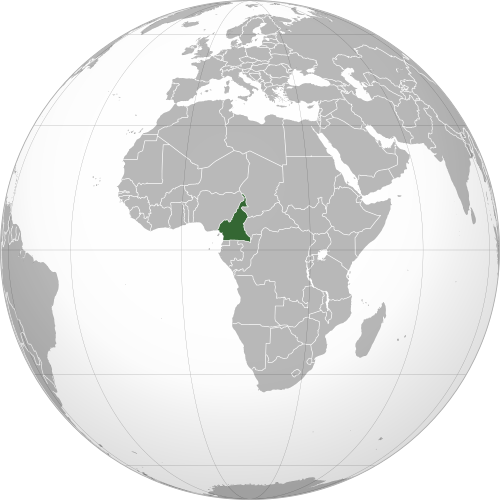
Cameroon, nicknamed “Africa in miniature” for its ethnolinguistic diversity — and where more than 250 spoken languages are counted1 — is a country where literature does not reduce itself to a single register. The country oscillates between two colonial inheritances: one quarter of the territory was administered by France, the rest by Great Britain after World War I. This double colonization, whose borders survived the 1960 independence, shaped a bilingual and multilingual literary scene — where Francophone and Anglophone writers coexist in permanent tension, sometimes conflictual, sometimes fertile. Cameroonian literature is today one of the richest and most diversified in Central Africa, driven by voices that ceaselessly cross linguistic and geographical boundaries to question identity, power, and memory.
From Mongo Beti to Imbolo Mbue: A Century of Cameroonian Writing
Modern Cameroonian literature takes shape as early as the 1930s with Jean-Louis Njemba Medu, who publishes Nnanga Kon in 1932 — one of the very first fictions in a Cameroonian language2. Shortly after, authors from missionary schools such as Louis-Marie Pouka or Sankie Maimo defend a policy of cultural assimilation3. But it is with Mongo Beti and Ferdinand Oyono that literature becomes a weapon of contestation. In 1956, Mongo Beti publishes Le Pauvre Christ de Bomba, a satirical novel about a French missionary imposing assimilation in southern Cameroon — a text that, according to specialists, functions as an account of literary slavery denouncing imperialism45. Mongo Beti, whose real name is Alexandre Biyidi, signs under a pseudonym meaning “vision”6. The same year, Ferdinand Oyono publishes Une Vie de Boy7, the story of a servant in a colonial official’s household, followed by Le Vieil esclave (1957) — an anti-colonial trilogy taught in Cameroonian schools8. Guillaume Oyônô Mbia, Mbella Sonne Dipoko, Francis Bebey, René Philombé and Kenjo Jumbam explore postcolonial modernity9.
After independence, writers align themselves in the wake of Négritude — the movement launched in Paris in the 1930s by Senghor, Césaire and Damas10 — while inventing new forms. Calixthe Beyala, born in Douala in 1961 and sixth of a dozen children11, publishes Assèze l’Africaine (1994) and then La Nuit sacrée (1996), awarded the Grand Prix du roman de l’Académie française, a narrative on the female condition1213. Patrice Nganang, born in 1970 in Yaoundé from a Bamileke family, teaches at the State University of New York and publishes Temps de chien (2000), a satirical novel on the victorious dictatorship, winner of the Marguerite-Yourcenar Prize and the Grand Prix littéraire d’Afrique noire1415. Werewere Liking invents comography — an embodied writing through gesture16. Leonora Miano writes Dark Room (2005), a pioneering Francophone work on lesbian sexuality in Africa17. Bate Besong, an Anglophone playwright, denounces the marginalization of Anglphones18.
In 2014, a pivotal moment: an unknown author signs a one-million-dollar contract with Random House19. Imbolo Mbue, born in Limbe and living in New York, publishes Behold the Dreamers in 201620. The novel follows a Cameroonian immigrant couple employed by a Lehman Brothers banker during the 2008 crisis21. The book wins the PEN/Faulkner in 2017 and is selected by Oprah Winfrey22, named bestseller of the New York Times. Critic Dibussi Tande observes that the success “certainly drew the world’s gaze onto Cameroonian literary talents, because his books deal with very Cameroonian realities”23.
The same momentum carries young Anglophone writers. The Anglophone crisis — also called the “Ambazonia conflict”24 — erupts in 2016: the government represses demonstrations, separatist groups form, 700,000 displaced and 4,000 civilians killed25. Dzekashu MacViban founds Bakwa magazine in 2011 — the only literary publication in English in a predominantly Francophone country26. The magazine hosts competitions, workshops, readings and podcasts27. Nana Nkweti (finalist of the Caine Prize 2019 for Walking on Cowrie Shells)28, Howard Meh-Buh Maximus (Miles Morland Fellowship 2018)29, Henny Kamkuimo, Monique Kwachou and Clementine Ewokolo Burnley publish in The Baffler, Brittle Paper and The New Orleans Review. As early as 2016, MacViban organizes physical events in Yaoundé, Douala, Buea and Limbe creating bridges between writers30. In 2019, Dibussi Tande and Joyce Ashuntantang coedit Bearing Witness: Poems from a Land in Turmoil, an anthology of 150 poems by 73 authors31. Francophone anthologies complete the picture: Cendres et Mémoires (2019)^32 and Cadavres de l’unité (2020)^33. The Grand Prix des Associations Littéraires (GPLA), launched in 201334, is one of the few bilingual prizes on the continent — rewarding Eric Mendi, Charles Salé, Felwine Sarr35 and paying tribute to Sankie Maimo in 201636. Hemley Boum, born in Douala in 197337, publishes Les Jours viennent et passent (Gallimard, 2019), a transgenerational narrative about three women from colonization to the Boko Haram war, winner of the Ahmadou-Kourouma Prize in 20203839.
A Shared Future
Cameroonian literature is a pen of double writing — Francophone and Anglophone, militant and introspective, local and global. Two centuries of production, from Bamoun and Bulu texts at the beginning of the 20th century to successes in New York and Paris, testify to a constantly renewed vitality. The Anglophone crisis revealed how writing can be an act of survival — but also of resistance, imagination and connection.
Today, Cameroonian writers face a fragile ecosystem: few local publishers — most publications go through French, American or Nigerian presses — dependence on foreign funding, a writing market still marginalized compared to other African countries. But bridges are being built — Bakwa and Saraba, the Nigerian review, have exchanged authors and texts between Douala and Lagos40 — and Francophone/Anglophone networks are strengthening, driven by writing residencies, international fellowships and bilingual anthologies circulating from London to New York via Paris. Cameroonian literature is not just the story of a country at a crossroads: it is that of a writing which refuses to fold, which persists in local languages as well as international ones, and which, despite crises, continues to open up to the world.
Did you know?
Bamoun is the only African language in Central Africa to have developed a complete writing system at the beginning of the 20th century — invented by King Nchum Maxime IV in 1896, it counts 320 distinct characters41. In 2023, a collection of poems in Bamoun was published with translations into French and English, illustrating the contemporary vitality of this writing42.
Sources
-
Mbaku, J. J. (2002) Culture and Customs of Cameroon, Greenwood Press, 80–83 p. ↩︎
-
Wikipedia, « Literature of Cameroon », section « Overview », articles on Njemba Medu and Bulu. ↩︎
-
Mbaku (2002), op. cit., 80–81 ; Fitzpatrick, Mary (2002) Lonely Planet West Africa, 5ᵉ éd., p. 38. ↩︎
-
Wikipedia, « The Poor Christ of Bomba » ; Britannica, « The Poor Christ of Bomba ». ↩︎
-
Tita, Charles (2016) « Towards a poetics of decolonization: Mongo Beti’s The Poor Christ of Bomba », Tydskr. Letterkunde, vol. 53, n° 1, scielo.org.za, doi:10.4314/tvl.v.53i1.12. ↩︎
-
Le Point, « Cameroun – Littérature : remember Mongo Beti », 7 November 2023 ; Fabula.org, « Mongo Beti, écrivain engagé ». ↩︎
-
Guardian, « Ferdinand Oyono obituary », 30 June 2010 ; Britannica, « Ferdinand Léopold Oyono ». ↩︎
-
Wikipedia, « Ferdinand Oyono » ; Africulture.com, « Ferdinand Oyono – African Heritage ». ↩︎
-
Wikipedia, « Literature of Cameroon », section « Overview » ; African Studies Centre Leiden, « Mongo Beti » and « Ferdinand Oyono ». ↩︎
-
Nesbitt, Nick (1999) « Negritude », in Gates Jr., Henry Louis & Appiah, Kwame, Africana, Perseus Books. ↩︎
-
Encyclopedia.com, « Beyala, Calixthe 1961– ». ↩︎
-
Wikipedia, « Calixthe Beyala » ; Oxford AASC, « Beyala, Calixthe ». ↩︎
-
Africultures, « Calixthe Beyala : | Africultures » ; Michigan State University, « The Rage of Calix the Bayela », vol. 2 n° 1. ↩︎
-
Wikipedia, « Patrice Nganang » ; AALBC, « Patrice Nganang ». ↩︎
-
AALBC, op. cit. ; Babelio, « Patrice Nganang (auteur de Temps de chien) ». ↩︎
-
Ohio Open Library, « Afrofuturisms : Ecology, Humanity, and Francophone Cultural… », p. 59. ↩︎
-
Ohio Open Library, ibid., 59 ; Journal of Black Studies, vol. 8 (1977), 169–188. ↩︎
-
Tydskr. Letterkunde, op. cit. (section « Anglophone Cameroon literature 1959-90 »). ↩︎
-
Publishers Weekly, « Frankfurt Book Fair 2014: pre-fair deals – two debuts draw seven figures ». ↩︎
-
Wikipedia, « Literature of Cameroon » ; PEN/Faulkner Foundation, « Imbolo Mbue ». ↩︎
-
Wikipedia, « Behold the Dreamers ». ↩︎
-
PEN/Faulkner Foundation, « Imbolo Mbue » ; Oprah.com, « Oprah Talks to Behold the Dreamers Author ». ↩︎
-
Al Jazeera, « Cameroon’s new literary generation is asserting itself globally », 15 September 2021. ↩︎
-
USCRI, « Timeline: Cameroon & the ‘Anglophone Crisis’ ». ↩︎
-
Al Jazeera, op. cit. ; USCRI, « Timeline: Cameroon & the ‘Anglophone Crisis’ ». ↩︎
-
Al Jazeera, op. cit. ; Open Country Mag, op. cit. ↩︎
-
Bakwa Magazine, « Interviews », series « Bakwa-UK workshops ». ↩︎
-
Open Country Mag, « In her debut, Nana Nkweti crosses genres to explore the Cameroonian-American experience ». ↩︎
-
Open Country Mag, « Cameroon’s New Literary Generation Comes of Age, as Anglophone Crisis Deepens », 25 June 2021. ↩︎
-
Open Country Mag, op. cit. ↩︎
-
Spears Books, « Anglophone Cameroon Narratives » ; Al Jazeera, op. cit. ↩︎
-
Open Country Mag, op. cit. ↩︎
-
Nsahmala.com, « All Published Books ». ↩︎
-
Wikipedia, « Grand Prix of Literary Associations ». ↩︎
-
Senenews, « Felwine Sarr et Eric Mendi lauréats des GPLA », 15 March 2017 ; Writing Africa, « GPLA 2018 winners announced ». ↩︎
-
Bamenda Online, « GPLA 2016 pays tribute to Sankie Maimo ». ↩︎
-
Wikipedia, « Hemley Boum » ; read.africa, « Les jours viennent et passent ». ↩︎
-
The Africa Report, « Cameroon: Hemley Boum scratches scars of colonialism in ‘Days Come and Go’ ». ↩︎
-
Wikipedia, « Hemley Boum » ; AfSeattle, « Days Come and Go: A Conversation with Hemley Boum ». ↩︎
-
Open Country Mag, op. cit. ; Limbe to Lagos: Nonfiction from Cameroon and Nigeria (Bakwa Books, 2019). ↩︎
-
Wikipedia, « Bamum script » ; Shumom-text.jpg on Wikimedia Commons, 1910. ↩︎
-
Brittle Paper, « Poetry collection written in Cameroon’s Bamum script translated in English and French », 16 August 2022. ↩︎