From Ge’ez Manuscripts to Diaspora Voices: A Millennium of Ethiopian Literature
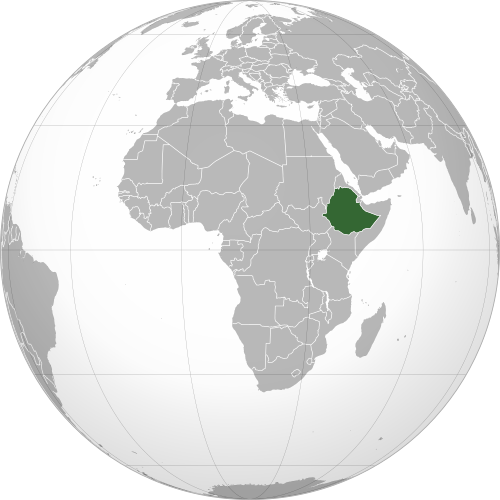
Ethiopian literature is one of the oldest written traditions in the world. As early as the 4th century, texts in Ge’ez1 — this classical language of Ethiopia, comparable to medieval Latin in Europe — documented royal campaigns and translated the Bible. Today, writers like Dinaw Mengestu and Maaza Mengiste tell Ethiopia in English to millions of Western readers, while authors like Yismake Worku write in Amharic in Addis Ababa2. But how did this millennial tradition, preserved by monasteries before becoming secular literature, survive invasions, dictatorships, and globalization?
From Royal Chronicles to Early Amharic Novels
The written history of Ethiopia is rooted in the Kingdom of Axum (1st century). Kings inscribed their exploits in Ge’ez and Greek, and monks translated the Church Fathers3. But Ge’ez was a language of clerics: secular literature — conquest narratives, royal chronicles, poems — awaited Amharic.
It was in the 16th century that Amharic began to serve literary purposes, driven by authors like Heruy Wolde Selassie (1878-1938), considered the father of modern Amharic prose. Under the regency of future Haile Selassie, he wrote allegorical essays where the human heart becomes My Heart My Friend. Meanwhile, Ge’ez literature itself produced its peaks: the Kebra Nagast (“Glory of the Kings”), a 14th-century narrative that traces the Ethiopian dynasty to King Solomon and the Queen of Sheba, remains the cornerstone of Ethiopian literary identity4.
The first Amharic novel appeared in 1908 with Libb-waled tarik (“History of the Heart”) by Afäwarq Gäbrä Iyäsus. But the true founding masterpiece is Fikir Eske Meqabir (“Love Until the Grave”) by Haddis Alemayehu (1910-2003): published in 1968, this novel tells the impossible love story between Bezabih, a brilliant poor young man, and Seblewengel, daughter of the aristocracy5. Haddis, former Minister of Foreign Affairs, there delivers an implacable indictment against Ethiopian feudalism. The work was hailed by the Encyclopædia Britannica as a modern classic6.
The Revolutionary Turning Point and Its Martyrs
The fall of Haile Selassie in 1974 triggered a literary effervescence. Authors seized the revolution as their subject: Daniachew Worku published The Thirteenth Sun (“The Thirteenth Sun”) in 1973, even before the coup d’état, but this already prophetic novel follows a dying noble and his westernized son7.
But it was with Baalu Girma (1939-1984) that Ethiopian literature tipped into mortal danger. This journalist and novelist of mixed origin — Indian father, Ethiopian mother — published Oromay (“The End”) in 1983, a novel that denounces the power mechanisms of the Derg regime. The following year, he disappeared: his death is attributed to the military junta8. Oromay then became not only a masterpiece of political fiction but also the testament of an writer assassinated for speaking the truth9.
The same era saw the birth of unique poetic voices. Tsegaye Gabre-Medhin (died 2012) is recognized as the greatest Ethiopian poet of the 20th century: he wrote more than thirty plays, translating Shakespeare and Molière into Amharic10. His preferred form, the q’ene (or “Wax and Gold”), is a Ge’ez tradition where each text carries a hidden meaning, gold concealed under wax — a double entendre game that makes Ethiopian poetry an art of disguise and cunning11.
Diaspora Voices
The Ethiopian diaspora has produced one of the most brilliant contributions to contemporary literature in English. Dinaw Mengestu (born in Addis Ababa in 1978) fled the Red Terror12 with his family, who settled in Illinois. At Georgetown and then Columbia, he perfected his narrative art. His first novel, The Beautiful Things That Heaven Bears (2007), received the Guardian First Book Award. He was chosen as a MacArthur Fellow in 2012 — a genius grant — and today teaches literary creation at Bard College13. Four novels later, he still explores the migrant condition: All Our Names (2014), How to Read the Air (2010), Someone Like Us (2024).
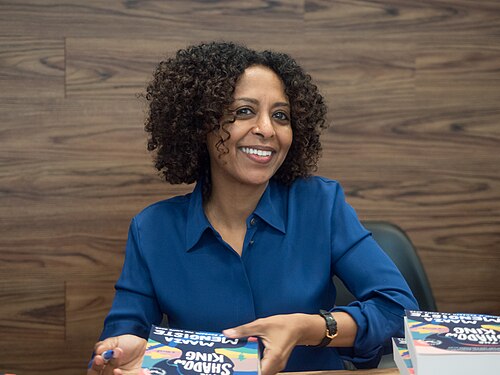
Maaza Mengiste, born in 1967, also writes in English but with a different perspective. Her first novel, Beneath the Lion’s Gaze (2010), retraces the fall of Haile Selassie through a family that disintegrates14. In 2019, The Shadow King (“The Shadow King”) exhumes the Ethiopian warriors who fought the Italian invasion of 193515. Her anthology Addis Ababa Noir (2021) brings together short stories by a dozen Ethiopian and diasporic authors.
Lemn Sissay (born in 1967 in Wigan, Lancashire) embodies another face of the diaspora. Son of an Ethiopian mother, raised in the British child protection system16, he retraces his quest for identity in My Name is Why (2018), an autobiographical memoir published by Canongate. In 2012, he was named official poet of the London Olympics17, making him the first Ethiopian-British poet to hold this position. He received the PEN Pinter Prize in 2019 and was appointed OBE in recognition of his services to literature18. He now lives between London, Manchester, and Addis Ababa.
A Flourishing Literary Present
The contemporary Ethiopian scene is rich and diverse. In Addis Ababa, authors like Yismake Worku write in Amharic for a mobile readership: his novels are among the most read in Ethiopia19. Bewketu Seyoum (born 1984) represents the young generation: a bilingual poet and novelist, he represented Ethiopia at the Poetry Parnassus in London in 2012 during the Cultural Olympics. His style blends the conciseness of q’ene with social violence.
Amharic-English translation is gaining ground: Yismake Worku’s The Lost Spell, translated by Bethlehem Attfield, is the first Amharic novel published in English in the UK (2022). Songs We Learn from Trees, an anthology of Ethiopian poetry translated by Chris Beckett and Alemu Tebeje, was published by Carcanet in 2022.
Ethiopian writers write in at least three literary languages—Ge’ez, Amharic, and English—and their works circulate between Addis Ababa, London, New York, and Paris. This literature is not a museum: it reinvents itself with each generation, just as q’ene does, continuing to hide gold beneath wax.
Did You Know?
Ethiopia is the only African country never to have been colonized, except for the brief Italian occupation (1936-1941). Its Ge’ez literature counts more than 5,000 religious and historical manuscripts preserved in its monasteries20. The Ethiopian biblical canon includes books absent from all other Christian traditions, such as the Book of Enoch and the Ascension of Isaiah21.
Founding Figures
| Name | Dates | Major Work | Language |
|---|---|---|---|
| Author of Kebra Nagast | 14th century | Kebra Nagast (« Glory of the Kings ») | Ge’ez |
| Abba Gorgoryos | c. 1500-1550 | Amharic-Latin Grammar | Ge’ez / Amharic |
| Afäwarq Gäbrä Iyäsus | early 19th c. | Libb-waled tarik (1908) | Amharic |
| Heruy Wolde Selassie | 1878-1938 | Wadaje lebbe (« My heart my friend ») | Amharic |
| Haddis Alemayehu | 1910-2003 | Fikir Eske Meqabir (1968) | Amharic |
| Baalu Girma | 1939-1984 | Oromay (1983) | Amharic |
| Tsegaye Gabre-Medhin | 1940-2012 | Oda Oak Oracle (1965) | Amharic / English |
| Daniachew Worku | 1934-2020 | The Thirteenth Sun (1973) | Amharic / English |
| Dinaw Mengestu | born 1978 | The Beautiful Things That Heaven Bears (2007) | English |
| Maaza Mengiste | born 1967 | Beneath the Lion’s Gaze (2010) | English |
| Lemn Sissay | born 1967 | My Name is Why (2018) | English |
| Bewketu Seyoum | born 1984 | In Search of Fat (2012) | Amharic / English |
Sources and References
-
Encyclopædia Universalis, « ETHIOPIA: Literature », by Jean Chavaillon and Jean Doresse, CNRS; accessed 2026. ↩︎
-
David DeGusta, « Ethiopian Literature », davidwrites.net — catalogue of Ethiopian authors and the diaspora; accessed 2026. ↩︎
-
Encyclopædia Universalis, ibid.: « Ge’ez is used for the first time in 4th-century inscriptions: King Ezana… first example of official historiography in Ethiopia. » ↩︎
-
Books Africana, « The Ethiopian Bookshelf: 15 Masterworks from Africa’s Oldest Literary Tradition », December 11, 2024. ↩︎
-
zehabesha.com, « “Love to the Grave” by Haddis Alemayehu, an Ethiopian classic »; Sewasew, « Haddis Alemayehu »; accessed 2026. ↩︎
-
Encyclopædia Britannica, ibid.: « His tragic novel, Love to the Grave, is one of the most renowned books in modern Ethiopian literature, considered a modern masterpiece. » ↩︎
-
Books Africana, ibid.: « Worku’s 1973 masterwork takes shape around a dying nobleman’s final pilgrimage. » ↩︎
-
Wikipedia, « Baalu Girma »: « Girma disappeared, widely suspected to have been assassinated by the Derg for his critical writings. » ↩︎
-
Books Africana, ibid.: « The author’s subsequent disappearance… transforms what might have been merely a compelling novel into something far more potent: a martyr’s final witness to the machinery of authoritarian power. » ↩︎
-
Encyclopædia Britannica, ibid.: « Gabre-Medhin Tsegaye: Considered Ethiopia’s leading poet, he wrote more than 30 plays, mostly in Amharic, and also translated works of Shakespeare and Molière. » ↩︎
-
Anglo-Ethiopian Society, « Ethiopian literature, the new frontier? », Chris Beckett, winter 2012. ↩︎
-
NPR, « Dinaw Mengestu Captures Immigrant Life », February 19, 2008. ↩︎
-
Wikipedia, « Dinaw Mengestu »; PEN America profile; accessed 2026. ↩︎
-
Books Africana, ibid.: « Mengiste dissects the anatomy of political upheaval. Her prose moves like a scalpel, laying bare the sinews of loyalty and betrayal. » ↩︎
-
Books Africana, ibid.: « Mengiste’s 2019 tour de force shatters the masculine lens through which war narratives are typically viewed. Set during Mussolini’s 1935 invasion of Ethiopia. » ↩︎
-
Wikipedia, « Lemn Sissay »; British Council Oral Histories; accessed 2026. ↩︎
-
Wikipedia, ibid.: « He was the official poet of the 2012 London Olympics. » ↩︎
-
Wikipedia, ibid.: « He was awarded the 2019 PEN Pinter Prize. » ↩︎
-
David DeGusta, ibid.: « Yismake Worku is likely the most popular living author writing in Amharic. » ↩︎
-
Encyclopædia Universalis, ibid.: « more than 5,000 religious and historical manuscripts preserved in Ethiopian monasteries. » ↩︎
-
Universalis, ibid.: « The canon of the Ethiopian Bible contains several books considered apocryphal by other Churches: the Book of Enoch, the Ascension of Isaiah, the Book of Jubilees among others. » ↩︎