
Biography
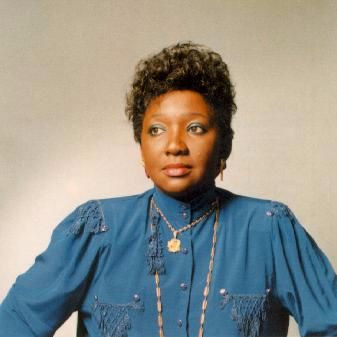
Aïcha Koné
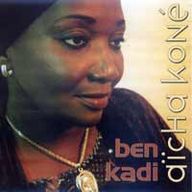
Abidjan, 1980. In the ORTI studios, the youngest of a sibling group of fifteen children imposed a rhythm that no one had yet dared to confine: that of the poro, this Senoufo and Malinke initiatory dance formerly reserved for community ceremonies. The young woman, with her crystalline voice charged with emotion, had just placed her nickname on a 45 rpm record. The world would discover her under the name Zata. In reality, Aïcha Koné — the one some already began to call “Mama Africa” — was only just beginning to write one of the most beautiful musical adventures of Côte d’Ivoire.
In brief
| Full name | Aïcha Koné |
| Birth | May 21, 1957, Abidjan (Adjamé), Côte d’Ivoire |
| Origin | Gbon, Boundiali department (Senoufo ethnicity) |
| Field | Singer, Poro Dance, Mandingue music, African varieties |
| Signature works | Zata, Poro Dance, Farafina Miria |
| Awards | Two gold records, more than 45 prizes and trophies, Ngomo Peace Prize (1989) |
Key dates
| Year | Event |
|---|---|
| 1957 | Birth in Abidjan (Adjamé), daughter of Dr Moussa Yanourga Koné (doctor), youngest of 15 children |
| 1963 | Discovery of Miriam Makeba in Abidjan: first inspiration |
| 1970s | Integration into ORTI as a chorus member under Boncana Maïga |
| 1979 | First 45 rpm record: Denikeleni |
| 1980 | Zata: national success and first nickname |
| 1983 | Narda, album recorded in the United States |
| 1986 | Aminata, gold record; pan-African recognition |
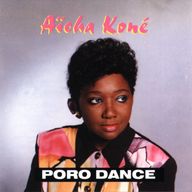
| 1992 | Poro Dance, innovative album that legitimizes poro dance on stage |
| 2025 | 50 years of career; concert at the Palais de la culture |
From northern Abidjan to the international stage
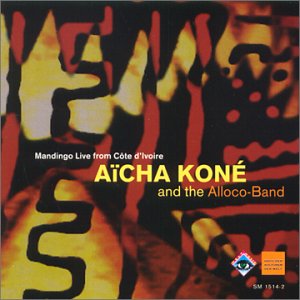
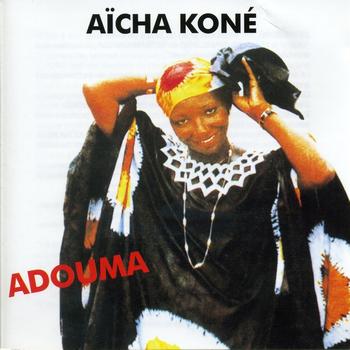
Born in Abidjan (Adjamé) on May 21, 1957, but rooted in the north of the country, Aïcha Koné carries the heritage of Senoufo and Dioula languages. Daughter of Dr Moussa Yanourga Koné and youngest of fifteen children, she had to overcome her father’s opposition. In 1963, the discovery of Miriam Makeba singing in Abidjan marked her. “There is something very moving and very profound in Miriam Makeba’s voice. I felt that she was expressing pain, but I didn’t know which. At the time, I didn’t know what apartheid meant,” she would later confess. Her entry into music came through the ORTI. Introduced by her brother to director Georges Benson, she joined the orchestra as a chorus member under the direction of Boncana Maïga. The Malian became her mentor and served as her regular arranger until Farafina Miria. “These years at the ORTI helped me organize and structure myself,” she recalls, in a studio where one rubs shoulders with Manu Dibango. In 1978, a tour with Jimmy Hyacinthe fell short. Instead of giving up, she allowed a new sound to germinate, nourished by Nana Mouskouri’s mandolins and the Eastern guitars of Enrico Macias that recall Mandingue music. Her first 45 rpm record, Denikeleni, was released in 1979. The following year, Zata, a title of communicative energy, secured a national success and earned her her nickname. The real qualitative leap arrived in 1983 with Narda, recorded in the United States, which revealed her to the international scene. Followed by Baba Tounouna, Kamelemba, Soleil, Linda, and Wodjoro. Then came Aminata (1986), a Mandingue melody dedicated to her sister, which crossed borders and turned into a gold record. In 1990, Tchaga launched her on the international stage: Europe, Canada, United States. The album, arranged by Boncana Maïga and Jimmy Hyacinthe, blends Mandingue rhythms, goumbé, rumba, soukous, and zouk in a rare fusion. Celebrated on the continent and admired by President Houphouët Boigny, Aïcha Koné assumed her vision: “Culture has a great role to play and a responsibility that I am ready to take on. In a country awaiting new elections, I want to call for peace, for unity, for knowing how to accept ourselves in our differences,” she declared in 2025, on the occasion of her 50 years of career. The nickname “Mama Africa” is not a coincidence. “When one says Mama, it evokes affection, benevolence. It is the figure of the mother who gathers, who speaks of peace, who speaks of love.”
Major works
| Work | Year | Why it is essential |
|---|---|---|
| Denikeleni | 1979 | First 45 rpm record; lays the foundations of her Mandingue sonic identity |
| Zata | 1980 | Fundamental title that earned her her nickname |
| Narda | 1983 | Recorded in the United States, reveals her international stature |
| Aminata | 1986 | Mandingue melody dedicated to her sister; gold record and pan-African recognition |
| Poro Dance | 1992 | Innovative album that legitimizes poro dance on stage and in studios |
Legacy and influence
Aïcha Koné shaped a unique musical space: that where the poro dance, an initiatory institution of Senoufo and Malinke societies, no longer remains confined to ceremonies, but resonates in the concert halls of the continent. One of the few Ivorian singers to secure two gold records, her voice, alternately nostalgic and cheerful, influenced an entire generation of West African artists. In 2025, she celebrated 50 years of career with an event concert at the Palais de la culture in Treichville, bringing together artists from Mali, Guinea, Benin, and Niger. Her track Yougouba, a modernized cover of Baya (1997) in collaboration with Ariel Sheney and Chouchou Salvador, proves that she intends to remain at the heart of the movement. “I want the younger generation to be interested in what we have already done, to draw inspiration from it,” she says. It is in this living transmission that lies her most durable legacy.
Sources and references
- “Aïcha Koné”, Wikipedia, https://fr.wikipedia.org/wiki/A%C3%AFcha_Kon%C3%A9, accessed November 3, 2026.
- Marine Jeannin, « The Ivorian singer Aïcha Koné celebrates 50 years of career », RFI Musique, https://www.rfi.fr/fr/musique/20250404-la-chanteuse-ivoirienne-a%C3%AFcha-kon%C3%A9-f%C3%AAte-ses-50-ans-de-carri%C3%A8re, accessed November 3, 2026.
- Nago Seck, « Aïcha Koné », Afrisson, https://www.afrisson.com/aicha-kone-5761/, accessed November 3, 2026.
- Adam Greenberg, « Aicha Kone — Biography », AllMusic, https://www.allmusic.com/artist/aicha-kone-mn0000605190, accessed November 3, 2026.
- « Aïcha Koné », Music In Africa, https://musicinafrica.net/node/8710, accessed November 3, 2026.
- Official Aïcha Koné / Negarit Productions Channel, YouTube, https://www.youtube.com/channel/UCsSCSjR3qoCHdOnz6nywBYw, accessed November 3, 2026.