From Ziglibithy to coupé-décalé: five decades that forged the sound of Côte d’Ivoire
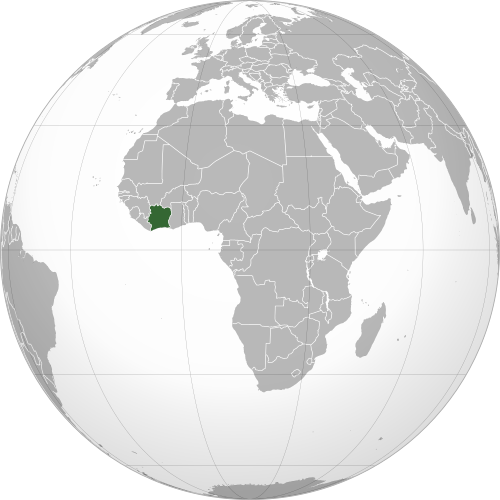
Abidjan, “Paris of West Africa” in the 1970s, had a handful of recording studios capable of rivaling Paris or London. The sole JBZ, the Cocody studio opened in 1982 by Frenchman Jacques Bizollon, saw over a thousand artists pass through in thirty years — including Alpha Blondy, Sam Mangwana and hundreds of musicians from all over Francophone Africa. How did Côte d’Ivoire, a country of exceptional cultural mixing, become the hub of West African music, from Ernesto Djedje to tomorrow’s DJs?
The golden age of Abidjan: when the capital welcomed all of Francophone Africa
Between 1975 and 1980, Abidjan was the great capital of Francophone music production in Africa. Political and economic stability under President Félix Houphouët-Boigny attracted producers, labels and artists from Senegal, Mali, Zaire, Cameroon. Studios like JBZ, the record label Sacodis by Aboudou Lassissi, Gbadamassi Raïmi’s Badmos label, or Sako Productions, launched sounds that would cross borders. “Abidjan is an Eldorado: Sam Mangwana, Salif Keita, and before them Manu Dibango — who directed the RTI orchestra — all passed through there,” reports ethnomusicologist Wolfgang Bender in Sweet Mother: Modern African Music (1991).
It was also the era when Ivorian musical identity consolidated, a mixing of rhythms from within the country and external influences. Haitian compas, Congolese rumba, American soul rubbed against the traditional dances of the Bété, Baoulé, Sénoufo, Dan and Akan peoples. “The opening to external influences, which sometimes slowed development, also enriched the Ivorian scene,” notes Ronnie Graham in Stern’s Guide to Contemporary African Music (1988).
Did you know? Côte d’Ivoire is a true crossroads of peoples: Danks (west/south), Akan (center/east), Sénoufo and Lobi (north), Bambaras (northeast). Each ethnicity brings its dances, drums and language — and this diversity makes the distinctiveness of the Ivorian sound.
Ernesto Djedje and Ziglibithy: a style born of fusion
Ernesto Djedje (1947–1983) embodies this era. Born in Tahiragué, in the Daloa region, son of a Wolof Senegalese father and Bété mother, he discovered music as an adolescent by joining at 15 the Ivoiro Star, an orchestra led by the legendary Amédée Pierre, star of dopé1 — the popular style of Ivorian party nights in the 1960s. In 1968, Ernesto went to Paris, where Cameroonian saxophonist Manu Dibango arranged for his first sessions. Returning to Côte d’Ivoire in 1972, he formed the Orchestre San Pedro, then Les Ziglibithiens.
It was there that Ziglibithy2 was born — “a synthesis of afro-beat and Congolese rumba, a sample from the musical mix of Francophone Africa,” Bender describes. Ernesto Djedje’s music highlights the 6/8 rhythms of the Bété country, weaving sinuous guitar lines punctuated by brass, African percussion and organ. His first album, Ziboté, recorded in 1977 at the Badmos studio in Lagos with producer Gbadamassi Raïmi, was a triumph. Le Roi du Ziglibithy and Aguissé followed — records now very rare, reissued on CD by the German label Popular African Music.
The “king of Ziglibithy” was honored by President Houphouët-Boigny in 1982 for his contributions to national culture. He died brutally in June 1983, at 35, from an untreated ulcer — poisoning rumors were already circulating. But his legacy survived: Ziglibithy became a huge success on the Colombian Caribbean coast, where the track Zighlibitiens was renamed “El Tigre” and became an absolute hit in the clubs of Barranquilla and Cartagena, carried by sound system operators3.
Alpha Blondy, Tiken Jah Fakoly and the voices of Ivorian reggae
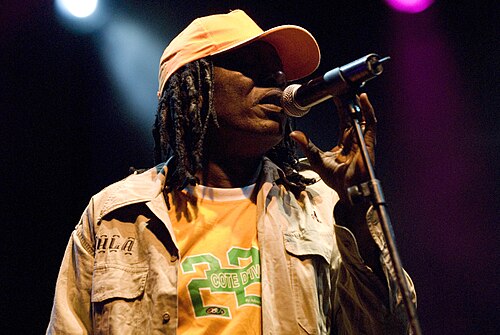
In 1981, a young man with a shaved head and singular style climbed onto the set of “Première chance,” the flagship show of Ivorian television hosted by his friend Fulgence Kassi. His name was Seydou Koné and he now goes by Alpha Blondy. Born on January 1, 1953 in Dimbokro and raised by his grandmother, he crossed Liberia, the United States (New York, Texas), where he discovered reggae at a Burning Spear concert in Central Park, then suffered psychiatric hospitalization after a traumatic return4.
His first album, Jah Glory (1982), recorded in one day at the JBZ studio, contains Brigadier Sabari — a title that made him an international star. The song recounts a police raid in the streets of Abidjan where a young man is “folded like a parachute” at the bottom of a truck. “The Ivorians discovered that one could sing reggae in an African language,” explains Alpha Blondy. “The dioula I speak is not that of Abidjan, ’eau-de-javellisé’, it’s the rural one, that of my grandmother”5.
The artist then signed with EMI and recorded at the famous studio Tuff Gong by Bob Marley in Jamaica — Cocody Rock (1984) and the following album with the Wailers6. Commitment, spirituality and pacifist messages nourished him throughout his career: Apartheid is Nazism (1985), Jerusalem (1996), Dieu (1994). In 2005, the UN named him Messenger of Peace for Côte d’Ivoire.
In Alpha Blondy’s wake, Tiken Jah Fakoly (born Doumbia Moussa Fakoly in 1968 in Odienné) imposed an even sharper voice. Coming from a family of griots7 — these custodians of the Mandingo oral tradition — he founded the group Djelys in 1987. Cours d’histoire (1999) and especially Françafrique (2002), awarded a Victoire de la Musique in 2003, made him the spokesperson for African injustices. Threatened with death, he has lived in exile in Bamako since 20038.
Zouglou, coupé-décalé and music as an escape
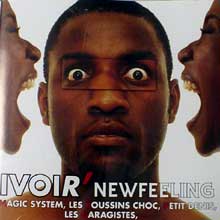
The 1990s and 2000s saw the emergence of new sounds, responding to the hopes and disillusionments of an Ivorian youth. Zouglou9, born in the early 1990s among university students in Abidjan, blends simple percussion, call-and-response structures, and satirical lyrics about social realities. The group Magic System — formed in 1996 in Anoumabo by Salif « A’Salfo » Traoré and three friends — brought zouglou to the international stage. Premier Gaou (1999), remixed by Bob Sinclar in 2002, reached the French charts. Bouger Bouger (2005) and Magic in the Air (2014) — the latter becoming the anthem of the French national football team at the World Cup — consolidated their status10.
This was also the era of the birth of coupé-décalé11 — a dancing style born in Parisian clubs and Abidjan maquis at the beginning of the 2000s, halfway between zouglou, Congolese ndombolo, and Ivorian rhythms. Douk Saga (deceased in 2006), DJ Arafat — the « king of coupé-décalé » — and DJ Mix Premier are the founding figures. Coupé-décalé, which means « cut and run » in Ivorian slang (nouchi), embodies a philosophy: play, evasion, resilience. It developed during the Ivorian civil war (2002–2007) as music of distancing and joy in adversity12.
DJ Arafat (Ange Didier Houon, 1986–2019) modernized the sound, infusing it with rap vocals and minimalist arrangements with deep bass. Discovered in Yopougon clubs, he released nineteen albums in fifteen years, extending coupé-décalé to Europe, Central Africa, and North America. His death on August 12, 2019, in a motorcycle accident in Abidjan, moved the entire continent13.
Post-Arafat: between heritage and renewal
Today, the Ivorian scene is not limited to zouglou or coupé-décalé. Artists like Ariel Sheney (producer and musician who collaborated with Arafat), DJ Kedjevara, or Shado Chris keep coupé-décalé alive while integrating Nigerian afrobeats and South African amapiano influences14. Independent producers record via streaming and broadcast directly on platforms. Abidjan now counts around twenty modern studios15.
Coupé-décalé itself is no longer purely an Ivorian phenomenon: it resonates in Lagos, Kinshasa, Douala, and Paris. Artists like Magic System continue to tour, while the Ivorian diaspora — in London, Toronto, Montreal — carries the sound into new territories. The year 2024 saw Magic System’s hit Akwaba chosen as the anthem of AFCON 2025, winning the Manie Musicale award16.
Fifty years after the birth of Ziglibithy, Côte d’Ivoire remains a musical laboratory — a crossroads of peoples, languages, and styles. As Manu Dibango wrote about Cameroon, it affirmed that « electric Africa exists ». The Ivorian sound, from Ernesto Djedje to Ariel Sheney, is that Africa: urban, connected, dancing, always in motion.
Sources
-
Ronnie Graham, Stern’s Guide to Contemporary African Music, vol. 1 (Zwan Publications, 1988), chap. « Côte d’Ivoire », p. 117–125. https://www.discogs.com/label/160511-Badmos ↩︎
-
Wolfgang Bender (éd.), Sweet Mother: Modern African Music (University of Chicago Press, 1991), chap. « Francophone Connections », p. 87–89. ↩︎
-
Pan African Music, « Ernesto Djédjé : king of ziglibithy, father of the ziglibithiens », October 10, 2022. https://pan-african-music.com/en/ernesto-djedje-king-of-ziglibithy ↩︎
-
François Bensignor, « Biographie de Alpha Blondy », Afropop Worldwide. https://www.afromix.org/html/musique/artistes/alpha-blondy/bio.fr.html ↩︎
-
Bertrand Lavaine, « Les 30 ans de Brigadier Sabari », RFI Musique, May 22, 2012. https://www.rfi.fr/fr/musique/20120522-les-30-ans-de-brigadier-sabari ↩︎
-
Wikipedia, « Alpha Blondy ». https://en.wikipedia.org/wiki/Alpha_Blondy ↩︎
-
RFI Musique, « Tiken Jah Fakoly », December 6, 2021. https://rfi.fr/fr/musique/20211206-tiken-jah-fakoly ↩︎
-
Wikipedia, « Tiken Jah Fakoly ». https://en.wikipedia.org/wiki/Tiken_Jah_Fakoly ↩︎
-
OkayAfrica, « 10 Musicians From Côte d’Ivoire You Should Be Listening To », March 12, 2018. https://www.okayafrica.com/10-musicians-from-cote-divoire-you-should-be-listening-to/243922 ↩︎
-
The New York Times / Daily Red Bull Music Academy, « Key Tracks: Magic System’s “1er Gaou” », 2019. https://daily.redbullmusicacademy.com/2019/10/key-tracks-1er-gaou-magic-system ↩︎
-
Queen Babee, « The legacy of DJ Arafat and how he took the Coupé Décalé sound to the world », Quartz Africa, August 14, 2019. https://qz.com/africa/1689772/the-pan-african-legacy-of-coupe-decales-dj-arafat ↩︎
-
DJ Arafat — Wikipedia. https://en.wikipedia.org/wiki/DJ_Arafat ↩︎
-
Grokipedia/Quartz Africa. https://grokipedia.com/page/DJ_Arafat ↩︎
-
OkayAfrica (2018, cf. note 9). ↩︎
-
Apple Music — « IVORY COAST » artist page. https://music.apple.com/za/artist/ivory-coast/828981564 ↩︎
-
Record Club — Magic System discography. https://record.club/artists/magic-system ↩︎