Biography
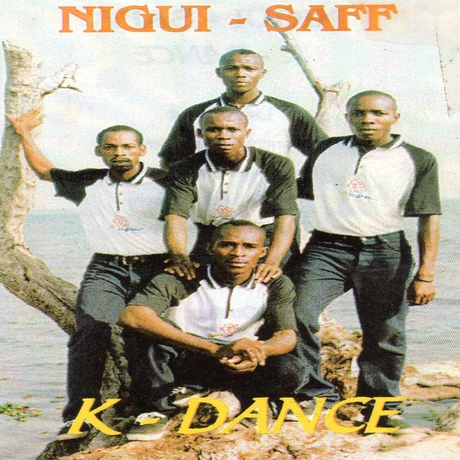
Nigui Saff K-Dance: the ambassadors of mapouka
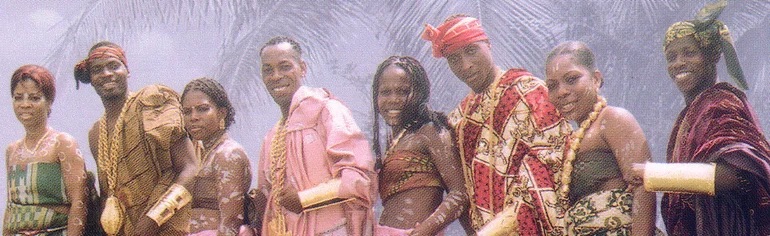
On the Ebrié lagoon, by an improvised concrete stage, the drums pick up speed. The dancers from the village of Nigui Saff, 70 km from Abidjan, move only their hips while the musicians strike two drums, castanets and bells1. This tableau, born in the fields of southern Côte d’Ivoire at the end of the 1980s, crossed the continent’s borders. The mapouka, a traditional Avikam dance from around Grand-Lahou, conquered Africa and Europe thanks to Nigui Saff K-Dance.
In brief
| Group name | Nigui Saff K-Dance |
| Place of formation | Nigui Saff, Jacqueville, Côte d’Ivoire |
| Genre | Mapouka (traditional Avikam dance modernized into popular music) |
| Activity period | 1997–2010, return in 2024 |
| Founder | Dr Albert Pitté |
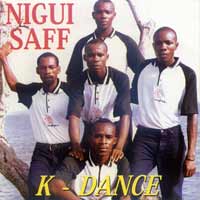
| Lineup | 4 dancers, 5 musicians |
| Emblematic works | Tchita, Hoza, Sozo (5th speed) |
| Major distinctions | Kora Awards 1999 — best traditional group in Africa |
Key dates
| Year | Event |
|---|---|
| 1988 | Avié Emmanuel, village constable, transforms the Ahoussi ritual into mapouka by immobilizing his daughter’s hips2. |
| 1988 | Creation of the Nigui Saff Ambiance Facile group, which animates local ceremonies. |
| 1997 | Dr Albert Pitté founds Nigui Saff K-Dance to record original mapouka, after a rival group copied six of their tracks3. |
| 1998 | Release of the album Tchita in February, the group’s first official recording. |
| 1999 | Victory at Kora Awards: best traditional group in Africa, before 300 million viewers. Selection at MIDEM in Cannes4. |
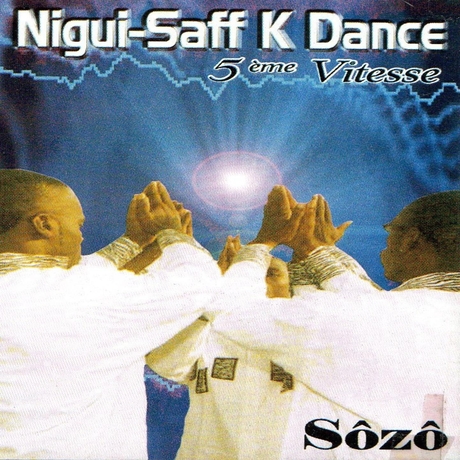
| 2005 | Release of Sozo (5th speed), album produced by Dr Albert Pitté5. |
| 2006 | Tour in Germany to promote Côte d’Ivoire at the Football World Cup6. |
| 2024 | Group returns with a maxi-single after several years of hibernation. |
From Ahoussi to mapouka: the invention of a style
The mapouka draws its roots from the lagoon communities in southern Côte d’Ivoire, among the Ahizi, Alladian, Dida and Avikam peoples. The word comes from mapoukate, which in Ahizi language means “to put everything in safety”7. A practical explanation: women had to settle household affairs before dancing, because the rhythm was so enchanting that one stopped thinking about anything else.
In 1988, Avié Emmanuel, constable of the Nigui Saff village, transformed this ritual. He immobilized his young daughter’s hips and asked her to move only the gluteal muscles. The entire village took up the experience. The Nigui Saff Ambiance Facile group then animated ceremonies from Jacqueville to Bouaké.
But in 1997, a rival group from the neighboring village of Tiami copied six tracks by Nigui Saff on a cassette. Under the impetus of Dr Albert Pitté, village son and enthusiastic promoter, the founders decided to record professionally. Nigui Saff K-Dance was born from this will8.
Consecration and return
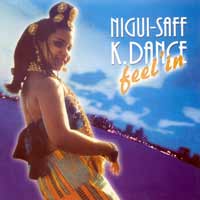
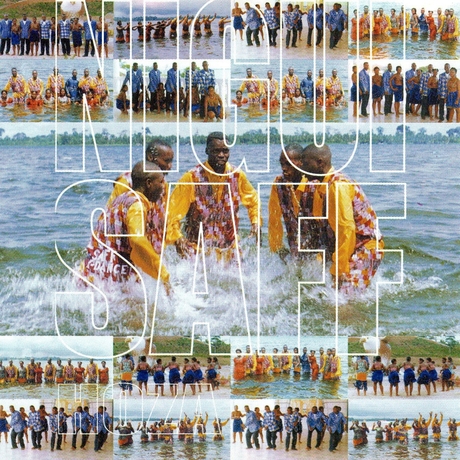
The year 1999 marks a turning point. The group was selected at the Kora Awards in Johannesburg and won the prize for best traditional group in Africa. It also took home the Oscar for best ambiance group and best mapouka in 1999. The group was invited to MIDEM in Cannes, embarked on tours in France, Holland, Cameroon, Gabon, and then was appointed to the Ivorian Order of Cultural Merit9. Albums followed one another: Tchita (1998), Hoza (1999), Feeli’in, Sozo (5th speed) (2005), all under the banner of Dr Pitté.
After more than a decade of absence, the group reappeared in November 202410. Manager Gervais Bozoua announced: “The group is now here, at the disposal of all of Côte d’Ivoire.” Two new tracks, Beauté africaine and Wantchy Wantchy, were presented in Abidjan, arranged by David Tayorault. The group, still composed of four dancers and five musicians, confirmed its intention to reclaim its role as ambassador of mapouka.
Major works
| Work | Year | Why it is essential |
|---|---|---|
| Tchita | 1998 | Group’s first album, first professional recording of mapouka |
| Hoza | 1999 | Album of the year for consecration, before victory at Kora Awards |
| Sozo (5th speed) | 2005 | Last major documented album, 10 tracks under Dr Pitté’s production |
| Best Off (Original Mapouka) | 2012 | Compilation that crystallizes the classic repertoire |
Legacy
Nigui Saff K-Dance accomplished what few groups from a village of 3,000 inhabitants had managed: to impose a traditional dance on the continental stage. The mapouka, born in the lagoon fields of southern Côte d’Ivoire, became one of Africa’s most widespread dance rhythms. Although the dance was banned on television in 1998 by the National Council for Audiovisual Communication, this only accelerated its diffusion in Europe. The group trained a generation of dancers and musicians. Its motto, reported by Dr Pitté, remains in the background: “Any action built on the foundation of tradition is like a rock and can only know a great destiny”11.
Sources and references
-
RFI Musique, LE MASA EN BROUSSE, article by Jean-Jacques Dufayet, March 2001, accessed October 29, 2026 ↩︎
-
Rezo-Ivoire, Nigui saff terre du mapouka, ivoirian heritage, accessed October 29, 2026 ↩︎
-
Rezo-Ivoire, Nigui saff terre du mapouka, section on the genesis of the group, accessed October 29, 2026 ↩︎
-
BBC News, Fassie and Kuti take the prize, BBC Africa, 1999, accessed October 29, 2026 ↩︎
-
Discogs, Nigui-Saff K Dance, discographic profile, accessed October 29, 2026 ↩︎
-
Discogs, Nigui-Saff K Dance, discographic profile, accessed October 29, 2026 ↩︎
-
Melodigging, Mapouka (genre), historical description, accessed October 29, 2026 ↩︎
-
Rezo-Ivoire, Nigui saff terre du mapouka, section on the recording decision, accessed October 29, 2026 ↩︎
-
Wikipedia FR, Nigui Saff K-Dance, group itinerary, accessed October 29, 2026 ↩︎
-
Le Patriote CI, Music: The Nigui Saff K-Dance group returns, November 2024, accessed October 29, 2026 ↩︎
-
Wikipedia FR, Mapouka, article on traditional dance, accessed October 29, 2026 ↩︎