Biography
Petit Denis: the voice of zouglou who conquered Africa
In 1996, a young man from Tabou, the fishing port in southwest Côte d’Ivoire, released a title that would shake the foundations of Ivorian power: “Zigbogbolôh”. In a few months, Petit Denis imposed zouglou — this style born in the university campuses of Abidjan where youth denounced society’s flaws with catchy choruses — not only in Abidjan, but across the entire continent.
In brief
| Full name | Denis Koulaté |
| Nicknames | El Capo, Denco, Oh Pah (“papa” in Bété country) |
| Birth | September 23, 1976, Tabou, Bas-Sassandra, Côte d’Ivoire |
| Field | Singer, lyricist, composer |
| Genres | Zouglou |
| Emblematic works | Tournoi, Pour votre propre sécurité, Lampedusa |
| Distinctions | Kora Award (2004) |
Key dates
| Year | Event |
|---|---|
| 1976 | Birth in Tabou, Bas-Sassandra, to Kla Hinéné Henriette |
| ~1991 | Move to Gbatanikro (Treichville, Abidjan), the neighborhood that gave birth to zouglou |
| 1996 | Release of album Tournoi and hit “Zigbogbolôh” |
| 1998 | Second album: Mon Gbêssê |
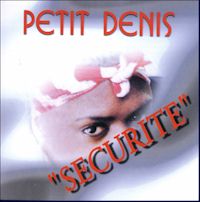
| 2001 | Pour votre propre sécurité, the album that solidified his continental fame |
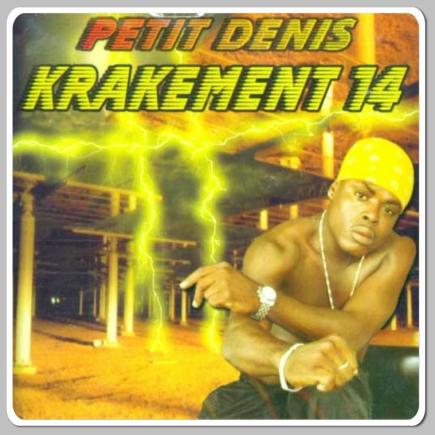
| 2002 | Krakement 14 |
| 2004 | Winning the Kora Award, pan-African music prize |
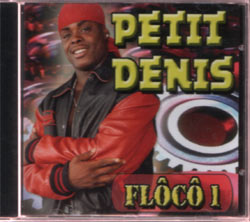
| 2005 | Flôcô 1 |
| 2006 | Record concert at Abidjan’s Palais de la Culture (6,500 spectators for 4,500 seats) |
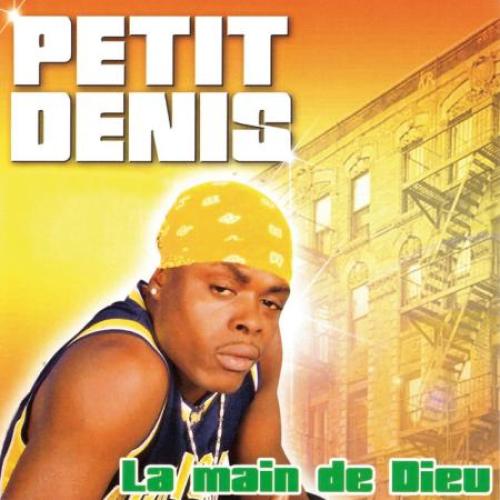
| 2007 | La Main de Dieu |
| 2016 | El Capo, featuring Kamnouze, Singuila, Youssoupha |
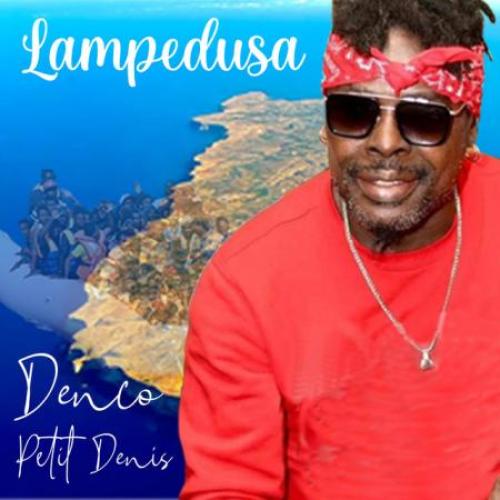
| 2022 | Release of Lampedusa, EP on African migration |
Journey: from Tabou to the continent
Denis Koulaté was born into a modest family in Bété country, a coastal region of Bas-Sassandra. As an adolescent, he left Tabou for Abidjan and settled in Gbatanikro, a popular neighborhood in Treichville at the heart of creative ferment. It was there that zouglou took root: students from Yopougon, frustrated by the economic crisis of the 1990s, invented a style where nouchi — Abidjan’s popular French — blended with dance rhythms and lyrics that spared no one. Petit Denis absorbed this atmosphere and took his first steps within the group Poussin Choc, a formation that later gave rise to Yodé and l’Enfant Siro. His nickname “Oh Pah” (“papa” in Bété country) and his stage name, Petit Denis, reflect the humble and provocative spirit of zouglou.
The lyrics struck at abuses of power, corruption, and the illusions of Ivorian youth. The move into the spotlight occurred with Tournoi (1996), the first album, and “Zigbogbolôh”, a national hit that launched his career. It was truly Pour votre propre sécurité (2001), released by 12080180 Records DK, that solidified his fame: the tracks denounced precariousness and betrayal with black humor. Krakement 14 (2002), Flôcô 1 (2005) and La Main de Dieu (2007) confirmed an upward trajectory. Petit Denis conquered audiences in Burkina Faso, Mali and Ghana. In November 2006, his ten years of career led to a record concert: more than 6,500 spectators crowded into Abidjan’s Palais de la Culture, a venue designed for 4,500 seats. Continental recognition came in 2004 with the Kora Award, a pan-African prize awarded by African World Group.
After El Capo (2016), an album available for download only on Wumb Label and A Phoenix Musique with collaborations from francophone artists (Kamnouze, Singuila, Black Kent, Youssoupha, Jango Jack), Petit Denis gradually withdrew from the scene. Rumors of his death circulated on social media, denied in November 2023 by his producer Paul Anthony in L’Avenir.ci. Away from the spotlights, the artist lives between Abidjan and San Pedro with his wife Lydie and their three children. His occasional television appearances, featuring “Tchôkôrôba”, remind us that he has not finished letting his voice be heard in the inimitable nouchi.
Major works
| Work | Year | Why it’s essential |
|---|---|---|
| Tournoi | 1996 | First album and career launch with “Zigbogbolôh” |
| Pour votre propre sécurité | 2001 | The pivotal album that imposed zouglou on the continental stage |
| Krakement 14 | 2002 | Confirmation of the style: humor, social critique, raw energy |
| La Main de Dieu | 2007 | Artistic maturity: spirituality and resilience |
| El Capo | 2016 | Return with francophone features and zouglou-hip hop fusion |
| Lampedusa | 2022 | Poignant EP on African migratory crossings |
Legacy
Petit Denis remains one of the founding figures of zouglou, alongside Magic System, Yodé & Siro and Espoir 2000. His career spanned the political upheavals of Côte d’Ivoire — 1999 coup d’état, post-electoral crisis of 2010-2011 — and his music continues to be referenced as a sonic testimony of that generation. Zouglou, carried by this wave, has since given way to coupé-décalé, but its influence can be read throughout contemporary Ivorian hip hop. Lampedusa, released in 2022, proves that the singer has not lost his relevance.
Sources and references
-
“Petit Denis”, Wikipedia, https://fr.wikipedia.org/wiki/Petit_Denis, accessed October 23, 2026.
-
“Zouglou”, Wikipedia, https://en.wikipedia.org/wiki/Zouglou, accessed October 23, 2026.
-
“Zouglou and Current Socio-Political Issues in Côte d’Ivoire”, Johns Hopkins University Press (ISOLA), https://muse.jhu.edu/article/471992, accessed October 23, 2026.
-
“Petit Denis”, Music In Africa, https://www.musicinafrica.net/node/8393, accessed October 23, 2026.
-
“KORA Awards 2004 Highlights”, Kora Awards, https://www.youtube.com/watch?v=toakfftgyWs, accessed October 23, 2026.
-
“Kora Awards”, Wikipedia EN, https://en.wikipedia.org/wiki/Kora_Awards, accessed October 23, 2026.
-
Bakayoko Bema, “Petit Denis is indeed alive”, L’Avenir.ci, 9 November 2023, https://www.lavenir.ci/people/6384-petit-denis-bel-est-bien-vivant, accessed 23 October 2026.
-
“PETIT DENIS”, Evasion.bf, https://evasion.bf/petit-denis-2/, accessed 23 October 2026.