
Biography
Alhaji Bai Konte
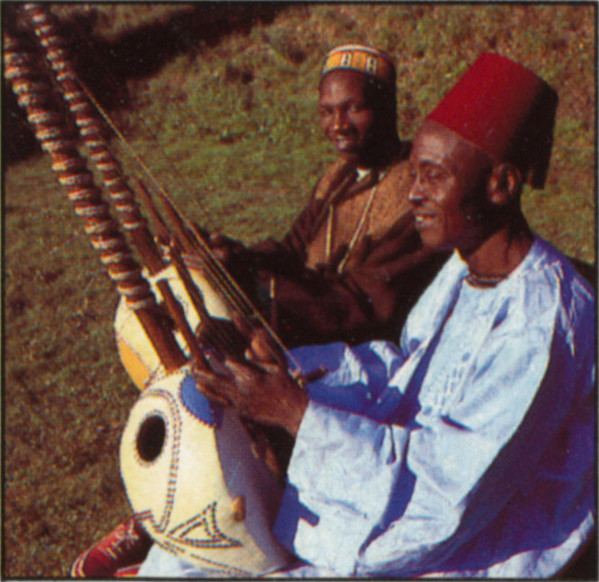
In 1973, on the sun-drenched stage of the Newport Jazz Festival in Rhode Island, a man in his sixties tuned the 21 strings of his wooden instrument. The sound that emerged, as fluid as it was powerful, bore no resemblance to anything the American public had ever heard. For the first time, a kora — this Manding harp-lute with its crystalline tone — resonated before thousands of Western listeners. This man, Alhaji Bai Konte, had just laid the first stones of a musical bridge between West Africa and the world.
In Brief
| Full Name | Bai Konte, known as Alhaji Bai Konte (after the pilgrimage to Mecca) |
| Birth | 1920, Brikama (now the Western Coast region), Gambia |
| Death | 1983 (some sources indicate 1986), Brikama, Gambia |
| Field | Kora (21-string harp-lute), Manding music |
| Notable Works | Kora Melodies from the Republic of The Gambia (1973), Gambian Griot Kora Duets (1979) |
| Honors | First Gambian griot to perform solo in the United States; album recommended by the New York Times |
Key Dates
| Year | Event |
|---|---|
| 1920 | Birth in Brikama, into a line of jeli (griot) Manding |
| 1970–1972 | Welcomed Marc and Susan Pevar into his family; first recordings of the kora |
| 1973 | Debut in the United States, Newport Jazz Festival; release of Kora Melodies (Rounder Records) |
| 1973–1980 | Intensive North American tour: festivals, NPR, television, universities |
| 1970s | Regular host of Chossani Senegambia, the shared history program on Radio Gambia / Radio Sénégal |
| 1978 | Release of the album Gambia’s Music (Folkways Records) |
| 1979 | Gambian Griot Kora Duets with his son Dembo and xalam player Malamini Jobarteh (Folkways) |
| 1982 | Kora Music and Songs from the Gambia (Virgin Records) with Dembo and Malamini Jobarteh |
| 1986/1983 ? | Death in Brikama, Gambia |
Griot Roots and the American Turning Point
Bai Konte belongs to a dynasty of jeli (griots) Manding whose origins trace back to the Kangaba region in Mali. His grandfather, Jali Ndaba Konteh, a konting (ngoni) player, had relocated the family to Brikama in Gambia. His father, Burama Konte, was a celebrated koraist who composed Yundum N’ko, the hymn of the Senegambian hero Mansumaneh Yundum. It was within this oral tradition that Bai Konte grew up, learning ancestral pieces and mastering the kora — this 21-string instrument, a wooden harp-lute that serves both as musical accompaniment and living archive of Manding genealogies and epics.
When American anthropologists Harold Gunn and Anthony King began recording koraists in Gambia during the 1970s, they identified Bai Konte as the musician holding the most extensive repertoire of pieces and arrangements. In 1971, Marc Pevar and his wife Susan settled within the Konte family for a year. It was there, in the daily life of the village, that the first recordings were made — not in a studio, but under the Gambian sun, with portable devices unplugged. Bai Konte himself encouraged his host to help him perform in the United States: “I want to take my kora to America,” he confided.
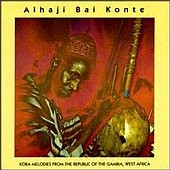
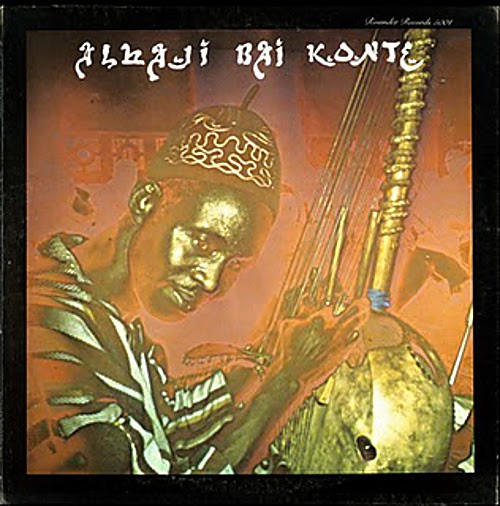
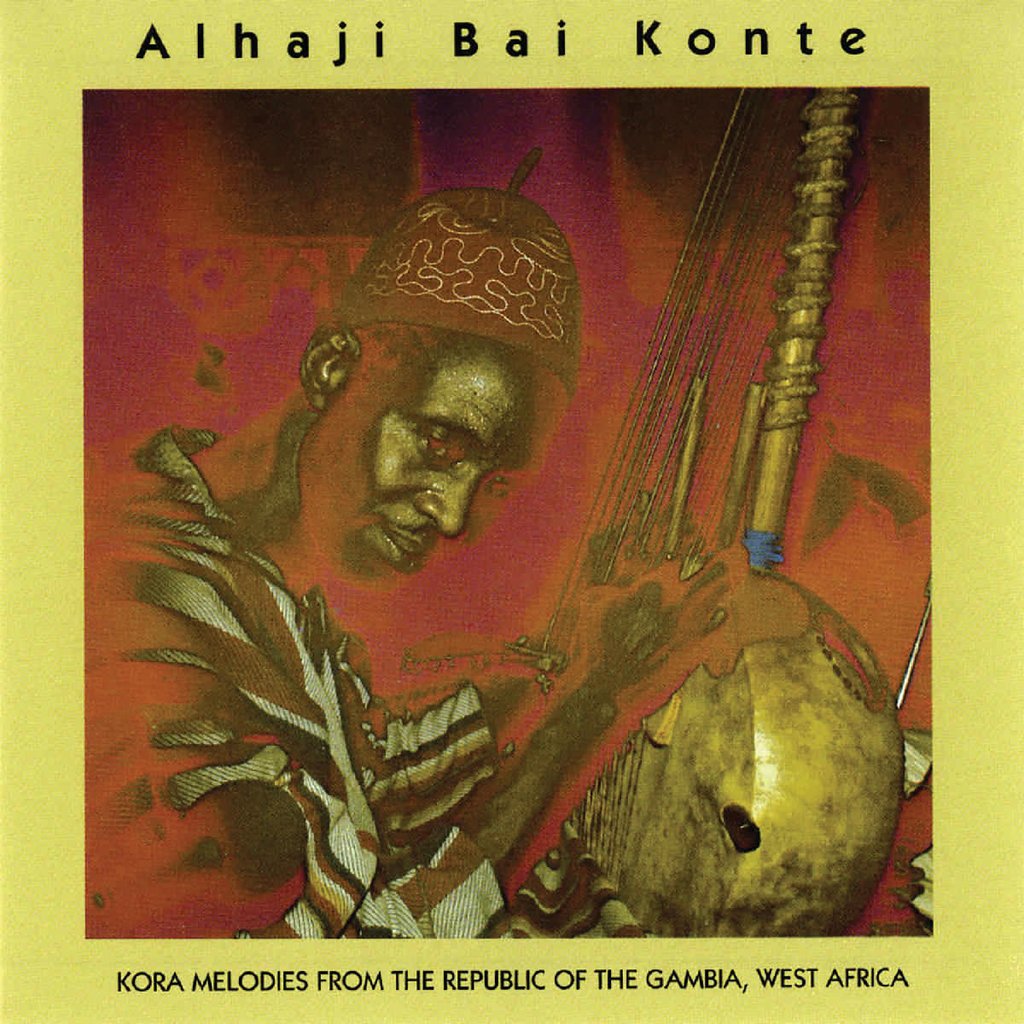
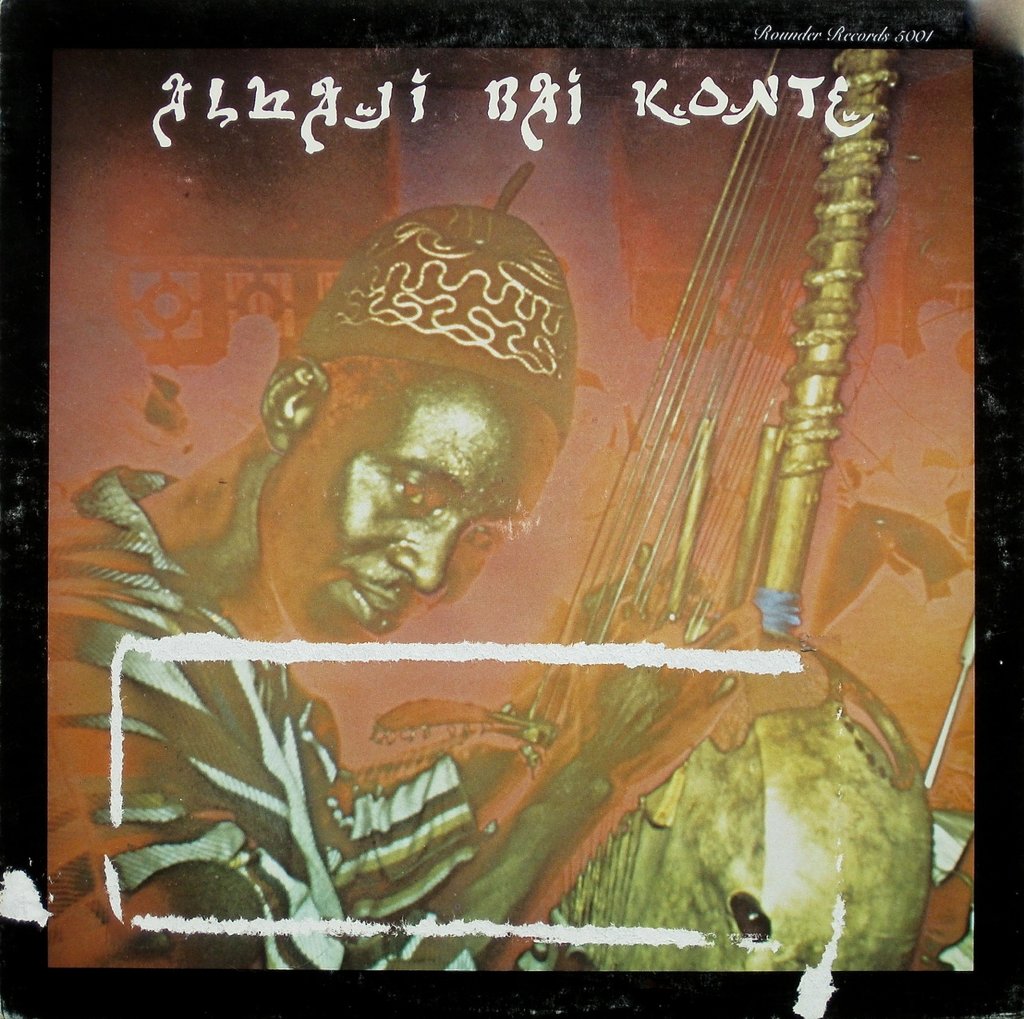
Thus, by 1973, he stepped onto the stage of the Newport Jazz Festival. The album Kora Melodies from the Republic of The Gambia, West Africa, released by Rounder Records that same year — recorded from the tapes Pevar had brought back from Africa and edited with the active participation of the musician himself — immediately received praise from Robert Palmer, music critic for the New York Times. The kora, until then confined to ethnomusicologist circles, entered the arena of the general public.
An International Career in Seven Years
Between 1973 and 1980, Bai Konte toured the United States as well as Europe, sharing stages at major folk and jazz festivals: Philadelphia Folk Festival, National Festival of American Folklife in Washington, Mariposa in Ontario, Clearwater Folk Festival, as well as numerous universities (University of Pennsylvania, Lincoln University). He appeared on Terry Gross’s Fresh Air on NPR, on PBS in the show Jump Street, and responded to interviews with several American newspapers. His style, linked to the Casamance school, was distinguished by vigorous improvisations, strings tuned higher than average (giving a bright tone that has since become very common), and the use of rhythmic percussion on the instrument’s body, played by a second musician.
Parallel to his musical life, Bai Konte assumed the spiritual role of his father: as a marabout, he mastered Quranic Arabic, wrote amulets, and dedicated part of each day to study and spiritual guidance. His sons Dembo and Sherrifo, raised at Konte Kunda under their grandfather’s care, took up the kora; Jali Sherrifo Konteh also recorded two CDs under his name and regularly tours the United Kingdom. The family legacy extends to their grandchildren, musicians now recognized as the Great Gambian Griots.
Major Works
| Work | Year | Why It Is Essential |
|---|---|---|
| Kora Melodies from the Republic of The Gambia | 1973 | First international kora album, acclaimed by the New York Times and a historical marker |
| Gambia’s Music (La musique de al Gambie) | circa 1978 | Sound anthology of Gambian music, published by Smithsonian Folkways |
| Gambian Griot Kora Duets (with Dembo Konte and Malamini Jobarteh) | 1979 | Duets between kora and xalam, reissued by Smithsonian Folkways in 1997 |
| Kora Music and Songs from the Gambia (with Dembo and Malamini) | 1982 | Last major recording made while Bai Konte was alive, on Virgin Records |
Heritage and influence
Alhaji Bai Konte’s breakthrough paved the way for an entire generation of kora players who, since the 1980s, have taken to international stages — from Ballaké Sissoko to Toumani Diabaté. The impact is twofold: on one hand, global visibility for an instrument once confined to West Africa; on the other, recognition of the jeli as a solo artist and no longer merely as an accompanist for dance or a figure of folklore. His recordings remain essential references for anyone exploring Manding music, and the recordings by his grandsons from Great Gambian Griots continue to carry his living musical memory, confirming that a griot tradition is transmitted not only through words — but through sound that never dies.
Sources and references
- « Bai Konte », Wikipedia, https://en.wikipedia.org/wiki/Bai_Konte, accessed November 9, 2026.
- « Alhaji Bai Konte Biography », AllMusic, https://www.allmusic.com/artist/alhaji-bai-konte-mn0000003544, accessed November 9, 2026.
- « Kora Melodies from the Republic of The Gambia, West Africa », Concord/Rounder Records, https://concord.com/concord-albums/alhaji-bai-konte-kora-melodies-from-the-republic-of-the-gambia-west-africa/, accessed November 9, 2026.
- Marc Pevar and Susan Pevar (interviews), Tape Op Magazine, https://tapeop.com/interviews/159/marc-pevar-susan-pevar, accessed November 9, 2026.
- « Alhaji Bai Konte (Musician) », Access Gambia, https://www.accessgambia.com/information/alhaji-bai-konte.html, accessed November 9, 2026.
- « Konte, Bai », Library of Congress Authorities, https://id.loc.gov/authorities/names/nr92000670.html, accessed November 9, 2026.
- « Parables: Music of Jali Bakary Konteh & Mafu Conteh », Contemporaneous Ensemble, https://www.contemporaneous.org/upcoming-events/2023/10/10/parables-music-of-jali-bakary-konteh-and-mafu-conteh, accessed November 9, 2026.
- « Rate Your Music — Alhaji Bai Konte discography », RateYourMusic, https://rateyourmusic.com/artist/alhaji-bai-konte, accessed November 9, 2026.