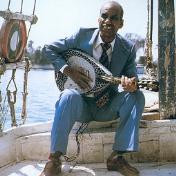
Biography
Ali Hassan Kuban: the James Brown of Nubian music
Born in a lost village along the Nile, Ali Hassan Kuban spent his life weaving a bridge between the ancestral chants of Nubia and international rhythms, shaking concert halls around the world.
In brief
| Full name | Ali Hassan Kuban (علي حسن كوبان) |
| Birth | 1929 – Qawra, Nubia, Egypt |
| Death | June 25, 2001 – Cairo, Egypt |
| Field | Nubian music, world music |
| Iconic works | From Nubia to Cairo (1980), Walk Like a Nubian (1991) |
| Awards | Berlin-Heimatklänge Festival Prize (1989), Golden Assembly of the German folk festival (1990) |
Key dates
| Year | Event |
|---|---|
| 1929 | Birth in Qawra, Southern Nubia |
| 1944 | Move to Cairo; learning of the tar (Nubian bagpipe) and trumpet |
| 1947 | Joining the Nubian Scouts in Abidine; structured musical training |
| 1949 | Debut at the Cairo Opera before King Farouk |
| 1957 | Creation of Egypt’s first professional Nubian band |
| 1964 | Forced displacement of Nubians by the Aswan High Dam; his music becomes the song of the exiled community |
| 1989 | International breakthrough at the Berlin Heimatklänge festival; first prize |
| 1993-1995 | Midem, WOMAD, Montreal Jazz Festival, Central Park Summer Stage |
| 2001 | Death on June 25 in Cairo |
From Nubia to the world
Ali Hassan Kuban grew up in a village of Nubia, a region along the Nile where music is learned before it is read. His father, an enthusiastic merchant of song, passed on to his son the love for Nubian pentatonic melodies—these ancestral scales that echo pharaonic rhythms. At seven, the family settled in Cairo. Ali became an apprentice tailor in the Abidine district, a crossroads for exiled Nubians, but his true school was the street: he learned trumpet and tar (a Nubian bagpipe similar to the girba) by improvising on traditional chants memorized as a child.
The decisive turning point arrived when he heard, from the sidewalk of the Gezira Sporting Club, a jazz orchestra coming from Harlem. This revelation shaped his entire project: to make Nubian chants dialogue with the sounds of the modern world. In 1947, he joined the Nubian Scouts of Abidine, where he received his first structured training. Two years later, in 1949, he participated in the operetta Nubian Weddings at the Cairo Opera, before King Farouk, who offered him a silver riyal and appointed him to train the royal scouts.
In 1957, he founded the first professional Nubian music ensemble in Egypt. His band integrated Western instruments from the start—electric guitar, saxophone, accordion, trumpet—while preserving the rhythmic foundations of Nubia. The formation performed at weddings, community celebrations, and national events, selling millions of cassettes. The Aswan High Dam, inaugurated in 1964, caused the forced displacement of about 100,000 Nubians; Kuban’s music became the song of resistance and memory for an exiled community. In 1967, the Six-Day War brought him to the front to sing for Egyptian soldiers after the June defeat. His fame surpassed the Nubian community: President Sadat invited him to his wedding, and Egyptian press nicknamed him “the Egyptian James Brown.”
The door to the world opened in 1988, when a delegation of German musicians discovered him. The international breakthrough arrived at the Berlin Heimatklänge festival in 1989, in the “Luxe Orient” edition. His stage energy captivated audiences and German press. He won first prize, joined the International Union of Musicians in Berlin, and triumphed at the Berlin political song festival that same year. His album From Nubia to Cairo, re-recorded with Piranha Records, became an instant classic. James Brown, charmed by his track “The Nile,” proposed a tour to the United States and several Arab countries. The Paris Opera solicited him, and French television produced a documentary in his native village. In the 1990s, Kuban traversed the globe, directing up to seven different ensembles and employing more than sixty musicians. No Nubian celebration is complete without his presence.
Major works
| Work | Year | Why it’s essential |
|---|---|---|
| From Nubia to Cairo | 1980 | Fusion of Nubian pentatonism, funk, salsa, and Arab pop; re-recorded in 1989 for Piranha |
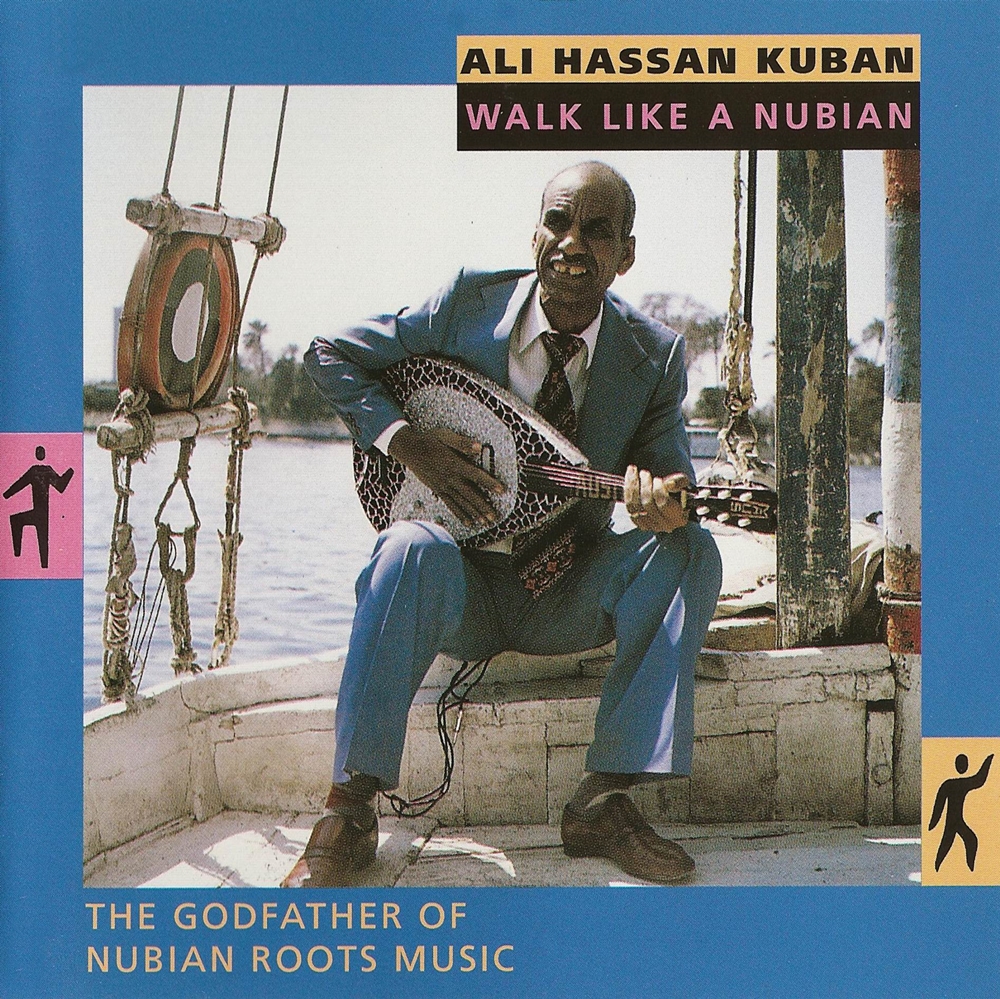
| Walk Like a Nubian | 1991 | Third place in the European world music rankings; hymn of the diaspora |
| Nubian Magic | 1995 | Consolidated Kuban style with rich arrangements and a prominent brass section |
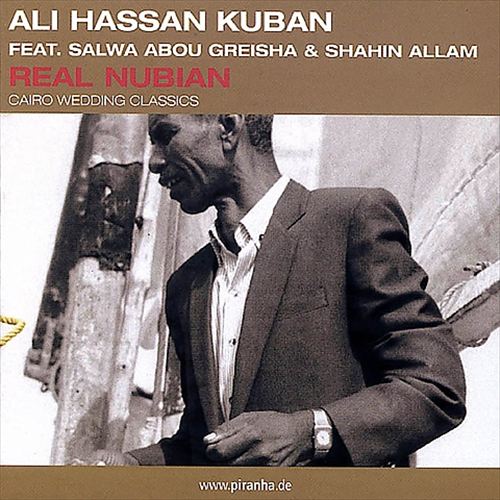
| Real Nubian: Cairo Wedding Classics | 2001 | Last album released during his lifetime, tribute to popular Nubian chants |
Legacy
Died on June 25, 2001, Ali Hassan Kuban left an unforgettable legacy: a style at the crossroads of Nubia and the entire world. His approach—keeping pentatonic roots while embracing international innovations—still inspires contemporary Nubian artists. With Hamza el Din, he remains the face of Nubian music for the world.
Sources and references
-
“Ali Hassan Kuban”, Wikipedia, https://en.wikipedia.org/wiki/Ali_Hassan_Kuban, accessed October 23, 2026.
-
“علي كوبان”, Arabic Wikipedia, https://ar.wikipedia.org/wiki/علي_كوبان, accessed October 23, 2026.
-
Myles Boisen, “Ali Hassan Kuban — Biography”, AllMusic, https://www.allmusic.com/artist/ali-hassan-kuban-mn0000743618, accessed October 23, 2026.
-
“Historic 1989 Interview with Egypt’s Ali Hassan Kuban Surfaces”, Afropop Worldwide, https://www.afropop.org/articles/check-out-this-1989-interview-with-ali-hassan-kuban, accessed October 23, 2026.
-
« Ali Hassan Kuban », Piranha Records, https://piranha.de/piranha_arts_ag/ali_hassan_kuban, accessed 23 October 2026.
-
« Ali Hassan Kuban, the James Brown of Nubian pop », Pan-African Music, https://pan-african-music.com/from-nubia-from-nubia-to-cairo/, accessed 23 October 2026.
-
« Kuban, Ali Hassan (1929-….) », General Catalogue — Bibliothèque nationale de France, https://catalogue.bnf.fr/ark:/12148/cb13956610k, accessed 23 October 2026.
-
« On Displacement and Threatened Heritage: The Case of Egypt’s Nubians », WRMEA, https://www.wrmea.org/north-africa/on-displacement-and-threatened-heritage-the-case-of-egypts-nubians.html, accessed 23 October 2026.