Biography
Babatunde Olatunji
Ajido, fishing village forty kilometers from Lagos. Every weekend, the festivals resonate: births, weddings, rites of passage. A young boy inserts himself among the musicians to watch their hands strike. His name, Babatunde, means “the father has returned”: he was born two months after his father Zannu, a fisherman destined for chieftaincy, who died before the ceremony. This son is his reincarnation. His mother shapes a first instrument for him in clay, the apasin.
In brief
| Full name | Michael Babatunde Olatunji |
| Birth | April 7, 1927, Ajido (near Badagry), Lagos, British Nigeria |
| Death | April 6, 2003 (one day before his 76th birthday), Salinas, California |
| Field | African percussion, Yoruba music, world music |
| Iconic works | Drums of Passion, Planet Drum, “Jin-Go-Lo-Ba” |
| Honors | Grammy Award 1992 (Planet Drum), Percussive Arts Society Hall of Fame |
Key dates
| Year | Event |
|---|---|
| 1927 | Birth in Ajido, fishing village near Lagos |
| 1950 | Rotary International scholarships; departure for Morehouse College, Atlanta |
| 1953 | First African dance concert on the Morehouse campus |
| 1954 | Graduated from Morehouse; NYU, public administration |
| 1958 | African Drum Fantasy at Radio City Music Hall; spotted by Columbia |
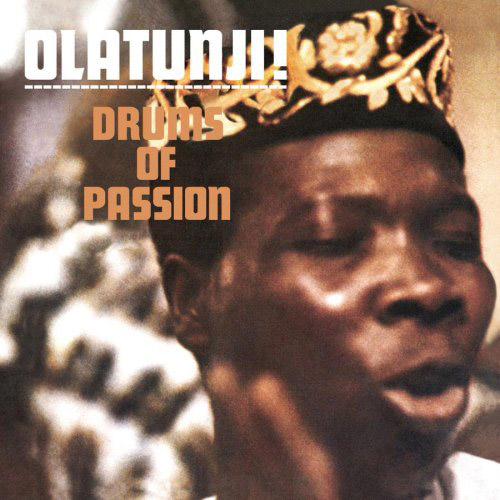
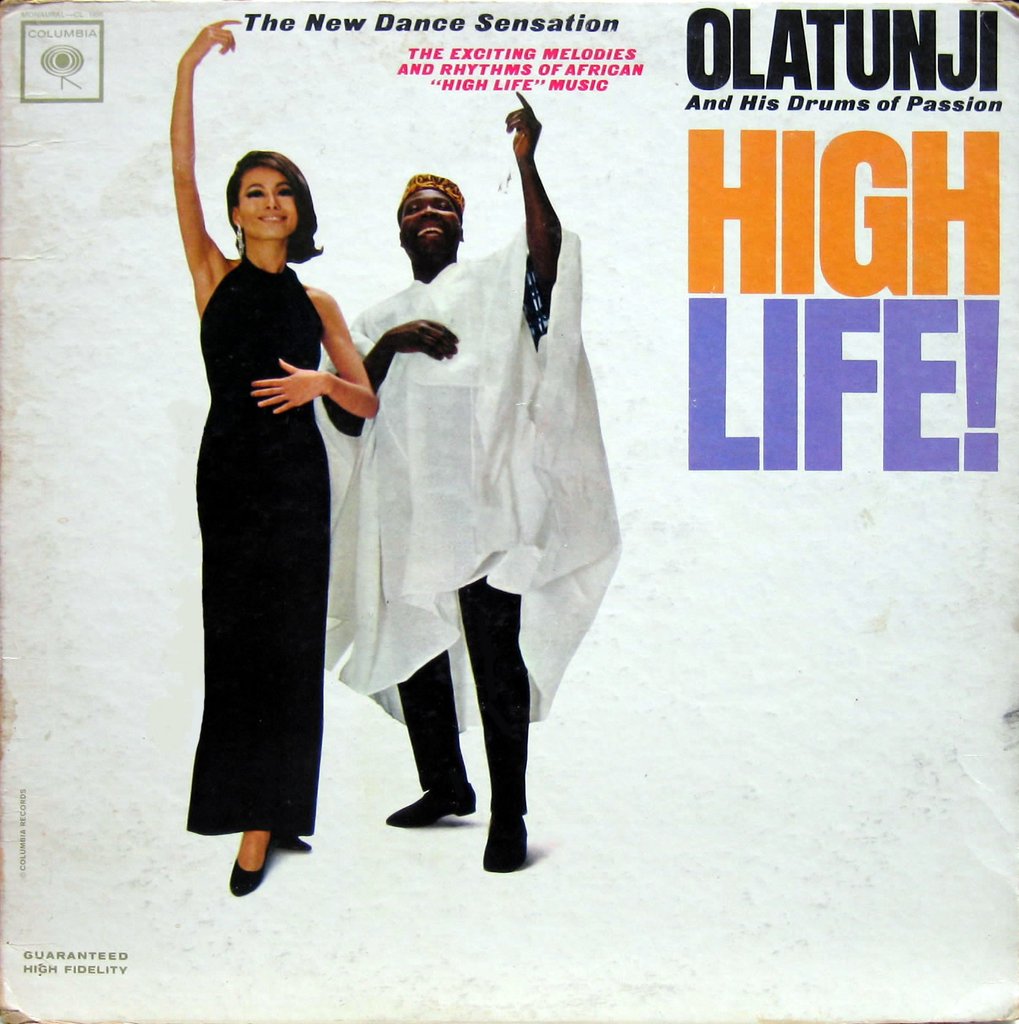
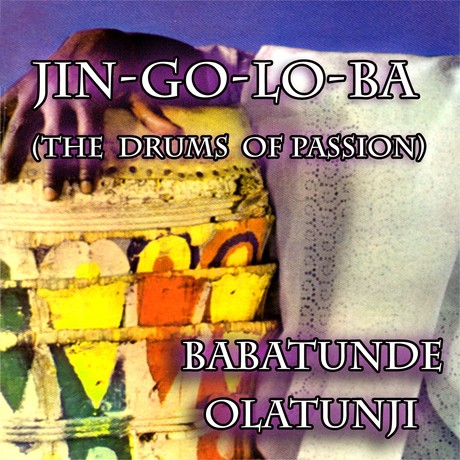
| 1959 | Release of Drums of Passion (Columbia) — global success |
| 1964–65 | Performances at the New York World’s Fair (African Pavilion) |
| 1965 | Founding of the Olatunji Cultural Center in Harlem with John Coltrane |
| 1985 | Reappearance alongside the Grateful Dead; taken up by Mickey Hart |
| 1992 | Grammy Award for Planet Drum (with Mickey Hart) — first year of the award |
| 2003 | Death in Salinas; Drums of Passion inducted into the National Recording Registry |
Origins and revelation
Babatunde grew up in a sound ecosystem where music accompanied every life event. His mother, a potter, understood his vocation and carved him a first instrument in clay. As an adolescent, he became a choir member and accompanist at the United Methodist Church in Lagos. In 1950, he went to the United States thanks to a Rotary International scholarship. At Morehouse College, he discovered African American students who were ignorant of Africa. He invited his classmates to his home, had them listen to blues and gospel while explaining the African roots of American music. In 1953, he organized the first African dance concert on campus — so successful that white spectators came from Atlanta.
In New York, he studied public administration at NYU while working in a ballpoint pen factory. In the evenings, he played at The Africa Room and founded a small percussion ensemble. In 1957, he collaborated with Raymond White, arranger for the Radio City Music Hall orchestra. Their show African Drum Fantasy performed four times a day for seven weeks before packed houses. At one of these performances, Al Han from Columbia Records signed the young percussionist. Drums of Passion appeared in 1959: first African percussion album recorded in stereo in an American studio. It reached the thirteenth place on the Billboard charts and sold millions of copies, introducing African music to the general American public.
Evolutions and turning points
When Columbia refused to renew his contract in 1965, Olatunji dedicated his energy to education. The Harlem Olatunji Cultural Center, inaugurated in 1956 with the financial support of John Coltrane — who paid him $250 every month — offered African dance and music classes for two dollars per session. In April 1967, Coltrane gave his last concert there before dying. The saxophonist had dedicated the composition Tunji to Olatunji on the album Coltrane (1962).
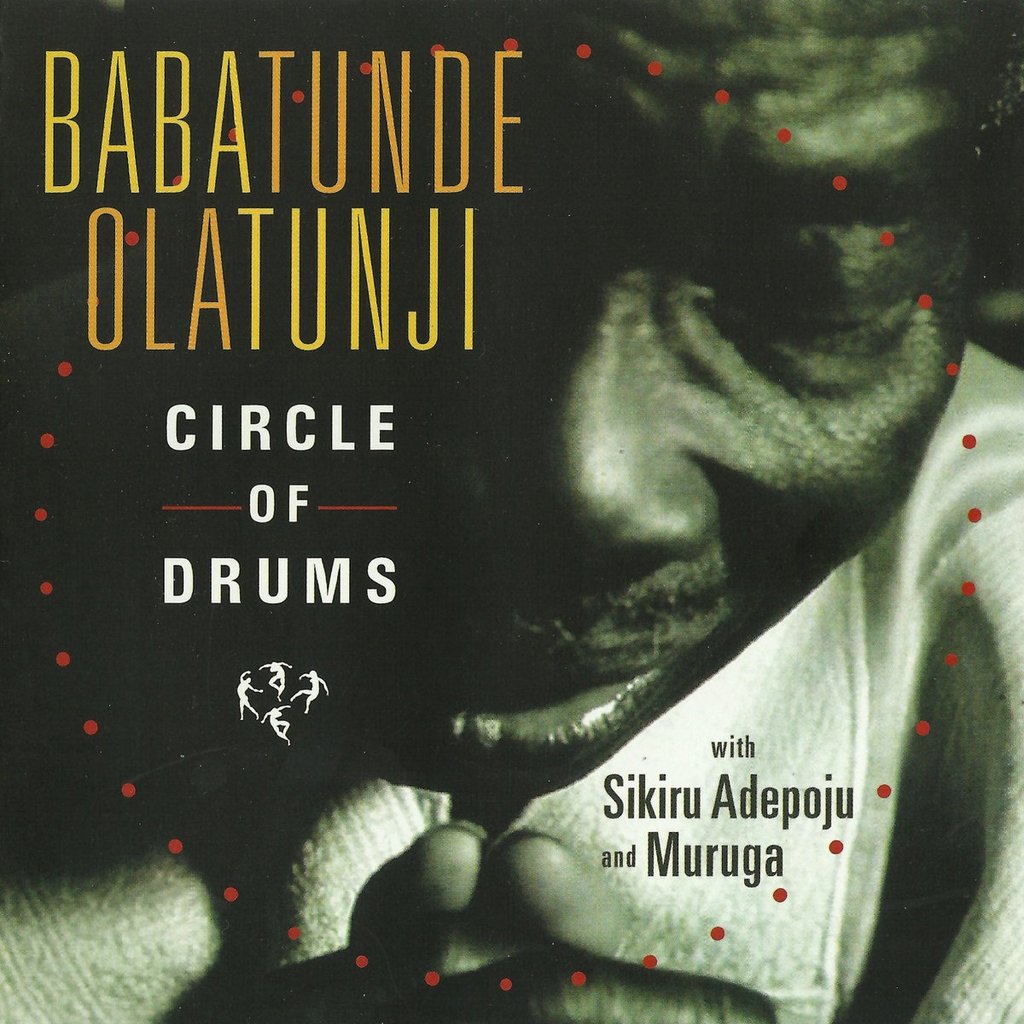
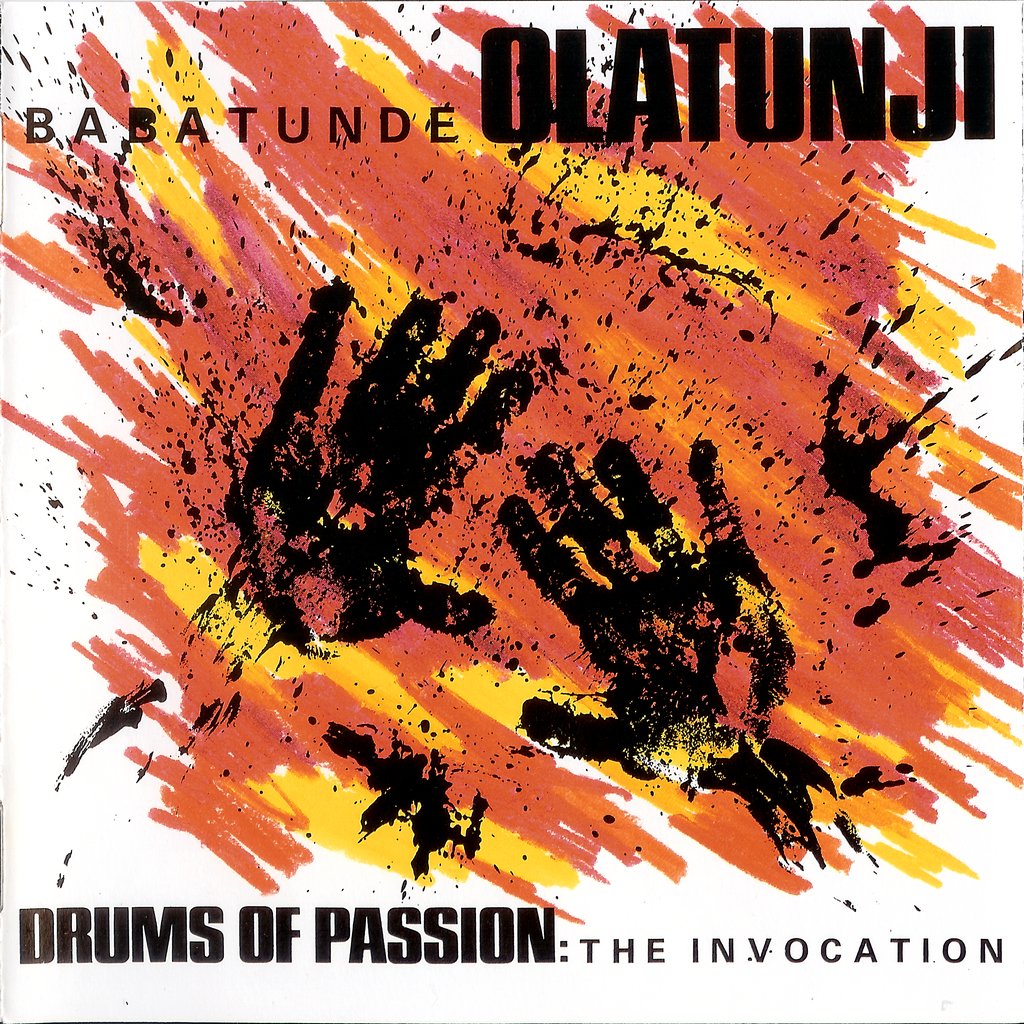
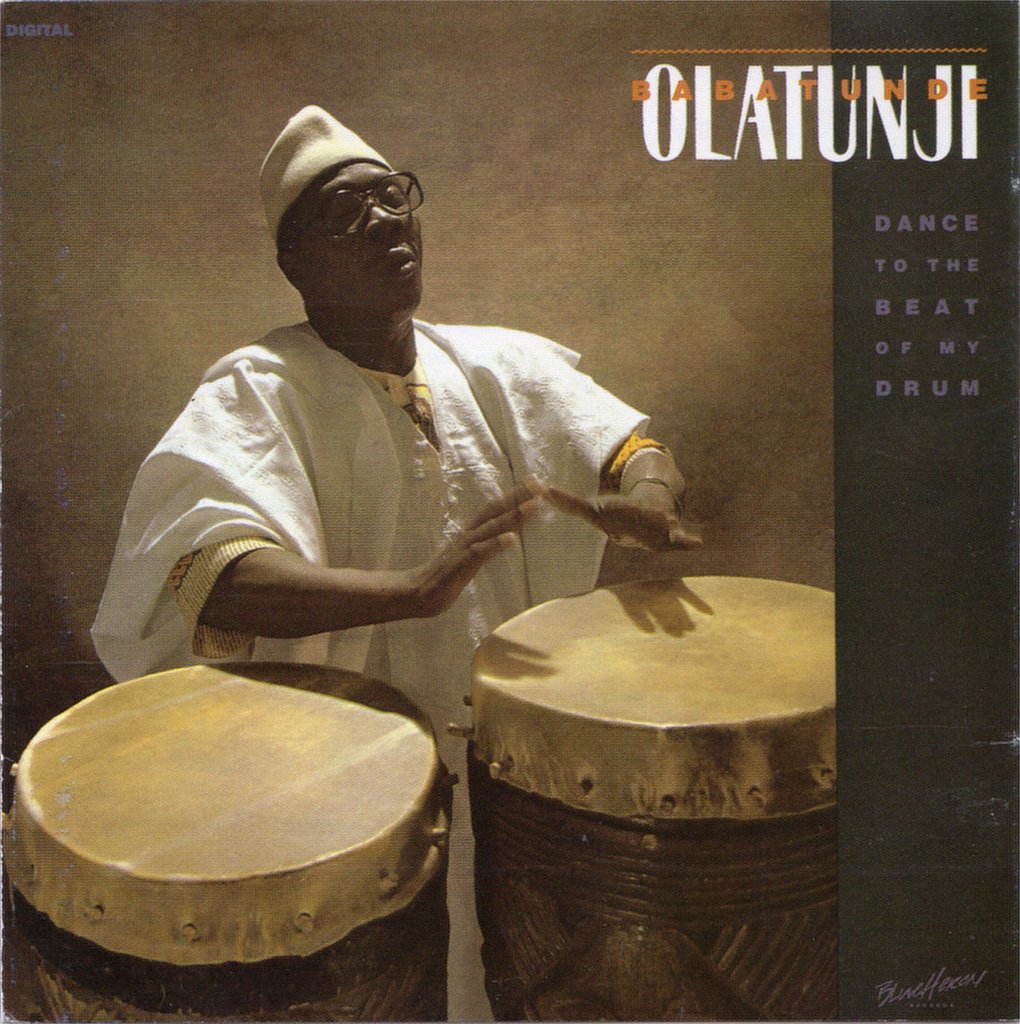
After the center closed in 1984, Mickey Hart — the drummer of the Grateful Dead whom Babatunde had invited to play on stage twenty-five years earlier — gave him a second youth. Hart produced Drums of Passion: The Beat (1986) and The Invocation (1988), then opened the doors of Planet Drum for him. The ensemble gathered around a round table of world percussion — Flora Purim, Airto Moreira, Sikiru Adepoju, Villanova Jubilation — won a Grammy Award in 1992 for the first album of the Best World Music Album category.
Olatunji published The Beat of My Drum — his autobiography prefaced by Joan Baez — in 2005.
Major works
| Work | Year | Why it’s essential |
|---|---|---|
| Drums of Passion | 1959 | First African percussion album in stereo in the United States; international bestseller. Features “Jin-Go-Lo-Ba”, covered by Carlos Santana under the name “Jingo”. |
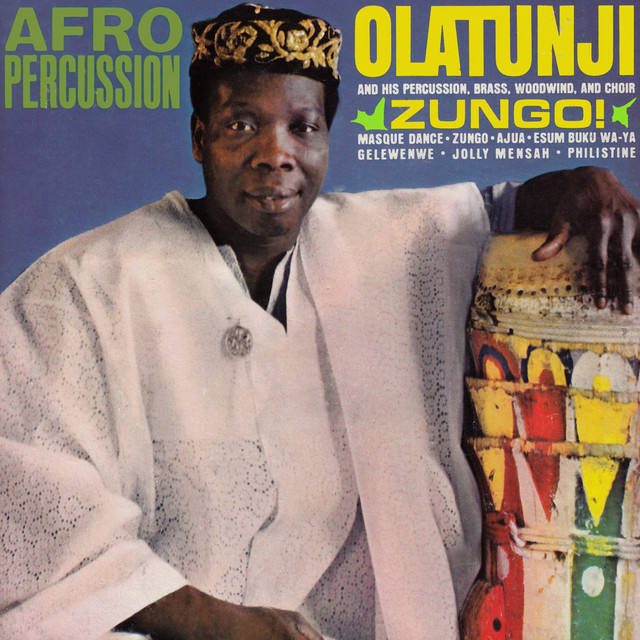
| Zungo! | 1961 | Pioneering fusion between Yoruba traditions and jazz, with Yusef Lateef and Clark Terry. |
| Planet Drum (with Mickey Hart) | 1992 | Grammy Award for best world music album — first year of the award. Round table of world percussion. |
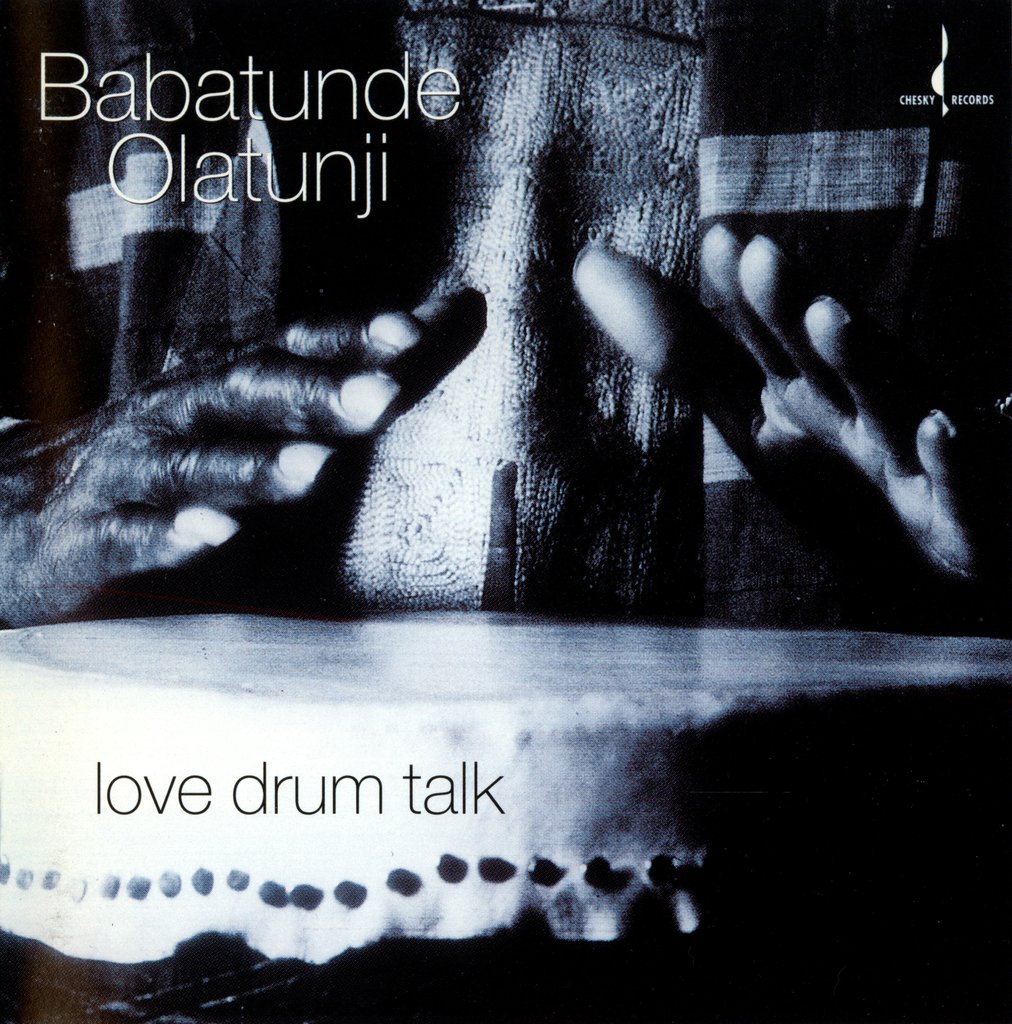
| Love Drum Talk | 1997 | Nominated for Grammy Awards; collaboration between Babatunde and Airto Moreira, reaffirming his artistic relevance. |
| Drums of Passion: The Invocation | 1988 | Rediscovered by Mickey Hart; restored to the master his discographic space after twenty years of absence. |
Heritage and influence
Drums of Passion opened a door that no one had attempted to open: African music, directly and without ethnographic filter, in an American studio. The album’s polyrhythms influenced generations of percussionists — from Elvin Jones to Art Blakey, through Max Roach and Carlos Santana. John Coltrane inscribed a permanent musical dedication through his composition Tunji. In Europe, Serge Gainsbourg interpolated his compositions without credit in Gainsbourg Percussions (1964).
The main legacy of Babatunde Olatunji is educational: the cultural center, the workshops at the Omega Institute and Esalen, and the record inducted into the National Recording Registry testify to a man who dedicated his life to sharing a heritage that many preferred to ignore. “Rhythm is the soul of life” he wrote — a conviction that guided half a century of shared percussion.
Sources and references
- “Babatunde Olatunji”, Wikipedia, https://en.wikipedia.org/wiki/Babatunde_Olatunji, accessed November 9, 2026.
- “Babatunde Olatunji” (biography PAS), Percussive Arts Society, https://pas.org/babatunde-olatunji/, accessed November 9, 2026.
- “The life and legacy of Babatunde Olatunji”, Pan-African Music, https://pan-african-music.com/en/life-of-babatunde-olatunji/, accessed November 9, 2026.
- “Bio”, Olatunji Music (official site), https://olatunjimusic.com/bio, accessed November 9, 2026.
- Ken Hunt, “Babatunde Olatunji”, The Guardian, April 11, 2003, https://www.theguardian.com/news/2003/apr/11/guardianobituaries.
- Jon Pareles, “Babatunde Olatunji, Drummer, 76, Dies; Brought Power of African Music to U.S.”, The New York Times, April 9, 2003, https://www.nytimes.com/2003/04/09/arts/babatunde-olatunji-drummer-76-dies-brought-power-of-african-music-to-us.html.
- “Babatunde Olatunji interview”, Furious.com, interview by Jason Gross, October 2000, https://www.furious.com/perfect/olatunji.html.