Biography
Chezidek
St. Ann’s Bay, Jamaica. A man sings full-voiced on a vintage riddim, eyes closed, while in the distance one hears a lumberjack cutting branches. “Leave De Trees,” he would murmur while laughing — leave the trees. This anecdote tells everything about Chezidek: an artist whose every word is at once prayer, manifesto, and invitation to look at the world differently.
In Brief
| Full Name | Desbert Johnson (stage name: Chezidek) |
| Birth | June 20, 1973, Saint Ann Parish, Jamaica |
| Genre | Roots reggae |
| Role | Singer, songwriter |
| Iconic Works | “Leave De Trees”, “Call Pon Dem”, “Inna Di Road” |
| Awards | Best New Artist JFM Middlesex |
Key Dates
| Year | Event |
|---|---|
| 1973 | Birth in St. Ann’s Bay, Jamaica |
| ~1994 | Career begins under the name Chilla Rinch |
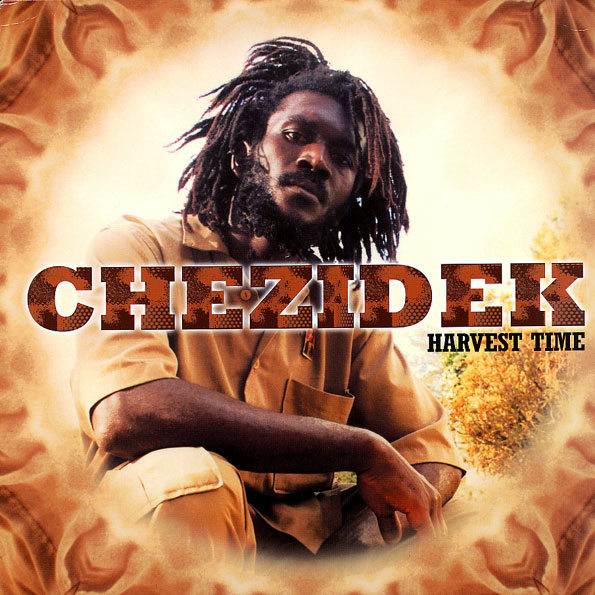
| 2002 | Release of first album, Harvest Time (VP Records) |
| 2004 | First #1: “Leave De Trees” (Our Promotion) |
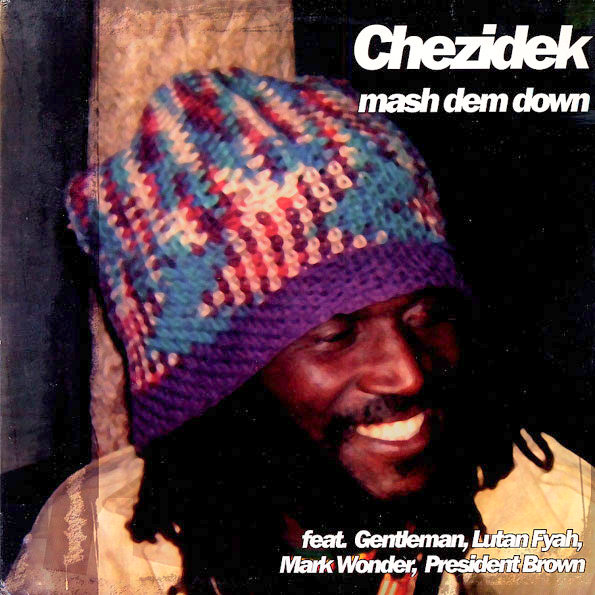
| 2006 | Album Mash Dem Down |
| 2007 | Inna Di Road on Greensleeves Records; “Call Pon Dem” in GTA IV |
| 2010 | Album I Grade with Sly & Robbie (Tabou 1) |
| 2013 | The Order of Melchezedik |
| 2020 | Hello Africa, militant album on the Black experience and racial struggle |
From Chilla Rinch to Chezidek — a spiritual and musical metamorphosis
Desbert Johnson grew up in the Parish of St. Ann, homeland of the Honorable Marcus Garvey and spiritual stronghold of Bob Marley. From childhood, he sang in school concerts and played the bugle in the St. Ann’s Bay Marching Band. After school, he performed on regional sound systems under the name Chilla Rinch, alternating singing and DJing in dancehalls and talent competitions. But it was by hanging out with elders who nicknamed him “Mel-Chézèdeque” — a reference to the biblical priest-blessing figure from Genesis — that the artist sensed another direction.
Around 2000, after a deep spiritual conversion, he turned definitively toward rastafari. He abandoned ephemeral dancehalls for roots music, that which has no age. He left St. Ann’s Bay for Kingston and signed with Xterminator Production with legendary producer Phillip “Fattis” Burrell. The move was good: he composed hundreds of riddims there, writing like a madman, he explains.
The consecration: Harvest Time and Leave De Trees
In July 2002, released on VP Records distributed by VP, the first album Harvest Time — produced personally by Fattis Burrell himself — laid the foundations. The record already contained the seeds of the Chezidek identity: strong-but-soft melodies on vintage riddims, a soul voice capable of sliding from rough bass to crystalline falsetto in one breath. The tracks “Can’t Hear Must Feel” and the title track spun on Jamaican radio and in Europe.
But it was in 2004 that Chezidek exploded into public consciousness. “Leave De Trees”, produced by Hugh “Bunny Dan” Miller on the Our Promotion label, climbed to the top of reggae charts and entered the BBC’s Top 10 dancehall. The story behind the title is all Chezidek: originally recorded as a song in favor of ganja against police repression, he heard a lumberjack stop to listen — and realized the message became ecological. The single is an environmental alarm signal that resonated well beyond Jamaican clubs.
From local stage to world festivals
His album Inna Di Road, produced by Bobby “Massive B” Konders and distributed by Greensleeves Records in September 2007, confirmed Chezidek’s status as a major voice of conscious roots reggae. The album reused historical riddims made for Yabby You, Bob Andy, Al Campbell and the Abyssinians with modern sensitivity. The track “Call Pon Dem” became an international anthem: selected for the fictional Massive B radio station in Grand Theft Auto IV, it propelled Chezidek before millions of players worldwide.
Between 2010 and 2020, the discography densified. I Grade (Tabou 1, 2010), produced by the untouchable Sly & Robbie, was hailed as a return to sources. Judgement Time (2010), produced by Jah Solid Rock, and The Order of Melchezedik (2013) deepened the spiritual dimension. In 2020, Hello Africa — on his own Cheziberry Records label in partnership with Tad’s Records — is a militant album documenting Black racial struggles worldwide, from America to Morocco.
Major Works
| Work | Year | Why It’s Essential |
|---|---|---|
| Harvest Time (album) | 2002 | The first draft: a laid-back soul voice, vintage riddims announcing the Chezidek identity |
| “Leave De Trees” (single) | 2004 | First Jamaican #1, an environmental anthem that transcends reggae |
| “Call Pon Dem” (single) | 2007 | Planetary anthem thanks to its selection in Grand Theft Auto IV |
| Inna Di Road (album) | 2007 | The culmination of conscious roots: revisited classics with modern precision |
| I Grade (album) | 2010 | With Sly & Robbie, a pure return to roots reggae sources |
| Hello Africa (album) | 2020 | Militant album on Black racial struggles, from America to Morocco |
Heritage and influence
Chezidek is one of the few roots reggae artists to have maintained a consistent spiritual and environmental line for over twenty years, never bending toward the passing fads of dancehall. His unique voice — half-singing, half-spoken-word — and his lyrics that blend Rastafari spirituality, social justice, and defense of nature have forged an international community of loyal fans, particularly in Europe. He has shared the stages of the world’s greatest festivals: Montreux Jazz Festival (Switzerland), Rebel Salute, Reggae Sunsplash (Jamaica), Uppsala Reggae Festival (Sweden), Reggia Sundance (Netherlands), Western Consciousness.
More than twenty years after his debut, Chezidek — the herbalist, environmentalist, this “spiritual singer” who simply calls himself a vessel between the Most High and the world — continues to publish, tour, and inspire a new generation of committed artists.
Sources and references
- “Chezidek Biography”, Chezidek Official Website, chezidekreggae.com/biography, accessed November 10, 2025.
- “Chezidek”, English Wikipedia, en.wikipedia.org/wiki/Chezidek, accessed November 10, 2025.
- Angus Taylor, “Interview: Chezidek”, United Reggae, March 28, 2010, unitedreggae.com/articles/n353/032810/interview-chezidek, accessed November 10, 2025.
- “Chezidek — Times-Standard”, Times-Standard, August 13, 2009, times-standard.com/2009/08/13/chezidek, accessed November 10, 2025.
- “Chezidek militant on ‘Hello Africa’ album”, Jamaica Gleaner, June 22, 2020, jamaica-gleaner.com/article/entertainment/20200622, accessed November 10, 2025.
- “Chezidek ready for the road”, Jamaica Gleaner, January 17, 2020, jamaica-gleaner.com/article/entertainment/20200117, accessed November 10, 2025.
- “Chezidek discography”, Discogs, discogs.com/artist/306313-Chezidek, accessed November 10, 2025.
- “Interview in Oracabessa, Jamaica”, Reggaeville, reggaeville.com/artist-details/chezidek/news/view, accessed November 10, 2025.
- “Chezidek: Jamaican reggae star who loves farming as much as music”, Kenya Nation, nation.africa/kenya/life-and-style, accessed November 10, 2025.
- “Chezidek returns with birthday concert”, Jamaica Star, June 14, 2019, jamaica-star.com/article/entertainment/20190614, accessed November 10, 2025.