From Trench Town to the World: The Musical History of Jamaica
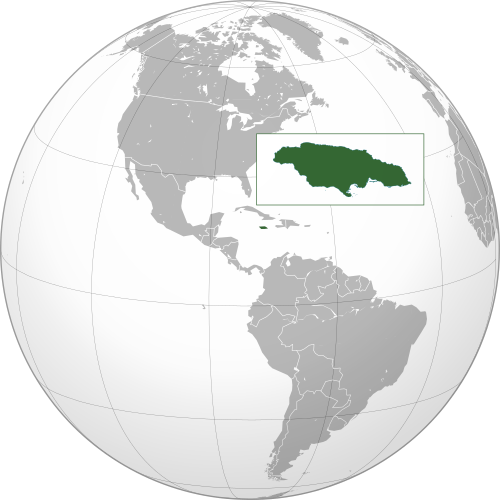
Jamaica, a country of three million people at the crossroads of the Caribbean, produces a musical influence disproportionate to its size. Reggae, ska, dancehall: these genres born on this island have shaped global pop music, from hip-hop to pop-rock, passing through electronic music. How did a small Caribbean archipelago become the world capital of underground music?
Since the sound systems of the 1950s — these itinerant DJs who broadcast American jazz and rhythm and blues through Kingston — Jamaica has never stopped exporting its sounds. Today, reggae, inscribed on the UNESCO Intangible Cultural Heritage list in 2018, and dancehall, heard on all global playlists, testify to a musical scene where each new generation reinvents the legacy of its predecessors.
From kumina drums to ska: the roots (1950-1964)
The history of Jamaican music plunges its roots into African traditions preserved in the rural areas of the island. The kumina — a religious ceremony of Congolese origin centered on drumming and possession — as well as the revival zion (a tradition of Angolan origin) kept alive the drum beat that the British colony had tried to eradicate1. These rhythms, crossed with work songs and lullabies, constitute the invisible soil of all Jamaican music.
In the 19th century emerges the mento, the first true popular Jamaican genre. This banjo-based folk music mixing Afro-Jamaican rhythms, European melodies and satirical lyrics dominated the scene from the 1930s to the 1950s. Artists like Herman Leon or Count Lasher laid its foundations2. But it is the arrival of American rhythm and blues, broadcast by radio from Miami and imported on vinyl, that will profoundly transform the music of the island.
At the end of the 1950s, in Kingston’s sound systems, the selectors — amateur DJs like Duke Reid and Clement « Coxsone » Dodd — superimposed B-sides of American records with their own compositions. The result: the ska, officially born around 1962. This ultra-fast, driving genre, dominated by brass and structured on the skank — that guitar or piano hit on the off-beat — became the first truly Jamaican music3. The emblematic band, the Skatalites, formed in 1964, set its codes for the decades to come.
Did you know? Jamaica designated its capital, Kingston, as a UNESCO Creative City in 2015 — the only Caribbean city to receive this label. Official recognition of a creativity that sustains 5.1% of the national GDP.
The golden age of roots reggae (1965-1980)
Ska, too fast, transformed around 1966 into rocksteady, a slower tempo where the bass takes its place as conductor. But it is around 1968 that reggae truly emerges, born from the fusion between ska and rocksteady, and baptized by Toots and the Maytals in their title of the same name4.
The 1970s constitute the golden age of roots reggae, a spiritual and politically conscious music. In an independent Jamaica (1962) confronted with unemployment, political violence and urban poverty, reggae becomes the « voice of the ghetto »5. It carries the themes of the Rastafari movement — appearing in the 1930s, this Afrocentric current recognizes Haile Selassie I, Emperor of Ethiopia, as the black messiah6. The lyrics oppose « Babilone » (the oppressive Western system) to « Zion » (the Ethiopian Promised Land), and fight for the liberation of black people.
Three figures dominate this era. Bob Marley & The Wailers, formed in 1963 with Peter Tosh and Bunny Wailer, are the global ambassadors of reggae. The albums Exodus (1977) and Kaya (1977) make them the first superstars of the Third World: Exodus remains in the British charts for 56 weeks7. After Marley’s death in May 1981 at the age of 36, music lovers like Peter Tosh (with the title “Legalize It”), Jimmy Cliff (whose film The Harder They Come, 1972, inaugurates the era of reggae in cinema), Burning Spear and Culture keep the flame alive8.
The same period sees the birth of dub, a radical technical innovation: producers move the mixing console to the rank of instrument, removing voices to isolate bass and drums, then adding echo and reverb. King Tubby, Lee « Scratch » Perry and Scientist thus invent the basis of remixing and electronic music — a decisive Jamaican contribution to global sound9.
From dancehall to New York arenas (1980-2015)
At the turn of the 1980s, « roots » reggae gave way to dancehall — a more festive, digital sound centered on the deejay (MC) who toasts, meaning they deliver rhythmic lyrics over instrumental tracks called riddims. The major breakthrough occurred in 1985 when producer King Jammy introduced the Sleng Teng, a rhythm entirely generated by computer. This « digital riddim » cost ten times less to produce and opened the door to a proliferation of productions10.
The dancehall of the 1980s-1990s was dominated by figures like Yellowman, the first dancehall superstar DJ, Shabba Ranks (first dancehall deejay to win a Grammy in 1992), Super Cat and Buju Banton11. The genre split between « conscience » (social texts and rastafari) and « slackness » (sexual and festive themes), this duality generating persistent debates about its role in Jamaican society12.
In the 2000s, Jamaican dancehall achieved a commercial breakthrough towards global pop. Sean Paul secured an American number 1 with “Get Busy” (2003) and multiplied collaborations with pop stars. Shaggy, from dancehall, reached the summits with “It Wasn’t Me” (2001). The genre profoundly influenced American hip-hop and R&B — the « dem bow » rhythm, from Shabba Ranks’ title Dem Bow, became the foundational beat of Latin reggaeton13.
In April 2025, dancehall history crossed a new milestone: Vybz Kartel, the mythical « World Boss » imprisoned in a Jamaican prison and then banned from the United States for twenty years, performed at two nights in front of more than 40,000 fans at the Barclays Center in Brooklyn — the largest dancehall concert ever organized on American soil14. This resurrection symbolizes the power of dancehall as a cultural beacon, beyond judicial and geographical borders.
The new wave: conscious reggae and crossover (2015-present)
While dancehall dominates the charts, conscious reggae has experienced a powerful renaissance since the 2010s driven by the Jamaican « neo-reggae movement ». Chronixx, Protoje and Jesse Royal reinvested engaged texts and live arrangements (drums, bass, Hammond organ) against the dominant digital sound, while speaking to younger generations15. Protoje, with “Rum and Coca-Cola” (2014), denounced the island’s tourist exploitation while becoming an international star. Chronixx, with “Here Come Zimper” (2015), affirmed: « Reggae isn’t dead, it lives in the youth »16.
In this landscape, a figure stands out: Koffee, born Mikayla Simpson in 2000 in Spanish Town. At 19, her EP Rapture (2019) won the Grammy Award for « Best Reggae Album », making her the youngest solo artist to receive this prize and the only female laureate17. Her album Gifted (2022) refined this blend of reggae, dancehall and afrobeats. In 2025, after a self-titled single Koffee, she is preparing a new 15-track album with collaborations including Skillibeng18.
More recently, Alkaline (born Aaron Anthony) reinvented dancehall by integrating Auto-Tune and trap codes, while Popcaan and Mavado continue to fill North American venues — Mavado returning to Toronto in 2025 after nine years of absence19. The current generation, more diverse and technologically connected, reasserts reggae as living music and not as museum heritage.
Founding figures of Jamaican music
| Genre | Period | Key Figure | Major Contribution |
|---|---|---|---|
| Mento | 1930-1950 | Herman Leon, Count Lasher | First Jamaican records, social satire |
| Ska | 1962-1966 | Les Skatalites | First post-mento Jamaican genre, brass and skank |
| Rocksteady | 1966-1968 | Alton Ellis, The Paragons | Slower tempo, bass as driver |
| Roots reggae | 1968-1980 | Bob Marley, Peter Tosh, Bunny Wailer | Conscious reggae and rastafari, global export |
| Dub | 1968-1980 | King Tubby, Lee « Scratch » Perry | Studio as instrument, basis for remix |
| Dancehall | 1985-present | Yellowman, Shabba Ranks, Beenie Man | Digital beat, toasting, riddim culture |
| Neo-reggae | 2015-present | Chronixx, Protoje, Koffee | Live renaissance, engaged texts, crossover |
A heritage that reinvents itself
Jamaican music is today recognized as one of the world’s cultural pillars. In 2018, UNESCO inscribed reggae on the Intangible Cultural Heritage of Humanity list20. Kingston, designated a creative city in 2015, relies on this recognition to structure a professional musical ecosystem. Recent economic data estimates the Jamaican creative industry at 107 billion Jamaican dollars per year — 5.1% of national GDP — or more than 690 million US dollars21.
Jamaican influence is not measured only in figures. It resides in the capacity of each new generation — from Trench Town sound systems to New York arenas — to transform a local sound into a universal language. The message of resistance, pride and unity carried since the 1960s now crosses continents, generations and genres, proof that a small Caribbean island can durablely speak to the whole world.
Sources and references
-
Peter Manuel and Michael Largey, Caribbean Currents: Caribbean Music from Rumba to Reggae, 3rd ed., Temple University Press, 2016, chap. 7 « Jamaica: From Ska to Dancehall ». ↩︎
-
François Bensignor, Les Musiques du monde, Larousse, 2002, rééd. « Caraïbes », p. 44-45. ↩︎
-
Manuel and Largey, Caribbean Currents, op. cit. ; Bensignor, Les Musiques du monde, op. cit. ↩︎
-
« Do the Reggay » by Toots and the Maytals, 1968. Source: Manuel and Largey, Caribbean Currents, op. cit. ; Discogs, Toots and the Maytals discography. ↩︎
-
Manuel and Largey, Caribbean Currents, op. cit., « Rasta and Revolution » ; Bensignor, Les Musiques du monde, op. cit. ↩︎
-
Manuel and Largey, Caribbean Currents, op. cit., « Rastafari and Reggae » ; Bensignor, Les Musiques du monde, op. cit., « Rastafari Movement ». ↩︎
-
« The New York Times », « Reggae Music Is Added to Unesco Cultural Heritage List », 23 November 2018. ↩︎
-
Manuel and Largey, Caribbean Currents, op. cit., « Roots and Culture: Downtown Triumphant » ; AllMusic, « Bob Marley & The Wailers ». ↩︎
-
Bensignor, Les Musiques du monde, op. cit., « Dancehall, DJ & Dub » ; Manuel and Largey, Caribbean Currents, op. cit. ↩︎
-
Manuel and Largey, Caribbean Currents, op. cit., « From Reggae to Ragga » ; Discogs, « Sleng Teng riddim ». ↩︎
-
Manuel and Largey, Caribbean Currents, op. cit., « The Dancehall Era » ; Grammy.com, « Shabba Ranks biography ». ↩︎
-
Manuel and Largey, Caribbean Currents, op. cit., « Tellin’ It Like It Is: From ‘Consciousness’ to ‘Slackness’ » ; chapter 10 « Five Themes » on gender and sex in Caribbean music. ↩︎
-
Manuel and Largey, Caribbean Currents, op. cit., « Dancehall Inna Foreign » ; glossary « Dembow ». ↩︎
-
« Caribbean Voxx », « Vybz Kartel Shuts Down Brooklyn With Two Historic Sold-Out Nights at Barclays », April 2025 ; « TLNShot », « Vybz Kartel Barclays 2025 », 2025. ↩︎
-
Billboard, « Best Reggae/Dancehall Songs June 2025: Masicka, Skillibeng & Konshens », June 2025 ; Jamaica Gleaner, « Koffee returns with ‘Rapid Fyah’ », June 2026. ↩︎
-
Chronixx, « Here Come Zimper », 2015 ; Protoje, « Rum and Coca-Cola », 2014. Sources: Discogs ; iTunes. ↩︎
-
« Wikipedia », « Original Koffee » ; « Talowa Productions », « KOFFEE ». ↩︎
-
« Jamaica Gleaner », « Koffee returns with ‘Rapid Fyah’ », 20 June 2026. ↩︎
-
« Wikipedia », « Alkaline (musician) » ; « Apple Music », « Mavado » ; « Kaboom Mag », « Mavado Set for First Toronto Performance », October 2025. ↩︎
-
UNESCO, « Reggae music of Jamaica », inscription 2018 (file 01398), Representative List of the Intangible Cultural Heritage of Humanity. ↩︎
-
« CCIAJ Survey Report 2025 », « Jamaica Creative and Cultural Industries Sector Survey », June-July 2025 ; IFPI, Global Music Report 2024. ↩︎