Biography
Danyèl Waro
In 1975, a young man from the Hauts of La Réunion refused to wear the uniform. Rejecting military service on antimilitarist grounds, he chose the prison of Rennes over conscription. This denial of authority did not turn him away from his art: imprisoned, he took a pencil and wrote his first texts in Creole. These words were the prelude to a voice that, for fifty years, would carry the maloya — this blues of the Indian Ocean — on the world’s greatest stages.
In brief
| Full name | Daniel Hoareau dit Danyèl Waro |
| Birth | 10 May 1955, Le Tampon, La Réunion |
| Field | Maloya, Creole traditional music — singing, percussion, luthiery |
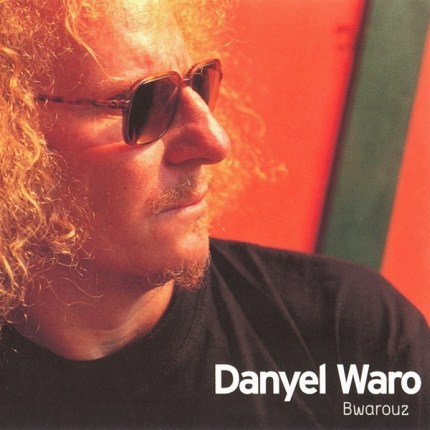
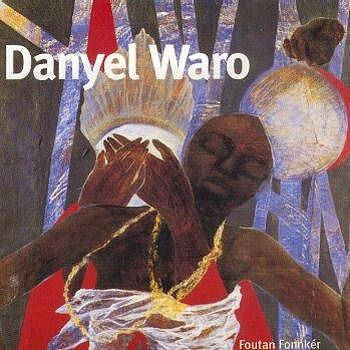
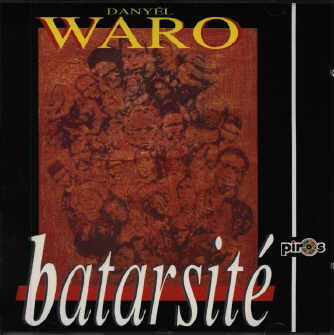
| Signature works | Batarsité, Foutan Fonnkér, Bwarouz |
| Honours | WOMEX Award 2010, Grand Prix de l’Académie Charles-Cros, Victoire du jazz 2020 |
Key dates
| Year | Event |
|---|---|
| 1955 | Birth of Daniel Hoareau in Tampon, in a peasant hut without water or electricity |
| 1970 | Discovery of maloya at a concert by Firmin Viry — a spiritual and political turning point |
| 1975 | First maloya concert on 27 December; insubordination and refusal of military service |
| 1975-1978 | Two years in prison in Rennes; wrote his first texts in Creole |
| 1978 | Publication of Romans ékri dan la zol an frans (prison texts) |
| 1980s | Beginnings of a musical career on the island with Troup Flanboiyan and his brother Gaston |
| 1994 | Release of Batarsité, manifesto of Creole métissage; major tour in France |
| 2000 | Foutan Fonnkér awarded the Grand Prix de l’Académie Charles-Cros |
| 2010 | WOMEX Award; maloya inscribed on UNESCO’s Intangible Cultural Heritage list |
| 2020 | Nomination for Victoires du jazz (world music category) for Monmon |
Rebel origins and the birth of an artist
Daniel Hoareau was born on 10 May 1955 in a small hamlet in the Hauts of Tampon, on the island of La Réunion. His family had neither running water nor electricity; his father, an agricultural worker and communist activist, raised five children amidst fields, rallies for the Réunion Communist Party, and an austere life. Music inhabited the household only through a transistor, which broadcast mainly news — and occasionally Brassens, discovered through his sister’s records. Young Daniel admired the poet singing of freedom, in stark contrast to the brutal image reflected back at him by his own drunken father. This contradiction branded him with a hot iron: he understood early that words could liberate.
At fifteen, another revelation imposed itself: that of the maloya. The genre, an inheritance of African and Malagasy slaves, was then despised by the Church and fought by colonial authorities. But in 1970, a concert by Firmin Viry — a true pioneer of the maloya — changed everything. The “little white man of the Hauts” fell under the spell of this primitive blues, carried by the percussion of the kayamb, rouler, and bobre. Determined to make it his own, he learned the rhythms by heart and began making his own instruments.
His commitment quickly turned into confrontation. In 1975, he refused to wear the uniform. Rejecting military service on antimilitarist grounds, he chose the prison of Rennes over conscription. This denial of authority did not turn him away from his art: imprisoned, he took a pencil and wrote his first texts in Creole. These words were the prelude to a voice that, for fifty years, would carry the maloya.
Revelation and international consecration
Released in 1978, Danyèl Waro returned to La Réunion and set about converting his contestatory energy into creation. He founded Troup Flanboiyan with his brother Gaston and established himself as one of the leading figures of the maloya renaissance. But Waro was not limited to traditional maloya: he explored métissage, jazz (with Olivier Ker Ourio), and engaged with the greats of his genre — Lo Rwa Kaf, Gilbert Pounia (Zisakakan), Titi Robin.
In 1994, he published Batarsité, a sonic manifesto of Réunion métissage — African, Malagasy, Indian, and European cultures united in the crucible of the island. The album triggered a tour in France and propelled his name beyond the Indian Ocean. The French press discovered him: Danyèl Waro is an artist of all possibilities, noted the magazine Hommes & Migrations.
Major works
| Work | Year | Why it is essential |
|---|---|---|
| Batarsité | 1994 | Manifesto of Creole métissage; made Waro known in France and Francophone Africa |
| Foutan Fonnkér | 2000 | Winner of the Grand Prix de l’Académie Charles-Cros; a firm musical culmination |
| Bwarouz | 2002 | Today’s sound rooted in tradition — a bridge between generations |
| Monmon | 2019+ | Nomination for Victoires du jazz; proof that his music continues to mature |
Legacy and influence
Danyèl Waro has become the global ambassador of the maloya, a genre inscribed in 2009 on UNESCO’s Representative List of the Intangible Cultural Heritage of Humanity. His high, powerful, and haunting voice resonates from African festivals (Mawazine in Rabat) to European stages (WOMAD, Africolor). More than a musician, he is a luthier — an artisan of traditional instruments that resist the diluting modernization of the maloya.
His descendants continue the legacy: his son Bino sings and plays in the group that accompanies him, while Sami Pageaux-Waro has established himself as a recognized multi-instrumentalist, collaborating with international artists such as Ibrahim Maalouf and Ballaké Sissoko. But Waro’s legacy extends beyond the family walls: every young Réunionnais who recognizes in the maloya the sound of their identity owes him a little of their pride.
“Pour moi Maloya, tu es la fleur qui m’a manquée quand j’étais petit,” he wrote in a song — these verses summarize half a century of commitment, resistance, and love for this music born in the sweat of the cane plantations.
Sources and references
- « Danyèl Waro », Wikipédia, https://fr.wikipedia.org/wiki/Dany%C3%A8l_Waro, accessed 8 November 2026.
- « Danyèl Waro | Biography », Foundation for the Memory of Slavery, https://memoire-esclavage.org/biographies/danyel-waro, accessed 8 November 2026.
- Frank Eisenhuth, « Danyel Waro — Biography », AllMusic, https://www.allmusic.com/artist/danyel-waro-mn0000571755, accessed 8 November 2026.
- Andy Morgan, « DANYEL WARO – Mongrel and proud », fRoots Magazine, 2011, https://www.andymorganwrites.com/danyel-waro-say-it-loud-mongrel-and-proud/, accessed 8 November 2026.
- « Danyèl Waro: “Maloya allowed me to cross prison as if nothing had happened” », France Info La 1ère, https://la1ere.franceinfo.fr/danyel-waro-le-maloya-m-a-permis-de-traverser-la-prison-comme-si-de-rien-n-etait-1701202.html, accessed 8 November 2026.
- « Danyèl Waro — Music », Bandcamp, https://danyelwaro.bandcamp.com/music, accessed 8 November 2026.