Biography
Dhafer Youssef
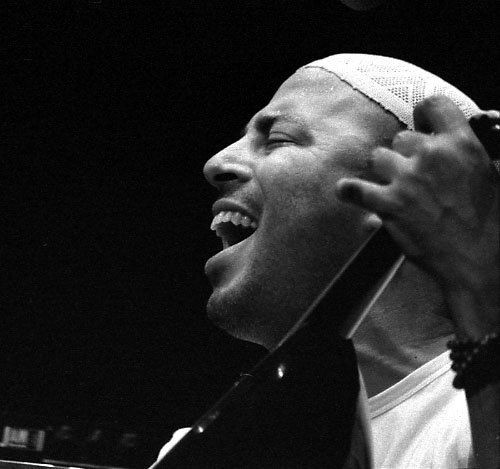
The voice of Dhafer Youssef rises from the top of a minaret in 1973. At six years old, living in the fishing port of Téboulba, south of Monastir, he calls the faithful to prayer with a cheap plastic microphone. “I think we are born with something,” he would say many years later, referring to his deep conviction: music as an innate destiny. Thirty years after this first call, this oud player turned singer and composer performs in packed halls in New York, London, and Paris.
In brief
| Full name | Dhafer bin Youssef bin Tahar Maarref (ظافر بن يوسف بن طاهر معرف) |
| Birth | November 19, 1967, Téboulba (Tunisia) |
| Genre | ethno jazz, world fusion, Sufi music, jazz fusion |
| Instruments | oud, vocals |
| Signature works | Malak, Birds Requiem, Diwan of Beauty and Odd |
| Awards | BBC Awards for World Music (nominations 2003 and 2006), Edison Awards |
Key dates
| Year | Event |
|---|---|
| 1967 | Born in Téboulba, a fishing village south of Monastir |
| 1973 | At six years old, calls the faithful to prayer in the village minaret |
| 1987 | Joins the Tunisian National Herd and Radio Monastir |
| 1989 | Moves to Vienna, discovers jazz in clubs |
| 1998 | Malak: first album with Enja Records; international career confirmed |
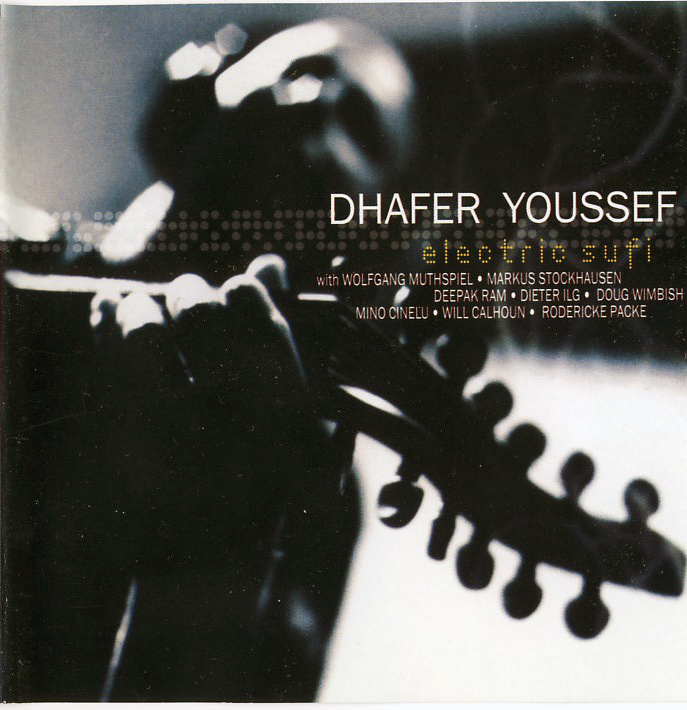
| 2001 | Electric Sufi: first album integrating electronics and voice as an instrument |
| 2003, 2006 | Two consecutive nominations for the BBC Awards for World Music |
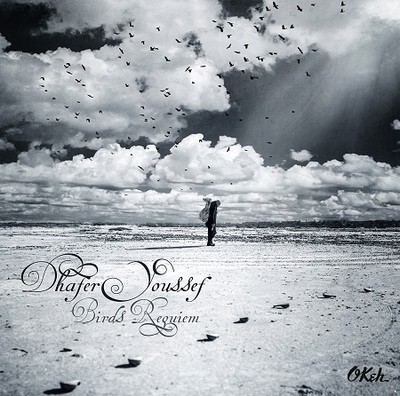
| 2013 | Birds Requiem: the album that crosses into the mainstream public sphere |
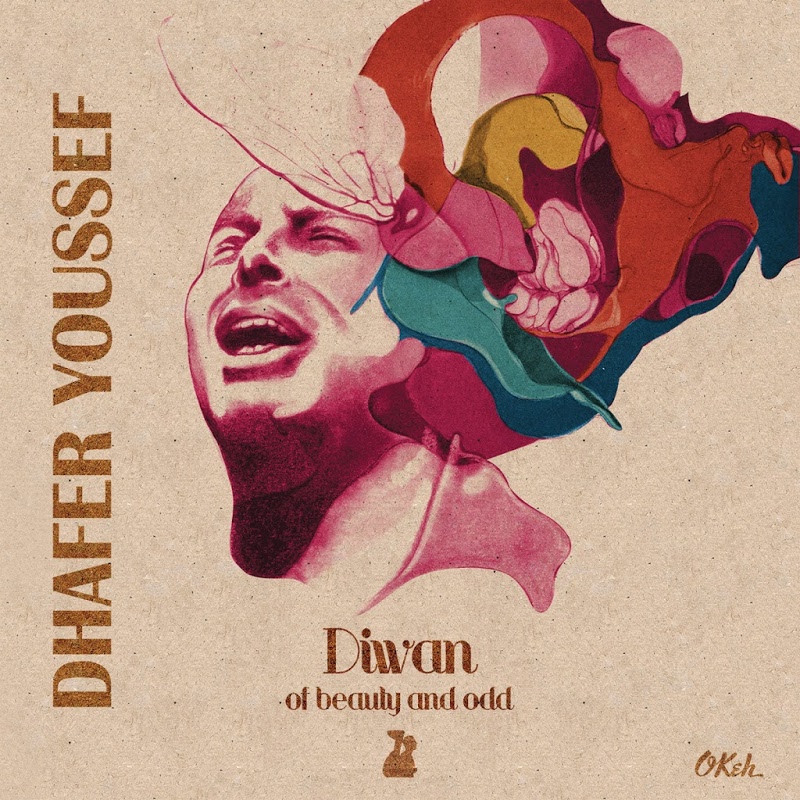
| 2016 | Diwan of Beauty and Odd: recorded in New York with an American supergroup |
| 2017 | Edison Award; world concert for International Jazz Day (UNESCO) with Herbie Hancock |
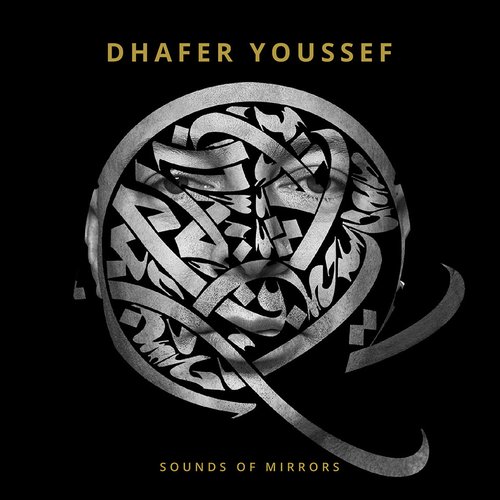
| 2018 | Sounds of Mirrors with tabla player Zakir Hussain |
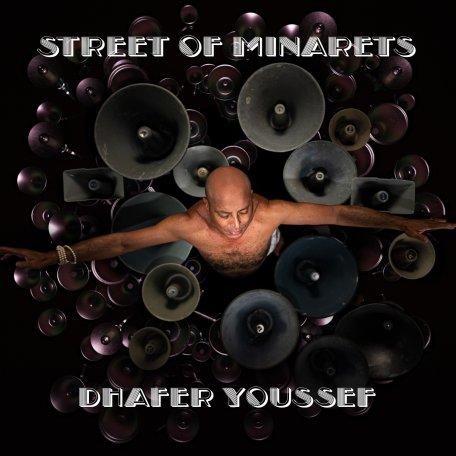
| 2023 | Street of Minarets, with Herbie Hancock and Nguyên Lê |
From the minaret to world stages: the journey of a sonic passer
Dhafer Youssef was born on November 19, 1967, in a small fishing port on the Tunisian coast. His grandfather was a muezzin — and this sonic lineage would serve as his foundation. At five, he entered the Quranic school where his grandfather taught him recitations. But there, in the secret of the school benches, another sound reached him: jazz broadcast on the radio. He sang along to the pieces in his mother’s kitchen, which became his first echo chamber, before discovering at six years old the mysterious resonances of the village hammam — that place with vaulted walls where his voice returned to him amplified. A local muezzin heard him and recommended him for the calls to prayer. Dhafer accepted, with a plastic microphone bought at the market. His voice boomed from atop the minaret: it was his first encounter with an audience, a memory etched in stone.
At fifteen, the youth center handed him an oud. The round-bodied Arabic instrument captivated this young man who loved freedom, who was also interested in the electric bass. At seventeen, the violinist Mesbah Souli — founder of the Tunisian National Herd — spotted him and recruited him into his orchestra. Dhafer, however, was no fool: he aspired to something else. In 1989, Dhafer Youssef left Tunisia and landed in Vienna to study musicology. The conservatory was not enough for him: the real course, he found it in Viennese jazz clubs, notably at Porgy & Bess. There, he crossed paths with French guitarist Nguyên Lê and Italian trumpeter Paolo Fresu — two lifelong partners.
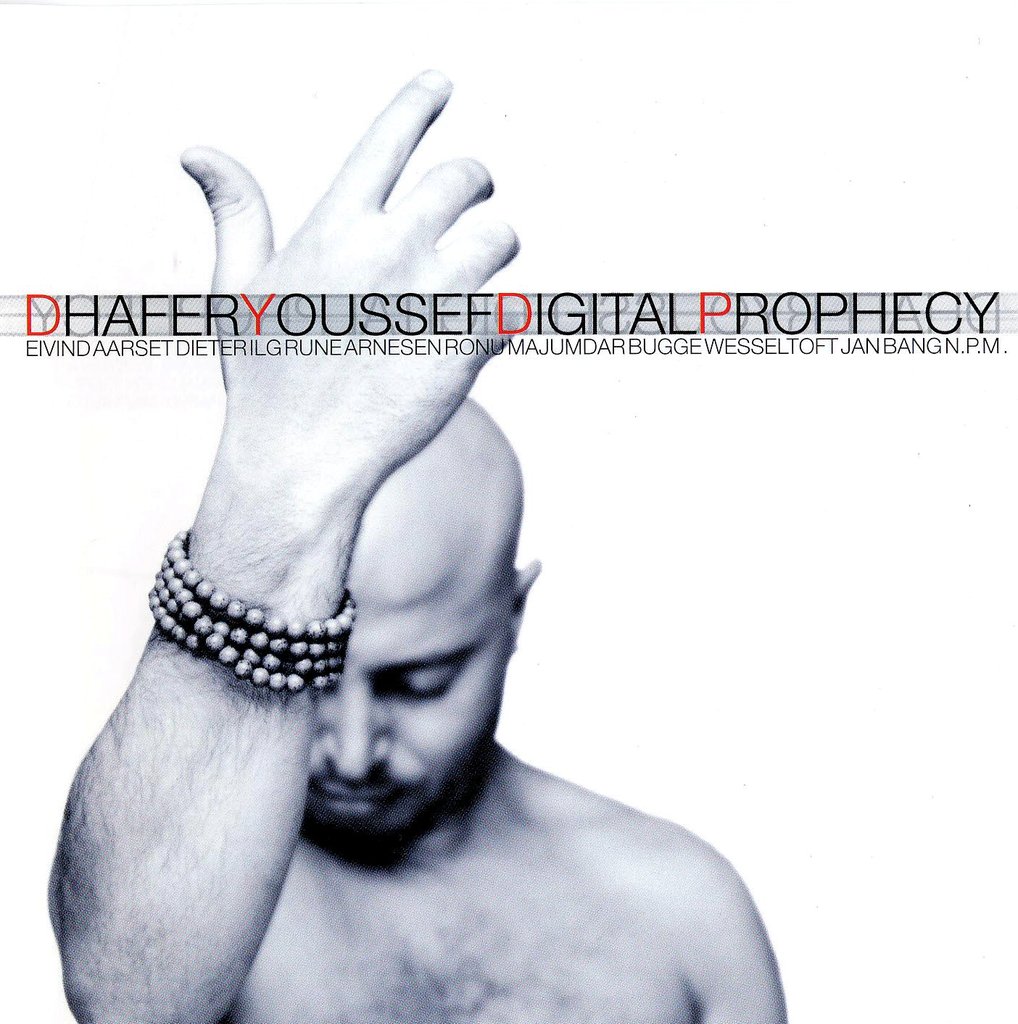
In 1998, Enja Records opened its doors to him for Malak. The album marries Mediterranean harmonies and avant-garde jazz with a fluidity that surprised the critics. Two years later, he climbed a step with Electric Sufi (2001), the first album where he integrated synthesizers and used his voice as a jazz instrument. Digital Prophecy (2003) went even further, with musicians from the Scandinavian electro-jazz scene: Eivind Aarset, Nils Petter Molvaer, Bugge Wesseltoft. The collaboration earned him two consecutive nominations for the BBC Awards for World Music and introduced him into the conversation of global jazz.
After Divine Shadows (2006) — an album where the oud dialogues with strings and Marilyn Mazur’s percussion — the decisive turning point arrived in 2013 with Birds Requiem. This album, conceived as a film score, brings together the Turkish clarinetist Hüsnü Şenlendirici and musicians met over the years. In 2015, Dhafer Youssef shared the stage of UNESCO’s Global Jazz Day in Paris with Herbie Hancock, as a duo. Diwan of Beauty and Odd (2016), recorded in New York with Aaron Parks, Ben Williams, and Ambrose Akinmusire, embodies his ultimate maturation. Sounds of Mirrors (2018) and then Street of Minarets (2023, with Herbie Hancock and Nguyên Lê) confirm that Dhafer Youssef has never stopped evolving. In parallel, he composes for cinema (Black Gold by James Horner in 2011), collaborates with Zakir Hussain, Tigran Hamasyan, and Mark Guiliana. In love with freedom — he claims his love for wine and fine clothes — Dhafer does not align himself with any label. “I am someone who absorbs everything, breathes everything, draws inspiration from everything,” he declared.
Major works
| Work | Year | Why it is essential |
|---|---|---|
| Malak | 1998 | His first record with Enja: an organic fusion between European jazz and Mediterranean groove |
| Electric Sufi | 2001 | First electronic album: his voice becomes a jazz instrument, an audacious experience praised by critics |
| Birds Requiem | 2013 | The album that propels him onto the international stage: an intimate record conceived as a film score |
| Diwan of Beauty and Odd | 2016 | Recorded in New York with a supergroup: exploration of dualities between the beautiful and the strange |
| Street of Minarets | 2023 | The oud converses with Herbie Hancock and Nguyên Lê: a return to roots enriched by ten years of experiences |
Heritage and influence
Dhafer Youssef has given the oud — an instrument traditionally confined to Arab-Muslim music — a place in international jazz that was not previously its own. By dialoguing with as diverse musicians as Eivind Aarset, Zakir Hussain, Nguyên Lê and Herbie Hancock, he proved that the instrument could fit into multicultural conversations without ever betraying its roots. His language, where Sufi chanting, North African modes and jazz improvisation merge without hierarchy, inspires a new generation of musicians who refuse ethnic or religious compartmentalization. His liberal convictions have earned him the enmity of certain conservative circles in Tunisia: he sings and composes with the assumed risk of being a bridge between worlds that are drifting apart.
Sources and references
- « Dhafer Youssef: Portrait of an atypical musician », BBC Afrique, 15 April 2017.
- Pascal Wyse, « Flying lessons with Dhafer Youssef », The Guardian, 18 May 2007.
- « Dhafer Youssef biography », AllMusic, accessed in November 2025.
- « Dhafer Youssef », Wikipedia (en), encyclopedia article.
- « Dhafer Youssef », Wikipedia (fr), encyclopedia article.
- « Dhafer Youssef – Official biography », dhaferyoussef.com, artist’s official website.
- « Dhafer Youssef », LPR (Longform Records), artist profile.