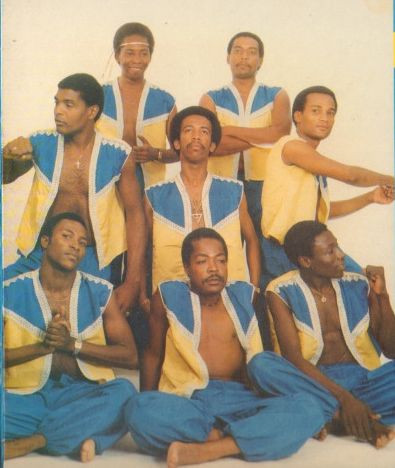
Biography
Tuco Bouzi and the Dixie Band
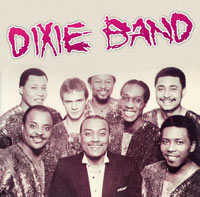
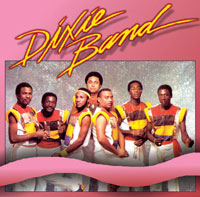
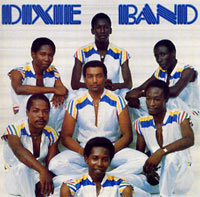
In 1984, in Gonaïves, the Dixie Band’s first single exploded on the streets and dance floors. “Bèl Kanaval” — Bel Carnaval in French, meaning “beautiful carnival” — became the anthem of a Haitian carnival where compas, a musical genre born in French-speaking Caribbean in the early 1950s and adapted into Haitian kompa, found new life. The group was driven by the drums and compositions of Ulrick Bouzi, nicknamed Tuco, a percussionist who drew an inimitable signature in the compas.
In Brief
| Group Name | Dixie Band |
| Founder and Conductor | Ulrick “Tuco” Bouzi, drums and composer |
| Origin | Haiti, Artibonite (Gonaïves) |
| Genres | Kompa — Haitian adaptation of Antillean compas, driven by a pète guitar and brass section |
| Active Period | 1982–2003 (documented albums); possible later activities |
| Documented Albums | 24 |
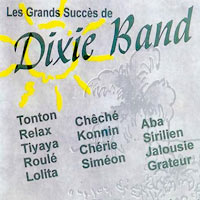
| Signature Tracks | “Bèl Kanaval”, “Malouines”, Aba!, “Chérie” |
| Labels | Mini Records (M.R.S.), Moradisc, JD Productions |
Key Dates
| Year | Event |
|---|---|
| 1982 | First recording: Dixie Band, released on Mini Records (M.R.S.) label |
| 1984 | “Bèl Kanaval” propels the group onto the Haitian kompa stage |
| 1985 | The group confronts the Duvalier regime; arrival of Frantz Dormela (vocals) and Georges Nazie (guitar) |
| 1986 | Release of Aba! — the Creole word meaning “down!” or “finished!”, the album that crystallized popular dissent |
| 1987 | “Malouines” denounces the Falklands War; records were seized and destroyed by the regime |
| 1987 | Release of the album Haiti; Dieudonné Larose sings within the group |
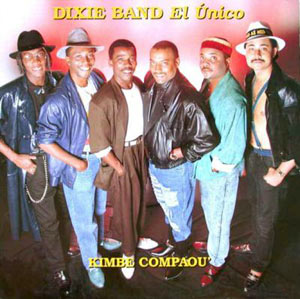
| 1989 | Arrival of Rene Jean Renel (saxophone) and Rodrigue Damis (vocals) on Kimbe Compaou' |
| 1993 | Release of Voye Monte; the group maintains its presence on the stage |
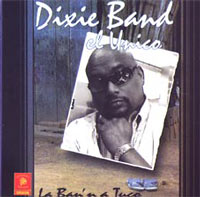
| 2003 | Last documented album: La Ban’n A Tuco (literally, “go find Tuco”) |
| 2014–2026 | Dixie Band tracks continue to be massively broadcast on Haitian radios |
From Gonaïves to Rebellion: The Dixie Band and 1980s Haiti
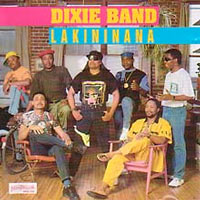
Ulrick Bouzi, known as “Tuco,” a nickname used here as standard journalistic appellation and not as a direct quote, laid the foundations of the Dixie Band in the early 1980s. Hailing from the Artibonite, the most populous region in Haiti centered on Gonaïves, Tuco was not a beginner: before founding the group, he had already played with the Frères Déjean — one of the great northern Haitian orchestras founded by Fred and André Déjean in 1963 — and with the Skah Shah, a formation of the Haitian diaspora in New York. His mastery of drums and sense of rhythm made him a natural conductor, capable of leading ensembles counting fifteen musicians.
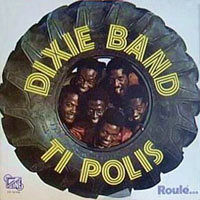
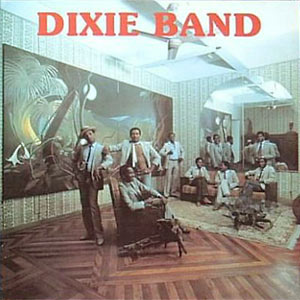
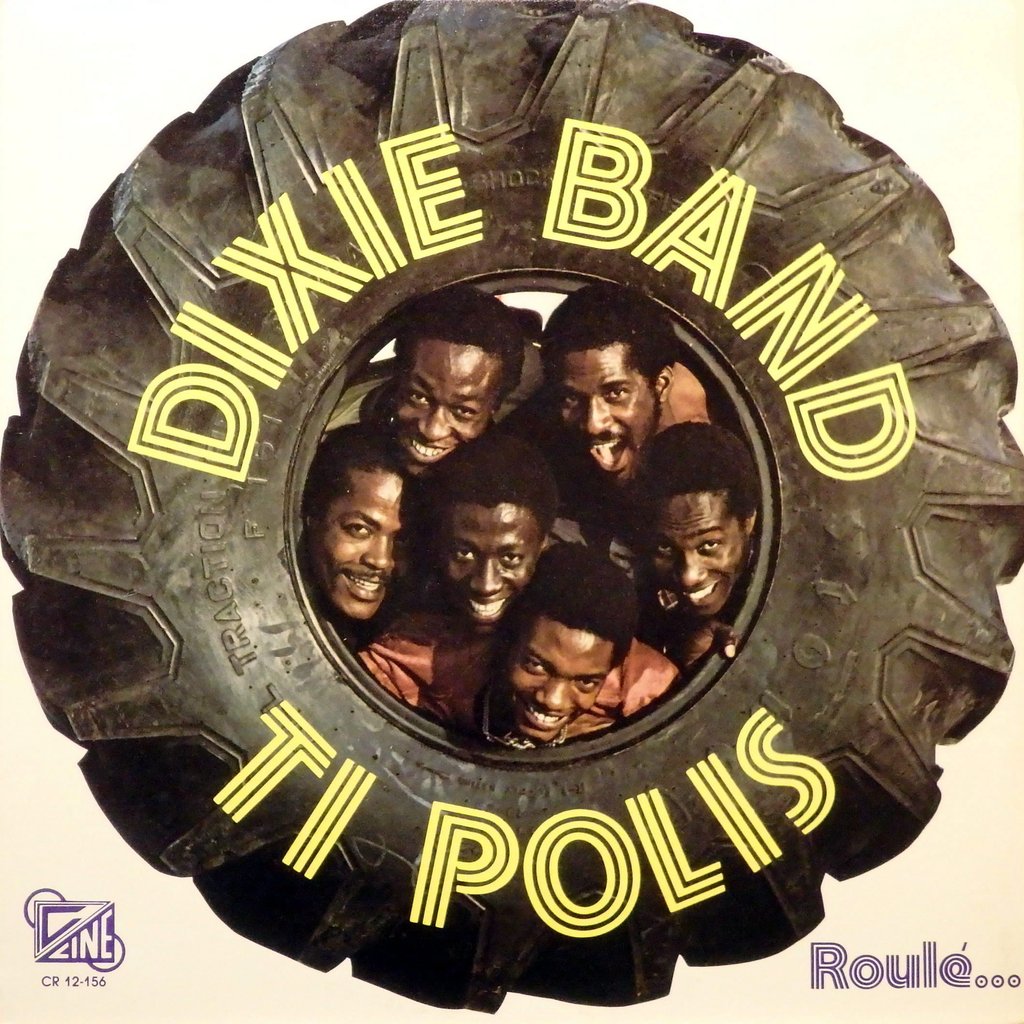
The first album, released in 1982 on the Mini Records label, is simply titled Dixie Band. It reveals a solid formation: Ulrick Bouzi on drums and musical direction, Daniel Nozile on congas, Dieujuste Polinice “Ti Polis” Nozile on guitar and backing vocals, Josué Fortuné on bass. The sound is compas — Haitian dance music descending from direct Antillean compas, characterized by a rhythmic guitar play nicknamed pète and a brass section alternating between alto saxophone and trumpet.
The consecration arrives in 1984 with “Bèl Kanaval”. The track becomes an immediate hit on the streets of Gonaïves and at carnival balls throughout the island. The Dixie Band is now a major group, with a discography spanning the Mini Records and JD Productions labels.
This ascent coincides with the catastrophic end of the Duvalier regime. Haiti sinks into repression and the Dixie Band, like many kompa groups from the provinces, responds through music. “Malouines”, released in 1987 on the eponymous album, denounces the Falklands War with the phrase: “Soldiers are killed, officers are decorated.” A veiled but targeted critique of the regime arming certain militias while its own troops die. Records were seized and destroyed by authorities — an act of censorship that marks the Dixie Band’s status as an implicit opposition group. The album Aba! (1986), whose title means “down!”, goes even further: its tracks denounce poverty, unemployment, torture, and arbitrary arrests. It is a psychological war album against the regime, driven by powerful voices including that of Dieudonné Larose.
The commitment is not just a marketing artifice. The group’s tour log is marked by lineup changes: in 1985, Frantz Dormela arrives on vocals and Georges Nazie on guitar; in 1986, five musicians leave the group; in 1987, four newcomers join the orchestra. This rotation of nearly fifty credited musicians across twenty-four albums makes the Dixie Band not a fixed group but a living institution, a launchpad for young talents. Among them, Edy Brisseaux — trumpet — who later recounted starting at 17 with great kompa groups, and Dieudonné Larose who, after the Dixie Band, became the major figure of Missile 727 and then a solo legend.
Major Works
| Work | Year | Why It Is Essential |
|---|---|---|
| Dixie Band (album) | 1982 | Group’s first recording: the gateway to provincial compas |
| “Bèl Kanaval” / Bel Carnaval | 1984 | First major success, carnival anthem that launches the group on the national stage |
| Aba! (album) | 1986 | Dissent album against the Duvalier regime, silent anthem of popular resistance |
| “Malouines” / Malouines (album) | 1987 | Denunciation of the Falklands War; records seized and destroyed by the regime — proof of the risk taken |
Heritage and influence
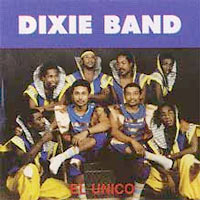
The Dixie Band did not receive the institutional recognition accorded to Tabou Combo or the Déjean Brothers in the grand narratives of Haitian music. Its provincial roots — Artibonite, far from the Port-au-Prince studios — worked against its national visibility. Yet, its influence is profound: it proved that provincial kompa could carry the same artistic and political ambitions as that of the capital. Its albums document a pivotal decade in Haitian history, and its tracks continue to animate dance floors and Haitian radio stations. Tuco Bouzi’s solo career — albums in Spanish such as Mim’ Nou Mim’n and Bolinguo, recorded in Miami in the 1990s — shows a musician who never ceased to explore beyond the compas. In 2026, NAGO TV notes that fourteen tracks by the group are still broadcast on Haitian stations, with “Chérie” at the top: a permanence that speaks for itself.
Sources and references
- “Groovin’ in the provinces: Hometown bands that spread konpa across Haiti”, Haiti Times, https://haitiantimes.com/2025/09/28/konpa-music-regional-bands-haiti, accessed November 15, 2026.
- “Dixie Band — Archives de la musique haïtienne”, Legal Men Bagay, https://legalmenbagay.com/archives/groupes/dixie-band, accessed November 15, 2026.
- “Dixie Band”, Discogs, https://discogs.com/artist/1629981-Dixie-Band, accessed November 15, 2026.
- “Dixie Band”, AllMusic, https://allmusic.com/artist/dixie-band-mn0000160674, accessed November 15, 2026.
- “Konpa in Connecticut: Interview with Trumpeter and Educator Edy Brisseaux”, Afropop Worldwide, https://afropop.org/articles/konpa-in-connecticut-interview-with-trumpeter-and-educator-edy-brisseaux, accessed November 15, 2026.
- “Dieudonné Larose, figure emblématique de la musique Haïtienne s’est éteint”, Bwat Nouvel, https://bwatnouvel.com/dieudonne-larose-figure-emblematique-de-la-musique-haitienne-sest-eteint/, accessed November 15, 2026.
- “Dieudonné Larose: quand une voix devient mémoire”, Michelle Latortue, https://www.michellelatortue.ca/2026/01/14/dieudonne-larose-quand-une-voix-devient-memoire/, accessed November 15, 2026.
- “Musikhaiti.free.fr — Discographie : Dixie Band”, http://musique.haiti.free.fr/discographie/fiches/dixieband00pagedr.htm, accessed November 15, 2026.
- “Music for the Masses: The Golden Age of Compas Direct”, Wavefarm, https://wavefarm.org/wf/archive/tk5h7t, accessed November 15, 2026.