L’Haïti en rythme : the musical history of a permanent revolution
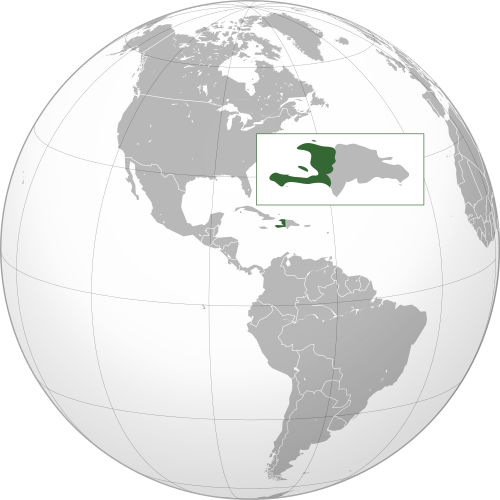
Haïti, the first independent black republic, owes its existence to an enslaved uprising where Vodou drums played a strategic role—not as accompaniment, but as a communication system and call to action. Nearly two and a half centuries after independence, this island of 12 million inhabitants continues to shape Caribbean music: from kompa, its most iconic global style, to political mizik rasin, passing through Kreyòl rap and the recent boom of digital kompa. « Dépi ou konn maké pa, ou toujou sou konpa » (« As soon as you know how to walk, you are always in kompa »), said Nemours Jean-Baptiste, creator of the genre1. Haitian music is the history of a country in motion.
From Vodou drum to méringue: the foundations (18th–19th century)
Haitian music draws its roots from three worlds that collided and fused on the island of Hispaniola. First, the Taíno and Carib peoples, whose instruments—maracas, güiros, and mayohuacán (large hollowed tree trunks used as tam-tams)—almost disappeared with Spanish colonization2. Then, the approximately 800,000 people enslaved from West Africa and the Congo, who imposed polyrhythms, call-and-response (the response chant), and ritual structures that remain the bedrock of Haitian musical culture2.
The Bois Caïman ceremony, August 14, 1791, is the founding moment: houngan (Vodou priest) Dutty Boukman gathered over a thousand conspirators in a ritual where songs and drums created an unbreakable unity of war1. The Haitian Revolution culminated in 1804—and Vodou, with its three sacred drums (boula, bébé, manman) and its lwa (spirits)3, became the spiritual and musical backbone of the island.
But French colonists also brought their ballroom dances—contradance, quadrille, habanera—which, blended with African rhythms, gave birth to the méringue (or slow méringue), a slow dance that historians now consider the direct ancestor of konpa. Around the turn of the 20th century, the guitar playing of twoubadou (from French “troubadour”), acoustic music of Port-au-Prince’s popular neighborhoods, completed this picture by adding a poetic and narrative dimension4.
Did you know? Haïti is the only nation in the world born from a slave revolt leading to total independence. But it had to pay France an “indemnity” of 90 million gold francs—diverting resources that could have funded a national music school as early as the 19th century2.
The kompa revolution (1955-1979): two men, a rhythm that conquered the world
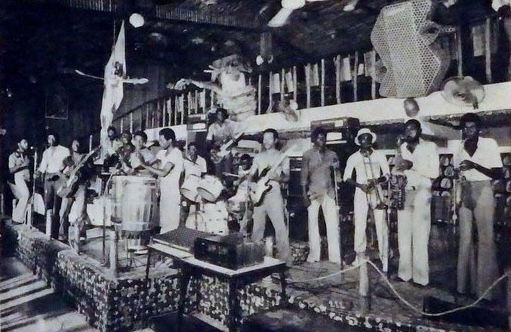
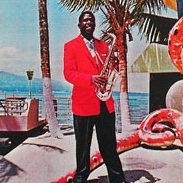
While méringue laid the groundwork, kompa (or kompa direk) is Haiti’s international signature. It was born on July 26, 1955, at Sainte-Anne Square in Port-au-Prince, when saxophonist Nemours Jean-Baptiste, returning from a visit to the sacred waterfall Sodo, turned to his friend saxophonist Webert Sicot and proposed: “Let’s form a group.” The Conjunto International took the stage that night1.
Nemours Jean-Baptiste (1918-1985), son of a middle-class family in the capital, had learned guitar and banjo in Les Cayes, then saxophone in Port-au-Prince. His vision: adapt Dominican méringue—booming thanks to President Rafael Trujillo—to the Haitian African groove. The result, which he called “kompa direk” (straight, square kompa), rests on a two-chord progression, walking bass, and a percussive rhythm that never lets up5. “Kompa, kompa, kompa,” he repeated on stage, until the word became the name of the genre itself4.
The rivalry with Webert Sicot, who created his own variant named “cadence rampa” (or kadans-ranpa), polarized the country but pushed both artists toward a permanent race for innovation. This period, called “épòk Nemou ak Siko” or “épòk polémik,” dominated the Caribbean scene for a decade6.
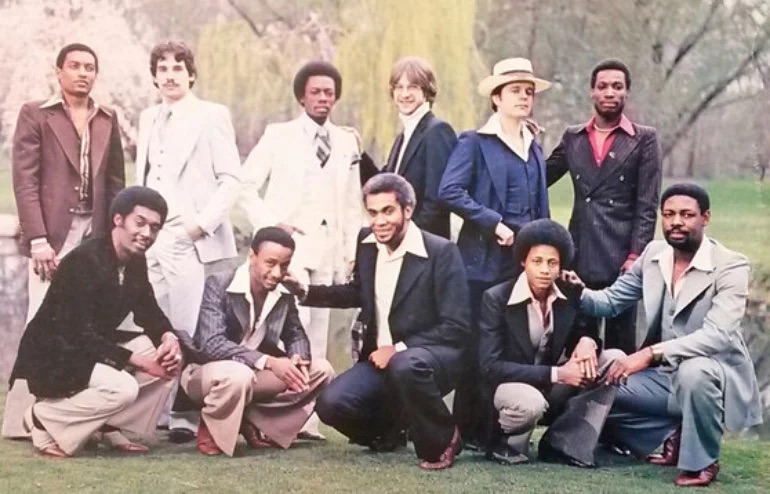
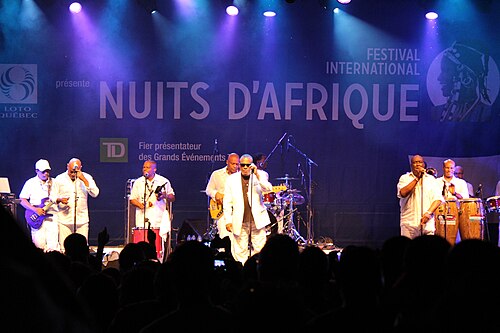
In the 1960s, mini-jazz exploded: smaller groups electrified kompa with electric guitars, keyboards, and brass. The Tabou Combo, founded in 1967 in Pétion-Ville by Albert Chancy and Herman Nau, became the genre’s global ambassador—the first Haitian group to play in Japan, Côte d’Ivoire, and Senegal, and the first Caribbean group to reach number one on the French hit parade7.
Mizik rasin and political kompa (1970-2000): when music says no
Under the Duvalier dictatorship (Papa Doc 1957-1971, Baby Doc 1971-1986), music became a battlefield. François Duvalier appropriated Vodou imagery as a tool of terror, and commercial kompa became the soundtrack for an out-of-touch ruling class. The Port-au-Prince youth reacted with mizik rasin (“music of the roots”), which fused traditional Haitian rhythms (rara, kanaval, lakou music) with Jamaican reggae, rock and funk3.
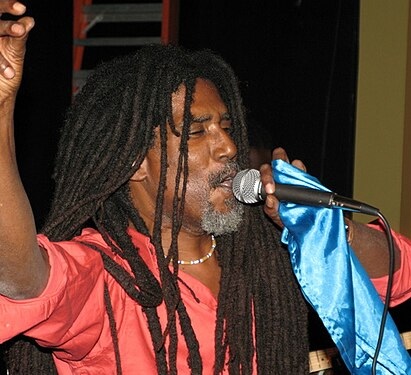
The most emblematic group is Boukman Eksperyans, founded in 1978 by Lolo Beaubrun Jr. and his sister Marjorie. The name pays homage to Vodou priest Dutty Boukman, whose 1791 ceremony is considered the trigger for the Revolution. “Eksperyans” refers to the Jimi Hendrix Experience. Their song “Ke’m Pa Sote” (“My heart does not skip”), presented at the 1990 Carnaval, became a resistance anthem against the post-Duvalier military government — a soldier shot at a young girl during their performance, and the group became a target8. In 1991, after the coup against Jean-Bertrand Aristide, Boukman Eksperyans went into exile and continued to denounce Raoul Cédras’s junta from abroad, before returning in 1994 and being nominated for a Grammy for their album Vodou Adjae.
Kompa itself is not left behind: Sweet Micky (Michel Martelly), a self-taught keyboardist nicknamed the “President of Kompa”, popularized a “new generation” (nouvèl jenerasyon) of groups with an electric and synthetic sound, blending kompa, zouk and carnival humor. His popular enthusiasm led to an unprecedented fact: in 2011, he became President of Haiti himself9.
The diasporic era and Creole rap: Haiti everywhere, Haiti nowhere?
The Haitian diaspora — estimated at several million people, notably in the United States (New York, Miami, Boston) and Canada (Montreal) — is a full-fledged musical laboratory. Wyclef Jean, former member of the Fugees, introduced kompa to the global public through a collaboration with Sweet Micky on The Carnival (1997), where he proclaims: “Surprise — it’s Sweet Micky!” He attempted to bring the Haitian beat in English, convinced that the rhythm was strong enough to cross the linguistic barrier8.
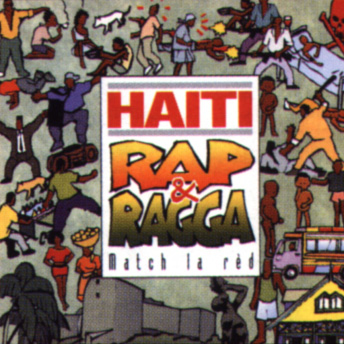
On the rap side, Rap Kreyòl (hip-hop sung in Haitian Creole) emerged in the early 1980s under the impetus of Master Dji (George Lys Herard), who brought back from France the practice of American hip-hop and adapted it to Haitian Creole. As early as 1989, his tracks “Vakans” and “Sispann” (“Stop”) launched a movement that made rap a tool of political protest, anti-corruption critique and democratic mobilization10. In the 2000s, collectives like Rockfam Lame A and figures like Wendyyy brought the genre to an unprecedented urban scale, blending punchlines, freestyles and kanaval anthems10.
Kompa 2.0: the digital boom and planetary turn (2010-2025)
The streaming era and social networks transformed kompa from diaspora music into a global phenomenon. The figures speak for themselves: platforms report a 300% increase in kompa playlists over two years11.
At the center of this wave: Joé Dwèt Filé. Born in 1995 in the Paris region to Haitian parents, this singer-multi-instrumentalist earned a nomination for the BET Awards 2025 (Best International Act) for “4 Kampé”, a diamond single that accumulated over 100 million streams and triggered the #KompaDanceChallenge on TikTok. “Kompa is more than music, it’s a feeling. When people hear it, even if they don’t understand Creole, they dance”11.
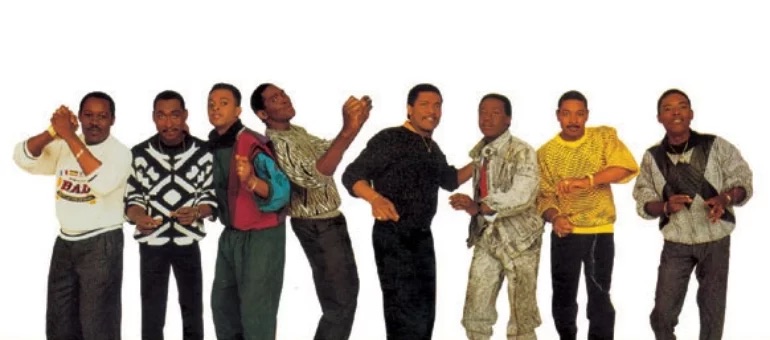
Haiti itself is also seeing a generational renaissance. Groups like Harmonik (the most-streamed kompa group of the current generation), Baz Kompa (formed in 2018 in Montreal) and Djakout Mizik are lighting up YouTube and Spotify. Tabou Combo, now led by Fanfan Joseph, celebrated its 50th anniversary in 2025 with concerts in New York12.
Did you know? The city of Montreal hosts the largest Haitian diaspora in the world. The city serves as a springboard for many kompa artists: Baz Kompa, Joé Dwèt Filé and others find there a ground for experimentation between the Parisian stage and the North American public13.
Legacy: a country that never stops inventing its own rhythm
Haiti counts no less than 60 traditional rhythms cataloged14. From the Vodou drum of Bois Caïman to the dance floor in Paris, passing through the Carême rara drums and Montreal synthesizers: Haitian music is a story of resilience and adaptation.
If the country goes through major political and economic crises, its music does not suffer them — it crosses them, transforms them, spreads them. As artist and producer Fabrice Rouzier says: “Kompa pulls all of this together. That’s why that of the golden era, from the 1960s to the early 80s, is a genre that never loses its taste. And it is inextricably Haitian. One cannot say it was copied from a nation. It has its own identity.”1
In 2025, 70 years after Nemours Jean-Baptiste, kompa waits for only one thing: to be danced.
Sources and references
-
Fabrice Rouzier and Nathalie Cerin, « The birth of Konpa! », WXPN / Vinyl At Heart, 2021. URL ↩︎ ↩︎ ↩︎ ↩︎
-
Caribbean Currents, ch. 01; CRUDEM Foundation, « Music in Haiti » URL; Manuel & Largey, op. cit. supra3. ↩︎ ↩︎ ↩︎
-
Peter Manuel & Michael Largey, Caribbean Currents: Caribbean Music from Rumba to Reggae, 3rd ed., Temple University Press, 2016, chap. 6 (Haiti and French Caribbean). ↩︎ ↩︎ ↩︎
-
« 70 Years of Compas Direct: Nemours Jean-Baptiste, the Pioneer », Le Nouvelliste, 2025. URL ↩︎ ↩︎
-
« History of Compas Direct », konpa.info (reference site for Haitian music). URL ↩︎
-
« 4 — The origins of konpa and kadans », Médiathèque Caraïbe (Laméca). URL ↩︎
-
« Tabou Combo biography », taboucombo.com. URL; see also Wikipedia, « Tabou Combo ». URL ↩︎
-
« Wyclef Jean works to become MVP for Haitian culture », Houston Chronicle, 2008. URL ↩︎ ↩︎
-
« Kompa Takes Over: How Haiti’s Signature Sound Became a Global Phenomenon », Kompanou, 2025. URL ↩︎ ↩︎
-
« Kick Off the Rhythm: Haiti Celebration With Tabou Combo », Mondo Local, June 2025. URL ↩︎
-
« Baz Kompa: A big sound from Haitian Montreal », Afropop Worldwide, November 2025. URL ↩︎
-
Andre Bassiard, « Haitian Music Complete: Kompa, Rara, Arts And Culture », Zafenou, January 2026. URL ↩︎