Biography
André « Dadou » Pasquet: the guitar that reshaped Haitian konpa
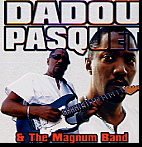
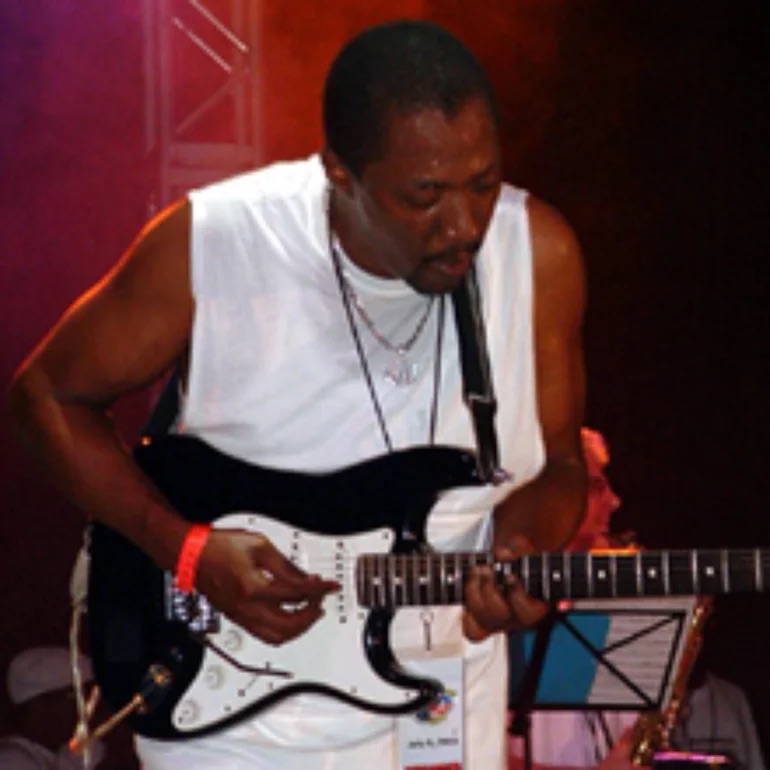
In 1976, in Miami, a twenty-three-year-old guitarist imposed an unprecedented sound1. André « Dadou » Pasquet had just launched the Magnum Band and marked Haitian music.
In brief
| Full name | André Pasquet |
| Nickname | « Dadou » |
| Birth | 19 August 1953, Port-au-Prince, Haiti |
| Death | 22 November 2025, Miami (Florida) |
| Instruments | Guitar, vocals |
| Genres | Konpa, Haitian soul, jazz, funk |
| Groups | Tabou Combo (1970-1976), Magnum Band (1976-2025) |
| Iconic works | “Liberté”, “Experience”, album Afrika |
Key dates
| Year | Event |
|---|---|
| 1953 | Birth in Port-au-Prince in a family of musicians |
| 1970 | Joins Tabou Combo at age 17, replacing Albert Chancy |
| 1970-1976 | Contributes to four iconic Tabou Combo albums |
| 1976 | Co-founds Magnum Band with his brother Claude « Tico » Pasquet |
| 1982 | “Liberté” becomes the anthem of the Haitian diaspora |
| 1986 | Release of Afrika, a pan-African tribute |
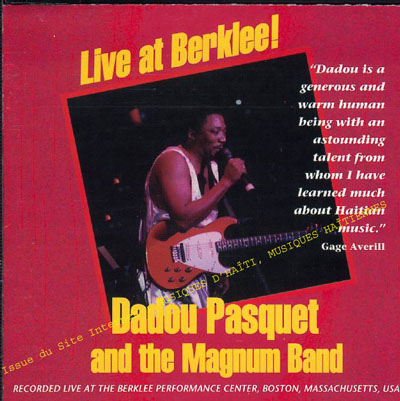
| 1992 | Live at Berklee ! captures a memorable concert in Boston |
| 1996 | The Magnum Band at the Atlanta Olympic Games cultural festival |
| 2025 | Death at age 72 |
Origins: a musical family
André Pasquet was born on 19 August 1953 in Port-au-Prince, immersed in music2. His uncle, Dòdòf Legros, a prominent figure on the Haitian scene, was his first inspiration. Very young, he picked up a guitar; Raymond Sicot, Raoul Guillaume and Richard Duroseau spotted his potential.
At Tabou Combo (1970-1976)
At fourteen, he played with Raoul Guillaume. In 1970, at sixteen, he joined Tabou Combo, a konpa group then at the peak1. Alongside Roger « Shoubou » Eugène and Yvon « Biassou » Mondésir, he formed a powerful vocal trio and contributed as guitarist and arranger to the successes of Sugar Cane, Respect, 8th Sacrament and The Masters.
But this talent felt too confined. He would later confess that he left Tabou Combo because he could not « truly exploit his compositional inspiration »3.
The Magnum Band and kadans rampa
On 24 June 1976, on the feast day of Saint John the Baptist, Dadou and his brother Claude « Tico » founded the Magnum Band in a lodge in Miami. The sound was new: konpa pulled toward jazz, funk and pop. Trained at Staten Island College, Dadou inserted blues chords and complex brass arrangements into Haitian konpa, forging kadans rampa — a climbing konpa1. The group performed in Miami clubs, 40,000 people in Paris, and the Atlanta Olympic Games in 1996.
« You can’t sing nonsense », he launched to the Miami Herald. « I want the Magnum Band to rock, and I won’t rest until it’s done ».
Magguie Rigaud, his manager, estimated that he could have « exploded on the world stage » if he had not been held back by the limits of the Haitian market1. Confronted with gangs, he had to abandon the studio built in Fermathe, on the hills of Kenscoff.
Discography
| Album | Year | Why it’s essential |
|---|---|---|
| Cherche la Vie | 1980 | First signature album of the Magnum Band |
| “Liberté” | 1982 | Anthem of the diaspora fleeing the Duvalier dictatorship |
| Afrika | 1986 | Bridge between Haitian rhythms and pan-African themes |
| Live at Berklee ! | 1992 | Improvised energy on stage, Boston |
| Generations | 2024 | Last album, carried toward new voices |
Legacy
Dadou Pasquet died in Miami on 22 November 2025, after a battle against leukemia3.
The Transitional Presidential Council of Haiti and Prime Minister Alix Fils-Aimé paid tribute to his « talent, elegance and devotion to Haitian music »4. His family described him as « a close one whose humility equaled his talent ».
Ralph Condé wrote: « Dadou’s touch, his soul on the guitar left a mark that will never fade »1.
Fabrice Rouzier, founder of the Mizik Mizik group, summarized: « Every 50 years, Haiti gives us one of them. It’s extraordinary to have lived at the same time as an artist like him »1.
When asked what he wanted to leave to the world, his answer in Crete fit into three words: « Jwe mizik lan ». Play my music.
Sources and references
-
Charles, Jacqueline, Miami Herald, 24 November 2025, accessed 29 October 2026. ↩︎ ↩︎ ↩︎ ↩︎ ↩︎ ↩︎
-
Archive Musique Haïtienne, AMH-D-000013, accessed 29 October 2026. ↩︎
-
Haitian Globe, 23 November 2025, accessed 29 October 2026. ↩︎ ↩︎
-
Yacou, Yasmina, Guadeloupe La Première (France Info), 23 November 2025, accessed 29 October 2026. ↩︎