Biography
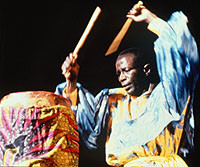
Doudou N’Diaye Rose: the mathematician of Senegalese rhythm
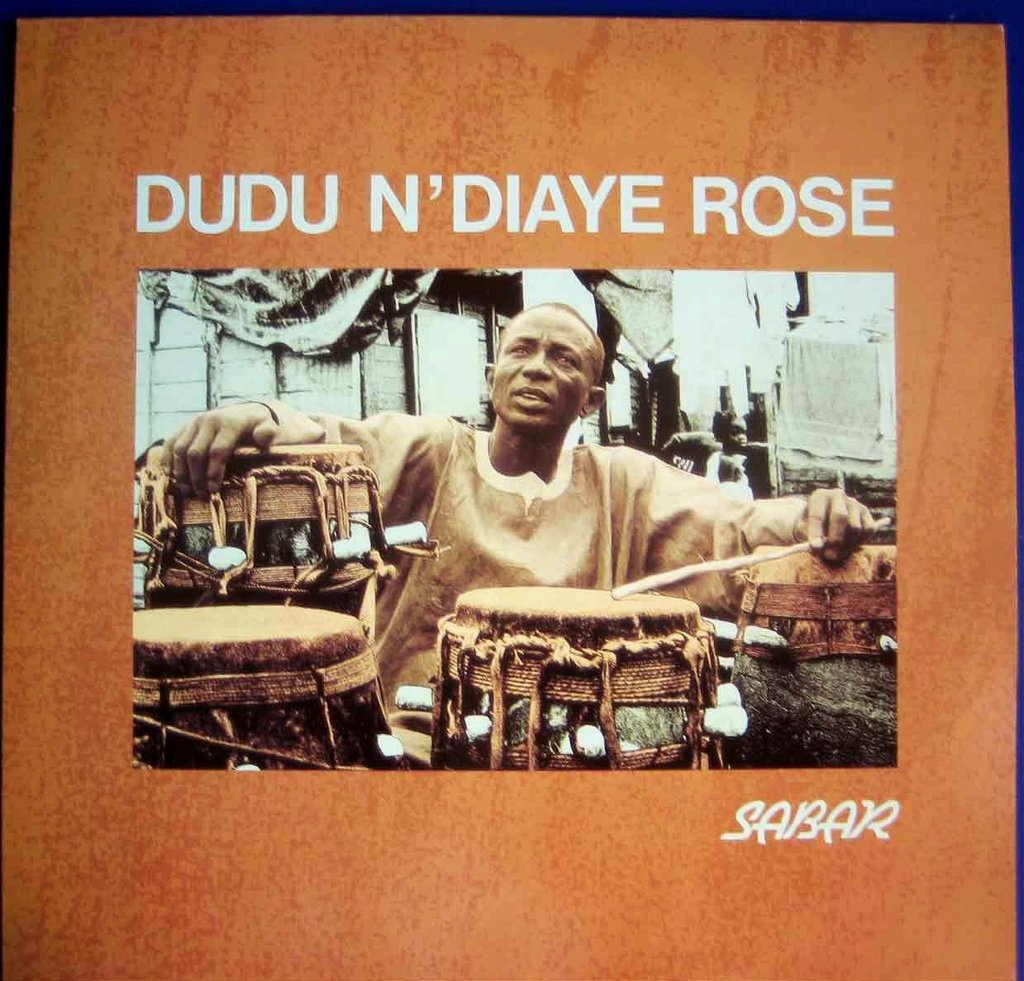
In Dakar, before independence, people followed the drums as if following a light. Young Mamadou N’Diaye, known as Doudou, left school to find the house where sabar was being played — that Wolof drum which, with a strike of the stick and the palm, sends messages between villages. He learned more than one hundred traditional rhythms before inventing dozens of others.
In brief
| Full name | Mamadou N’Diaye, known as Doudou N’Diaye Rose |
| Birth | 28 July 1930, Dakar (French West Africa) |
| Death | 19 August 2015, Dakar (85 years old) |
| Field | Traditional Senegalese percussion — sabar, bougarabou, lambe… |
| Notable works | Djabote, “Passion” (Peter Gabriel) |
| Honours | UNESCO Living Human Treasure (2006) |
Key dates
| Year | Event |
|---|---|
| 1930 | Birth in Dakar, into a Wolof family of griots |
| 1940s | Training under Mada Seck El Hajj; mastery of more than one hundred rhythms |
| 1950-60 | Josephine Baker on tour in Dakar: « You will be a great drummer » — a prophecy fulfilled |
| 1960 | Led one hundred sabars during the independence ceremonies of Senegal |
| 1960-70 | Drum major of the National Ballets of Senegal |
| 1974 | Founded the Dakar percussion school, open to girls — a revolution |
| 1984 | Met Peter Gabriel in Africa; enduring collaboration |
| 1989 | Percussion on Passion by Peter Gabriel for the film The Last Temptation of Christ |
| 1994 | Release of the album Djabote on the Real World label, produced by Eric Serra |
| 2006 | Declared UNESCO Living Human Treasure by UNESCO |
From village sabar to global recognition
Mamadou N’Diaye was born on 28 July 1930 in Dakar, into a Wolof family of griots whose father, an accountant, wanted him to become a plumber. Doudou obeyed on paper, but not on the drum: « Even though I trained to be a plumber, I never stopped playing the drums », he would later confess to The Guardian. Mada Seck El Hajj, the country’s finest sabar master, opened the doors of tradition to him. Doudou travelled across Senegal and learned more than one hundred rhythms; the elders made him their drum major.
In 1960, at the time of Senegalese independence, Doudou led an orchestra of one hundred sabars before President Léopold Sédar Senghor. This event marked the beginning of a regular friendship and designated him as drum major of the National Ballets of Senegal. In 1974, he founded a percussion school open to girls — a revolutionary gesture in a country where sabar was the exclusive domain of men. From his union with four women came forty-two children, many of whom became percussionists. He created The Drummers of West Africa and the female ensemble Les Rosettes. He invented a new form of sabar that earned him the nickname « mathematician of rhythm » from critics; more than five hundred rhythms bear his imprint.
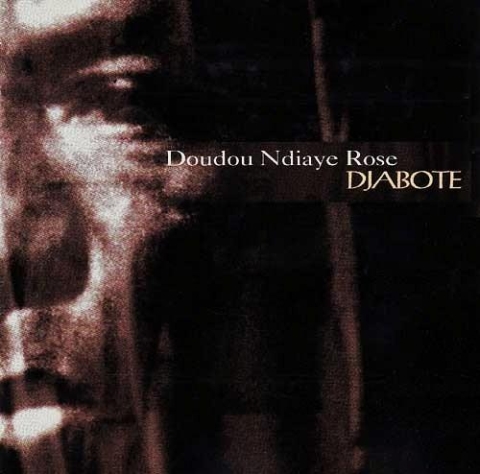
International recognition arrived through Peter Gabriel, whom he met in 1984 during an African tour. Doudou participated in Passion (1989), the soundtrack to Martin Scorsese’s film, then appeared on Us (1992) and Hit (2003). Gabriel described him as « a Yoda type of figure whose magic powers extended deep into the rhythmic arts ». In 1989, he appeared in a tuxedo atop a pyramid of drums on the Champs-Élysées. His album Djabote, released in 1994 on Gabriel’s Real World label, was recorded in one week on the island of Gorée with fifty percussionists and eighty choristers — the best album to discover sabar. He is also heard collaborating with Miles Davis, Dizzy Gillespie and the Rolling Stones; he appears in a remix of The Warning by Nine Inch Nails (Year Zero Remixed, 2007).
Major works
| Work | Year | Why it is essential |
|---|---|---|
| Djabote | 1994 | Reference album for symphonic sabar, recorded on the island of Gorée with 50 drums and 80 choristers |
| “Passion” (soundtrack) | 1989 | Doudou’s percussion in Peter Gabriel’s legendary score for Martin Scorsese’s film |
Legacy and influence
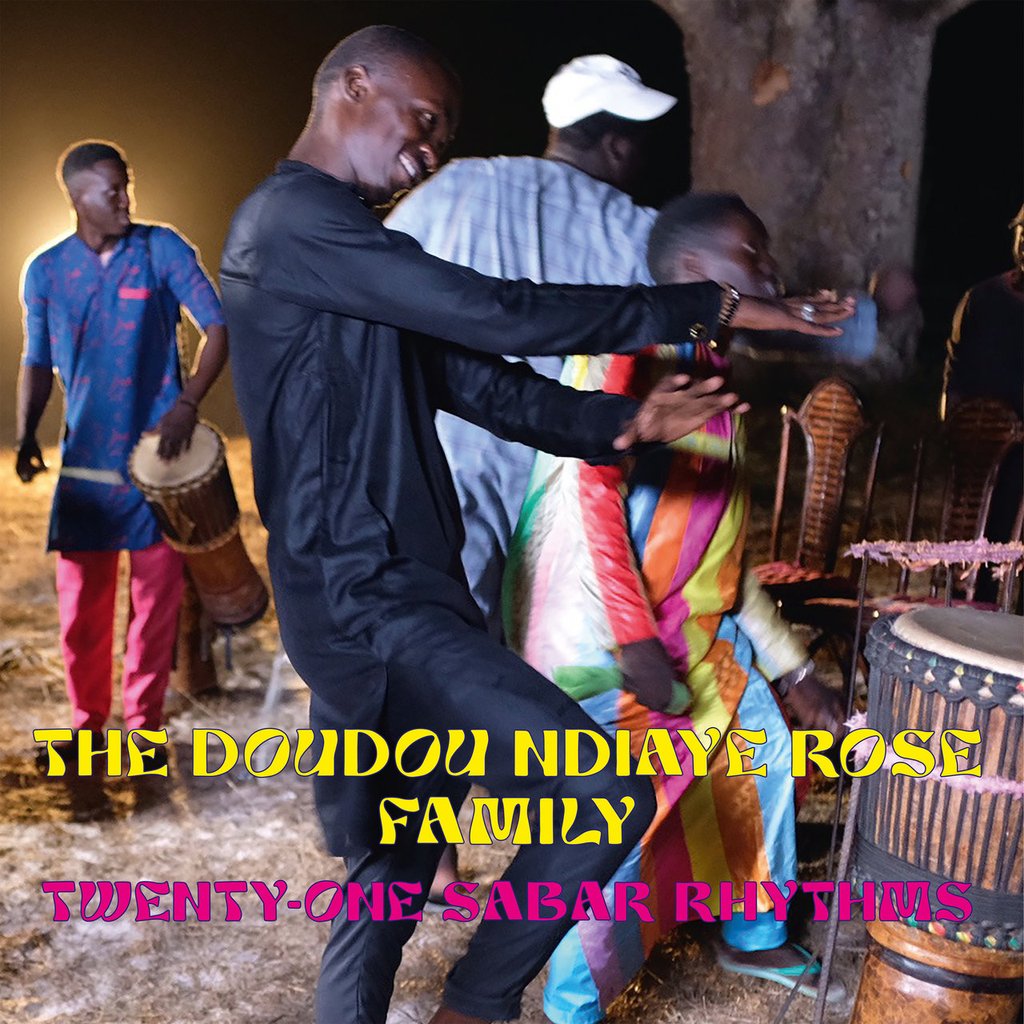
Doudou N’Diaye Rose leaves behind the image of an innovator who turned sabar into a symphonic instrument and a model educator. His descendants continue his work: The Drummers of West Africa and Les Rosettes continue to perform on international stages, and his son Moustapha teaches at the Cité de la Musique in Paris. UNESCO pays tribute to the « Living Human Treasure » by organizing concerts bringing together his descendants, confirming that this treasure is more alive than ever.
Sources and references
-
« Doudou N’Diaye Rose obituary », The Guardian, https://www.theguardian.com/music/2015/aug/25/doudou-ndiaye-rose, accessed 15 November 2026.
-
« Doudou N’diaye Rose, legendary Senegalese drummer who played a key role in preserving his native culture, dies at 85 », The Guardian, https://www.theguardian.com/music/2015/aug/20/senegalese-drummer-doudou-ndiaye-rose-dies-in-dakar-aged-86, accessed 15 November 2026.
-
« Doudou N’Diaye Rose », Wikipedia, https://en.wikipedia.org/wiki/Doudou_N'Diaye_Rose, accessed 15 November 2026.
-
« UNESCO mourns the death of Senegalese percussionist Doudou Ndiaye Rose », UNESCO, https://www.unesco.org/en/articles/unesco-mourns-death-senegalese-percussionist-doudou-ndiaye-rose, accessed 15 November 2026.
-
« Doudou N’Diaye Rose — Biography », AllMusic, https://www.allmusic.com/artist/mn0000191162, accessed 15 November 2026.
-
« Doudou N’Diaye Rose — Discogs », https://www.discogs.com/artist/425545-Doudou-NDiaye-Rose, accessed 15 November 2026.
-
« Djabote — Liner notes », Real World Records, https://realworldrecords.com/releases/djabote/, accessed 15 November 2026.
-
“Biography of Doudou N’diaye Rose (1930-2015)”, Encyclopédie Universalis, https://www.universalis.fr/encyclopedie/doudou-n-diaye-rose/, accessed November 15, 2026.