Biography
Éric Brouta
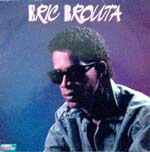
On June 17, 2011, at the Zénith in Paris, Éric Brouta took the stage before ten thousand people. His tinted glasses and drummer’s cap made him an immediate landmark. When he launched Nadia (méti-w an kontakt), the hall vibrated: it was a collective memory revival for zouk, and Brouta was a key figure in this movement.
In Brief
| Full Name | Éric Juste Brouta |
| Birth | November 10, 1961, Pointe-à-Pitre, Guadeloupe |
| Death | May 8, 2014, Paris (5th arrondissement) |
| Field | Zouk — Caribbean dance music born in the late 1980s |
| Instruments | Drums, vocals |
| Iconic Works | “Téléphone”, “Chèché-mwen”, “Machine à lanmou” |
| Labels | Moradisc, Disques Debs, Akatoto, Phoenix Records |
Key Dates
| Year | Event |
|---|---|
| 1961 | Birth in Pointe-à-Pitre, Guadeloupe |
| 1977 | Debut as a drummer in the reggae group Smoke |
| 1980-1985 | Successive drummer for Francky Vincent, Tabou n°2, Les Vikings de la Guadeloupe and Expérience 7 |
| 1985 | Release of Ouvé ban mwen with Frédérick Caracas; success of the track “Chèché-mwen” |
| 1986 | Joined the Disques Debs stable, the flagship label of Caribbean zouk |
| 1988 | First solo album, Mwen Ké Déviré, with the hit “Téléphone” |
| 1989-1993 | Productive period: Trafik, Pa Ka Tenn, Tou Paré, Zouk Connection |
| 2011 | Concert at the Zénith in Paris with Jacob Desvarieux (Grand Méchant Zouk) |
| 2014 | Death in Paris, from lung cancer |
| 2015 | Inauguration of the Éric-Brouta kiosk in Abymes, Guadeloupe |
From Drums to Microphone
Éric Brouta grew up in Pointe-à-Pitre. Music flowed through the streets — zouk, gwoka, reggae mingled. From his earliest age, he was immersed in these rhythms and discovered the drums.
In 1977, at sixteen, he joined Smoke, a small reggae group. It was there that he forged his sense of groove — placing every drum hit exactly at the right moment. Zouk, which developed in Guadeloupe in the late 1980s, is a dance music influenced by Haitian konpa and Latin cumbia.
His drumming quickly made him a sought-after studio musician. He successively joined the formations of Francky Vincent, Tabou n°2, Les Vikings de la Guadeloupe and Week-End. With Expérience 7, he performed his first solo song: Mwen ké déviré. This drummer’s journey gave him a valuable asset: he knew the internal mechanics of zouk, from arrangements to mixing.
The Turning Point of Ouvé ban mwen and Solo Consecration
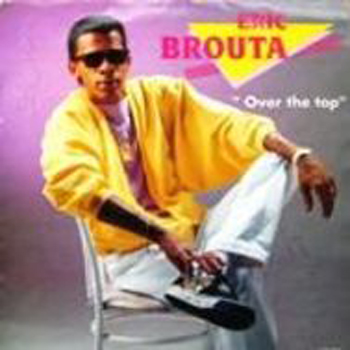
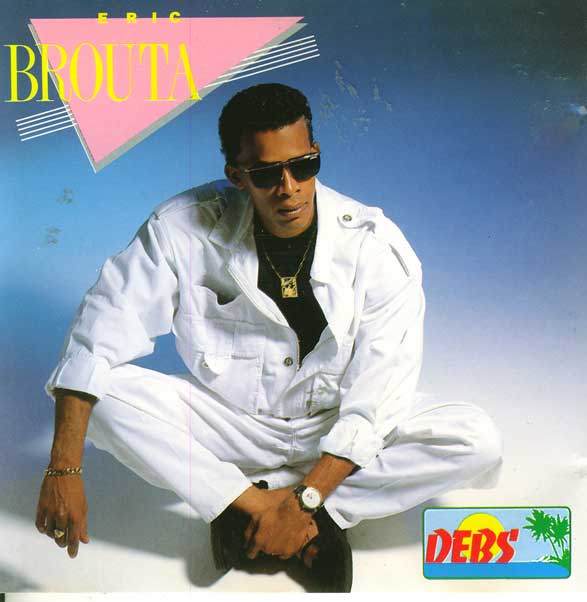
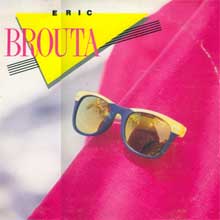
In 1985, the path shifted. He collaborated with Frédérick Caracas on the album Ouvé ban mwen (released by Moradisc). The track “Chèché-mwen” — meaning “look for me” in Guadeloupean Creole — became a planetary zouk hit. Brouta imposed his style: tinted glasses and raspy voice, far from the excessive smoothing of contemporary productions.
He then joined the Disques Debs stable, the label founded by Henri Debs that made Guadeloupe the undisputed capital of zouk. He multiplied collaborations with label artists and, in 1988, launched his solo career with Mwen Ké Déviré. The single “Téléphone” — a verse telling homesickness through impossible communications — became its anthem.
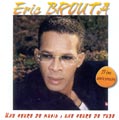
The years 1989 to 1993 saw a succession of albums: Trafik (1989), featuring “Misyé Ména”; Pa Ka Tenn (1989); Tou Paré (1990); the instrumental Zouk Connection (1991, Akatoto); and Over the Top (1992). His style stood out: a percussive rhythm that kept the drums at the center of the mix, something few zouk singers did. He sang in Guadeloupean Creole, affirming a Caribbean identity beyond the codes of zouk.
Turning Point and Last Decade
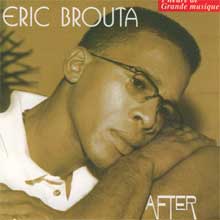
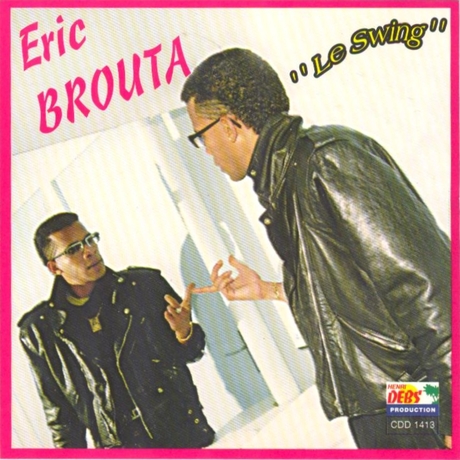
Brouta continued recording: Randezouk (1993), Zouk 5 étoiles (1995) and the double releases of 1996 (After and Le Swing) showed an artist who mastered his repertoire. He experimented with softer atmospheres (“Pense à toi”, “Bél pawol”) while maintaining his rhythmic signature.
In 2011, Ali Angel invited him on his album Hit me again for a “Chèché-mwen” duet. That same year, he was the guest of honor at the anniversary concert of Grand Méchant Zouk at the Zénith in Paris, organized by Jacob Desvarieux. On this mythical stage, he performed “Nadia (méti-w an kontakt)” and “Téléphone” before ten thousand spectators.
Ill, he gradually retired. He died of lung cancer on May 8, 2014 in Paris, at the age of 52. The zouk world was shaken: Tanya Saint-Val and Francky Vincent published tributes.
On March 8, 2015, the Éric-Brouta kiosk was inaugurated in Abymes. This tribute from the town hall — a music kiosk built on Frédéric-Jalton Square — made him an urban monument that would never again be silent.
Major Works
| Work | Year | Why It Is Essential |
|---|---|---|
| “Ouvé ban mwen” (with Frédérick Caracas) | 1985 | Brouta’s first planetary hit; an absolute classic of zouk that defined the Caribbean sound of the 80s |
| “Téléphone” | 1988 | Brouta’s first solo hit; anthem of Caribbean homesickness, sung in Guadeloupean Creole |
| “Misyé Ména” (album Trafik) | 1989 | Iconic track illustrating his mastery of conversational zouk, between humor and social commentary |
| “Chèché-mwen” (2011 cover) | 1985/2011 | Reinterpreted as a duo with Ali Angel at the Zénith in Paris, proof that the repertoire spans generations |
| “Machine à lanmou” (album Zouk Connection) | 1991 | Iconic instrumental; rare album where Brouta places his drums at the center of the mix |
Heritage and influence
Éric Brouta is not just a zouk singer: he is a drummer who sang, and this duality defines the specificity of his work. While his contemporaries entrust percussion to sidemen, he keeps control — his drumming is identifiable on every album.
His music remains a benchmark for new generations of Antillean artists who champion Guadeloupean Creole. The hits “Téléphone” and “Chèché-mwen” feature in all compilations. The kiosk bearing his name in Abymes is a place where music continues to resonate — local scenes still stage concerts there. Brouta transforms the everyday — a missed call, a dance party, a phrase in Creole — into songs that make an entire island vibrate.
Sources and references
- « Éric Brouta », Wikipédia, https://fr.wikipedia.org/wiki/%C3%89ric_Brouta, accessed 16 November 2026.
- Catherine Le Pelletier, « Eric Brouta est mort », La 1ère — France Info Outre-mer, 8 May 2014, https://la1ere.francetvinfo.fr/guadeloupe/2014/05/08/eric-brouta-est-mort-150225.html, accessed 16 November 2026.
- « Éric Brouta discography », Rate Your Music, https://rateyourmusic.com/artist/eric-brouta, accessed 16 November 2026.
- Gene Scaramuzzo, « Eric Brouta — Biography », Coda Music, https://codamusic.me/artists/eric-brouta/, accessed 16 November 2026.
- « Éric Brouta », Deezer, https://www.deezer.com/en/artist/367292, accessed 16 November 2026.
- Harry Mapolin, « Le kiosque Éric-Brouta inauguré », France-Antilles Guadeloupe, 8 March 2015, https://www.guadeloupe.franceantilles.fr/actualite/vielocale/le-kiosque-eric-brouta-inaugure-604751.php, accessed 16 November 2026.