From Slave Drums to Global Hits: The Musical History of French Antilles
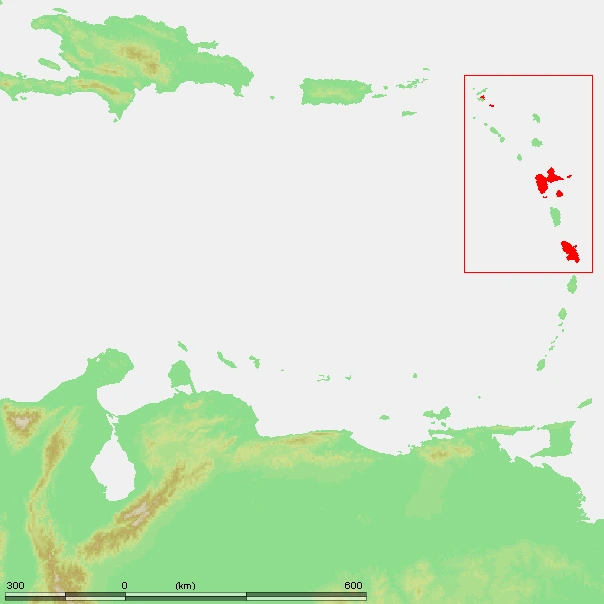
In 1985, the group Kassav’ released Zouk-La-Sé sèl médikaman nou ni and created a planetary phenomenon: zouk, from concert halls in South America to clubs in Tokyo, passing through West Africa. Thirty-five years later, the shatta born in the neighborhoods of Fort-de-France shakes French charts, and modern gwo ka travels to Paris, Los Angeles, and Berlin. Two islands, Guadeloupe and Martinique, have carried a music that conquered the world and continues to reinvent itself.
From Forbidden Drums to Rhythms of Freedom
The gwo ka (or gwoka), the traditional music of Guadeloupe, finds its roots in the 17th century, in sugar plantations 1. African slaves built their drums from barrels of salted meat or wine, hence the name — gros-quart, which became gwo ka in Creole 2. Despite the ban of the Code Noir, this music was a means of escape, evasion, and communication: Creole language and the drum were the only weapons possessed by deportees to preserve their identity 3.
Overseas, the bèlè from Martinique, also born of slavery, is characterized by a complex polyrhythm where the drum tanbou dé bonba dialogues in real time with the dancer, who improvises his steps at the center of the lawonn (the circle of spectators) 4. For centuries, gwo ka and bèlè circulated in swaré léwòz (traditional evenings) and kout tanbou (informal performances), far from the gaze of colonial administration 5.
Did you know? Gwoka was inscribed in 2014 on the Representative List of the Intangible Cultural Heritage of Humanity by UNESCO 6. This recognition is a first for a cultural practice stemming from slavery in France.
The Pioneers: When Antillean Music Conquered Paris
At the turn of the 19th and 20th centuries, a new art emerged in Martinique: the biguine, a syncopated music born in Saint-Pierre, then nicknamed « the little Paris of the Antilles » 7. A fusion of European dances (mazurka, waltz, polka) and African rhythms, the biguine is carried by the clarinet, banjo, and trombone 8.
The eruption of Mount Pelée in May 1902 destroyed Saint-Pierre. The exile of musicians to Fort-de-France, then to the metropolis, gave the biguine a new continent. The clarinetist Alexandre Stellio (1885-1939) became its absolute ambassador 9. Settled in Paris between the two wars, he recorded about sixty tracks and established the codes of classical biguine. In 1931, at the International Colonial Exposition, his orchestra performed in the Guadeloupe pavilion before thousands of visitors: this was the apex of biguine in Paris.
The mythical Bal nègre on rue Blomet (33 rue Blomet, Paris 15th), nicknamed thus by surrealist poet Robert Desnos, welcomed from 1924 a mixed public: Antilleans, artists, writers, post-war artists came to dance the biguine and jazz 10. Ernest Léardée, Moune de Rivel, Léona Gabriel: these musicians — men and women — shaped a Parisian Creole scene that influenced all subsequent generations 11.
From Biguine to Zouk: The Revolution of the 1970s-1980s
The biguine lost its brilliance after 1945, competing with jazz and American music. But the tradition did not disappear: it irrigated Antillean music in filigree, ready to be reborn 12.
In the 1960s, pioneers like Gérard Lockel (1928-2023) in Guadeloupe reinvested the gwo ka with modern instruments — guitar, saxophone, trumpet — creating gwo ka modèn 13. Lockel published in 1981 a Traité de gwo ka modèn which became the reference for this music, and engaged in the Guadeloupean independence cause 14.
In Martinique, the group Malavoi (named after a variety of sugarcane) founded in 1972 a unique sound mixing biguine, Creole mazurka, salsa and jazz, carried by the violins of Mano Césaire 15. Their album Shé Shé (1986) was a turning point, and they paved the way for the next generation.
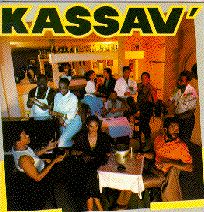
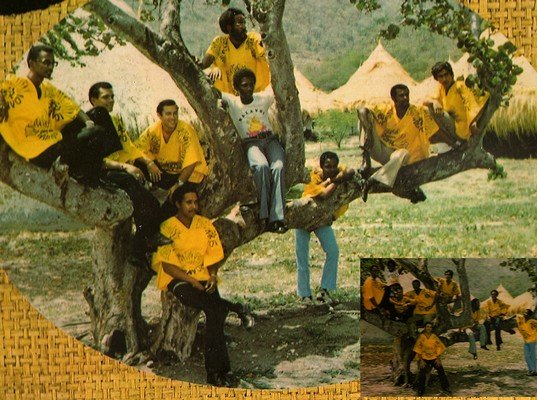
But it is Kassav’ that changed everything. Formed in 1979 by Jacob Desvarieux and Pierre-Édouard Décimus, the group mixed Haitian cadence-lypso, Antillean rhythms and modern Parisian production. Love and Kadance (1979) inaugurated zouk. Yélélé (1985) exploded with Zouk-La-Sé sèl médikaman nou ni, a planetary hit that made people dance from Brazil to Thailand, from West Africa to Europe 16. Zouk — fast-kanre — became the first Caribbean genre of global scale.
Current Stars: Tradition and the New Wave
Today, the musical scene of French Antilles is buzzing. Several movements are intersecting:
In Guadeloupe, modern gwo ka features artists like Sonny Troupé, a multi-instrumentalist master who fuses ka drum and sampler with his group Expéka 17. Célia Wa, a flutist and singer trained at the George Troupé school in Sainte-Anne, blends gwoka and soul on her album Wastral (2023) 18. Eugène Neighbours (Martinique) combines traditional bèlè and electronics on Wouj Vè Nwè Dialektics, a tribute to Césaire, Fanon, and Mona 19.
Shatta, born in the early 2010s in the Volga-Plage neighborhood of Fort-de-France, has established itself as the most trendy genre in Francophone Caribbean 20. Stemming from Jamaican dancehall, shatta is distinguished by its powerful basses (98-100 BPM), its minimal and festive sound. PSK and Danthology are the pioneers; a new wave of female artists — Maureen, Jahlys, Meryl, Shannon — carries the genre beyond the island. Maureen released her first album Queen and collaborated with Kalash on the hit Laptop, certified diamond in France 21. Jahlys recently signed with Universal Music Publishing France 22.
Bouyon, born in Dominica between Martinique and Guadeloupe, also reaches the peaks of the French hit-parade: the track Alpha by Damso and Kalash (certified diamond) and KONGOLESE SOUS BBL by Théodora (certified platinum) are directly inspired by this rhythm 23. Guadeloupean artist 1T1 embodies the new generation of bouyon 24.
Finally, the Parisian label Oioji Records, founded in 2024 by producer Cris « As Valet » Davidas, unites a creative diaspora: Rickysoul (Gwokhouse), Queen Ci (biguine-house), Kwamé « Fenyan » Ba, Mano D’Ishango 25. The generation born in the 1990s-2000s makes their Antillean roots a weapon for contemporary creation.
Challenges and Perspectives: Between Heritage and Modernity
The Antillean scene faces a paradox: how to preserve an heritage without exposing it to folklore? Traditional gwo ka, still often despised as mizik a vié nèg (« music of old negroes ») until the 1960s, now enjoys unprecedented institutional recognition 26. But this recognition risks ritualizing living practices 27.
Conversely, shatta and bouyon, born in popular neighborhoods, struggle to obtain the same institutional support. These genres, yet successfully exported to mainland France, remain predominantly independent and self-funded 28. Young artists from Guadeloupe and Martinique are building their future on social networks, streaming platforms, and diaspora networks, rather than official circuits 29.
Nevertheless, the signs are encouraging: Oioji Records label, reissues of Antillean jazz on Bandcamp, the rising power of female shatta artists at an international level — all signals that French Antillean music has not finished surprising the world 30. A bit like the slave drum, born from a barrel of salted meat, which today vibrates Montreux jazz festivals and Berlin clubs.
Sources
-
François Bensignor, Les Musiques du monde, Larousse, 2002, p. 46-47. ↩︎
-
UNESCO, « Le gwoka : musique, chants, danses et pratique culturelle représentatifs de l’identité guadeloupéenne », Liste représentative du patrimoine culturel immatériel de l’humanité, 2014. https://ich.unesco.org/fr/RL/le-gwoka-musique-chants-danses-et-pratique-culturelle-representatifs-de-l-identite-guadeloupeenne-00991 ↩︎
-
« Gwoka », Wikipédia, consulté le 21 octobre 2026. https://fr.wikipedia.org/wiki/Gwoka ↩︎
-
Peter Manuel & Michael Largey, Caribbean Currents: Caribbean Music from Rumba to Reggae, 3ᵉ éd., Temple University Press, 2016, p. 46-47. ↩︎
-
Ministère de la Culture, « Le gwoka, un pilier culturel de la Guadeloupe ». https://www.culture.gouv.fr/thematiques/patrimoine-culturel-immateriel/vivre-le-patrimoine-culturel-immateriel/reportages/le-gwoka-un-pilier-culturel-de-la-guadeloupe ↩︎
-
UNESCO, Décision 9.COM 10.17, 2014. https://ich.unesco.org/fr/decisions/9.COM/10.17 ↩︎
-
« Histoire de la biguine : Stellio, le Bal nègre et le Paris des années 1930 », Coeur en Musiques, juillet 2026. https://www.coeurenmusiques.fr/article/histoire-biguine-antilles-paris-alexandre-stellio-bal-negre-blomet-leona-gabriel-1920-1930 ↩︎
-
Smithsonian Folkways, Au Bal Antillais: Creole Biguines from Martinique, 1929-1939. https://folkways.si.edu/au-bal-antillais-creole-biguines-from-martinique-early-recordings-of-caribbean-dance-music/ ↩︎
-
« Alexandre Stellio », Wikipédia, consulté le 21 octobre 2026. https://fr.wikipedia.org/wiki/Alexandre_Stellio ↩︎
-
INA, « Ernest Léardée ou le roman de la biguine, histoire du Bal nègre ». https://fresques.ina.fr/danses-sans-visa/fiche-media/Dasavi00602/ernest-leardee-ou-le-roman-de-la-biguine-histoire-du-bal-negre-rue-blomet.html ↩︎
-
« Histoire de la biguine », op. cit. Coeur en Musiques. ↩︎
-
Andy Thomas, « The Sound of Guadeloupe and Martinique Today », Bandcamp Daily, 21 octobre 2024. https://daily.bandcamp.com/scene-report/guadeloupe-and-martinique-music ↩︎
-
Gérard Lockel, Gwo Ka Modènn, 2011. https://www.gwoka.org/le-moderne.html ↩︎
-
« Gérard Lockel », Wikipédia, consulté le 21 octobre 2026. https://fr.wikipedia.org/wiki/G%C3%A9rard_Lockel ↩︎
-
« Malavoi », Wikipédia, consulté le 21 octobre 2026. https://en.wikipedia.org/wiki/Malavoi ↩︎
-
« Kassav’ », Wikipédia, consulté le 21 octobre 2026. http://en.wikipedia.org/wiki/Kassav ↩︎
-
Andy Thomas, op. cit. Bandcamp Daily. ↩︎
-
Célia Wa, Wastral, 2023. https://cliawa.bandcamp.com/album/wastral ↩︎
-
Eugène Neighbours, Wouj Vè Nwè Dialektics, Oioji Records, 2024. https://oiojirecords.bandcamp.com/album/wouj-v-nw-dialektics ↩︎
-
« Comment le shatta a-t-il émergé en Martinique », France Info Outre-mer, 24 juin 2026. https://la1ere.franceinfo.fr/comment-le-shatta-a-t-il-emerge-en-martinique-avant-de-conquerir-une-nouvelle-generation-1709968.html ↩︎
-
Billboard France, « Shatta, bouyon : les Antilles influencent les plus gros hits du moment », 1ᵉʳ avril 2025. https://fr.billboard.com/shatta-bouyon-les-antilles-influencent-les-plus-gros-hits-du-moment/ ↩︎
-
France Info Outre-mer, « Meryl, Jahlys, Maureen, Shannon… », 25 octobre 2025. https://la1ere.franceinfo.fr/martinique/meryl-jahlys-maureen-shannon-une-nouvelle-generation-de-chanteuses-martiniquaises-s-impose-sur-la-scene-musicale-caribeenne-et-internationale-1636186.html ↩︎
-
Billboard France, op. cit. ↩︎
-
RFI, « 1T1, l’une des voix du bouyon nouvelle génération aux Antilles », 19 mai 2025. https://www.rfi.fr/fr/podcasts/couleurs-tropicales/20250519-1t1-l-une-des-voix-du-bouyon-nouvelle-g%C3%A9n%C3%A9ration-aux-antilles ↩︎
-
Andy Thomas, op. cit. Bandcamp Daily. ↩︎
-
Freddy Marcin, « Le gwoka à l’heure de l’Unesco : entre reconnaissance et interpénétration culturelle », in Musiques noires, Camion blanc, 2016, p. 253-276. ↩︎
-
Jean-Claude Nelson (Soley Nwè), cité dans Marcin, op. cit. ↩︎
-
France Inter, « Zoom Zoom Zen : le shatta », 29 janvier 2026. https://www.radiofrance.fr/franceinter/podcasts/zoom-zoom-zen/zoom-zoom-zen-du-jeudi-29-janvier-2026-3127434 ↩︎
-
World Music Central, « Artist Profiles: Kali », consulté le 21 octobre 2026. https://worldmusiccentral.org/artist-profiles-kali ↩︎
-
France Inter, op. cit.; RFI, op. cit.; Bandcamp Daily, op. cit. ↩︎