Biography
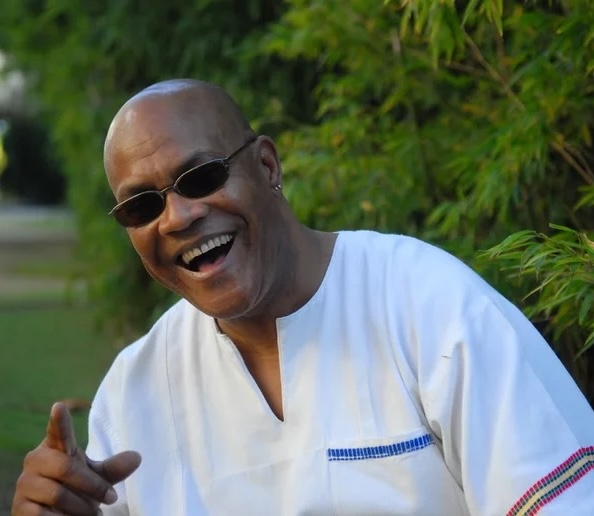
Dédé Saint-Prix: the island griot who ignited the world
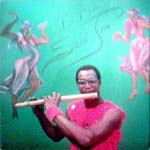
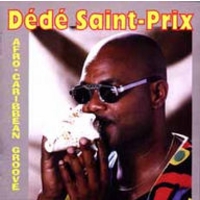
In the warmth of New York’s Central Park, Dédé Saint-Prix’s bamboo flute sound cuts through the crowds and draws a public from Rio to Budapest into collective movement. This sunlit-voiced musician has tirelessly spread Antillean rhythms around the globe, making chouval bwa — this music born from traditional Martinican carousel rides — his banner.
In brief
| Full name | André Saint-Prix, known as “Dédé” |
| Birth | February 10, 1953, Le François, Martinique |
| Field | Chouval bwa, Antillean music, world musics |
| Instruments | Bamboo flute, saxophone, percussion (bèlè drum, congas) |
| Genres | Chouval bwa, zouk, rara, Haitian compas, salsa |
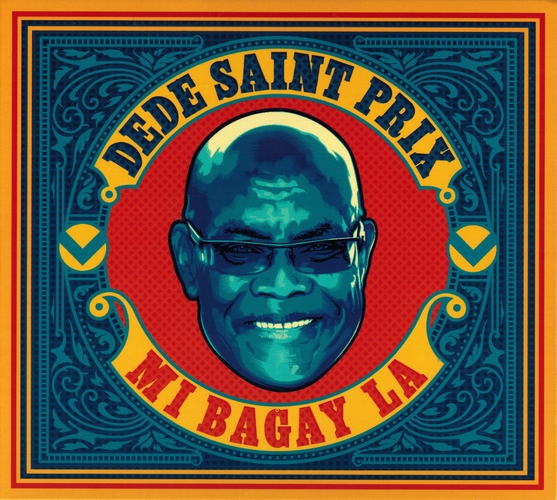
| Emblematic works | Piblicité, Fruits de la patience, Chouval bwa sans frontières |
| Honors | Maracas d’Or (1983), Knight of the Legion of Honour (2012) |
Key dates
| Year | Event |
|---|---|
| 1953 | Born in Le François, Martinique, raised by grandparents |
| 1968 | First recording at age 15, Fort-de-France choir |
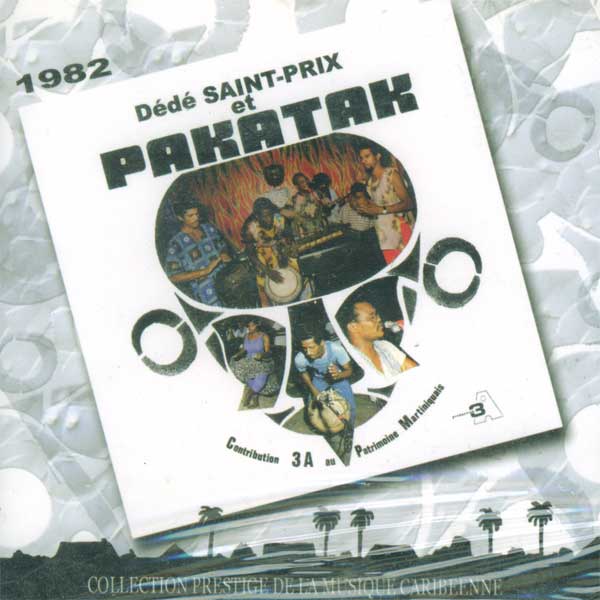
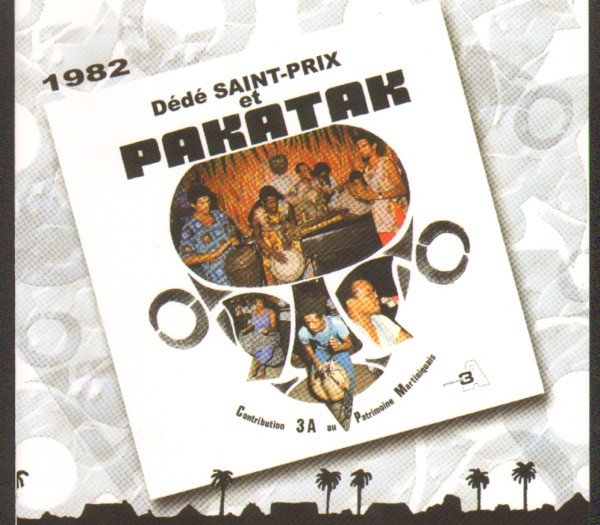
| 1979 | Creation of the group Pakatak with Bago Balthazar |
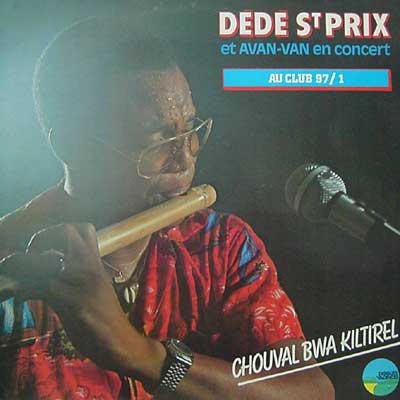
| 1982 | Founding of the group Avan-Van |
| 1983 | Maracas d’Or in Paris for Piblicité |
| 1985 | Tour of 48 venues in France in a single summer |
| 1991 | Resignation from the National Education system for music |
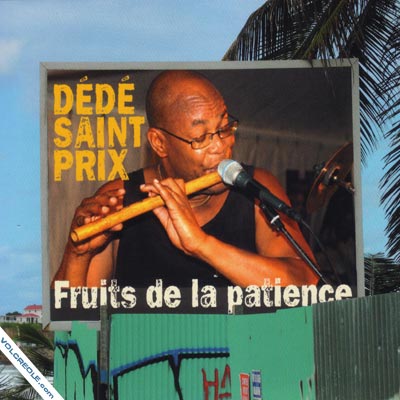
| 2005 | Fruits de la patience |
| 2012 | Knight of the Legion of Honour and Arts and Letters |
| 2019 | The city of Le François names a square in his honor |
From origins to chouval bwa
André, known as “Dédé,” Saint-Prix was born on February 10, 1953, in Le François, a commune on Martinique’s Atlantic coast. Raised by his grandparents alongside his older brother Maurille, he evolved very young within the island’s popular tradition. From age six, the music of chouval bwa — this beating of the bèlè drum, ti-bwa bamboo stick, and chacha that once accompanied hand-powered carousel rides — literally captivated him. “Around the mast, there were musicians. I wanted to play with them. I entered as a pusher, because that way I didn’t have to pay to get in!”1
Barely an adolescent, Dédé joined the small groups of Le François, Les Trouvères and Les Juniors. He then moved with his mother to Fort-de-France, joined more ambitious formations, La Sélecta Martinique and Malavoi. In 1979, he created Pakatak with saxophonist Bago Balthazar, an “experimental formation for rhythmic research” devoted to restoring the music of his childhood its rightful place. Two years later, he founded Avan-Van, which would become his main musical vehicle2.
Revelation and recognition
At the beginning of the 80s, Avan-Van took the swaying rhythms of chouval bwa to mainland France, Africa, and the United States. In 1985, Dédé toured 48 French venues in a single summer. The consecration arrived in 1983, when Piblicité won the Maracas d’Or in Paris, an award dedicated to African and Antillean artists. Dédé then performed at the Olympia, Zénith, Central Park, and ignited the biggest stages — Rock in Rio, Printemps de Bourges, Francofolies de La Rochelle3.
His music feeds on all of the Caribbean: Haitian compas, rara, Cuban salsa, Jamaican raggamuffin. “I have the memory since childhood of Haitian orchestras coming to Martinique to play in dances. There have always been Haitians in Martinique,” he recalls. “When a Haitian orchestra plays, there is not a moment when the dance floor is empty”4. Dédé Saint-Prix is considered the griot of the islands.
Career and transmission
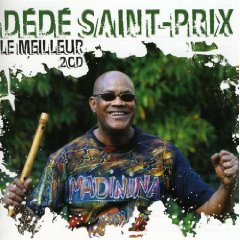
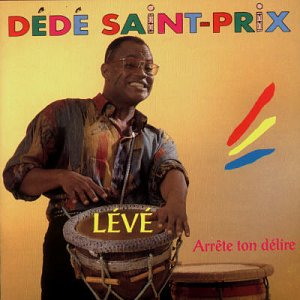
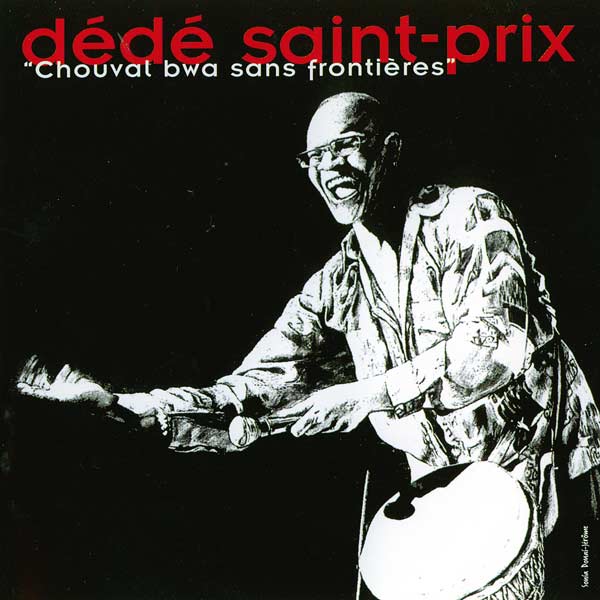
Parallel to his musical career, Dédé worked as a teacher for eleven years. “My music completely took over my schedule and my mind. I only thought about that!,” he confesses. He resigned from the National Education system in 1991. The rest of his career was built on two axes: creation and transmission. As a creator, he published around twenty albums — Chouval bwa sans frontières (1995), Fruits de la patience (2005), Aka Man Soso (2014) in duo with Guadeloupean Gérard Pomer, Raices y Culturas (2013). A prolific collaborator, he worked with Malavoi on Marronage (1999), Jocelyne Béroard, Cameroonian Blick Bassy, and participated in Eurovision with Serge Gainsbourg5.
As a pedagogue, Dédé leads master classes in Afro-Caribbean percussion at the Angoulême conservatoire, at the Festival Musiques Métisses, and at the Falun Folkmusic Festival in Sweden. He is godfather to the association Musique et Santé and leads musical workshops in hospital settings. “My goal would be to create an NGO in favor of tradition.” In 2012, he received the insignia of Knight of the Legion of Honour. In 2019, the city of Le François honored him by naming a square in his honor5.
Did you know?
Did you know? Dédé Saint-Prix undertook the Grand Méchant Zouk tour in 1985, alongside major figures of Antillean music such as Kassav’, Béranger Galernier and Jean-Marc Négrier.
Major works
| Work | Year | Why it’s essential |
|---|---|---|
| Piblicité | 1983 | First major solo success, Maracas d’Or award |
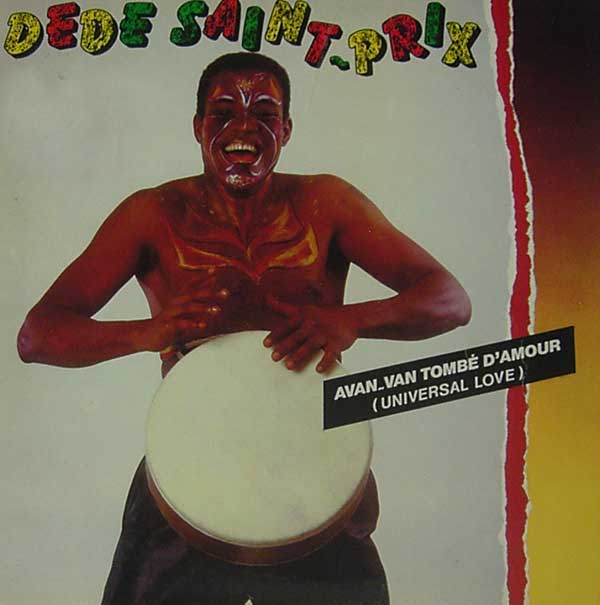
| Avan-Van tombe d’amour | 1984 | Chouval bwa fused with Caribbean musics |
| Chouval bwa sans frontières | 1995 | Synthesis of his pan-African and Caribbean vision |
| Fruits de la patience | 2005 | Confirmed studio comeback, opening to Africa |
| Aka Man Soso | 2014 | Duo with Gérard Pomer, return to Guadeloupean gwoka |
Heritage
Dédé Saint-Prix remains one of the key figures in the modernization of chouval bwa, a music that paved the way for zouk, popularized by Kassav’. Beyond his music, he is a cultural intermediary of the highest importance4. Patrick Chamoiseau, one of the pillars of créolité, entrusted him with listening to his old records while he took up the pen. « His encouragement prompted me to stay on course ».
His masterclasses attract Antillean diaspora from around the world. « The further one is from the island, the more aware one becomes! ». He also laid the foundations for his LPK Sound label, intended to produce artists with eclectic horizons. « Creole is my identity card ».
The documentary Le Griot des îles (SaNoSi Productions, 2017, 52 min), co-produced by Martinique 1ère, bears witness to his journey. Dédé Saint-Prix dedicated his life to saying: « No ocean separates us ».
Sources and references
Encyclopedias
-
Personnages, Africultures, africultures.com, accessed October 29, 2026, https://africultures.com/personnes/?no=3734 ↩︎
-
Dédé Saint Prix, International Magazine Kreol, kreolmagazine.com, accessed October 29, 2026, https://kreolmagazine.com/dede-saint-prix ↩︎
-
Dédé Saint-Prix et le compas haïtien, RFI Musique, February 4, 2026, https://musique.rfi.fr/musique/20030204-dede-saint-prix-le-compas-haitien.html ↩︎
-
Dédé Saint-Prix, un maître de tradition, Rodolf Etienne, Martinique France-Antilles, August 20, 2014, https://www.martinique.franceantilles.fr/actualite/culture/dede-saint-prix-un-maitre-de-tradition-857770.php ↩︎ ↩︎
-
Dédé Saint-Prix, AZ Martinique, azmartinique.com, accessed October 29, 2026, https://azmartinique.com/fr/tout-savoir/personnes-celebres/dede-saint-prix ↩︎ ↩︎