Biography
Erik Négrit
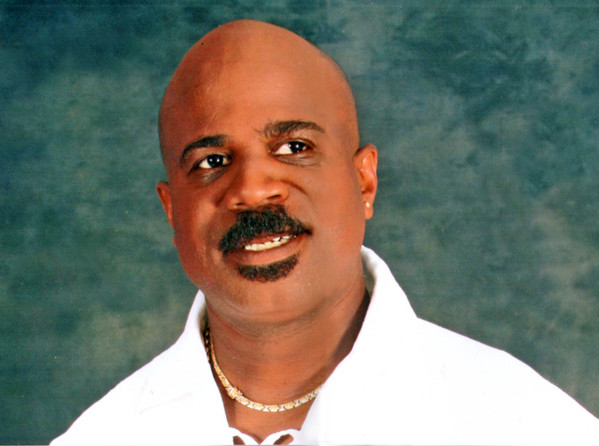
In 2000, a song circulated in every car in Guadeloupe and Martinique. Ko malad — a track where singer Erik Négrit transforms back pain and bodily weariness into an timeless dance. Over 50,000 albums sold. This is not a passing fad: it is the signature of an artist who made gwo ka, the traditional percussion music of the French Antilles, accessible without ever diluting it.
In brief
| Full name | Erik Négrit (listed as “Eric” in BnF catalogs) |
| Birth | February 29 (leap year), Pointe-à-Pitre, Guadeloupe |
| Field | Gwo ka, zouk — creator of kompa ka |
| Emblematic works | “Ko malad”, “Papa nwèl di bouè rom”, “8h pile” |
| Local nickname | « le faiseur de tubes » (local press) |
Key dates
| Year | Event |
|---|---|
| Around 1983 | Military service in the French Navy; band music on the aircraft carrier Clémenceau; Beirut, Cyprus, Greece |
| 1985 | Return to Paris; integration into Creole folkloric groups (« Pakoraban », « Fleurs des Îles ») |
| 1992 | Return to Guadeloupe; founding member of « Caribana » and the « Académie du ka » in Gosier; percussion lessons in schools |
| 1994 | First solo album — birth of kompa ka (blend of gwo ka and Haitian music); criticism from the traditional fringe |
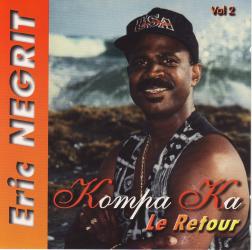
| 1995-1997 | Career suspended by a serious road accident; return with Le Retour du kompa ka vol. 2 |
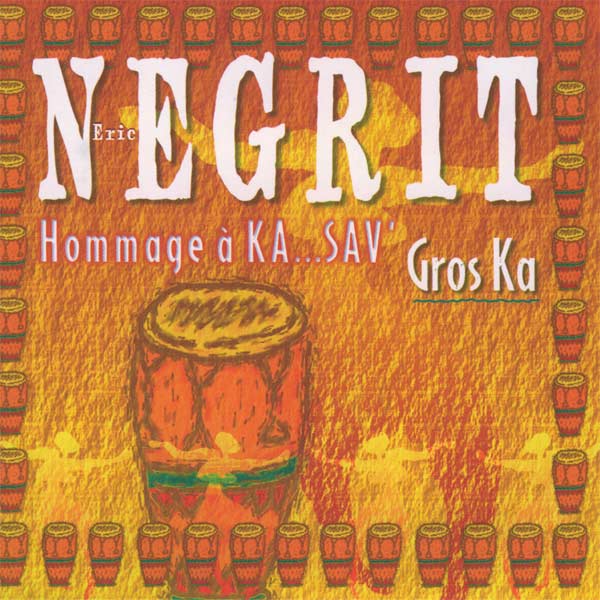
| 1998 | Album Hommage à Kassav’ — gwo ka reinterpretation of Kassav’ hits, produced with Jacob Desvarieux |
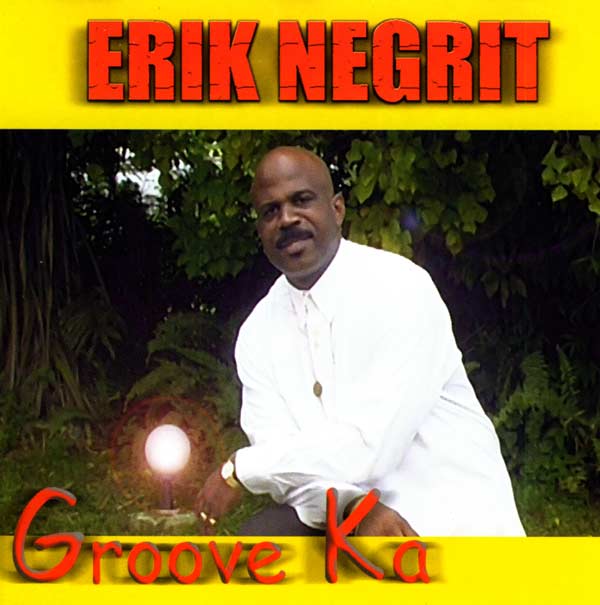
| 2000 | Release of Groove ka and the track “Ko malad” — 50,000 albums sold in the Caribbean and Europe |
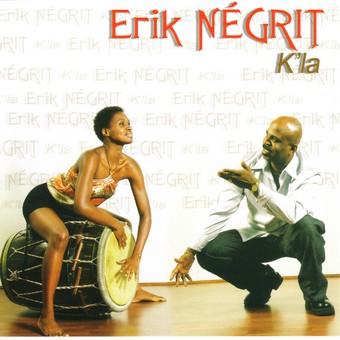
| 2005 | Album K’la; local press nicknames him « le faiseur de tubes » |
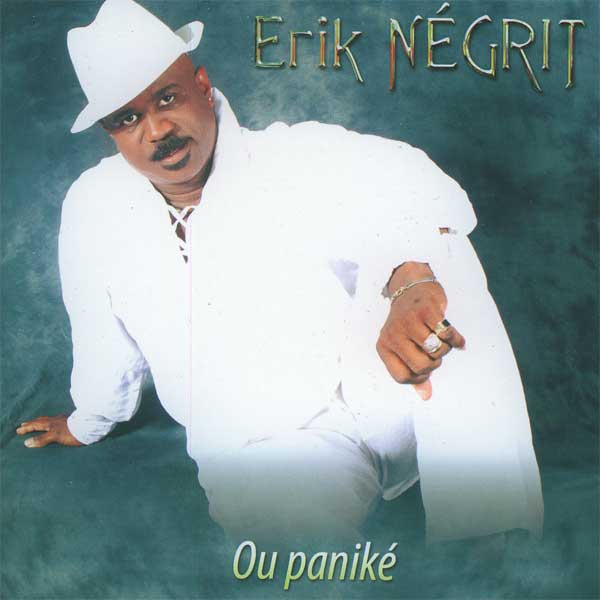
| 2006-2010 | Albums Ou paniké, 8h pile !, La Ritounnèl Bèl; hits “J’aimerais voir où t’habites”, “Cocu”, cover of “Célimène” |
| 2010-2012 | Integration into group B’wan Biyo (essential in Guadeloupe); TV appearances on TF1 |
A diaspora musician at the crossroads of roots
Erik Négrit was born on February 29, leap day, in Pointe-à-Pitre. Third of a family of five children, he grew up cradled by music: his surname is no accident — Eddy Négrit, Yann Négrit and Sully Négrit are recognized figures of the Guadeloupean scene. From age ten, he played on « kanaris » — pots and pans — during live nativity scenes. For him, percussion was first a neighborhood game before becoming a vocation.
In 1983, he flew to mainland France for military service. Assigned to the French Navy, he joined the band of the aircraft carrier Clémenceau. This period changed his trajectory: passing through Cyprus, Greece and Beirut — where his regiment participated in the operation as part of the Lebanese war — he discovered rhythms and soundscapes that would enrich his palette. Upon returning to Paris in 1985, he did not let go of music: he joined several Creole folkloric groups in the capital, including « Pakoraban » at Colonel-Fabien and « Fleurs des Îles », traveling across Europe.
In 1992, he returned to settle in Gosier, his native commune. He sang with « Caribana », the « Académie du ka » and « Kapoudouvan ». He hosted léwoz — traditional wakefulness gatherings — and taught percussion in schools. He is a rooted artist, who gives as much as he receives.
The inventor of kompa ka and popular consecration
In 1994, Erik Négrit published his first solo album and launched the kompa ka, an hybrid he shaped: gwo ka, ancestral Guadeloupean percussion, meets Haitian music in a previously unexplored blend. Some traditional purists reproached him for this distant Creole touch. Criticism did not stop him from creating.
His career took a sudden turn in 1995, when the ascent was underway, when a serious road accident put his career on pause. He resumed with Le Retour du kompa ka vol. 2 in 1997, more determined than ever.
The album Hommage à Kassav’ (1998, produced by Rony Piziou in collaboration with Jacob Desvarieux) reinterpreted the legendary zouk group’s hits in gwo ka. Then came Groove ka (2000), which propelled “Ko malad” — a popular hymn criticized by some as vulgar, heard everywhere. With over 50,000 albums sold in the islands and Europe, Erik Négrit crossed a threshold: he became essential.
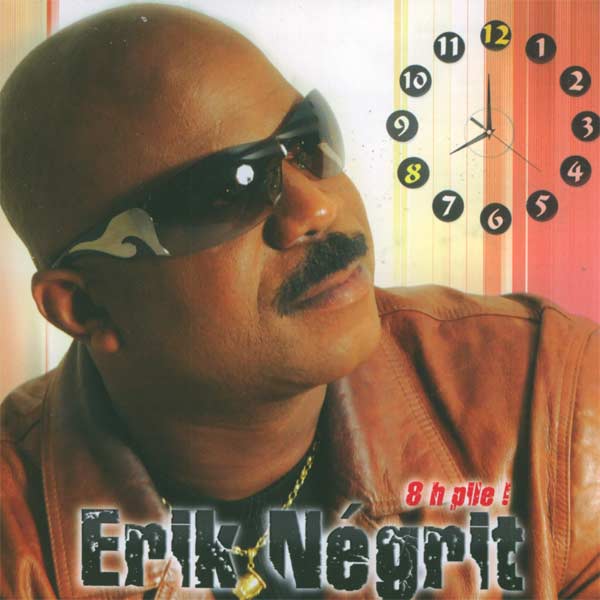
His sense of the hook never left him. “Papa nwèl di bouè rom” (2003), an essential Christmas hit, “8h pile !” (2008) — a song mocking late husbands — and “Cocu” made history. In 2005, the album K’la earned him the local press nickname « le faiseur de tubes ». He collaborated with Medhy Custos, Jeff Joseph, Carimi, and the group Union. He performed at Paris Zénith with Tabou Combo, at the Olympia with the Choubadou concept, at the Centre des Arts in Guadeloupe and at the Atrium in Martinique.
Major works
| Work | Year | Why it’s essential |
|---|---|---|
| Kompa ka vol. 1 | 1994 | First solo album: birth of kompa ka, an hybrid genre between gwo ka and Haitian zouk |
| Hommage à Kassav' | 1998 | Gwo ka reinterpretation of Kassav’ hits, co-produced with Jacob Desvarieux |
| Groove ka (“Ko malad”) | 2000 | Hit that crossed the threshold of 50,000 sales; dance anthem in Caribbean streets |
| K’la | 2005 | Confirmed « faiseur de tubes » by local press; wordplay and melodies that stick |
| 8h pile ! (“Cocu”) | 2008-2019 | Humorous wink to late husbands: a song telling Caribbean daily life |
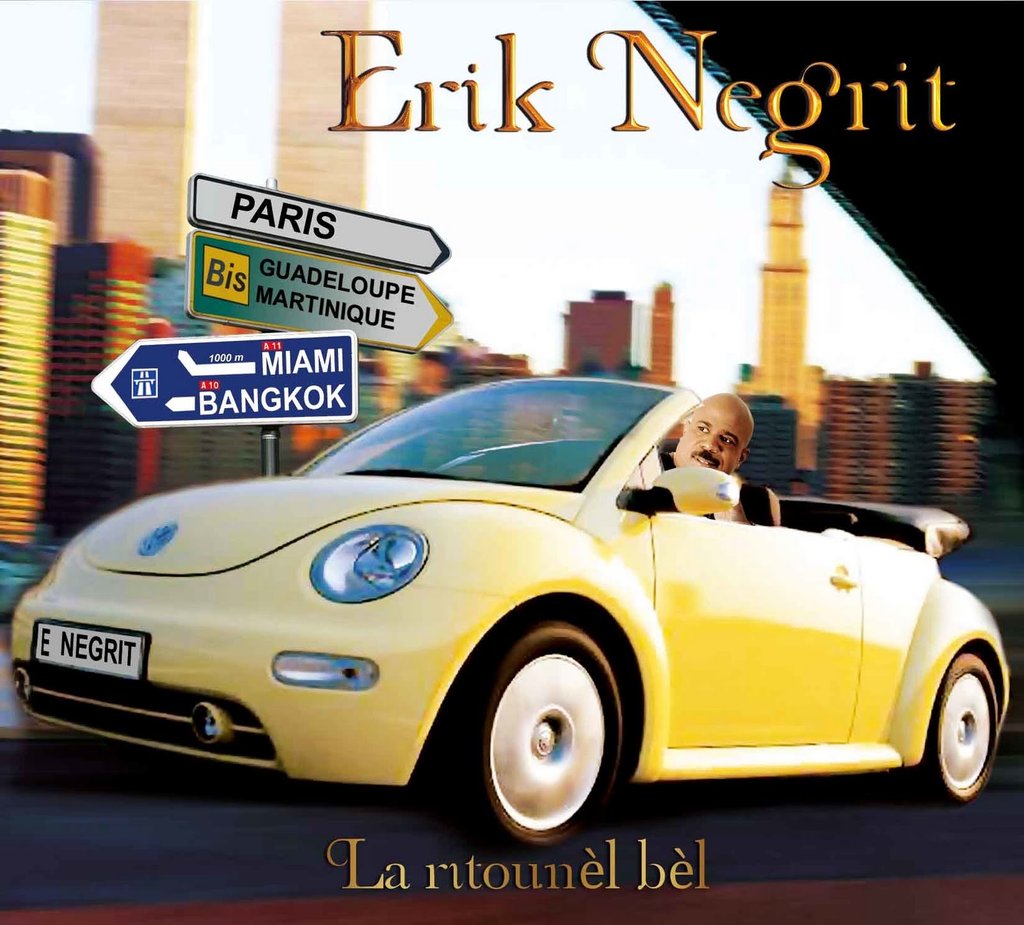
| La Ritounnèl Bèl | 2010 | Cover of “Célimène” (David Martial): bridge between Guadeloupe and Martinique |
Heritage and influence
Erik Négrit is one of the few Guadeloupean artists to have imposed a musical neologism — kompa ka, a fusion between gwo ka and Haitian zouk — which proves that traditional roots can dialogue with the diaspora without renouncing themselves. His work, rooted in humor and the daily lives of Antilleans, contributed to making gwo ka audible well beyond his island. He remains, more than twenty years after Groove ka, a central figure in the Creole musical landscape: concerts, TV appearances, the group B’wan Biyo — his name continues to feature prominently at Caribbean evenings.
Sources and references
- « Negrit Erik », Mizik Nou, miziknou.com, accessed 16 November 2025. Text by Philippe Pilotin.
- « Erik Négrit », Discogs, discogs.com, accessed 16 November 2025.
- « Erik Négrit toujours à l’heure du gwo-ka », France Antilles Guadeloupe, 2 January 2009, guadeloupe.franceantilles.fr, accessed 16 November 2025.
- « Erik Négrit », Apple Music, music.apple.com, accessed 16 November 2025.
- « Erik Négrit », Wikidata Q123168416, accessed 16 November 2025.
- K’la / Erik Négrit, Martinique Library (Syracuse), collectivitedemartinique.mq, 2005.