Biography
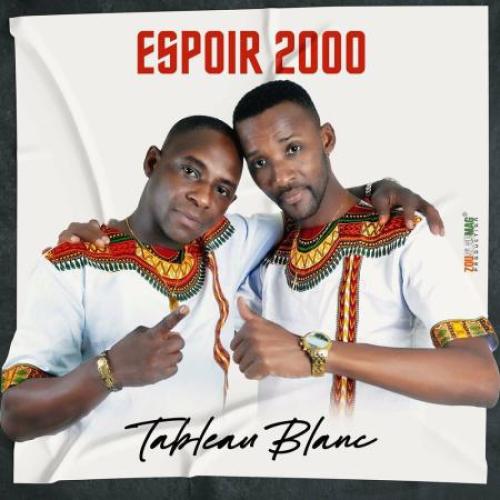
Espoir 2000
On October 28, 1975, amidst the student movement shaking the university campuses of Abidjan, a new music genre exploded: students from Yopougon invented zouglou by chanting their anger against inequalities to an infectious rhythm. Thirty years later, Espoir 2000 remains one of the most faithful voices of this genre. Their track “Abidjan Farot”, taken from the album Gloire à Dieu, is undoubtedly the Ivorian song that has most marked the country’s collective imagination.
In Brief
| Group Name | Espoir 2000 |
| Genre | zouglou — Ivorian urban music born in the university campuses of Abidjan at the beginning of the 1990s, characterized by its engaged lyrics on the daily lives of young people and their danceable rhythm |
| Origin | Koumassi, Abidjan, Côte d’Ivoire |
| Founding Members | Pat Sacko (Ossohou Hugues Patrick, vocals and songwriter), Valéry Théa Dugbo (Valéry), Shura |
| Current Status | Pat Sacko alone, Valéry on leave for health reasons |
| Emblematic Works | Éléphant d’Afrique, Série C, “Abidjan Farot” |
Key Dates
| Year | Event |
|---|---|
| 1997 | First album Éléphant d’Afrique; the trio Pat Sacko, Valéry and Shura become known |
| 1998 | Release of Série C, which sells more than 200,000 copies in Côte d’Ivoire |
| 2001 | Shura leaves for Paris; the duo continues |
| 2001-2002 | Political crisis in Côte d’Ivoire; Espoir 2000 sings patriotic tracks |
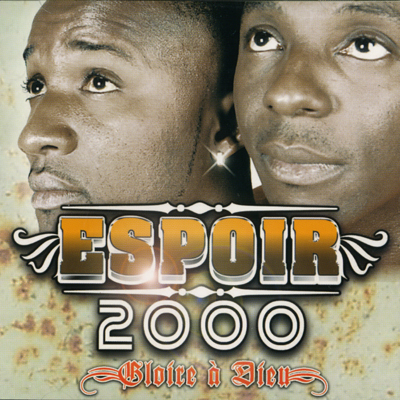
| 2007 | Return with Gloire à Dieu, marked by the song “Abidjan Farot” |
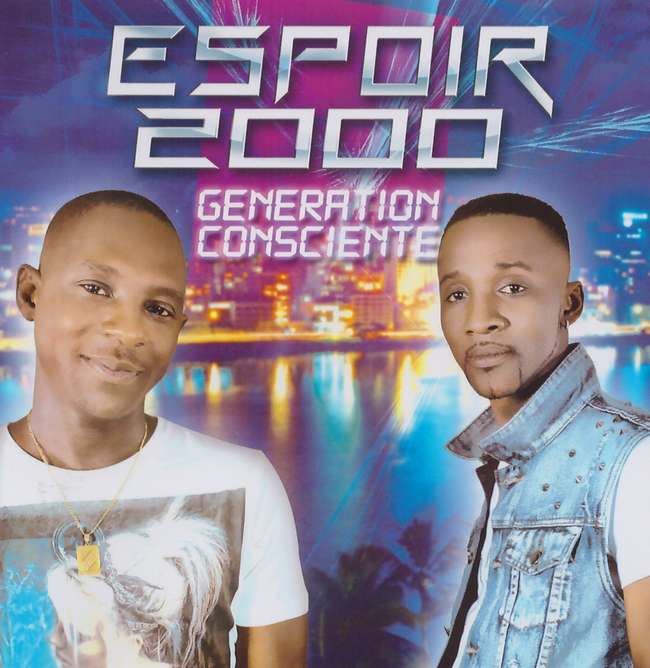
| 2014 | Publication of Génération consciente and a two-volume best-of |
| 2015-2025 | Withdrawal from the stage after Valéry’s departure due to illness; Pat Sacko performs alone |
| 2025-2026 | Pat Sacko on solo tour in Canada; he defines himself as “guardian of the temple” |
Origins and Revelation: From Koumassi Students to Consecration
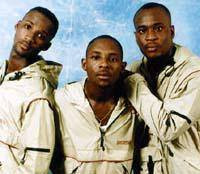
Espoir 2000 was born in the popular neighborhood of Koumassi, on the southern banks of Abidjan. Three young men share the same love for singing: Pat Sacko (whose real name is Ossohou Hugues Patrick), Valéry Théa Dugbo, and Shura. Pat is the most rebellious of the trio — his family tries to keep him back, he even sacrifices his high school classes to animate football matches, baptisms, and funerals with his friends. When they decide to go into the studio, their first album, Éléphant d’Afrique, published in 1997, propels them to the forefront of the scene.
Zouglou is then in full expansion: born in the university campuses of Abidjan at the beginning of the 1990s, this genre is street music that speaks to Ivorian youth about their problems — unemployment, corruption, love relationships — with humor and frankness. The three members of Espoir 2000 take up this tradition with particular vigor: they point out the contradictions of Ivorian society, targeting especially the ambiguous behaviors of certain young women.
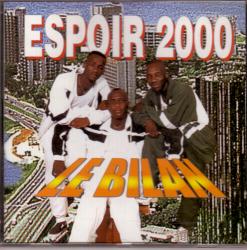
It is with their second album, Série C (1998), that the group explodes. The eponymous track becomes an essential hit: the album sells more than 200,000 copies in Côte d’Ivoire, a considerable figure for the time. The formula works: simple love stories, all wrapped in humor and danceable melodies. In 1999 and 2001, Le Bilan and Quatrième Mandat confirm their status as a zouglou reference.
But at the height of their glory, Shura leaves the group in 2001 to settle in Paris with his wife. Pat Sacko and Valéry continue the adventure as a duo. The group confirms its popularity with Quatrième Mandat (2001-2002) and a first tour in Europe and across the African continent.
The Crisis, Faith, and Eternal Return
Between 2002 and 2004, Côte d’Ivoire plunges into a politico-military crisis. Like many zouglou artists, Espoir 2000 engages in the word. “We are even obliged to make patriotic songs during the crisis because the market was not ready for an album,” explains Pat Sacko in an interview. Their stance is not partisan: “Saying no to war does not mean saying yes to the government in place. We just wanted to signal society’s problems.”
At the end of the crisis, Espoir 2000 returns in 2007 with Gloire à Dieu, an album marked by a gospel dimension. This record contains “Abidjan Farot”, their biggest hit, which becomes an absolute classic of Ivorian culture. The title speaks of Abidjan’s realities with humor and tenderness, a recipe that continues to make listeners vibrate.
The arrival of coupé-décalé, a genre more dance-oriented and less textual, comes to compete with zouglou in the charts. Pat Sacko and Valéry resist by integrating trends while keeping their identity: “With each album, we adapt our style. We integrate the fashions of the moment while keeping our traditional touch.”
In 2014, Génération consciente is released accompanied by a two-volume best-of. It is the duo’s last studio album: Valéry falls ill and can no longer perform. Pat Sacko continues alone, playing concerts under the name Espoir 2000 while assuming the singularity of his situation. “Reform a duo? No! Espoir 2000 is a life story. There is no need to reform a duo. The spirit of the group remains. I am the guardian of the temple,” he declares in 2025 to Connection Ivoirienne.
Major Works
| Work | Year | Why It Is Essential |
|---|---|---|
| Éléphant d’Afrique | 1997 | First album of the trio; the group becomes known with a raw and direct zouglou |
| Série C | 1998 | The record that consecrates them: more than 200,000 sales, an accessible sound and impactful lyrics |
| “Abidjan Farot” | 2007 | The most famous track by Espoir 2000; a hilarious and affectionate portrait of the capital |
| Gloire à Dieu | 2007 | The return album: fusion between zouglou and gospel inspiration after the political crisis |
Heritage and influence
Espoir 2000 is part of the Ivorian zouglou pantheon. Thirty years of career, six studio albums and nearly a hundred songs testify to a rare coherence: speaking about the lives of Ivorians without ever resorting to easy solutions. Their music is intergenerational: young people still listen to “Abidjan Farot” and sing Série C at concerts.
Zouglou, a genre threatened by the rise of coupé-décalé and rap, owes much to these pioneers who managed to make it international. Pat Sacko does not intend to be erased by oblivion: he performs solo, undertakes social actions (donations of medicines, blood donation campaigns) and dreams of a foundation for the schooling of young girls. « Our music is intergenerational », he says with confidence, before adding: « We are almost 30 years old, but it is also appreciated by young people ».
Sources and references
- « Biography Espoir 2000 », Deezer, https://deezer.com/en/artist/68931, accessed 16 November 2026.
- « Espoir 2000 », Discogs, https://discogs.com/artist/3513115-Espoir-2000, accessed 16 November 2026.
- « Espoir 2000, masters of zouglou », Afrique Magazine, https://afriquemagazine.com/espoir-2000-maitres-es-zouglou, accessed 16 November 2026.
- Patrick O. G., « Espoir 2000: Reform a duo? No! I am the guardian of the temple », Connection Ivoirienne, https://connectionivoirienne.net/2025/04/30/espoir-2000-reformer-un-duo-non-je-suis-le-gardien-du-temple-pat-sako/, accessed 16 November 2026.
- « Pat Sacko in Canada, zouglou shared in five cities », Africanadien, https://www.africanadien.com/index.php/2026/10/22/pat-sacko-au-canada-le-zouglou-en-partage-dans-cinq-villes/, accessed 16 November 2026.
- « Espoir 2000: Det finns ingen politisk tillhörighet i det vi gör », 100%Culture Magazine, https://www.100pour100culture.com/svenska/espoir-2000-det-finns-ingen-politisk-tillhorighet-i-det-vi-gor/, accessed 16 November 2026.
- « The epic saga of Ivorian zouglou », RFI Musique, https://www.rfi.fr/fr/musique/20220309-la-saga-%C3%A9pique-du-zouglou-ivoirien, accessed 16 November 2026.