Biography
Eugène Mona
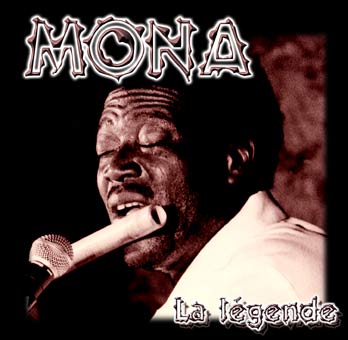
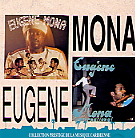
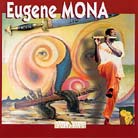
In 1989, Eugène Mona slipped into a recording studio in Fort-de-France to record what would become his final album. He knew that zouk was already setting the pace in Martinique, and that radio waves were closing their doors. Nevertheless, he laid down on tape a plaint flute melody made of bamboo as powerful as a manifesto, before telling his producer: “I must die so that my body can serve as manure.” Three months later, a cerebral congestion claimed him at 48 — he who dreamed of taking Martinican music all the way to Europe.
In brief
| Full name | Georges Venus Nilecam, aka Eugène Mona |
| Birth | 13 July 1943, Le Vauclin (Martinique) |
| Death | 21 September 1991, Fort-de-France (Martinique) |
| Field | Martinican music, bèlè, Caribbean music |
| Instruments | Bamboo flute (toutoun’ banbou), vocals, percussion |
| Signature works | “Bwa Brilé”, “Témoignage”, “Blan manjé” |
| Honours | SACEM Award, tribute at the Cité de la musique (Paris) |
Key dates
| Year | Event |
|---|---|
| 1943 | Birth in Le Vauclin, a rural commune in southern Martinique |
| 1960 | Moves to Marigot (north Atlantic) and joins the local MJC |
| 1968 | Wins a Creole singing contest at age 25 |
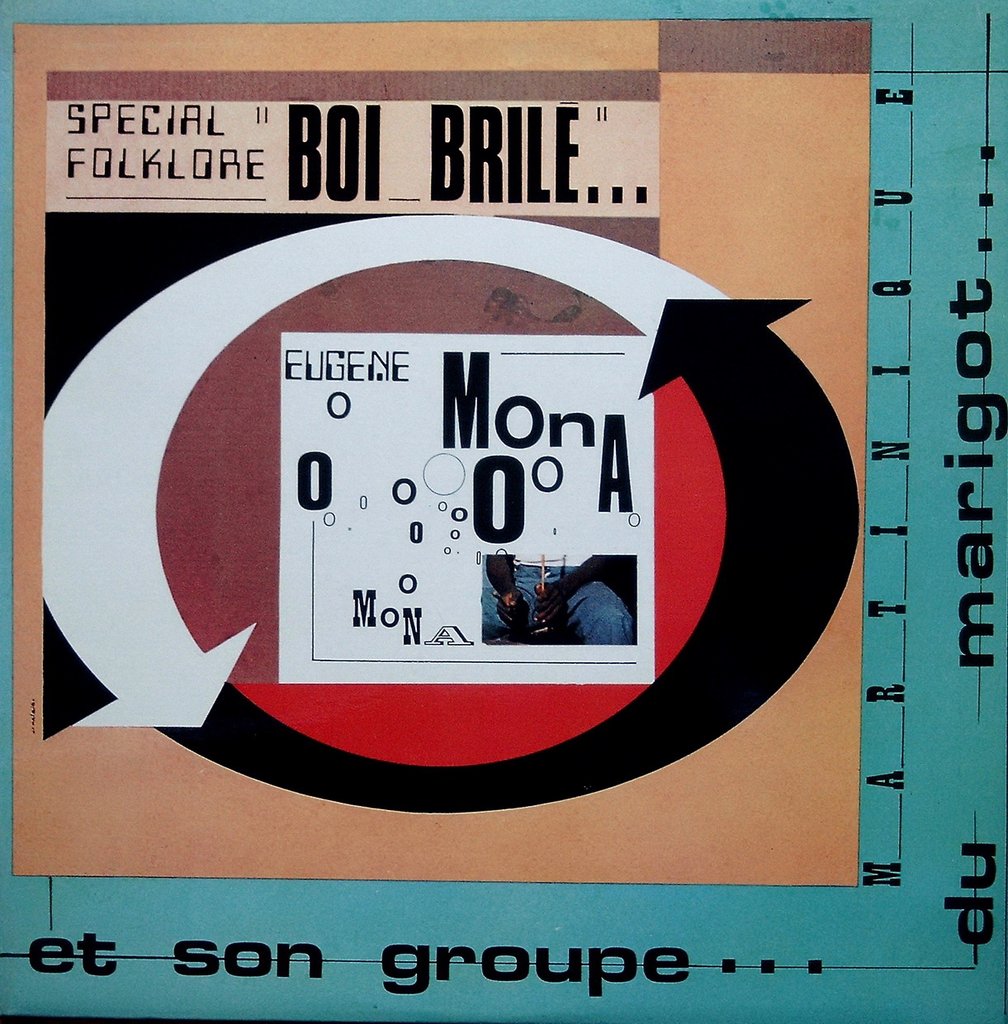
| 1973 | Release of first album Bwa Brilé, immediate local success |
| 1980 | Release of Ma maman m’a dit, affirmation of his personal style |
| 1983 | Participation in the film Rue Cases-Nègres by Euzhan Palcy |
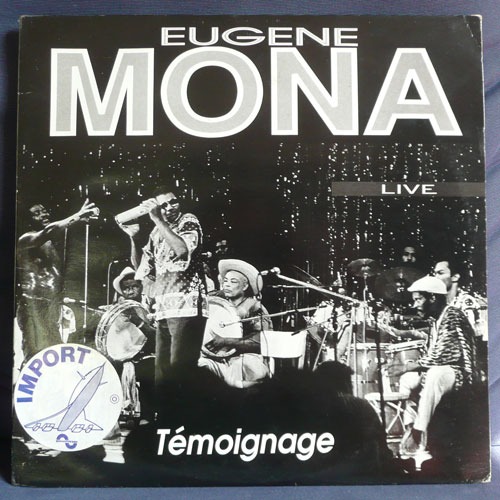
| 1986 | Release of Témoignage, the peak of his poetic commitment |
| 1989 | Recording of Blan manjé — his last album while alive |
| 1991 | Death in Fort-de-France following a cerebral congestion |
| 1996 | Tribute concert at the Cité de la musique, Paris |
From mornes to airwaves: the ascent of a self-taught artist
Georges Nilecam grew up in the mornes — those verdant hills that dot Martinique — at the heart of a poor family from Le Vauclin. His father, an amateur accordionist, passed on his first notes to him. At fifteen, he could neither read nor write: “I am a child of Marigot who wants to touch the universal… Is it possible, no?” he would ask himself later.
In 1960, he moved to Marigot, a small commune in the north Atlantic. There, he found work as a carpenter-cabinetmaker for the Crassous family. In his spare time, he frequented the Maison des Jeunes et de la Culture du Marigot. It was in this setting that he learned to read, discovered the history of Martinique and immersed himself in it — slave trade, colonial slavery. He became a fervent defender of Martinican culture and history.
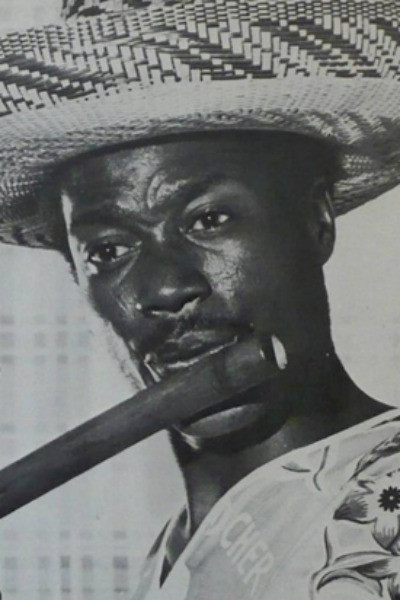
It was also there that he met Max Cilla, nicknamed the “father of the morne flute,” a self-taught musician who chose to retire to his morne to craft flutes according to traditional Indian rules. Cilla entrusted Mona with one of his bamboo flutes — the toutoun’ banbou — whose fingers would draw melodies haunting an entire generation.
In 1968, at twenty-five, he won a Creole singing contest. The turning point: he decided to dedicate his life to music, which he had practiced until then in the secrecy of the mornes.
The bard of Creole culture: a music that denied nothing of its roots
His first album, Bwa Brilé (1973), recorded with his Marigot group, caused a scandal — but not for bad reasons. While others followed the sweeping cadence and konpa wave that swept through the Caribbean in the 1960s, Mona refused modern melodic instruments. His music rested on the tanbou bèlè (traditional drum), congas, chacha (hand-struck idiophone instrument), tibwa (percussive bamboo) and even Tamoul drums — sonic traces of Indian engagisme that arrived in Martinique after 1848. Every instrument was a heritage, every rhythm an identity card.
His deep voice and its coarse texture earned him the nickname “Nègre debout” (“Standing Black Man”), then that of “poto mitan” — central pillar, backbone of a people. In La Chandelle (1975), he linked the customs of Saint-Pierre to the eruption of Mount Pelée in 1902. In Mi Lago (1978), he recounted the electoral dispute between Alfred Marie-Jeanne and Rodolphe Désiré in 1977. In Moin ka douté (1976), he dug into the reasons for the curse that struck the island. Mona did not sing to entertain — he sang to testify, so that memory would not sink.
In 1983, he participated in cinema by appearing in Rue Cases-Nègres by Euzhan Palcy — the first film directed by a Black Martinican woman shot on the island, which would become an absolute classic. His performance was noted and he confirmed that his art transcended the concert stage.
Léritaj Mona (2006) and Léritaj Mona vol. 2 (2011), tribute albums co-produced by Jean-Michel Rotin, Akiyo, Dominik Coco and others, attest that his voice continues to resonate. In 2015, the film Big Sun by Chassol borrowed again “Bwa Brilé” from Mona’s discography, inserting it into a new generation of Caribbean filmmakers.
Legacy
Eugène Mona died without knowing the national recognition he demanded. His widow, Martiane Bizet Siano, confided: “They closed the door on him too often.” But time did its work, as he himself said. Martinican writers Patrick Chamoiseau and Raphaël Confiant hailed him as a bard of deep Creole literature. An avenue in Fort-de-France bears his name since 1992, a college in Marigot since 2013.
He who dreamed of a “big band” representing Martinique in Europe found another immortality: that of an art that does not sell but endures. As he wrote: “If one wants to build the future, one must think of yesterday and not reject tradition.”
Major Works
| Work | Year | Why It Is Essential |
|---|---|---|
| Bwa Brilé | 1973 | First album, eponymous title that became the anthem of Martinican Creole culture |
| Ma maman m’a dit | 1980 | Assertion of a style where bèlè meets jazz and Creole poetry |
| Témoignage | 1986 | Peak of his commitment — music and lyrics as acts of memory |
| Blan manjé | 1989 | Last album released during his lifetime, a prophetic farewell to an island in transition |
Sources and References
- « Eugène Mona — Biography », Foundation for the Memory of Slavery, https://memoire-esclavage.org/biographies/eugene-mona, accessed November 12, 2026.
- Jacques Denis, « Eugène Mona: a comet in the Caribbean sky », Pan-African Music, https://pan-african-music.com/eugene-mona-une-comete-dans-le-ciel-antillais/, published June 3, 2022, accessed November 12, 2026.
- « Eugène Mona », Wikipedia, https://fr.wikipedia.org/wiki/Eug%C3%A8ne_Mona, accessed November 12, 2026.
- « Eugène Mona », Outremer Memory, https://outremermemory.com/eugene-mona, accessed November 12, 2026.
- « Eugène Mona », Apple Music, https://music.apple.com/au/artist/eug%C3%A8ne-mona/183128613, accessed November 12, 2026.
- « Eugène Mona », Deezer, https://www.deezer.com/en/artist/56684, accessed November 12, 2026.
- SACEM Archives — sheet music for Bwa Brilé (1973) and identity photographs, consulted via secondary sources.
- Nathalie Glaudon, documentary Sur les traces de Mona, cited in Jacques Denis’s article (2022).