Biography
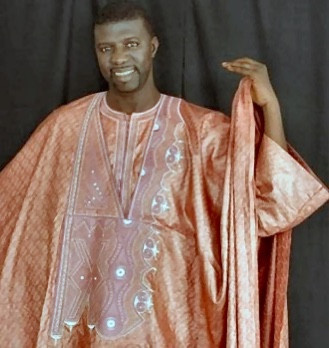
Fallou Dieng
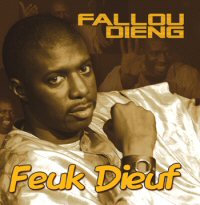
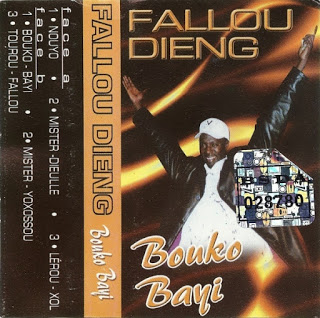
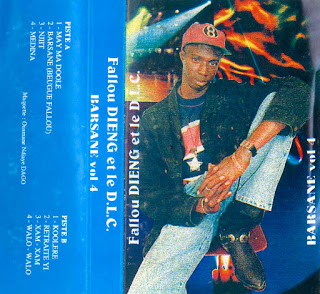
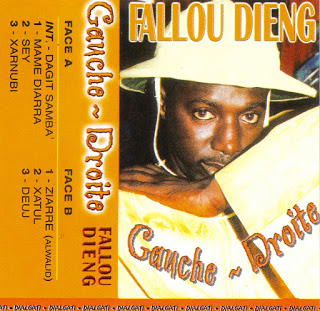
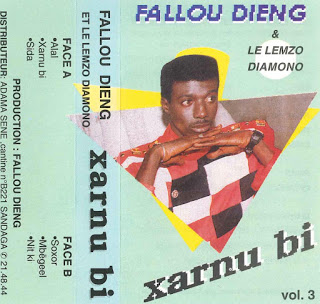
In 1992, on a magnetic cassette released in Dakar, the deep and steady voice of Fallou Dieng blends with the guitars and percussion of the group Lemzo Diamono. This singer, born in Dakar in 1960, never sought the spotlight; he preferred to hone his craft in silence before late in life charting his own path.
In brief
| Full name | Fallou Dieng |
| Birth | 1960, Dakar (Senegal) |
| Genre | Mbalax, marimbalax — a Senegalese rhythm derived from sabar, where the guitar mimics traditional sounds and percussionists create danceable polyrhythms |
| Notable works | Lemzo Diamono, “Weex Bet”, album Medina |
| Awards | Koras Awards (Sun City, South Africa, 2001) |
Key dates
| Year | Event |
|---|---|
| 1960 | Birth in Dakar, Senegal |
| ~1990-1998 | Founding member and vocalist of Lemzo Diamono, the group led by Lamine Faye |
| ~1995-1998 | Release of eight studio albums with Lemzo Diamono on Senegalese labels |
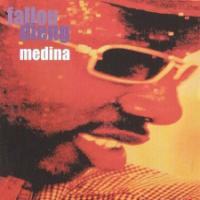
| 2000 | Release of the solo album Medina — first recording by Fallou Dieng as a lead artist |
| 2001 | Recognition at the Koras Awards in Sun City, South Africa |
| 2013 | The track “Weex Bet” appears on The Rough Guide to the Music of Senegal, a global compilation by World Music Network |
Origins and formation — from a suspended solo career to collective apprenticeship
Fallou Dieng grew up in the musical movement that made Dakar one of Africa’s capitals of sound. Like many musicians of his generation, he discovered sabar and the polyrhythms that structure Wolof music at a very young age.
When Lamine Faye left Super Diamono — one of the great mbalax groups — to found Lemzo Diamono in 1990, Fallou Dieng was among the first loyalists. The group gathered around him several former members of Super Diamono (Salam Diallo, Moustapha Faye) and promising young talents. The lineup was pléthorique — more than twenty names cited as members, whose influence the group is recognized for and whose name became an institution in the Dakar scene of the 1990s.
The reason for his commitment to the group is illuminating: Fallou Dieng had already begun a solo career, but he chose to suspend it temporarily in order to gain experience and forge his own sound. This collective apprenticeship shaped his voice and allowed him to develop a stage presence that would later become his strength.
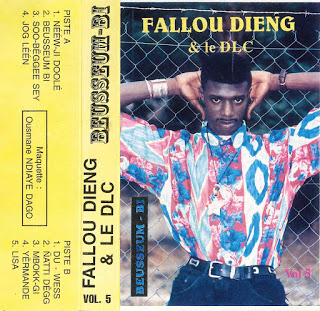
Between 1992 and 1998, Lemzo Diamono produced an impressive catalog, essentially on cassette: Jom, Setsima, Xarnu Bi, Masla-Bi, Akara, Simb, Vol. 5, Marimbalax on CD (Stern’s, 1997), Co Co Rico. Fallou Dieng sings and shares his voice with Alioune Mbaye Nder, Mada Ba, and Salam Diallo. The group’s style, called marimbalax, combines the rhythmic structure of Dakar mbalax with marimba sounds — a sound rooted in Wolof tradition but open to modern influences.
Revelation, recognition, and the artist’s solitude
After the group dissolved in 1998, Fallou Dieng resumed his solo career. In 2000, he released the album Medina, which bears his name and marks his true entry into solo work. The album retains the energy of mbalax while giving his voice a central place.
His recognition also arrived on the international stage: in 2001, he was present at Sun City (South Africa) for the Koras Awards, alongside major artists such as Youssou N’Dour and Coumba Gawlo. This presence testifies to his stature in the Senegalese musical landscape, even though his reach remains primarily centered on West Africa.
His track “Weex Bet” ranks among the giants of Senegalese music: Cheikh Lô, Orchestra Baobab, Mansour Seck, Sister Fa, Nuru Kane, Youssou N’Dour, Baaba Maal, Ismaël Lô. The compilation was compiled by Daniel Rosenberg and produced by Phil Stanton — it is a global passport for the selected musicians.
Major works
| Work | Year | Why it is essential |
|---|---|---|
| Lemzo Diamono, Vol. 1: Jom | 1992 | Group’s first album, recorded in Dakar — Fallou Dieng’s voice asserts itself from the start |
| Lemzo Diamono, Marimbalax (CD) | 1997 | Group’s first CD releases, Stern’s release — the marimba enters the scene and reinforces the sound identity |
| Medina (solo album) | 2000 | Fallou Dieng’s return as a solo artist — the artist liberates his voice after years of collective learning |
| “Weex Bet” (compilation) | 2013 | Almost twenty years after his debut, the track appears on a global compilation that places him alongside Youssou N’Dour and Baaba Maal |
Legacy and influence
Fallou Dieng’s music resonates within the Senegalese mbalax tradition of the 1990s, an era when Dakar’s musical scene pulverized its boundaries between Wolof tradition and modernity. Lemzo Diamono, with its pléthorique lineup and catalog of eight albums, marked an entire decade. Medina marks the transition from a group artist to a solo artist, which is common in the mbalax scene. The digital traces of Fallou Dieng’s name persist today on international music databases — MusicBrainz, ISNI (0000 0003 8265 7438), VIAF (83614563) — as many testimonies that he indeed existed, even if we do not know enough to trace his path beyond what the sources allow us to write.
Sources and references
- « Lemzo Diamono », Wikipedia, https://fr.wikipedia.org/wiki/Lemzo_Diamono, accessed November 15, 2026.
- « Senegal », Wikipedia (EN), https://en.wikipedia.org/wiki/Senegal, accessed November 15, 2026.
- « Fallou Dieng », MusicBrainz, https://musicbrainz.org/artist/15ca70f3-5a7d-40ef-a8ed-00f39bb58c96, accessed November 15, 2026.
- « The Rough Guide to the Music of Senegal », Wikipedia (EN), https://en.wikipedia.org/wiki/The_Rough_Guide_to_the_Music_of_Senegal, accessed November 15, 2026.
- Ousmane Mbaye, « Senegal: 6th Koras Awards: Youssou Ndour, Coumba Gawlo, Demba Dia and Fallou Dieng at Sun City », Le Soleil, Dakar, 13 September 2001.
- « Félix Wazekwa », Wikipedia (EN), https://en.wikipedia.org/wiki/Félix_Wazekwa, accessed 15 November 2026.