Biography
Fifi Rafiatou: the tonal voice that made Togo dance
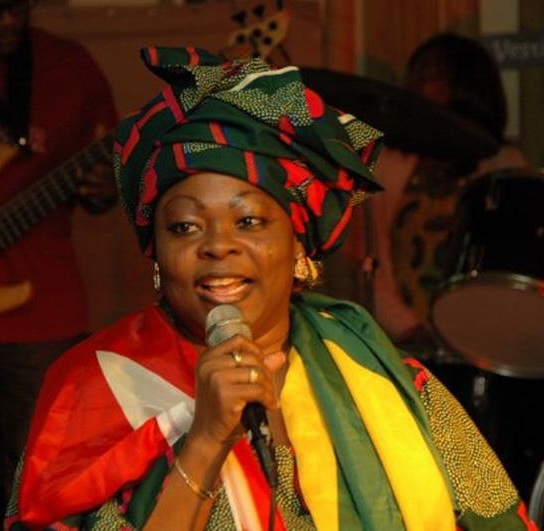
On the Ifè hills, near Atakpamé, an eight-year-old girl joins the choir of a Protestant church. Her voice carries far, beyond the clay roofs and baobabs. This child’s name is Djariatou Adjayi. Forty years later, the whole world will know her by her stage name: Fifi Rafiatou, the “Diva of Togolese music”1.
In brief
| Full name | Fifi Rafiatou (civil status: Djariatou Adjayi) |
| Birth | 1965, Atakpamé, Togo |
| Field | Afro-zouk, salsa, reggae — harmonica, talking-drums |
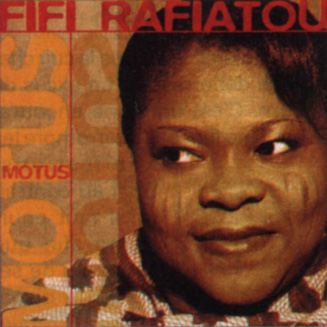
| Iconic works | Motus, Le Défi, Nwassa (J’ai peur) |
| Awards | Tabala d’Or (1990), Éléphant d’or (1991), Afrovision (1990), FESPAM (1996) |
Key dates
| Year | Event |
|---|---|
| 1965 | Birth on the Ifè hills in Atakpamé, daughter of a flutist |
| 1977 | Victory at the “Intervilles” contest on Radio Lomé with the song Iwassa2 |
| 1985 | Release of the first 45 rpm record, start of a professional career |
| 1988 | Ngoma Festival in Kinshasa (then-Zaïre) |
| 1990 | Tabala d’Or in Paris and Afrovision in Abidjan |
| 1991 | Éléphant d’or in Abidjan |
| 1996 | Album Motus; FESPAM in Brazzaville |
| 2006 | Creation of the KETEKE orchestra for live performances |
| 2007 | Release of Le Défi and the single “Message aux Nations unies”3 |
| 2009 | Launch of the champagne brand Et Dieu créa la Femme |
| 2013 | Release of albums Nwassa and Djofè |
| 2022 | Single “La Solitude”4 |
From church choir to world stage
Fifi Rafiatou is the eldest of a musical family. Her father, a flutist, instilled in her a taste for melodies and rhythms. Her cousin, also a singer, introduced her to traditional songs. At eight years old, Djariatou already performed in the Protestant church choir of her commune5. At thirteen, she stood out during the “Intervilles” contest organized by Radio Lomé, a competition designed to discover young talents across all of Togo6. She won first prize with Iwassa, a song that would become one of her hits.
But it was in 1985 that she took the professional step with the release of her first 45 rpm record. Her style began to take shape: a blend of afro-zouk — a genre that fuses Antillean zouk with African rhythms — Togolese salsa and reggae, all driven by the notes of her harmonica7. The young woman carried on her shoulders the promise of a Togolese music capable of conquering the world.
Consecration, commitment and KETEKE
The 1990s were the decade of consecration. In 1990, Fifi Rafiatou won the Tabala d’Or in Paris, a prestigious distinction, then triumphed at the Afrovision contest in Abidjan, pan-African recognition that confirmed her status as a continental superstar8. The following year, the Éléphant d’or in Abidjan sealed her reign. Togolese music, previously unknown beyond its borders, took the stages of Kinshasa, Brazzaville, Accra, New York and even Pyongyang.
Fifi Rafiatou does not just sing stories of love or celebration. In 2007, she released Le Défi, an album marked by “Message aux Nations unies”, a track that denounces wars and violations of children’s rights9. “Precious things are not lost,” she slips in “Sambrima”, her fétiche hit2. A call to preserve everything that counts: peace, culture, dignity.
In 2006, she founded her own orchestra, KETEKE, a formation with pan-African colors: Gabonese bassist, Ivorian percussionist, Cameroonian choristers, Togolese conductor10. In 2009, she expanded her empire with the creation of the champagne brand Et Dieu créa la Femme, for which she is both the sole African artist to market the product11.
Final years and legacy
After years spent in Germany, Fifi Rafiatou settled in France, in Sannois, in the Val-d’Oise12. But distance did not diminish her creativity. She released Nwassa (J’ai peur) in 2013, then Djofè the same year, and in 2022 the introspective single “La Solitude”. Every return is proof that her tonal voice continues to resonate.
Today, Fifi Rafiatou remains an indispensable reference in Togolese music. Her dense and eclectic work still inspires university research and academic theses. Married and mother of two children13, she embodies a generation of artists who, without renouncing their roots, dared to carry Togolese culture to the four corners of the globe.
Major works
| Work | Year | Why it is essential |
|---|---|---|
| Motus | 1996 | First major studio album, including “Sambrima”, hymn to preservation |
| Le Défi | 2007 | Committed album with “Message aux Nations unies”, militant and political track |
| Nwassa (J’ai peur) | 2013 | Notable comeback with a track featuring multiple versions (Ahélè, Wawa, Otito…) |
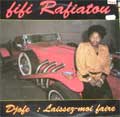
| Djofè (Laissez-moi faire) | 2013 | Natural sequel to Nwassa, confirms artistic resilience14 |
| La Solitude | 2022 | Introspective single, proof that her muse does not fade |
Heritage
Fifi Rafiatou shaped modern Togolese music. By blending afro-zouk, salsa and reggae with the harmonica as a sonic signature, she paved the way for a new generation of African artists. Her lyrics, blending dance and message, proved that popular music can carry political claims without losing its emotional power. Today, her name remains synonymous with Togolese pride.
-
Wakatogo, Fifi Rafiatou · Diva of Togolese music, accessed 27 October 2026 ↩︎
-
République Togolaise, Fifi Rafiatou launches her new album in Lomé, 20 October 2007, accessed 27 October 2026 ↩︎ ↩︎
-
Republicoftogo.com, Fifi Rafiatou in concert, 22 January 2008, accessed 27 October 2026 ↩︎
-
Deezer, artist Fifi Rafiatou, accessed 27 October 2026 ↩︎
-
DoingBuzz, FIFI RAFIATOU: A tonal voice, accessed 27 October 2026 ↩︎
-
Wikidata, Q111903260 - Fifi Rafiatou, accessed 27 October 2026 ↩︎
-
Wakatogo, Fifi Rafiatou · Diva of Togolese music, accessed 27 October 2026 ↩︎
-
Wikipédia FR, Fifi Rafiatou, accessed 27 October 2026 ↩︎
-
DoingBuzz, FIFI RAFIATOU: A tonal voice, accessed 27 October 2026 ↩︎
-
Republicoftogo.com, Fifi Rafiatou in concert, 22 January 2008, accessed 27 October 2026 ↩︎
-
DoingBuzz, FIFI RAFIATOU: A tonal voice, accessed 27 October 2026 ↩︎
-
Togocultures, Fifi Rafiatou, Ilema, 22 September 2010, accessed 27 October 2026 ↩︎
-
DoingBuzz, FIFI RAFIATOU: A tonal voice, accessed 27 October 2026 ↩︎
-
Deezer, Fifi Rafiatou discography, accessed 27 October 2026 ↩︎