Biography
Frédérick Caracas
With the discreet chords of his bass, Frédérick Caracas draws a line connecting the streets of Raizet to international stages. A Guadeloupean bassist, composer, arranger and producer born in 1963, he accompanied the birth of zouk as a genre and shaped it for over forty years, both behind the scenes and in front of the spotlights.
In brief
| Full name | Frédérick Caracas |
| Birth | 27 May 1963, Les Abymes, Guadeloupe |
| Nationality | French |
| Field | Zouk, Antillean raggamuffin, kizomba |
| Instrument(s) | Lead bass, vocals, synthesizer, programming |
| Notable works | “Voulez-vous venir ?”, “Lombraj”, “Aimer en silence” |
Key dates
| Year | Event |
|---|---|
| 1963 | Born in Abymes, Guadeloupe; son of an amateur guitarist |
| 1977 | At age 14, loss of his father; decides to learn bass as a self-taught musician |
| 1982 | Enrolled at the Paris Conservatoire for classical training |
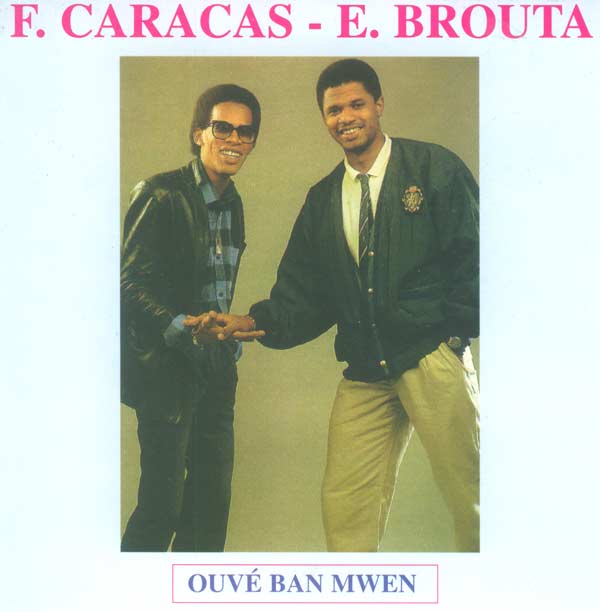
| 1985 | First album Ouvé Ban Mwen, co-founded with Eric Brouta on the Moradisc label |
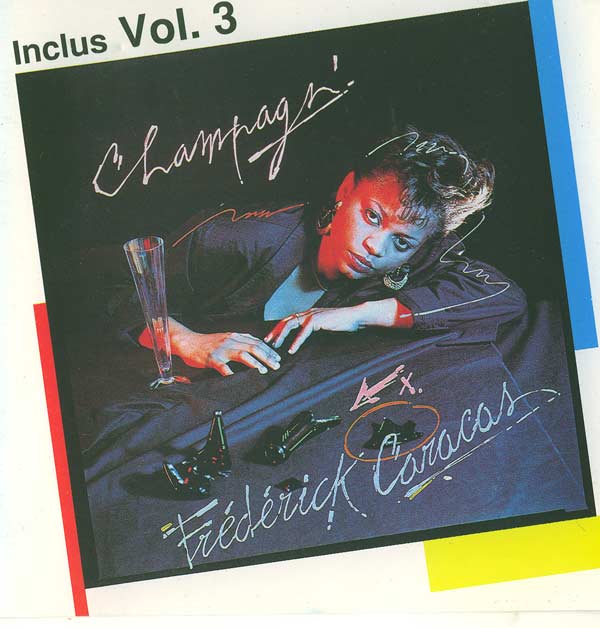
| 1987 | Release of first solo album Voulez-vous venir ?; co-founding of Champagn' |
| 1991-1996 | Bassist for the group Kassav’, succeeding Georges Décimus |
| 1992 | Appearance in the film Siméon by Euzhan Palcy |
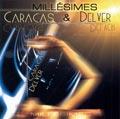
| 2004 | Album Millésimes in collaboration with Victor Delver |
| 2015-2024 | Extensive collaborations in zouk and Antillean urban music (Admiral T, Fanny J) |
| 2023 | Release of the documentary Sur un air de silence, directed by Raymond Philogène |
| 2024 | Concert celebrating 40 years of his career at Caz’Art in Baie-Mahault |
Origins and revelation: from Raizet to the Paris Conservatoire
Frédérick Caracas grew up in the Raizet neighborhood, in Les Abymes. This suburb of Abymes was then a musical melting pot that saw the birth or proximity of Francky Vincent, Jean-Michel Rotin, Pascal Latour, Daly and many others. “Besides my musician cousins, Le Raizet was a real hub for musicians: Daniel Forestal, Francky Vincent, the group Les Rapaces,” confides Caracas. “There were many opportunities to move towards music.”
But in 1977, at fourteen, his life turned upside down: he lost his father, an amateur guitarist. Despite his mother’s opposition who dissuaded him from making it a profession, Caracas decided to learn bass as a self-taught musician. He trained through listening, trial and error, and repetition—an approach that would mark his entire style: intuitive, unpretentious, but of impeccable precision.
Desiring to perfect his technique, he joined the Paris Conservatoire in 1982. This classical training reinforced an already highly developed musical instinct and opened the doors to Parisian studios.
Champagn’ and Kassav’: the zouk accelerator
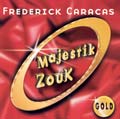
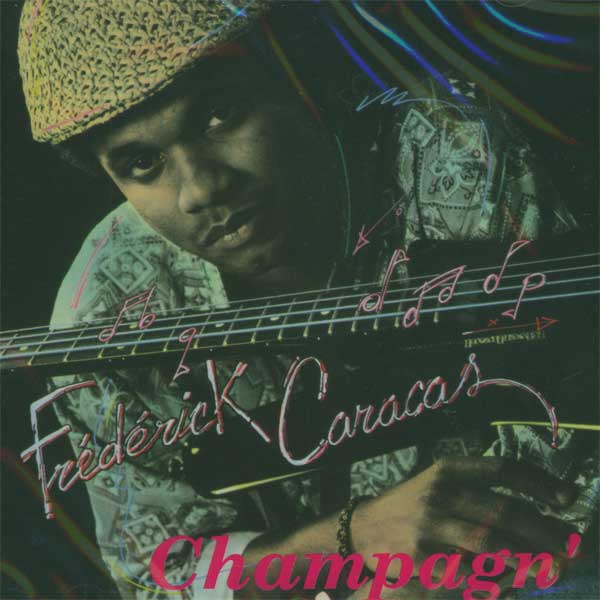
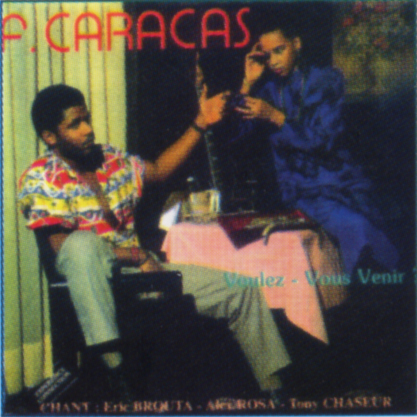
In 1987, Frédérick Caracas founded the group Champagn’ with Dominique Gengoul and Ronald Rubinel. The trio delivered a warm zouk, blending Antillean sensibility with soul influences—the group released tracks like Cocktail Lavax, Aimer en silence and Muffin Zouk. In parallel, Caracas pursued a solo career from 1987 with the album Voulez-vous venir ? on the Moradisc label, co-founded that same year by Eric Brouta and Caracas. The album launched songs like Kimbe Mwen and Compè.
The decisive turning point came in 1991: Kassav’ called on Caracas to replace Georges Décimus on bass. He remained in the group until 1996, a period during which he traveled the world with them. “It was a beautiful exchange with musicians from other cultures that nourished me musically,” he recalls. “For me, the best moment is when we leave our home to see something else, elsewhere, in other islands or continents, to then adapt it to our music.” His flexible bass, often subtly in the background, modernized Kassav’’s sound without ever stealing the spotlight.
Evolutions: collaborations and opening to the world
Caracas is a studio musician as much as a stage performer. Director Raymond Philogène, who dedicated the documentary Sur un air de silence (2023) to him, calls him the hitmaker—and this nickname well summarizes his prolificity. He collaborates with Édith Lefel, Patrick Saint-Eloi (2002-2010), Tanya Saint-Val, Gilles Floro, Jean-Michel Rotin and many others. More broadly, he works with French and international artists such as Catherine Lara, Michel Jonasz, Khaled, Salif Keïta and Manu Dibango.
One title in particular marks his innovative approach: “Lombraj”, released at the end of the 1980s. “I am among the first to have integrated raggamuffin into my music with the title Lombraj, at the end of the 1980s,” he recounts. “At the time I was very influenced by Yellow Man!” This track would become one of the classics of zouk-raggamuffin.
Caracas says that each project he undertook took him out of his comfort zone: “Every time, it was a new challenge!” His collaboration with Admiral T, Fanny J, Misié Sadik or Were Vana in the urban music scene illustrates this constant curiosity.
His commitment goes beyond the borders of zouk: he also trains in kizomba and accompanies new generations of the Antillean scene, while remaining faithful to this bass that bridges cultures.
Major Works
| Work | Year | Why It’s Essential |
|---|---|---|
| Voulez-vous venir ? (solo) | 1987 | First solo album: an intimate zouk that foreshadows the classics to come |
| Champagn’ (album) | 1990 | Third album by Champagn’ — Aimer en silence and Gomnaj’ mark Antillean zouk |
| “Lombraj” (single) | late 1980s | One of the first zouk tracks to integrate raggamuffin — an innovative influence |
| Kassav’ (albums 1991-1996) | 1992-1995 | The arrival of Caracas on bass for Kassav’ modernized the group’s sound during its global popularity |
| Millésimes (with Victor Delver) | 2004 | Collaborative album that proves his ability to grow over the decades |
Legacy and Influence
Frédérick Caracas is one of those musicians whose career remains little known to the general French public but celebrated on the island. His versatile approach — sideman bassist par excellence, while remaining a singer-songwriter on his own records — inspires many young Antillean musicians. The documentary Sur un air de silence (2023, Raymond Philogène) and his 40th-anniversary concert (July 2024, Lacaz’Art) allowed this musician to regain the recognition he deserves. “These four decades have allowed me to leave a lasting mark in the music world. It’s a beautiful adventure that is not over,” he says with this characteristic humility of great artists.
Sources and References
- “Frédérick Caracas: 40 years later”, KARIBINFO, kariibinfo.com/news/musique-frederic-caracas-40-ans-plus-tard, accessed November 18, 2026.
- “MUSIC. Frédérick Caracas celebrates 40 years of career on stage in Guadeloupe”, France Antilles / Guadeloupe La 1ère, la1ere.franceinfo, published July 22, 2024.
- “Frédéric Caracas”, Outremer Memory, outremermemory.com/frederic-caracas, accessed November 18, 2026.
- “Frédéric Caracas”, Wikipedia, fr.wikipedia.org/wiki/Frédéric_Caracas, accessed November 18, 2026.
- “Frederic Caracas”, AllMusic, allmusic.com/artist/frederic-caracas-mn0001251280, accessed November 18, 2026.
- “Frédérick Caracas”, Discogs, discogs.com/artist/1210625, accessed November 18, 2026.