Biography
Georges Décimus
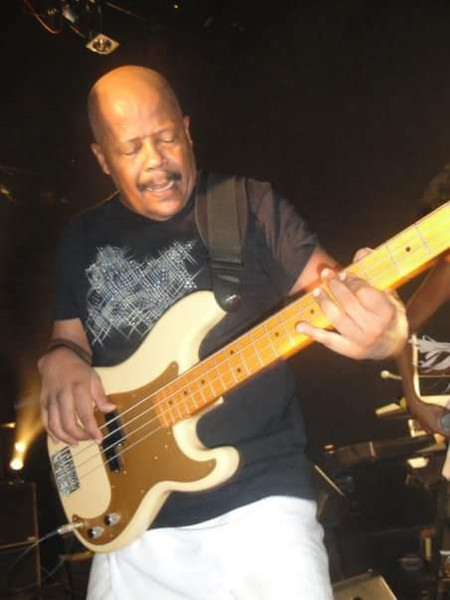
In 1979, a group of Americans discovered Paris and stumbled upon rhythms that made the floors tremble. Originally, electrified Guadeloupean cadences, a precise and driving bass that became the foundation of zouk. That specific bass line is Georges Décimus’s. Younger brother to co-founder Pierre-Édouard, he is the silent yet indispensable instrument behind Kassav’s sound, and more broadly, a prolific songwriter who shaped over one hundred works.
In Brief
| Full Name | Georges Décimus |
| Birth | October 26, 1955, Pointe-à-Pitre, Guadeloupe |
| Field | Music — zouk, Caribbean traditions |
| Main Instrument | Bass (electric) |
| Notable Works | “Yélélé”, “Gorée”, “Zouk la sé sèl médikaman nou ni” |
| Distinctions | Gold and platinum albums with Kassav’; over 100 compositions to his credit |
Key Dates
| Year | Event |
|---|---|
| 1955 | Birth in Pointe-à-Pitre, Guadeloupe |
| Circa 1973–1975 | Musical beginnings with the group Les Hunters in Guadeloupe |
| 1975–1977 | Military service in France; meeting Patrick Saint-Éloi and César Durcin |
| 1979 | Co-founding of Kassav’ with his brother Pierre-Édouard and Jacob Desvarieux |
| 1980 | Release of the first album: Love and Ka Dance |
| 1984 | Release of Yélélé, co-written with Jacob Desvarieux, propelling the group |
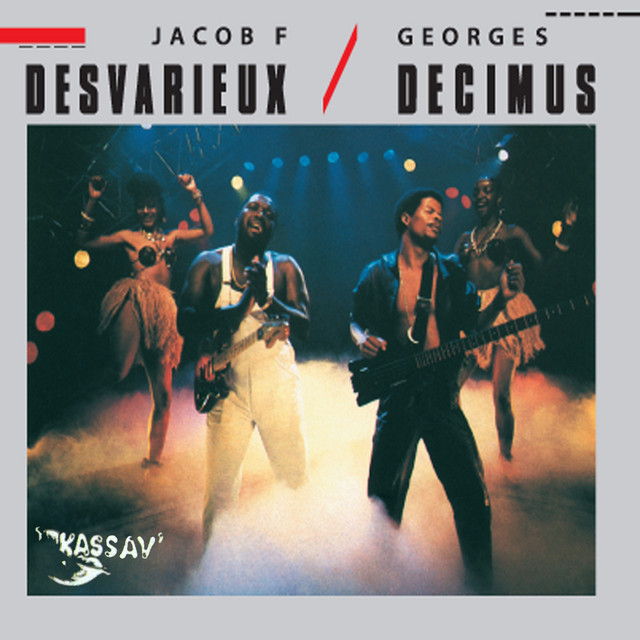
| 1986 | Second duo collaboration with Desvarieux: Gorée |
| 1991 | Departure from Kassav’ to form Volt-Face with Jeff Joseph |
| 2004 | Return to Kassav’ for the fourteenth album, Ktoz |
| 2009 | Participation in the documentary 30 ans de Kassav' |
A Foundational Bass, a Caribbean Journey in Paris
Georges Décimus grew up in Pointe-à-Pitre, at the heart of a family marked by music. His older brother Pierre-Édouard, co-founder of the Vikings de Guadeloupe, was his first role model. From adolescence, Georges formed the group Les Hunters with friends from his neighborhood. Military service in France cut short this period: between 18 and 20 years old, he reunited with his compatriots Patrick Saint-Éloi and César Durcin. Georges swore never to live in France, as he hated the winter he experienced during his army service. Yet, he returned quickly. Back in France, Georges learned the trombone and joined the group Vénus One as a bassist. This is where destiny shifted: Pierre-Édouard Décimus discovered his talent and invited him to join a Parisian studio project that would transform Caribbean music.
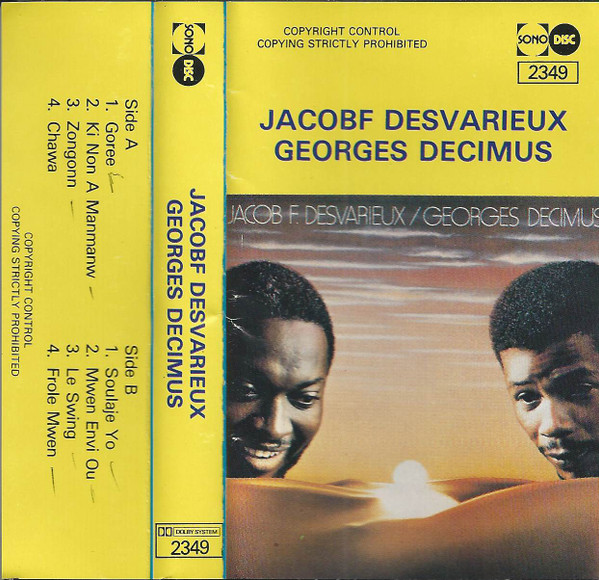
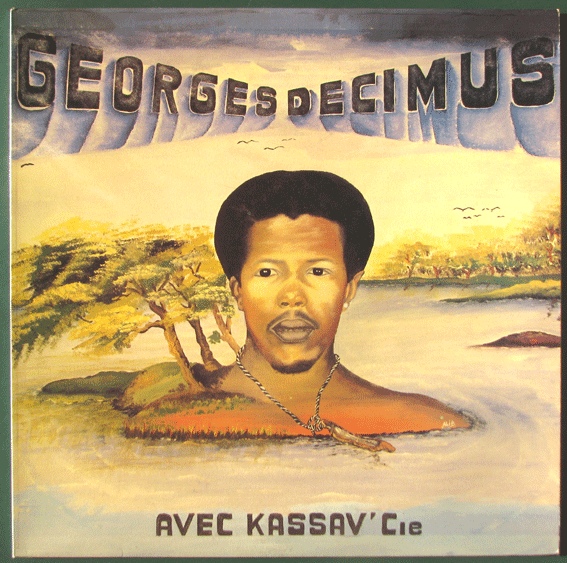
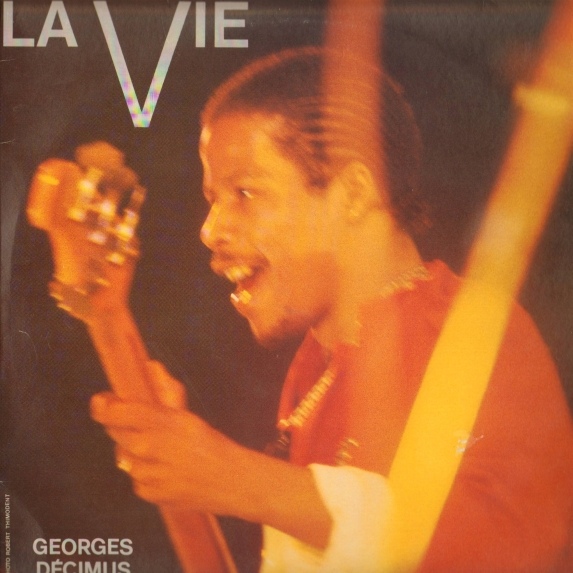
In 1979, Georges co-founded Kassav’ with his brother and guitarist Jacob Desvarieux. The name is inspired by cassave, a manioc-based food — a nod to Caribbean roots. The group fused traditional rhythms (gwo-ka, ti-bwa) with modern Parisian recording technologies. This sound — quickly baptized zouk because their music became inevitable in Caribbean evenings — revolutionized the scene. The collaboration between Georges and Jacob Desvarieux became the creative engine of Kassav’. Yélélé (1984) was a turning point: the hit title “Zouk la sé sèl médikaman nou ni” (“The zouk is our only medicine”) propelled the group onto the international stage. Gorée (1986), the second duo album, confirmed this dynamic with “Soulagé Yo” and “Mwen Anvi’w”. Georges also played a key role in the group’s recruitment: he introduced Patrick Saint-Éloi, whose backing vocals would permanently mark Kassav’s sound. In 1982, he released George Décimus with Kassav’, an album including “Nwel”, ten minutes of brass and percussion considered a precursor to zouk. With over one hundred compositions to his credit, he became one of the most prolific songwriters in Caribbean music.
In 1991, Georges decided to explore new paths and formed the group Volt-Face with his friend Jeff Joseph (founder of Grammacks). Dominik Coco, Dominique Panol, and Kathryn Thelamon accompanied them. Volt-Face produced a dozen albums in ten years, marking a new generation of Caribbean music. In 2004, he rejoined the Kassav’ troupe for the fourteenth album, Ktoz. Having become an indefatigable member of the formation, he continued to compose and produce throughout the decades.
Major Works
| Work | Year | Why It Is Essential |
|---|---|---|
| Love and Ka Dance (Kassav') | 1980 | Kassav’s first album; Georges Décimus already introduced his precise, dancing bass signature here |
| George Décimus with Kassav' | 1982 | Bassist’s first solo album; “Nwel”, ten minutes of brass and percussion, is a foundational precursor to zouk |
| Yélélé (with Jacob Desvarieux) | 1984 | The album that propelled Kassav’ into international recognition; “Zouk la sé sèl médikaman nou ni” became the movement’s anthem |
| Gorée (with Jacob Desvarieux) | 1986 | Confirms the Georges-Jacob partnership; iconic titles including “Soulagé Yo” and “Mwen Anvi’w” |
Legacy and Influence
Georges Décimus never had the media spotlight of Jacob Desvarieux nor the enchanting stage presence of Jocelyne Béroard, but his bass is the invisible pillar that maintains Kassav’s sonic architecture. Forty years after the group’s creation, whose albums earned gold, platinum, and diamond certifications and who performed in 82 countries, his music continues to resonate. Every generation rediscovers the foundations he laid in Pointe-à-Pitre before arriving in Paris. Alongside Jocelyne Béroard and Jean-Claude Naimro, he remains one of the last living witnesses to the founding lineup that made Kassav’ a global cultural phenomenon.
Sources and References
-
« Georges Decimus — Biography », AllMusic, allmusic.com/artist/georges-decimus-mn0001232368, accessed November 16, 2025.
-
« Georges Decimus », Peel Fandom, peel.fandom.com/wiki/Georges_D%C3%A9cimus, accessed November 16, 2025.
-
« Persons — Décimus Georges », Africultures, africultures.com/personnes?no=4215, accessed November 16, 2025.
-
« Bassist Georges Décimus (Kassav and Volte-Face) puts on a show in Schoelcher », Outre-mer La 1ère, la1ere.franceinfo.fr, April 21, 2023.
-
« Décimus Georges », MizikNou, miziknou.com/artiste.html?id=113, accessed November 16, 2025.
-
« Kassav’ — Members and history », Wikipedia EN, en.wikipedia.org/wiki/Kassav%27, accessed November 16, 2025.
-
« Georges Decimus — Albums, songs », Deezer, deezer.com/en/artist/1385551, accessed November 16, 2025.
-
« Kassav’ — Biography », Amoeba Music, amoeba.com/kassav/artist/151010/bio, accessed November 16, 2025.