Biography
Gertrude Seinin
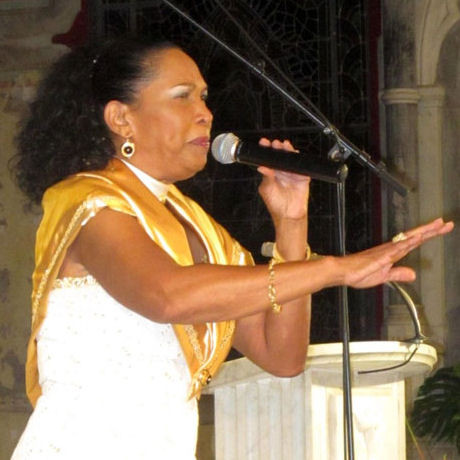
At the Olympia in Paris, in 2002, Gertrude Seinin performed on the national stage. She was not there to follow a trend or miss her era, but to present to the capital’s audience what she knew was already ancestral — the biguine, the mazurka, and the Creole spirituals she herself shaped. Around her was the grand Mahogany orchestra under the direction of Manuel Césaire, the Tche Kreyol ballet, and the strange guest of honor, a Japanese guitarist: Ichiro Suzuki. The show was a bridge between the world and the island — the connecting thread she always wanted to make heard.
In Brief
| Name | Gertrude Seinin |
| Birth | Fort-de-France, Martinique (20th century) |
| Domain | French Antilles music, biguine, mazurka, bèlè, sacred music |
| Notable Works | “Si tellement”, “Mazouk Grand Moun”, Creoles Spirituals, Live at the Olympia |
| Awards | Maracas d’Or SACEM (1982) |
Key Dates
| Year | Event |
|---|---|
| ~1960s | Debut as a singer |
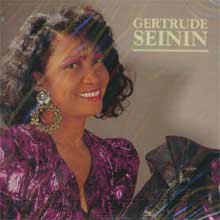
| 1981 | First album, Chante Fernand Donatien Vol. 1 (Creole Waltzes, Biguines and Mazurkas), label Selina Rese |
| 1982 | Chante Fernand Donatien Vol. 2; received the Maracas d’Or SACEM from Rhoda Scott for promoting Martinican traditional music |
| 1985 | Release of self-titled album on GD Productions label |
| 1989 | An Ti Moman Selman, Antillean traditional music |
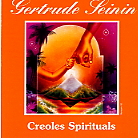
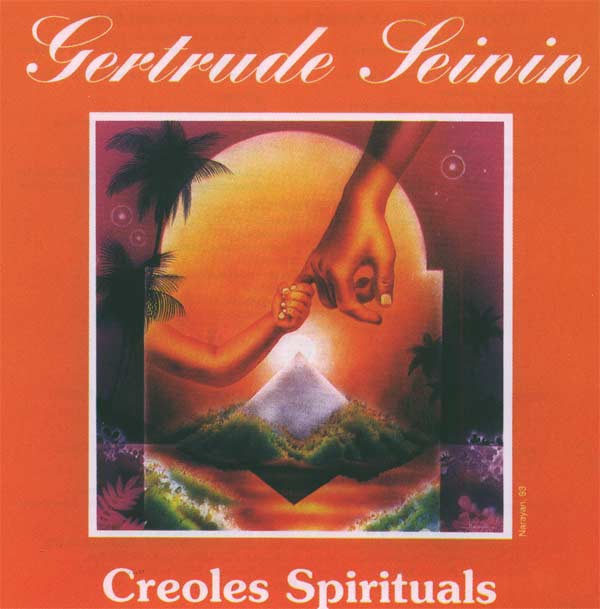
| 1996 | Creoles Spirituals Vol. 1; creation of the genre she named thus, a fusion between sacred music and Antillean traditions |
| 1997 | Creoles Spirituals Vol. 2, recorded in New York (5 tracks in Martinique, 5 in New York) |
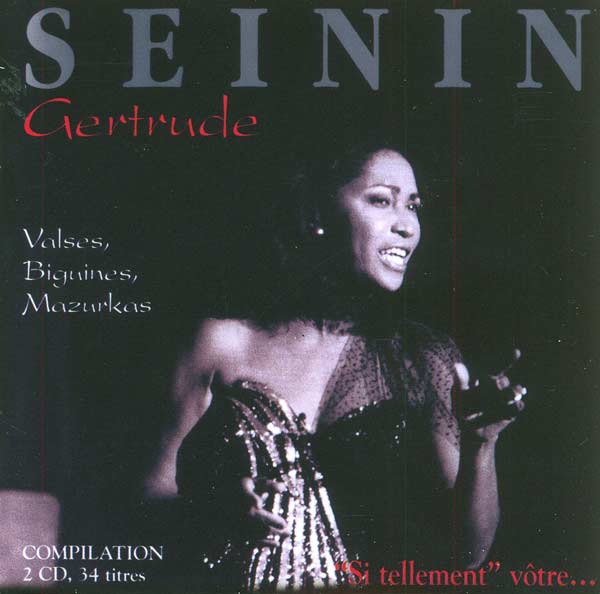
| 1998 | Compilation “Si tellement” — Your… (2-CD set), label Crescendo Productions |
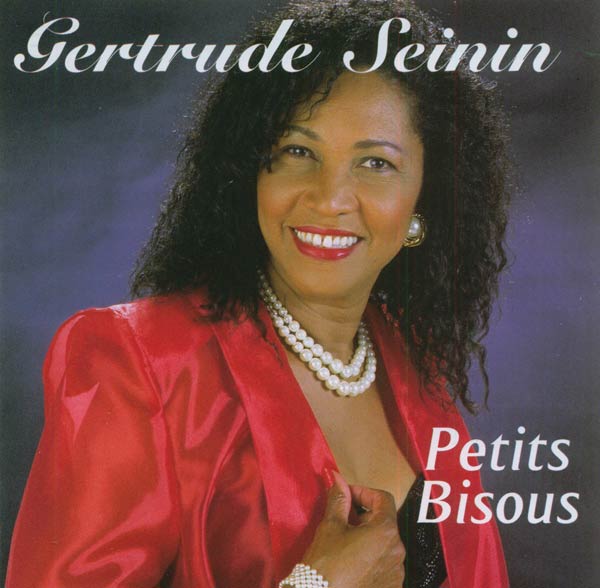
| 1999 | Petit Bisous, Antillean traditional music |
| 2001 | Anniversary concert “20 ans d’amour” at CMAC Atrium in Fort-de-France |
| 2002 | Concert at the Olympia (Paris), Live at the Olympia, Mahogany orchestra / Manuel Césaire, Tche Kreyol ballet |
| 2003 | Caribbean Homage to Édith Piaf (Live at La Cigale), with Mario Canonge and Andy Narell |
| 2006 | Invited as goodwill ambassador for the World Festival of Negro Arts (FESMAN) in Senegal |
Origins and First Steps: The Biguine as Root
Born in Fort-de-France, Gertrude Seinin grew up with Martinican music in her veins. As early as the 1960s, she performed as a singer, then embarked on a recording career at the beginning of the 1980s. Her first album, released in 1981 on the Selina Rese label (Chante Fernand Donatien, Vol. 1: Creole Waltzes, Biguines and Mazurkas), is a hymn to Antillean composers — in this case, Fernand Donatien, whose works she interprets. The album made two tracks famous that would remain iconic: “Si tellement” and “Mazouk Grand Moun”.
The following year, the second volume arrived. Gertrude Seinin built a repertoire that highlights the richness of Martinican traditional music: Creole waltz, biguine, mazurka. And in 1982 she received the Maracas d’Or SACEM from Rhoda Scott — a major figure in jazz, organist and renowned pianist — for her promotion of Martinican traditional music. This distinction marked a turning point: her work was no longer just local; it was recognized by a national institution.
A Unique Voice: From Creole Spirituals to the Olympia
Parallel to her grounding in traditional registers, Gertrude Seinin made an artistically bold choice: like the Americans with gospel music, she introduced a form of fusion between sacred music and Antillean traditions. She named this new genre: Creoles Spirituals. The first volume appeared in 1996, and a second one in 1997. On this second album, the tracks were recorded both in Martinique and New York, a sign of an expanded network and audience.
But it was in 2002 that Gertrude Seinin accessed the great Parisian stage. The Olympia is the building of French song par excellence — and she entered there with her biguine and her Mahogany orchestra directed by Manuel Césaire. The Tche Kreyol ballet accompanied her in dance, and the surprising guest of honor: Japanese guitarist Ichiro Suzuki. The Live at the Olympia that resulted (2002) is a major document of her career — where the biguine meets “Hymne à l’amour”, “Ro lé min”, and tracks from the Antillean repertoire.
The following year, at La Cigale, she paid a Caribbean tribute to Édith Piaf. Accompanied by Mario Canonge (piano) and Andy Narell (vibraphone), she transposed Piaf’s repertoire into a Caribbean palette. Caribbean Homage to Édith Piaf (2003) is a cultural bridge between the Parisian of song and the Martinican of world music.
Later Years: A Career Always in Motion
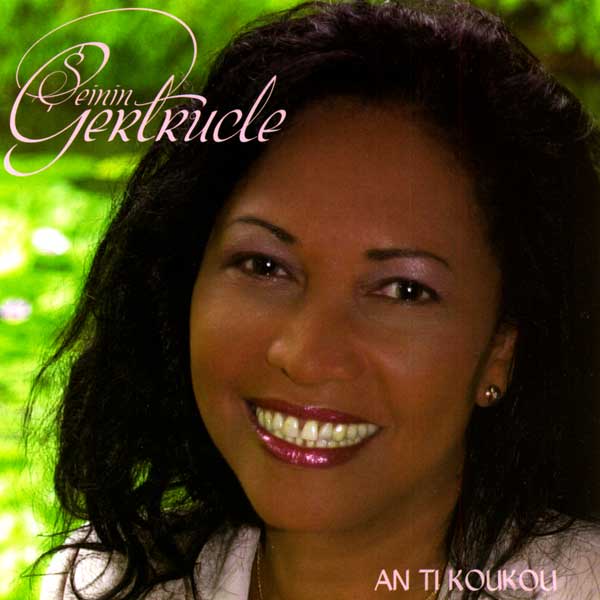
After the legendary concerts at the Olympia and La Cigale, Gertrude Seinin continued to perform and record. In 2013, the album An Ti Koukou (CD, label Crescendo Productions) was released. She was also invited to collaborate with other Antillean artists, such as on the album Jeux de dames Vol. 4 where she shares the microphone with other female voices from the Antilles, or on Gospel Noël alongside Tanya Saint-Val and Dominique Zorobabel.
Her presence as goodwill ambassador for FESMAN (World Festival of Negro Arts) in Senegal, noted in 2006, confirms her status as a representative of Antillean music and culture beyond French borders.
Major Works
| Work | Year | Why It’s Essential |
|---|---|---|
| Chante Fernand Donatien Vol. 1 | 1981 | First album; features “Si tellement” and “Mazouk Grand Moun”, signature tracks of Martinican biguine |
| Creoles Spirituals Vol. 1 | 1996 | Invention of a genre: the fusion between sacred music and Antillean traditions |
| Live à l’Olympia (with the Mahogany Orchestra) | 2002 | Arrival on the national Parisian stage; meeting between biguine and jazz orchestration |
| Hommage caribéen à Édith Piaf (La Cigale) | 2003 | Cultural bridge: Piaf revisited through Caribbean rhythms, with Mario Canonge and Andy Narell |
| An Ti Koukou | 2013 | Last known studio album; preservation of musical heritage despite the passage of time |
Legacy and Influence
Gertrude Seinin is an artist who never followed trends. She began with biguine, stayed with it—but enriched it with her own invention, the Creoles Spirituals. Even today, her catalog remains a resource for anyone wishing to understand Martinican traditional music and its capacity to dialogue with other musical traditions from around the world. Her appearance at the Olympia, her collaboration with Mario Canonge and Andy Narell, her 2013 album An Ti Koukou—all this testifies to a career path where Antillean heritage is never a relic, but living material.
Sources and References
- “Gertrude Seinin”, Wikipedia, https://fr.wikipedia.org/wiki/Gertrude_Seinin, accessed November 16, 2026.
- “Gertrude Seinin Discography”, Qobuz, http://www.qobuz.com/us-en/interpreter/gertrude-seinin/289603, accessed November 16, 2026.
- “Gertrude Seinin”, Discogs, https://discogs.com/artist/1283445-Gertrude-Seinin, accessed November 16, 2026.
- “Gertrude Seinin”, Wikidata, https://wikidata.org/wiki/Q3104392, accessed November 16, 2026.
- “Gertrude Seinin discography”, Rate Your Music, https://rateyourmusic.com/artist/gertrude-seinin, accessed November 16, 2026.
- “Gertrude Seinin”, Apple Music, https://music.apple.com/us/artist/gertrude-seinin/359815237, accessed November 16, 2026.