Biography
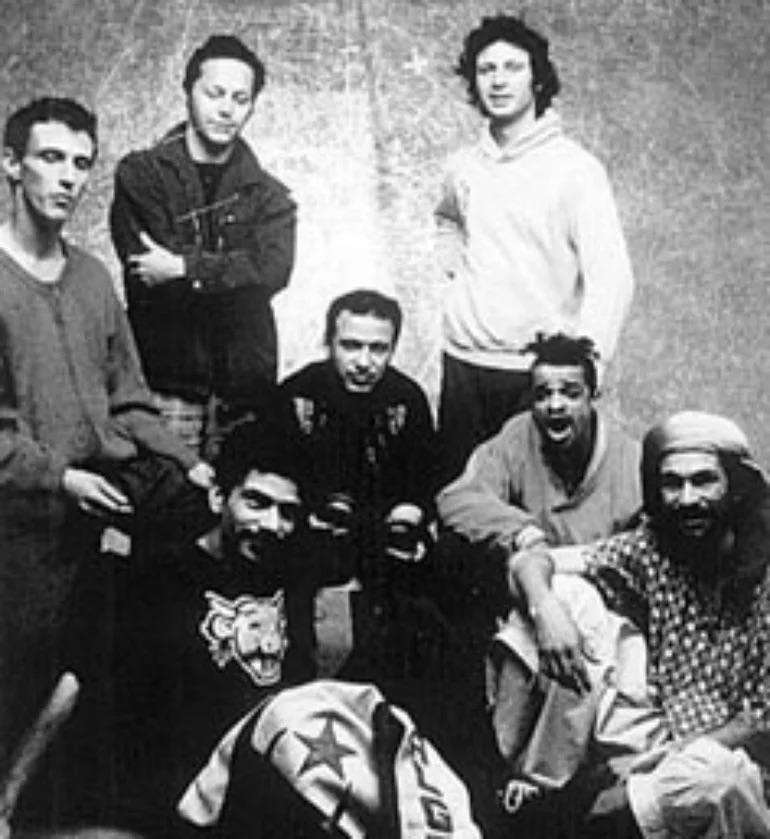
Gnawa Diffusion
Grenoble, November 25, 2006. The Élysée Montmartre is smoky. Amazigh Kateb, son of the Algerian writer Kateb Yacine, raises a microphone before 1,500 spectators: “France, we discovered it in 1988 at sixteen, with a bag and my father’s death inside us.” The group he founded in 1992 blows out its ten candles with music that does not ask for permission — Algerian chaâbi, Jamaican reggae, gnawa percussion and texts in Arabic, French and English. Twenty-five years later, the sound remains intact.
In brief
| Group name | Gnawa Diffusion |
| Origin | Grenoble, France (originally Algerian members) |
| Formation | June 27, 1992 in Échirolles (Isère) |
| Musical genre | Gnawa, reggae, chaâbi, ragga |
| Languages | Algerian Arabic, Tamazight, French, English |
| Leader | Amazigh Kateb (vocals, guembri) |
| Signature works | Algeria, Bab El Oued Kingston, Souk System |
Key dates
| Year | Event |
|---|---|
| 1972 | Birth of Amazigh Kateb in Staouéli, son of writer Kateb Yacine |
| 1989 | Death of Kateb Yacine, a void that music will fill |
| 1992 | Formation of the group in Échirolles on June 27 |
| 1997 | Release of Algeria, first album and hit “Ombre-elle” |
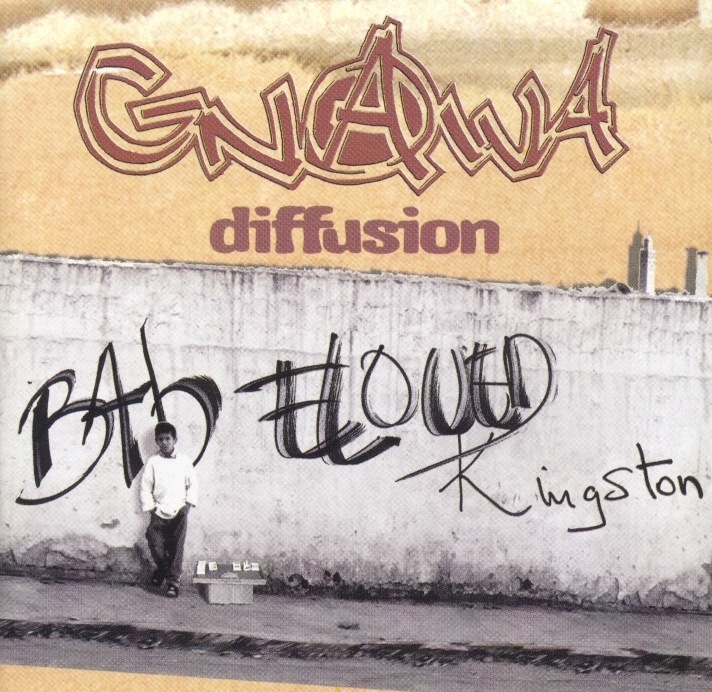
| 1999 | Bab El Oued Kingston, meeting with Jamaican reggae |
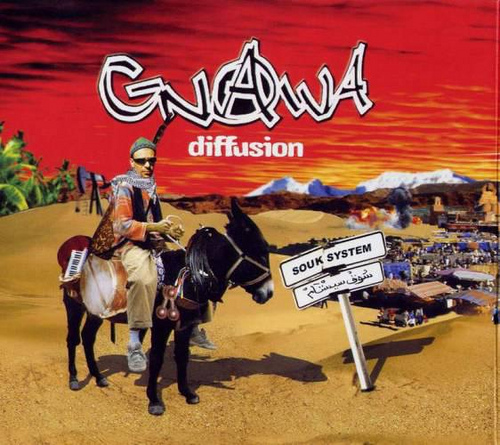
| 2003 | Souk System on Warner, world tours |
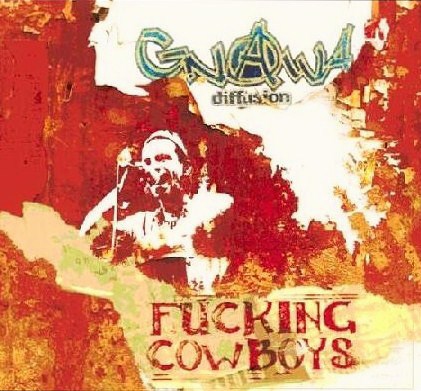
| 2007 | Live DVD Fucking Cowboys at Élysée Montmartre |
| 2025 | Rwina, new album twenty-five years after creation |
A writer’s son forging an insubmersible sound
Amazigh Kateb was born on September 16, 1972 in Staouéli, near Algiers. His father, Kateb Yacine (1929-1989), is one of the greatest Algerian writers, author of Nedjma. His father’s death in 1989 left a void that music would fill. Amazigh discovered the sounds of southern Algeria as early as nine years old: in Timimoun, he attended nocturnal gatherings where gnawa music — a musical tradition introduced in North Africa by descendants of sub-Saharan slaves — pulsed within the intimacy of homes. “I danced like a madman until late hours,” he recalls.
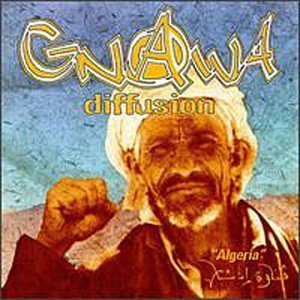
In 1988, at sixteen, he arrived in Grenoble with his mother. At high school, he read Aragon. In the neighborhoods, he listened to ragga. On a local radio station, he crossed paths with Yassine Gouri’s instrumentals. The band formed around the microphone. Gnawa Diffusion took flight in 1996 with the release of Algeria. Inspired by Nass El Ghiwane, a Moroccan group blending popular song (chaâbi, the traditional Algerian music) and punk-rock, the group forged a unique sound. The guembri (three-stringed lute of the Gnawa) rubbed shoulders with reggae bass, while the krakeb (gnawa metal cymbal) answered the rock drum kit.
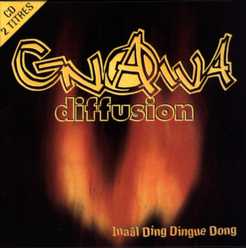
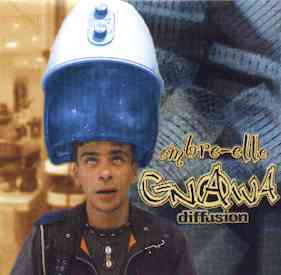
The single “Ombre-elle” — a tight portrait of facial profiling controls — became a cult hit. The group continued with tours, sharing the bill with FFF, Zebda and Massilia Sound System. Bab El Oued Kingston (1999) widened the breach with Jamaica, remixing the ancestral chant “Chara’Allah” and recording “Bab El Oued Kingston”. Souk System (2003, Warner) added international politics: the texts denounced Bush, Blair and intervention in Iraq.
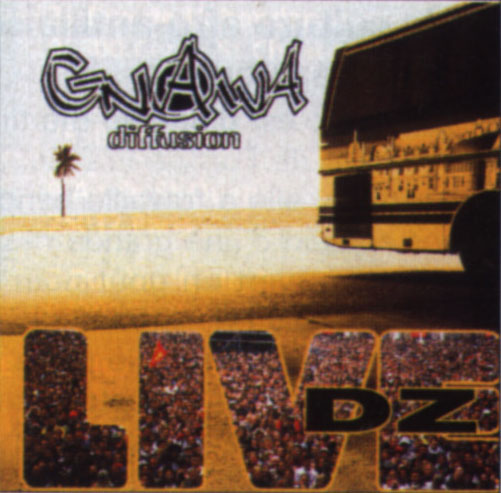
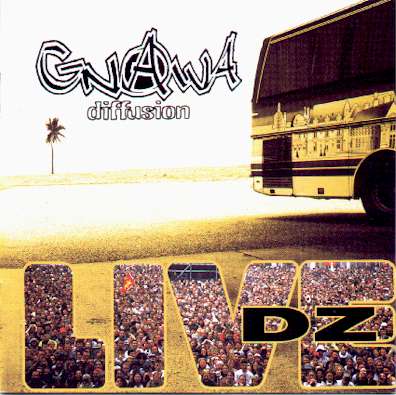
In 2002, Live DZ was recorded during a tour in Algeria — a first historical record. In 2007, Amazigh launched his solo career with Marchez Noir, but Gnawa Diffusion returned: the DVD Fucking Cowboys retraced the anniversary concert. Shock El Hal (2012) and Rwina (2025) proved that the machine does not stop.
Major works
| Work | Year | Why it is essential |
|---|---|---|
| Algeria | 1997 | First album, forged the signature sound with “Ombre-elle” |
| Bab El Oued Kingston | 1999 | Meeting with Jamaican reggae and reappropriation of “Chara’Allah” |
| Souk System | 2003 | Most political text, major label, world tours |
| Fucking Cowboys | 2007 | Anniversary concert at Élysée Montmartre, unforgettable live performance |
Legacy
Gnawa Diffusion paved the way for a generation of Franco-Maghrebin musicians who do not limit themselves to one register. Their model — reinventing a tradition by grafting it onto reggae, rock and hip-hop — has inspired artists from the entire diaspora. “Ombre-elle” appears on the soundtrack of the film Sheitan (2006), and their concerts continue to gather a mixed audience. In 2025, Rwina confirms that the group’s music is not a product of its time, but an inexhaustible reservoir.
Sources and references
- “Gnawa Diffusion”, Wikipedia (French version), https://fr.wikipedia.org/wiki/Gnawa_Diffusion, accessed October 23, 2026.
- “Gnawa Diffusion”, Wikipedia (English version), https://en.wikipedia.org/wiki/Gnawa_Diffusion, accessed October 23, 2026.
- “Gnawa Diffusion”, RFI Musique, https://musique.rfi.fr/musique/19990527-gnawa-diffusion.html, accessed October 23, 2026.
- “The 10 years of Gnawa Diffusion”, RFI Musique, https://musique.rfi.fr/musique/20061127-10-ans-gnawa-diffusion.html, accessed October 23, 2026.
- Angel Romero, “Artist Profiles: Gnawa Diffusion”, World Music Central, https://worldmusiccentral.org/artist-profiles-gnawa-diffusion/, accessed October 23, 2026.
- “Gnawa Confusion: The Fusion of Algeria’s Favorite French Band”, Interdisciplinary Studies of Art, https://doi.org/10.7202/1015031ar, accessed October 23, 2026.
- “Gnawa Diffusion”, Qobuz, https://www.qobuz.com/us-en/interpreter/gnawa-diffusion/98950, accessed October 23, 2026.
- “Gnawa Diffusion”, Deezer, https://www.deezer.com/us-en/artist/14267, accessed October 23, 2026.