Algeria in Melodies: From the Casbah to Global Charts
Raï, born in the streets of Oran, has been inscribed on UNESCO’s World Heritage List since 2022. Yet it represents only one facet of an extraordinary diverse Algerian musical landscape — from Andalusian-Arab music, inherited from Al-Andalus eight centuries ago, to Berber hip-hop that now makes Paris, Lisbon and Toronto dance. Let us see how Algeria, a Mediterranean crossroads, has transformed its influences into unique creations.1
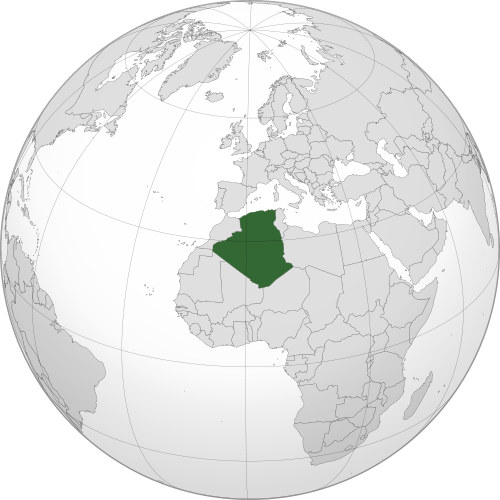
Algerian music is often reduced abroad to raï — this popular genre born in the 1920s in Oran. Yet, the country hosts at least five major traditions that coexist and mutually influence one another: Andalusian-Arab music2, urban chaâbi, raï, Kabyle Berber music and Sahrawi songs. Each tells a story of the country — colonialism, identity resistance, globalization — and each has produced international figures.
From the first records to raï: pioneers and the birth of the genre (1900-1970)
The recorded history of Algerian music begins at the start of the 20th century, mainly in Algiers. The city, a Mediterranean metropolis with multiple communities (Muslim, Jewish, European), is the crucible that gives birth to chaâbi (« popular »), an urban style that moderates the rigorous rules of Andalusian-Arab music to fit into the daily life of popular neighborhoods.3
The founding figure is Hadj M’hamed El Anka (1907-1978), whose real name is Mohammed Idir Halo, born in the high Casbah of Algiers. A student of Cheïkh Mustapha Nador, great master of Andalusian-Arab music, he innovated by introducing new instruments — banjo, darbouka, piano — and created the Algerian mandole, a half-mandolin with an elongated neck, crafted with Spanish luthier Jean Bellido.4 In 1928, he recorded his first 78s with Columbia Records and participated in the inauguration of Radio Alger. In less than a decade, he became the greatest name in Algerian song, nicknamed « the Cardinal » for the majesty of his stage presence, performing about 360 poems and producing nearly 130 records.
But Algiers is not the only musical hub. In Constantine (east), ma’luf, a local Andalusian variant, is perpetuated in family ceremonies. In the south, the music of the oases of Ouargla and Touggourt, Staifi, blends Arab and African rhythms; Sahrawi flutes — tashinsik and teiharden — accompany the nomadic songs of the Peul people. Each region develops its own sonic palette.
In western Algeria, in Oran (Wahrani), another style emerges: raï, an Algerian Arabic word meaning « opinion » or « advice ».5 The first raï songs appear in the 1920s in a harsh colonial context: agricultural workers lose their lands to European colonists, and women cheikhat — rural singers of Bedouin origin — compose texts expressing this precariousness, mixing love, alcohol and social critique. The cheikha Rimitti el Reliziana (1900-2004), a tutelary figure, sings in darija (dialectal Arabic) with a gasba flute and a guellal drum, sometimes performing in public for men — a taboo for the time.6
Traditional raï (1930s-1950s) remains confined to wedding celebrations, cafés-concerts and cabarets on the Oran Corniche. Modern raï emerges in the 1970s, carried by urban groups that add accordion, saxophone, electric guitar, rhythm box and synthesizer. Messaoud Bellemou, trumpeter from Aïn Témouchent, forms an orchestra that modernizes Oran folk music; Chaba Fadela, from this orchestra, becomes one of the first female stars of the genre.7
Did you know? The first images of Algerian musicians circulated in Europe as early as the 1910s in the form of colonial postcards. Photographs of Andalusian or chaâbi music concerts in Algiers parks were probably what most French people ever heard of Algerian music at that time.8
Raï conquers the world (1980-2000)
The political turning point arrives in independent Algeria. The regime promotes classical Arabic culture and marginalizes local languages; raï, sung in Oran Darija mixed with Spanish, French, and Berber, is often excluded from state media.9 This does not prevent it from conquering the youth’s ear. In the early 1980s, the youth of Oran and Sidi Bel-Abbès export raï to Algiers, then Paris, with low-cost cassette productions. In 1982, producer Rachid Baba Ahmed modernizes the sound with electronic keyboards; in 1985, Colonel Hosni Snoussi, a liberal figure of the regime, programs raï stars at the Youth Festival in Algiers, paving the way for national recognition.10
The globalization of raï occurs through three generations of artists. Cheb Khaled (born 1960), nicknamed “the King of Raï,” fuses raï, jazz, and pop with his album Kutché (1988) produced by Safy Boutella on the Pomme Music-Sony label; Cheb Mami (1957-2019) experiments with international duets and records the globally known hit “Desert Rose” with Sting; Faudel and Rachid Taha push the fusion further, mixing raï with rock and punk. Rachid Taha, who arrived in France at ten years old, forms the group Carte de Séjour in the 1980s and later creates the collective 1,2,3 Soleils with Khaled and Faudel — a symbol of Francophone cultural diversity.11
The drama strikes in the mid-1990s when the Algerian civil war erupts: two raïstars are assassinated by Islamists, Cheb Hasni in 1994 and Rachid (Mimouni) the same year. Several artists leave the country.12 Paradoxically, this violence reinforces raï’s reputation as music of resistance and freedom. In 2022, UNESCO inscribes raï on the Intangible Cultural Heritage of Humanity, recognizing that it is “a means to transmit social reality without taboo or censorship” and that its “message of freedom and transgression has become universal.”13
The Berber voice: Kabyle music and identity movements
While raï conquers the world, another tradition — that of Kabylie, a mountainous region north of Algiers — carries an identity affirmation message that resonates well beyond the country’s borders. Kabyle music (or amazigh), sung in Tamazight, the Berber language, has its primary function as preserving a language and culture against the dominance of Arabic in post-independence Algeria.14
Idir (stage name of Hamid Aït Ater, born 1948) establishes himself as early as 1967 with “A Vava Inouva”, a title that became a generational anthem listened to by millions of Algerians and translated into seven languages. His fragile voice allied with engaged poetry makes him one of the most popular figures of Berber song. Lounis Aït Menguellet (born 1950) develops an even more refined poetic aesthetic: each song is a work of memory and defense of the Kabyle language. “The song has always carried the Kabyle soul on its shoulders,” he declared.15
The next generation, that of Lounès Matoub (1956-1998), nicknamed “the Rebel,” takes a more confrontational tone: he denounces linguistic censorship, cites the Berber sovereign Jugurtha in his texts, and is assassinated in 1998 under controversial circumstances.16 Kabyle music is not solely militant; it is also modern pop. The group Takfarinas, active since the 1980s, electrifies the Berber style by bringing it closer to international pop, while Massissa continues to export Kabyle song in European halls.17
The contemporary scene: Soolking, Sami Galbi, and new generation raï
While the 1990s-2000s see raï lose ground to global hip-hop, the 21st century witnesses a new breath. Soolking (Abderraouf Derradji, born 1989 in El Hammamet, a suburb of Algiers) has become, at 35 years old, one of the most-listened-to Francophone artists in the world, with more than eight billion cumulative streams since 2018. From a family of Algerian immigrants — he lived as an undocumented person on the streets of Paris in his youth — Soolking mixes rap, R&B, pop, and raï in a production that makes millions dance. His hits “Meleğim” (certified diamond by the SNEP), “Suavemente” (143 million YouTube views) and “Casanova” (also diamond in France) have conquered France, Spain, the Netherlands, and Italy.18
Raï itself renews: Sami Galbi, a young artist born in Algeria, explores a hybrid electro raï presented in 2026 at the Escales de Saint-Nazaire. The label Capitol Music signs Soolking and makes raï the salt of international pop. The Algerian diaspora scene also enriches itself: Lynda Bounoua, El Anou and DjeLlDa embody an Algéro-Kabyle rap that recycles the same identity themes as their Kabyle predecessors.
A plural future
Algerian musical history is a history of mixing. Arab-Andalusian music, heir to Al-Andalus, nourished the chaâbi; the chaâbi and raï share the Casbah and the street; raï exported Arabic words into French clubs; Kabyle music imposed Tamazight on the airwaves; and the Algerian diaspora, in Paris, Toronto, and London, recycles all this into a hip-hop that speaks of colonial memory and pride. Algeria, a country of 45 million inhabitants and seven million diaspora, continues to export artists who shape the most popular genres on the planet — not by imitating, but by fusing. Raï, “opinion,” remains the best possible name for a music that has never stopped giving voice to those who wanted to be silenced.
Sources
-
UNESCO, “Raï, popular folk song of Algeria”, inscribed on the Representative List of the Intangible Cultural Heritage of Humanity, 2022. https://ich.unesco.org/en/RL/rai-popular-folk-song-of-algeria-01894 ↩︎
-
“Musics of Algeria: Selected Recordings”, Review of Middle East Studies, Cambridge University Press. https://www.cambridge.org/core/journals/twentieth-century-music/article/seeing-music-in-early-twentieth-century-colonial-algeria/70682F4BC3DF1BFB5B6438BFDFABD591 ↩︎
-
Mohamed Balhi, “The secret of raï lies in its spontaneity”, Pan African Music, reported in “Once upon a time there was raï”. https://pan-african-music.com/il-etait-une-fois-le-rai ↩︎
-
Wikipedia, “Hadj El Anka”. Born on May 20, 1907 in the Casbah of Algiers, died on November 23, 1978. https://fr.wikipedia.org/wiki/Hadj_El_Anka ↩︎
-
“Musiques d’Algérie, mondes de l’art et cosmopolitisme”, Revue Européenne des Migrations Internationales, vol. 67, no. 1, 2003. https://www.persee.fr/doc/rint_0294-3069_2003_num_67_1_1012 ↩︎
-
Wikipedia, “Raï”. Cheikha Rimitti el Reliziana (1900-2004). https://en.wikipedia.org/wiki/Ra%C3%AF ↩︎
-
“On the Origins of Pop Rai”, Music Journal of Contemporary Culture, Brill, 2024. https://brill.com/view/journals/mjcc/12/1/article-p7_3.xml ↩︎
-
Jonathan Glasser, “‘Seeing’ Music in Early Twentieth Century Colonial Algeria », Twentieth-Century Music, Cambridge University Press. ↩︎
-
Banning Eyre, “Khaled and the myth of rai”, Foreign Policy, September 10, 2010. https://foreignpolicy.com/2010/09/10/khaled-and-the-myth-of-rai/ ↩︎
-
“L’épopée de la chanson raï”, Persée, 2003. https://www.persee.fr/doc/rint_0294-3069_2003_num_67_1_1012 ↩︎
-
Wikipedia, “Khaled (musician)”. “Cheb Khaled” means “Young Khaled” in Algerian Arabic. https://en.wikipedia.org/wiki/Khaled_(musician) ↩︎
-
“L’épopée de la chanson raï”, Persée, 2003. “Cheb Hasni and Rachid [Mimouni], assassinated.” ↩︎
-
UNESCO (see note 1). ↩︎
-
Karen R. Fisk, “Identity and alterity in Kabyle engaged song of the 1990s”, insaniyat.crasc.dz. ↩︎
-
Karim Ouaras and Nabil Boudraa, “Interview with Lounis Aït Menguellet”, Tamazgha Studies Journal, spring 2024. https://www.tamazghastudiesjournal.org/articles-spring2024-issue-01-article17 ↩︎
-
“Identité et altérité dans la chanson kabyle engagée”, CRASC. Lounès Matoub (1956-1998), assassinated on May 25, 1998. ↩︎
-
“Il était une fois le raï”, Pan African Music. Takfarinas: evolution of Kabyle music towards modern pop. ↩︎
-
“‘Misery gives us strength’: Soolking, the rap voice of young Algeria”, The Guardian, May 19, 2020. Arab News, August 26, 2022. https://www.theguardian.com/music/2020/may/19/misery-gives-us-strength-soolking-the-rap-voice-of-young-algeria ↩︎