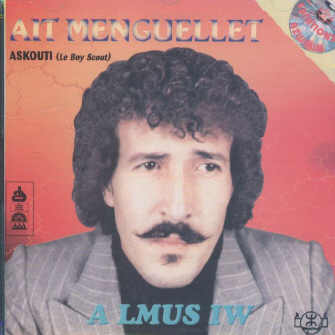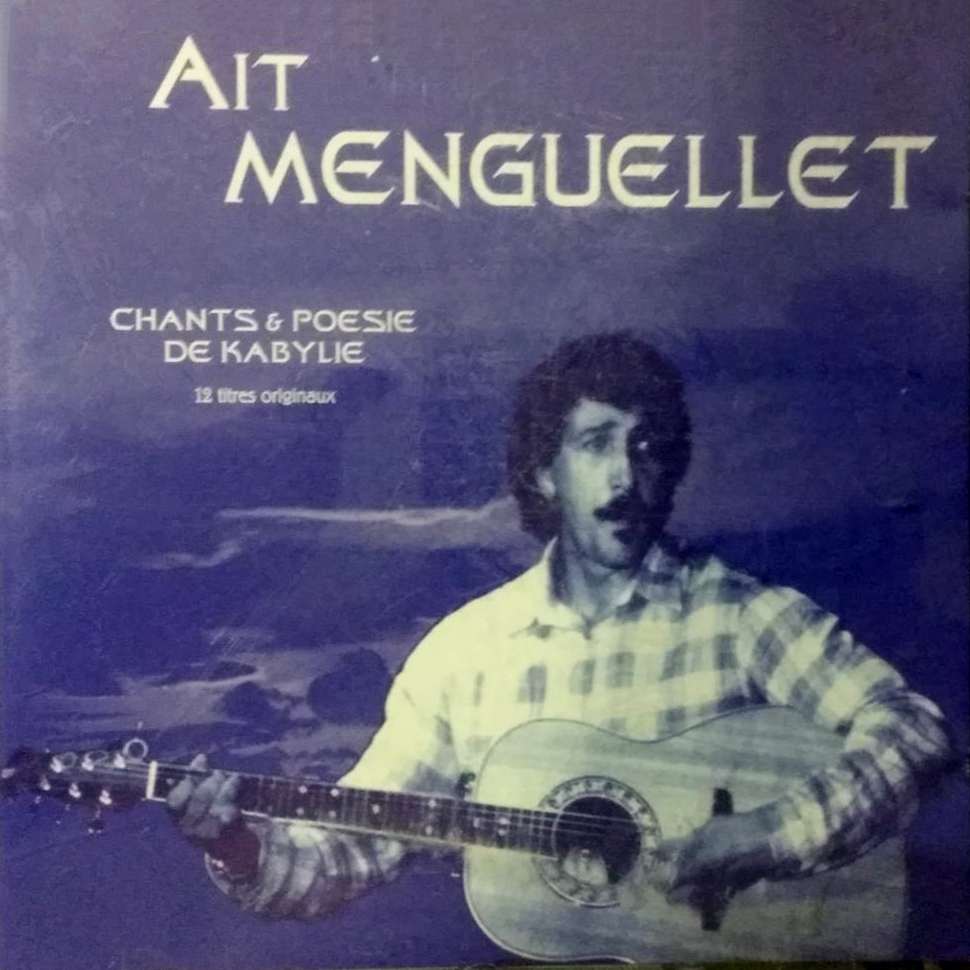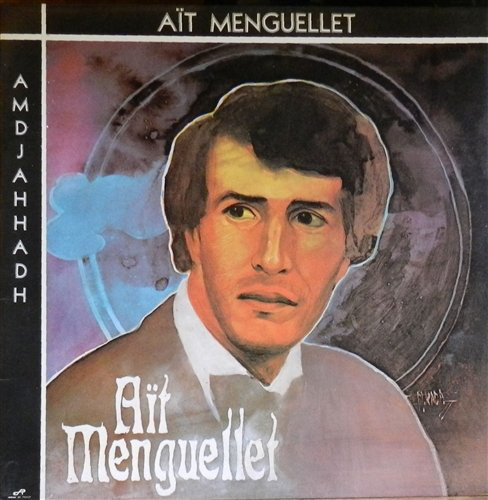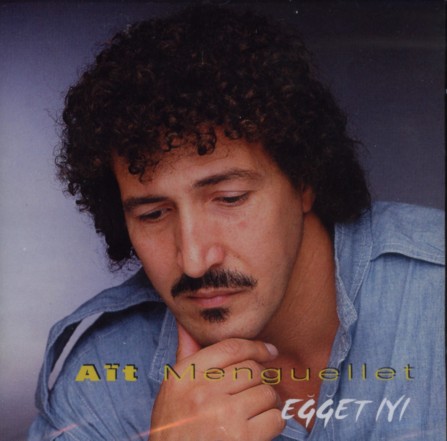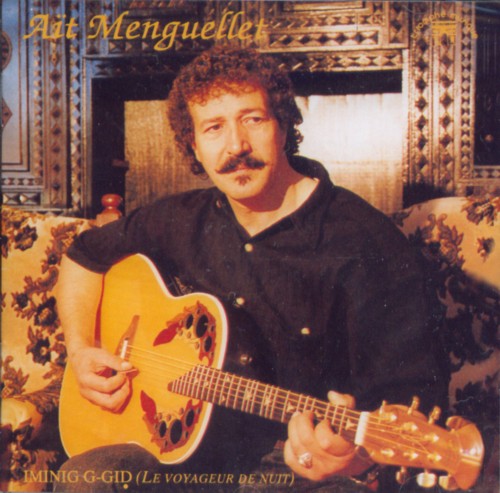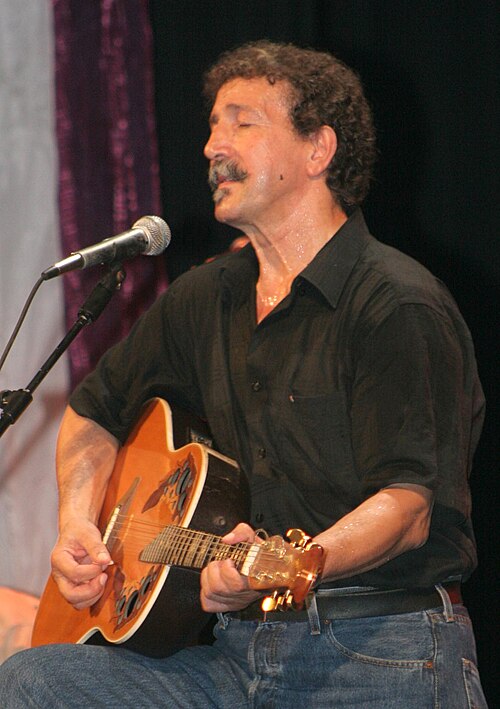
Biography
Aït Menguellet, the Poet of Kabylie
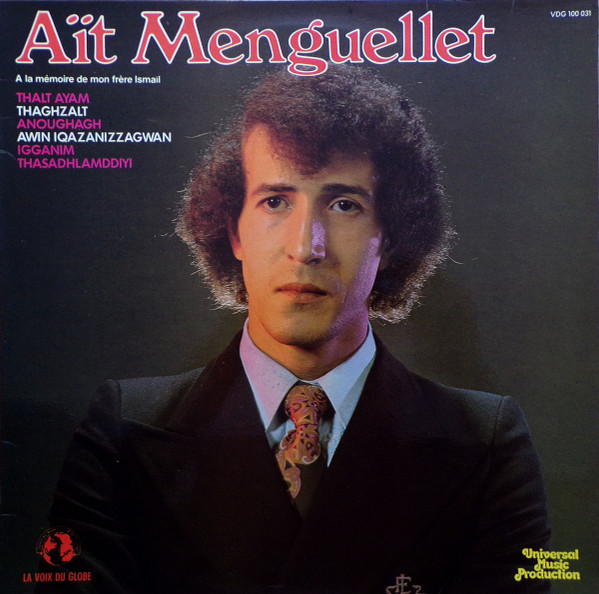
Born in the mountains of Djurdjura during the Algerian War of Independence, Lounis Aït Menguellet grew up cradled by evening gatherings where elders sang traditional proverbs and poems. More than fifty years later, nearly 222 of his songs, written in Kabyle, still resonate as a living reference for millions of speakers. Nicknamed the “great Kabyle poet,” he is one of the most studied Berber artists in the world.
In Brief
| Birth Name | Abdenbi Aït Menguellet |
| Stage Name | Lounis Aït Menguellet (nickname given by his grandmother) |
| Birth | January 17, 1950, Ighil Bouammas, Great Kabylie, Algeria |
| Field | Singing, poetry; Kabyle music (Berber song) |
| Instruments | Voice, guitar |
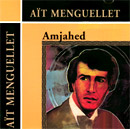
| Emblematic Works | Tilt Yyam, Amǧahed, A Lmus-iw, Yenna-d wemγar |
| Honors | Doctor honoris causa of Mouloud Mammeri University in Tizi Ouzou (2017) |
Key Dates
| Year | Event |
|---|---|
| 1950 | Birth in Ighil Bouammas, Great Kabylie, into a modest family of six children |
| 1967 | Radio debut on the show “Tomorrow’s Singers” hosted by Chérif Kheddam |
| 1973 | First studio album, Ay Izem (The Lion) |
| 1978 | Concert at the Olympia in Paris; recording of Aεeṭṭar |
| 1980 | Mobilization with the Berber Spring (Tafsut Imazighen) |
| 1985-1988 | Incarceration for three years, following charges related to carrying weapons |
| 1990 | Release of Tafsut Imazighen, an album dedicated to the Amazigh cause |
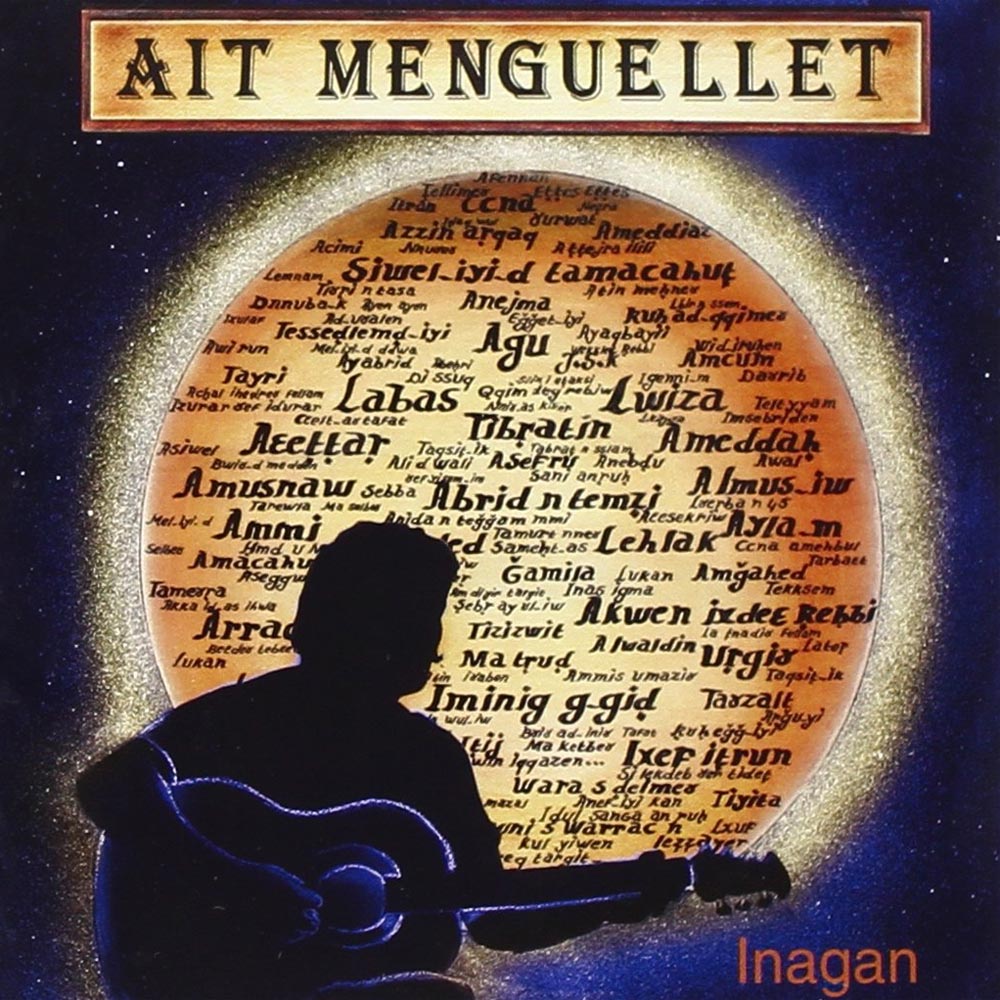
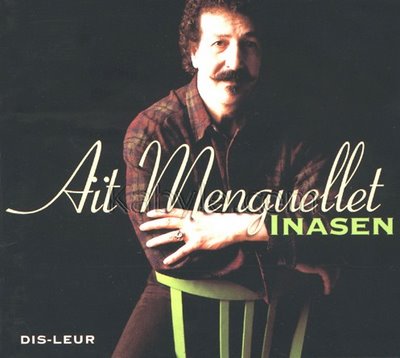
| 2001 | Release of Inasen (Tell Them), a mirror album of memory |
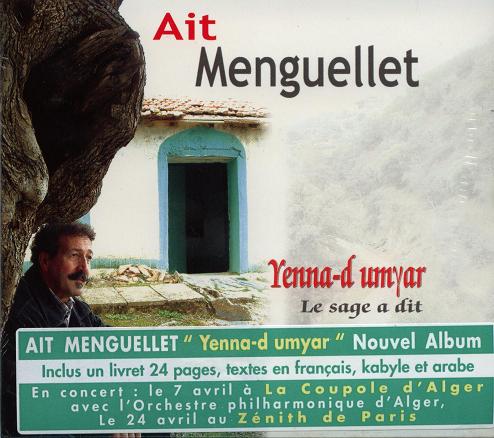
| 2005 | Yenna-d wemγar (The Sage Said), a philosophical reflection |
| 2017 | Doctorate honoris causa from Tizi Ouzou University |
From Village to Microphone: A Poet Who Carried a Language
Lounis is the youngest of a family living under one roof: his mother, four grandmothers from three marriages of the grandfather. In this house of stone and silence, women weave the thread of memory—love songs (tayri) whispered to children, poems that evening gatherings prolong until late at night. The child learns to listen before he knows how to read, and it is the ear, more than the book, that becomes his first instrument. When the Algerian War closed in on Kabylie, he was four years old. He experienced hunger and ambushes on mountain paths, retaining an unalterable tenderness for his own. At independence in 1962, the family left the village for Algiers. It was through radio that he entered music. In 1967, a cousin persuaded him to go to Channel 2 for the show “Tomorrow’s Singers” hosted by Chérif Kheddam. There he sang his first composition, “If You Cry” (Ma truḍ), of which he wrote the lyrics. Kheddam, admiring, predicted a promising future for him.
The first phase of his career, from the 1970s to the early 1980s, was marked by love and nature. Titles like Tilt Yyam (Three Days) or Tayri (Love) sculpted an intimate lyricism, rooted in daily Kabyle life but carrying a universality that transcended borders. His style blended the influence of Algerian cha’bi—this genre where the oud yields to acoustic guitar—with traditional Berber forms. The Berber Spring of April 1980 marked a rupture: when the wali of Tizi Ouzou banned a conference on “The Ancient Poetry of the Kabyles,” the population rose up. Aït Menguellet took a stand; his song “Tafsut Imazighen” (The Amazigh Spring) became the anthem of revolt. The artist, who defined himself as a poet and not as a politician, saw his texts censored before being imprisoned for three years. This experience fueled a second creative phase, darker and more philosophical. Akk win ikhdaâ rebbi, Isawalen, Aflou—each album became a mirror held up to Kabyle and Algerian society.
Since the 1990s, he further refined his message. Inasen (Tell Them, 2001) and Yenna-d wemγar (The Sage Said, 2005) are summits of wisdom where the poet, adopting the posture of the old sage, meditates on destiny and transmission. “The language is the mother, the earth,” he said, summarizing in one phrase an engagement that was not a fight but an obstinate presence.
Major Works
| Work | Year | Why It Is Essential |
|---|---|---|
| Tilt Yyam (Three Days) | 1975 | Universal love song in Kabyle, immediate poetic signature |
| Amǧahed (The Combatant) | 1977 | Turning point: social and identity commitment enters poetry |
| Live à l’Olympia | 1978 | Historic concert in Paris, international recognition |
| Tafsut Imazighen | 1990 | Hymn to Amazigh cultural resistance |
| Yenna-d wemγar | 2005 | Philosophical summit: the sage meditates on destiny |
Legacy
Aït Menguellet is the most studied Kabyle artist in the world: works dedicated to him have been published in Tamazight, Arabic, and French. His poetry, often compared to that of Bob Dylan or Joan Baez, transcends the local framework to reach a global audience. Kabyle music, long relegated to “light music,” he elevated to high poetry. His voice remains an identity pillar for millions of Kabyles. He lives retired in his village in Djurdjura, writing, reading, playing the bow—the poet who never stopped listening to the earth and memory.
Sources and References
-
“Lounis Aït Menguellet,” Wikipedia (French article), https://fr.wikipedia.org/wiki/Lounis_A%C3%AFt_Menguellet, accessed October 23, 2026.
-
M. El Messiri, “Aït-Menguellet,” Encyclopédie berbère (academic journal, Aix-en-Provence), https://doi.org/10.4000/encyclopedieberbere.2384, accessed October 23, 2026.
-
Karim Ouaras and Nabil Boudraa, “Interview with Lounis Aït Menguellet”, Tamazgha Studies Journal, vol. 2, no 1, spring 2024, https://tamazghastudiesjournal.org/articles-spring2024-issue-01-article17, accessed 23 October 2026.
-
“Biography”, aitmenguellet.net (artist’s official website), https://www.aitmenguellet.net/biographie/, accessed 23 October 2026.
-
“Discography”, aitmenguellet.net (artist’s official website), https://www.aitmenguellet.net/discographie, accessed 23 October 2026.
-
A. M. Eddine, “Lounis Aït Menguellet”, Notable People Project, https://notablepeopleproject.org/lounis_ait_menguellet, accessed 23 October 2026.
-
J. E. Goodman, Berber Culture on the World Stage, Indiana University Press, 2005 (academic reference cited in university works on the artist).
-
“Aït Menguellet”, MusicBrainz, https://musicbrainz.org/artist/9d78abad-fbd8-4ec6-9b64-1feb1e1e817c, accessed 23 October 2026.
-
Last.fm, “Aït Menguellet”, https://last.fm/music/A%C3%AFt+Menguellet/+wiki, accessed 23 October 2026.
-
Kateb Yacine, preface to Tassadit Yacine, Aït Menguellet chante, 1989 (cited in FR Wikipedia).