Biography
Idir: the voice that brought Kabylie to the world
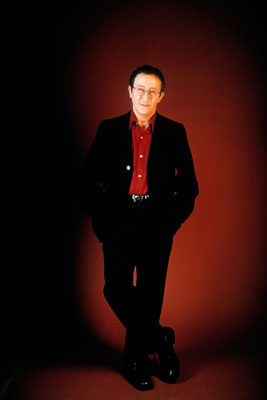
On October 25, 1949, in the mountain village of Aït Lahcène, near Tizi-Ouzou, Hamid Cheriet was born in the heart of Greater Kabylie1. His life changed one spring evening in 1973: called as a last-minute reinforcement to Radio Alger to replace the singer Nouara, he improvised, jumped on stage and sang “A Vava Inouva”. This track, a Kabyle lullaby written by the poet Mohamed Ben Hamadouche, would become the anthem of millions of people around the world. This geology student who was destined for the oil industry became overnight one of the greatest ambassadors of Kabyle music and Amazigh culture.
In brief
| Full name | Hamid Cheriet (Kabyle: Ḥamid Ceryat) |
| Stage name | Idir (Kabyle: “to live”, “the living”) |
| Birth | October 25, 1949, Aït Lahcène, Tizi-Ouzou, Algeria |
| Death | May 2, 2020, Paris, France |
| Field | Kabyle music, world music |
| Instruments | Vocals, acoustic guitar, flute, derbouka |
| Iconic works | “A Vava Inouva”, Identités, La France des couleurs |
| Labels | Pathé Marconi, Blue Silver, Sony |
Key dates
| Year | Event |
|---|---|
| 1949 | Birth in Aït Lahcène, village of Greater Kabylie |
| 1973 | Unexpected replacement at Radio Alger, recording of “A Vava Inouva” |
| 1975 | Move to Paris, signing with Pathé Marconi |
| 1976 | Release of the album A Vava Inouva |
| 1979 | Release of Ay arrac nneɣ (“To our children”) |
| 1981-1991 | Withdrawal from the stage for ten years |
| 1993 | Return with Les Chasseurs de lumières, first concerts at New Morning and the Olympia |
| 1995 | Concert “Algérie la vie” with Khaled for peace and tolerance |
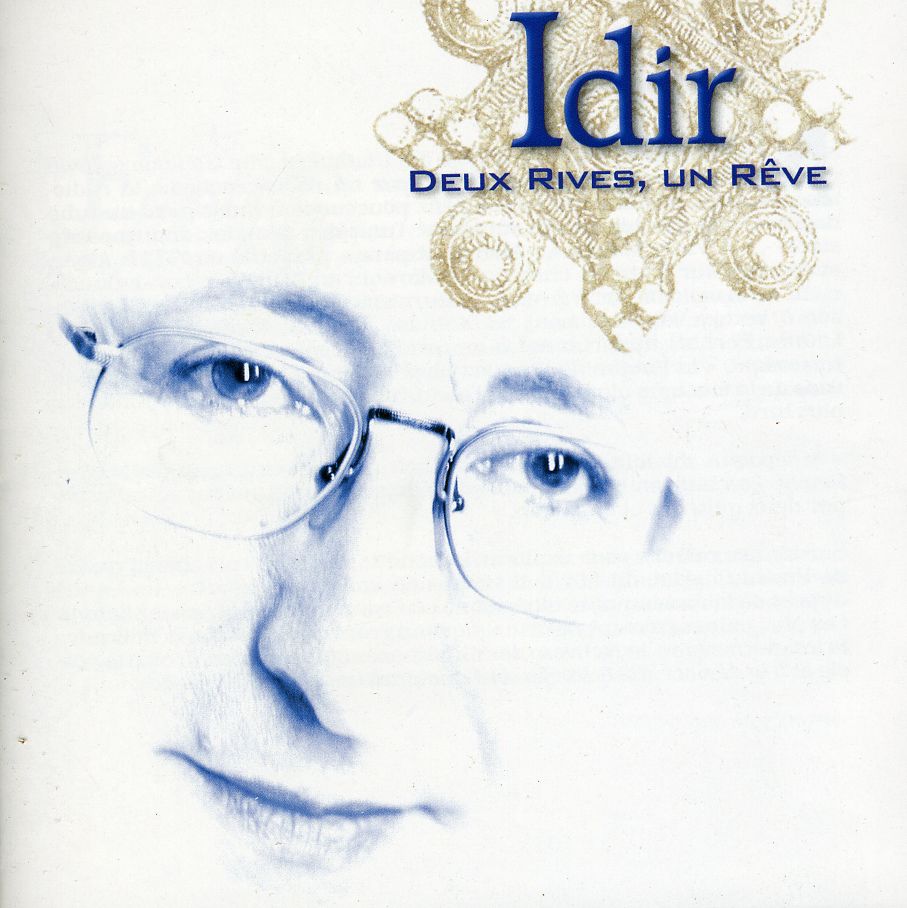
| 1999 | Album Identités with Manu Chao, Zebda, Maxime Le Forestier |
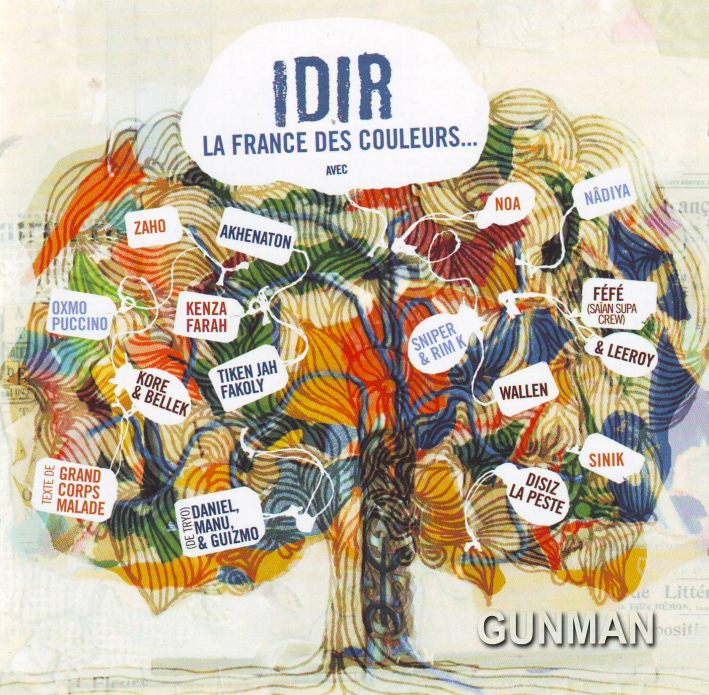
| 2007 | La France des couleurs, multicultural album |
| 2017 | Last album, Ici et ailleurs |
| 2020 | Death in Paris at the age of 70 |
From geology to the stage: a chance that changes everything
Idir is the son of a Kabyle farmer. Raised by Jesuits in his youth, he began studies in geology, oriented toward a career in the Algerian oil sector. But music haunted him. His stage name “Idir”, borrowed from the name that Kabyle parents give to a newborn after they have lost a child, means “to live” or “the living”. It is a gentle way of reminding that Berber culture must never die.
In 1973, he presented himself at the Radio Alger studio as an accompanist for Nouara, a popular singer. Nouara cancelled. Without hesitation, Idir took the guitar and sang “A Vava Inouva”, a track he had composed for her. At the end of the broadcast, satisfied but not imagining the coming flood, he put away his guitar and returned to the village to prepare for his military service. During his two years under the flag, the song became a national hit—the first song in the Kabyle language to reach this dimension.
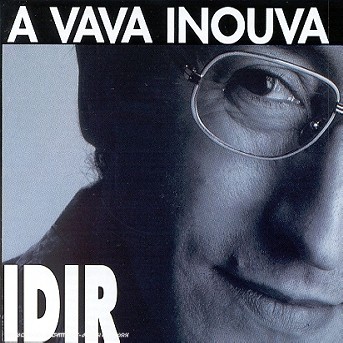
After military service, he moved to Paris in 1975, where the label Pathé Marconi offered him a contract. The eponymous album A Vava Inouva was released in 1976. The record included lullabies as delicate as Assendu, but the weight of the international success of the hit title became heavy: at every concert, the audience demanded exclusively “A Vava Inouva”.
A planetary hit that shaped an identity
“A Vava Inouva” draws its text from a traditional Kabyle tale—The Oak and the Ogre—whose echoes can be found in the work of Taos Amrouche. The song unfolds a winter vigil in the mountains of Djurdjura2. The chorus, a dialogue between a young girl and her father imprisoned by a forest populated with ogres, is both an evocation of Kabyle vigils and a subtle political critique of the time.
The title was broadcast in 77 countries and translated into fifteen languages. The sociologist Pierre Bourdieu, who studied Kabylie extensively, described Idir as “a member of every family”. Le Monde mentioned the title in 1978 as a marker of the entry of Kabyle music into the world of world music. For Idir, success was a golden trap3. He composed for other artists but felt trapped by his own hit. He disappeared from the stage from 1981 to 1991, making way for more politically engaged singers like Ferhat and Matoub Lounès.
The return and the encounters that make history
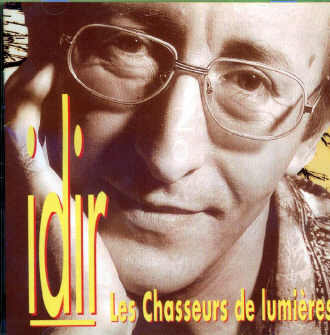
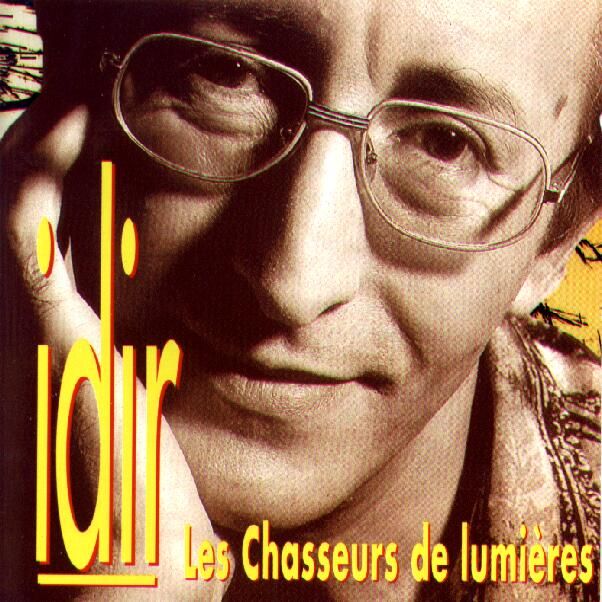
In 1993, after a long lawsuit against his former producer, Idir returned with Les Chasseurs de lumières on the Blue Silver label. There he celebrated love, freedom and exile. The music integrated synthesizers alongside the flute and derbouka, modernizing without renouncing its roots. He performed at New Morning in Paris in February 1992, then at the Olympia in June 1993.
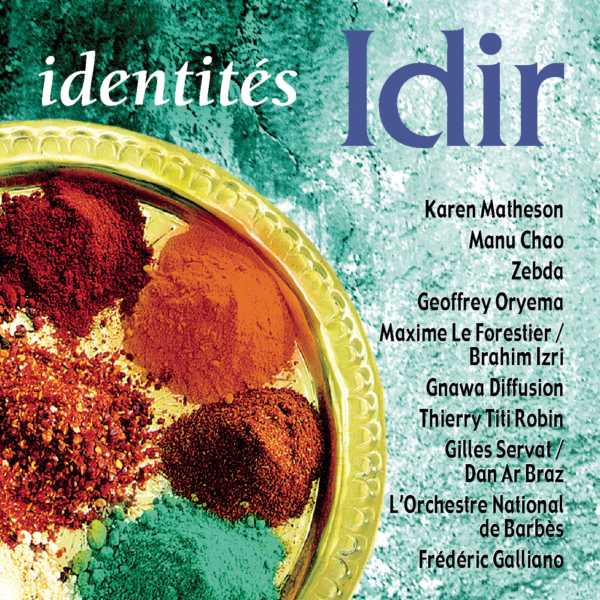
The true turning point came in 1999, with Identités (Sony label, 1999). The album reunited Manu Chao, Dan Ar Braz, Maxime Le Forestier, Gnawa Diffusion, Zebda, Gilles Servat, Geoffrey Oryema, the Orchestre National de Barbes and Karen Matheson4.
In January 2018, after 38 years of absence, Idir returned to sing in Algiers for the Berber New Year Yennayer. He was ill at the time, suffering from pulmonary fibrosis. His son Takoua joined him on stage.
Ambassador of Berber culture and champion of diversity
Idir is not just a singer. He is an activist for the Kabyle cause and a passionate defender of his community’s cultural rights5. In June 1995, he co-organized with Khaled the concert “Algérie la vie” in Paris, gathering over 6,000 people to celebrate peace and tolerance. In memory of Matoub Lounès, a Kabyle singer assassinated in 1998, Idir participated in a memorial concert.
In his final years, he supported the Hirak movement in Algeria. In 2019, at the Place de la République in Paris, he told Journal du Dimanche: “I loved everything about these demonstrations: the intelligence of this youth, their humor, their determination to remain peaceful.” He added, with uncompromising honesty: “Stricken by pulmonary fibrosis, I know what I’m talking about.”
On January 5, 2018, his return to Algiers for Yennayer, invited by the Bouteflika government, sparked controversy among the most uncompromising Berber activists. But Idir always defended his freedom of movement. Journalist Ghania Mouffok summarized the strength of Idir thus: “May he rest in peace, Allah Irahmou.”
Major Works
| Work | Year | Why it’s essential |
|---|---|---|
| “A Vava Inouva” | 1976 | First international hit by a Maghrebi artist, translated into 15 languages |
| Ay arrac nneɣ | 1979 | Second album, title meaning “To our children”: Kabyle heritage passed to new generations |
| Les Chasseurs de lumières | 1993 | Triumphant return, modernization of Kabyle sound (synthesizers + derbouka) |
| Identités | 1999 | Star collaborative album: Manu Chao, Zebda, Maxime Le Forestier, Orchestre National de Barbes |
| La France des couleurs | 2007 | Multicultural manifesto with Akhenaton, Tryo, Oxmo Puccino, Tiken Jah Fakoly |
| Ici et ailleurs | 2017 | Last studio album, #12 on the French Top 50 |
Legacy
Idir paved the way for an entire generation of Maghrebi artists. As an ambassador of Kabyle and Amazigh culture, he proved that a singer could embody their homeland without being confined. His music — acoustic guitar, Kabyle flute, derbouka — introduced the sounds of Kabylie to the global world music scene.
By dying on May 2, 2020, Idir left a mark that spans generations. Algerian President Abdelmadjid Tebboune hailed him as “a monument” of Algerian art6. But perhaps his legacy is most vibrant in the Kabyle villages, where grandmothers continue to sing ‘A Vava Inouva’ to their grandchildren.
“A Vava Inouva” is not just a song. It is a bridge between worlds, a cry of gentle resistance, and the eternal memory of Kabyle gatherings around the winter fire.
Sources and references
-
France Culture (RFI), Idir and A Vava Inouva, the story of the Kabyle lullaby that went around the world, 2020. ↩︎
-
World Music Central, Artist Profiles: Idir by Angel Romero, accessed October 30, 2026. ↩︎
-
AllMusic, Idir — Biography, Discography, Albums & Expert Reviews by Caspar Salmon, accessed October 30, 2026. ↩︎
-
Jeune Afrique, Algeria: A Vava Inouva by Idir, story of a hymn, 2020. ↩︎
-
France Musique (RFI), The singer Idir, legend of Kabyle music, is dead, 2020. ↩︎
-
Le Monde, The singer Idir, one of the main ambassadors of Kabyle song, is dead, 2020. ↩︎