Biography
Henri Dikongué
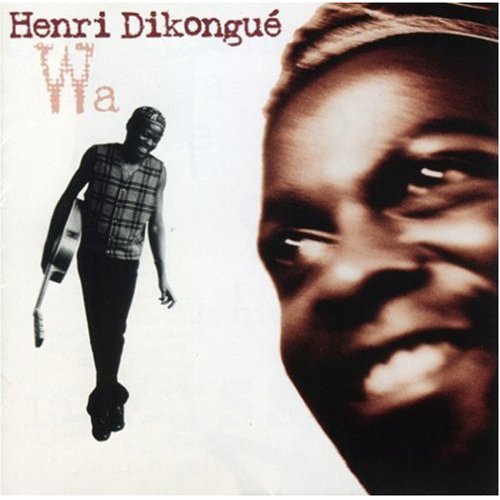
On April 6, 1995, Henri Dikongué released his first album under his own label. For a year and a half, he recorded Wa in his Paris apartment, without a famous producer or a fancy studio. The album hit hard: no muffled synths, no dancing makossa with excessive brass — just a clear acoustic guitar, soft voices, and lyrics in Duala about war, racism, and the weight of colonialism. Critics were charmed: Le Monde discovered a poet with a clear voice, in the lineage of Ismaël Lô and Pierre Akendengué. In three months, 10,000 copies sold — a record for a francophone world music artist.
In Brief
| Full Name | Henri Dikongué |
| Birth | December 6, 1967, Douala (Cameroon) |
| Field | Singer, guitarist — Cameroonian world music |
| Notable Works | Wa (1995), C’est la vie (1997) |
| Awards | N° 1 on the European World Music Charts, January 1998 |
Key Dates
| Year | Event |
|---|---|
| 1967 | Born in Douala into a family of musicians |
| 1985 | Moved to France, studied law in Besançon |
| 1989 | Abandoned law, enrolled at the École normale de musique de Paris; completed classical studies |
| 1989-1995 | Collaborations with Manu Dibango, Papa Wemba; creation of Masques et Tam-Tam |
| 1995 | Release of Wa (Buda Musique) — first solo album |
| 1998 | C’est la vie N° 1 on the European World Music Charts; tours in the United States and Germany |
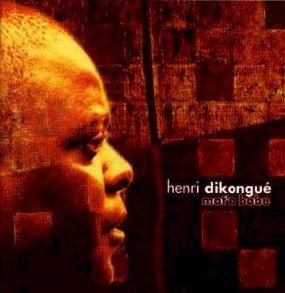
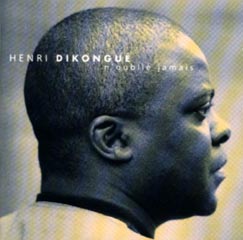
| 2000 | Release of N’oublie jamais and Mot’a Bobe; the track “Ndutu” featured in a Kodak commercial in the United States |
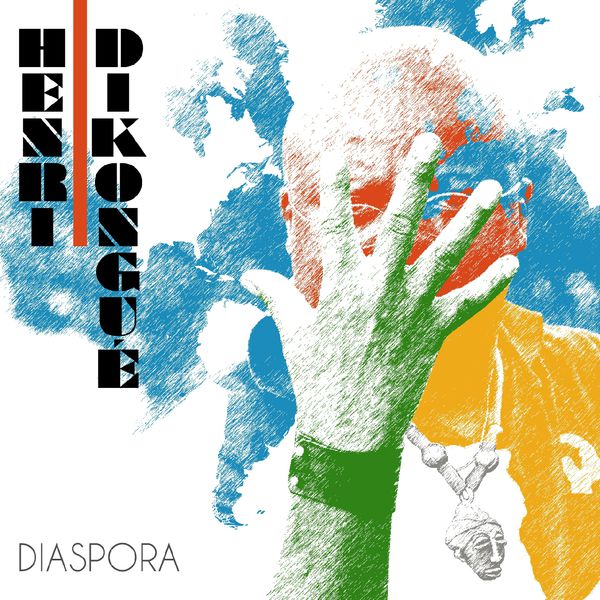
| 2016 | Release of Diaspora, self-produced album |
| 2023 | Publication of the track “Derrière ton masque”, recorded in Douala |
From Douala to Paris: a musical destiny despite family reservations
Henri Dikongué was born on December 6, 1967, in Douala, a port city and the birthplace of makossa. Coming from a family of musicians, he was immersed in music early on: it was with his uncle that he discovered the acoustic guitar, and with his grandmother that he sang in a Protestant choir in the Briqueterie neighborhood. His father, concerned that his son pursue an artistic career, broke Henri’s first guitar at age five to force him to focus on his studies. The boy retrieved a second instrument, which he hid and perfected in secret. At 17, his passion disturbed his surroundings to the point that his family sent him to live with a sister in Switzerland — an interlude from which he returned early, determined to forge his own path.
In 1985, Henri left Cameroon for France. His parents enrolled him in Besançon, where he undertook law studies — the dream profession for a model son. The classes bored him. Music called to him. He enrolled at the École normale de musique de Paris, a choice that shocked his family: his parents cut off his food supply. Without financial support, Henri multiplied small jobs (dishwasher, mover) while studying composition and classical guitar. He gradually built his network in the intense Parisian world music scene of the 1980s.
It was this period that forged his unique sound. He collaborated with Manu Dibango, the legendary Cameroonian saxophonist, and ex-Zaïrois Papa Wemba. He formed Masques et Tam-Tam, a troupe blending music and theater with actor Martin Yog, Alfred M’Bongo (ex-Zaïre), and Franco-Camerounais Manuel Wandji — the latter would become his main studio collaborator. He also sang with Banthu Maranatha, a South African choir. All these experiences allowed him to digest varied influences: makossa, bikutsi (Cameroonian rhythm), Congolese rumba, reggae, Brazilian samba, and Spanish flamenco.
In April 1995, under the Buda Musique label, Henri launched Wa (“You” in English), an album conceived in the intimacy of his Paris apartment, with the complicity of Manuel Wandji. The press discovered an author of rare finesse: Le Monde (March 10, 1998) described him as a poet with a clear voice. The album blends makossa, bikutsi, reggae, and rumba on texts written in French then translated into Duala — Dikongué admitted he did not master this language enough to write directly in Duala. Immediately, he took the stage on Parisian scenes, opening for four nights Césaria Évora’s show at the Bataclan.
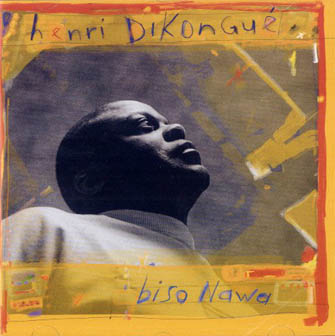
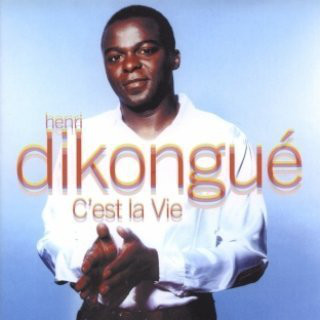
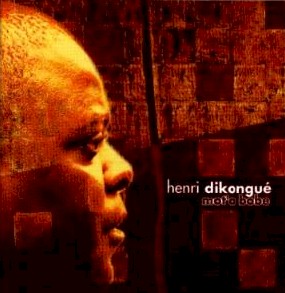
His second album, C’est la vie (Tinder Records), recorded in Besançon with top-tier musicians, cemented the singer’s reputation: N° 1 on the European World Music Charts in January 1998, nearly 10,000 copies sold in three months. His track “Ndutu” was selected by Kodak for a television commercial in the United States (2000-2001). In May 1998, he returned to Cameroon for the first Rencontres Musicales de Yaoundé — an electric concert in an atmosphere of exaltation. In 2000, he released N’oublie jamais (directed by Étienne Mbappé with Manu Dibango as guest) and Mot’a Bobe (Tinder Records), blending Cameroonian and Congolese rhythms. In 2005, Biso Nawa confirmed his introspective signature with South African harmonies and a touch of rock guitar. Henri continued concerts in Europe (Germany, Switzerland, Italy, Great Britain) and tours in Francophone Africa. His songs entered the musical heritage of Africa: in 2012, a Togolese contestant on The Voice Afrique interpreted “C’est la vie” and triggered a viral sensation. In May 2016, he produced Diaspora in a vein mixing New Orleans and African influences. He returned to Cameroon in 2019 and 2020, and published the track “Derrière ton masque” in June 2023 — a return to roots in Douala.
Major Works
| Work | Year | Why It’s Essential |
|---|---|---|
| Wa | 1995 | First solo album, recorded in a Parisian apartment; introduced Dikongué to the press |
| C’est la vie | 1997 | No. 1 European World Music Charts; track used by Kodak in the United States; made the singer known in America |
| N’oublie jamais | 2000 | Invitation from Manu Dibango; fusion of flamenco, jazz and African music |
| Biso Nawa | 2005 | South African harmonies and subtle arrangements; culmination of Dikongué’s sound |
Legacy and Influence
Henri Dikongué is not a musician of the bran-là-braque. His acoustic and introspective approach, far from the frenzied synthesizers of dancing makossa, paved the way for a generation of Cameroonian singers who claim the guitar as their main instrument. Contemporary artists like Lokua Kanza cite Dikongué as a model of authenticity. His most tangible legacy resides in the covers of “C’est la vie” that continue to flood African screens and stages. His catalog remains a reference for anyone who wants to understand how African world music can dialogue with jazz, flamenco and tradition without ever betraying them.
Sources and References
- “Dikongué (Henri)”, RFI Musique, 30 November 2023, https://www.rfi.fr/fr/musique/20231130-dikongu%C3%A9-henri, accessed 25 November 2025.
- “Henri Dikongué”, Wikipedia (EN), https://en.wikipedia.org/wiki/Henri_Dikongu%C3%A9, accessed 25 November 2025.
- “Henri Dikongué”, Wikipedia (FR), https://fr.wikipedia.org/wiki/Henri_Dikongu%C3%A9, accessed 25 November 2025.
- Craig Harris, “Henri Dikongué — Biography”, AllMusic, https://www.allmusic.com/artist/henri-dikongu%C3%A9-mn0000673117/biography.
- “Henri Dikongué”, African Musicians Profiles, https://www.africanmusiciansprofiles.com/HenriDikongue.htm.
- J. Poet, “Henri Dikongué - Biography”, Amoeba Music, https://www.amoeba.com/henri-dikongu/artist/120621/bio.
- “Henri Dikongué”, Wambo Productions, https://www.wamboproductions.com/en/henri-dikongue/.
- Maria Noel, “African Roots and Rhythms: Henri Dikongué (Cameroon)”, The Riff (Medium), 21 February 2024, https://medium.com/the-riff/african-roots-and-rhythms-henri-dikongu%C3%A9-cameroon-7e1a4cd6ba96.