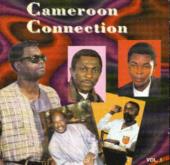
How Cameroon Invented Modern African Music
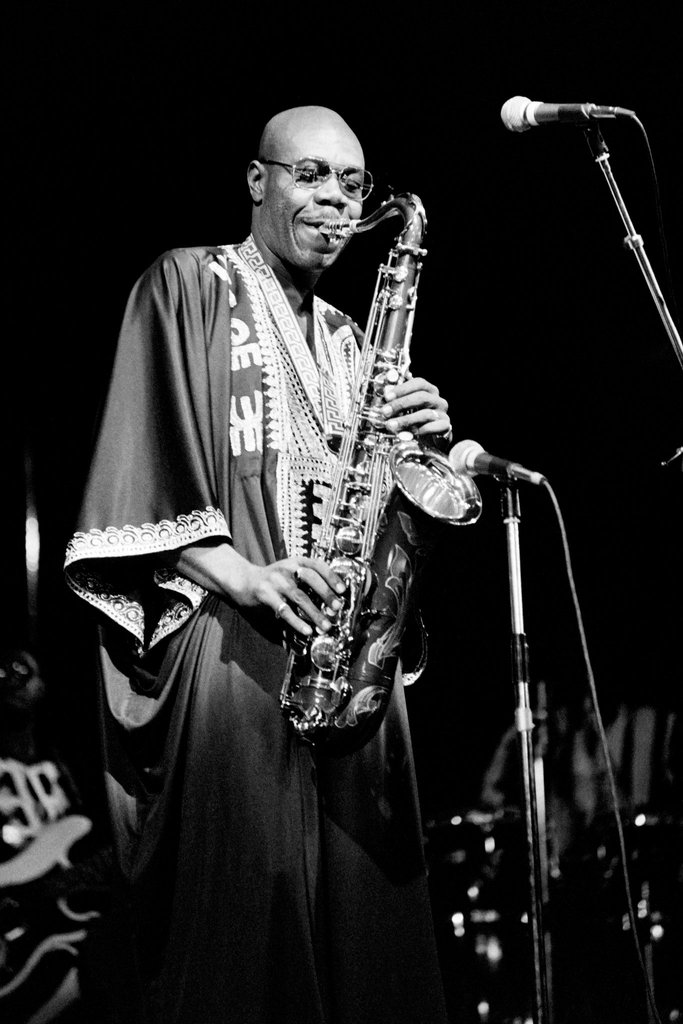
In 1972, Cameroonian saxophonist Manu Dibango recorded “Soul Makossa”, a track that would become the rhythmic reference for global disco and which Michael Jackson drew inspiration from for Thriller. Forty years later, his heirs — Charlotte Dipanda, Blick Bassy, Locko — do the same. A look back at a scene born in the bars of Douala that shaped decades of African pop.
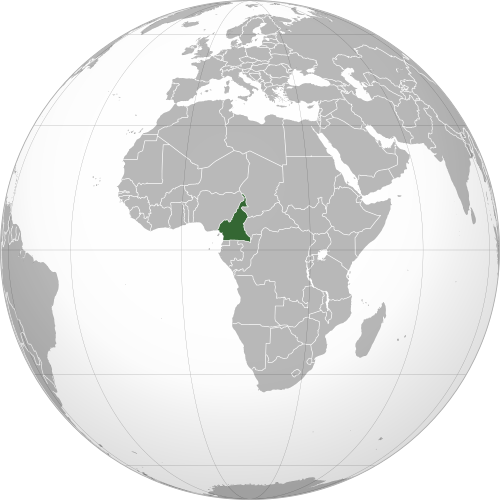
Cameroon, nicknamed “Africa in miniature” for its mosaic of 250 ethnic groups and languages1, possesses one of the densest musical traditions on the continent. While makossa is today its most famous style, this urban music was not born in isolation: it is the fruit of a blending between traditional rhythms from the coast, Congolese rumba traveling by river, Ghanaian highlife arriving from the north, and Caribbean rhythms crossing the Atlantic.
To understand how a country of 28 million inhabitants became a hub for African music, one must start from scratch — or almost — from Beti ceremonies with xylophones to the discotheques of Paris.
Makossa: From Ancestral Ceremonies to the Port of Douala
Traditional Cameroonian music rests on five major ethnic ensembles2. In the southern forests, the Beti people practice bikutsi — “beat the ground” — a 6/8 dance accompanied by xylophones and female vocals3. In the southwest, the Duala practice assiko, a popular dance whose main outlines were drawn by Oncle Medjo (born 1914), and ambass bey, the sailors’ song of Douala. To the west, the Bamileke cultivate bend skin and mangambeu, royal court dances.
The turning point arrives in the 1950s. Douala, the most active port of French Cameroon, becomes a crucible: bars multiply with an influx of urban workers, and the demand for modernity pushes musicians toward electrification4. Makossa takes shape around 1958. The term comes from Duala: mak means “fall” and sa “dance”5. Emmanuel Nelle Eyoum, a 24-year-old guitarist, figures as an architect with his group Los Calvinos by fusing assiko, Congolese rumba, and Ghanaian highlife6.
The Pioneers: The Dibango-Lotin-Nzié Triptych
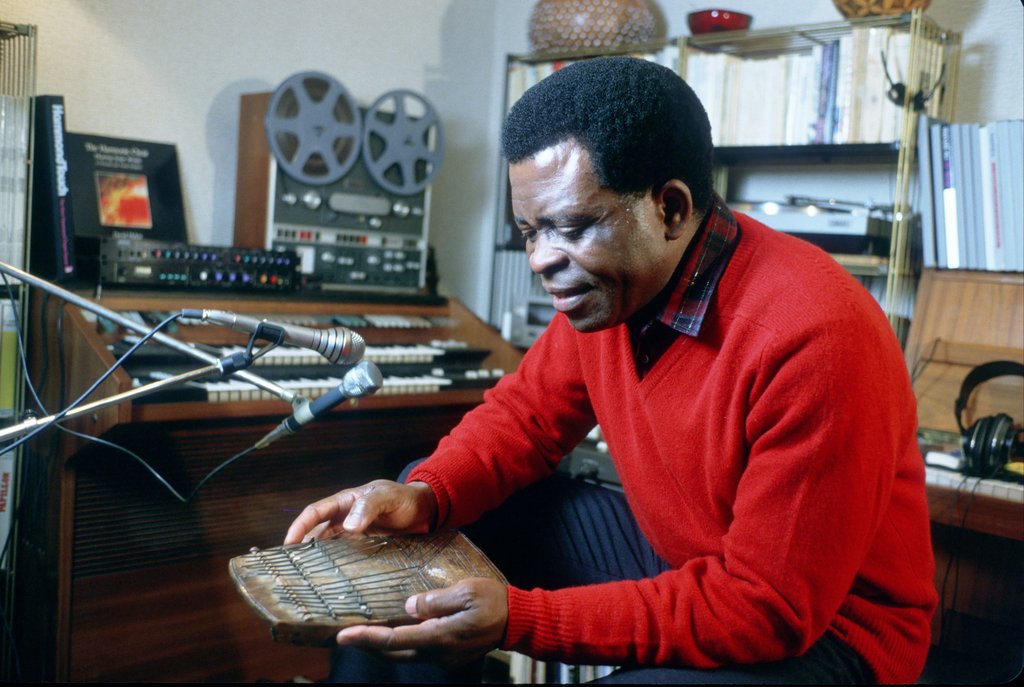
While makossa is born in Douala, it is another native of the city — born in 1933 — who gives it its first globalization: Manu Dibango. A self-taught saxophonist trained in the jazz clubs of Paris, he goes to Léopoldville (Kinshasa) to play with Grand Kallé’s African Jazz, then returns to settle in Douala in 19637. His albums of the 1960s, such as Soir au village (1964), blend jazz, rumba, and Cameroonian rhythms8. But it is “Soul Makossa” (1972) that changes everything. The track, initially the B-side of a hymn for the Cameroonian football team at the CAN, lands in the hands of New York DJ David Mancuso in a Jamaican store in Brooklyn. Mancuso plays it at the Loft, his traveling club, where the crowd demands it on loop9. Atlantic Records signs the license, and the track reaches the Billboard Hot 100 in 197310.
“Soul Makossa” is today considered one of the first disco records in the world11. Its sung refrain “Mama-ko mama-sa maka makossa” (in Duala, “I am going to dance”) will be taken up by Michael Jackson on Thriller (1982), Rihanna in 2007, and sampled by A Tribe Called Quest, Jay-Z, Kanye West, and Beyoncé12. Dibango was the first African musician to see his work become a fundamental piece of global pop — an inheritance for which he received royalties after a lawsuit against Jackson, resolved in 1986 for one million French francs13.
While Dibango is the global ambassador, Eboa Lotin (1942-2006) is its continental pillar. Born into a religious family in Douala, he begins in 1962 with “Mulema Mwam”, considered the first true makossa hit, and climbs the ranks to play at Paris’s Olympia in 197014. His guitarist and rhythm section establish the makossa formula that will be taken up for decades: syncopated bass in first position, brass responding, and rhythm guitar playing counterpoint15.
On the women’s side, Anne-Marie Nzié (1932-2015), known as “the Mother of bikutsi”, is its founding figure. Starting at age 8 in her village church, she goes to record in Abidjan in 1954 and returns to Cameroon with a repertoire blending biguine, rumba, and bikutsi16. Her tracks “Nguiamba” and “Mah Banze” are the first Cameroonian recordings to reach a massive female audience. In 2008, Etienne Mbappé, an international bassist, pays tribute to her by re-recording Lotin’s “Mulema Mwam”17.
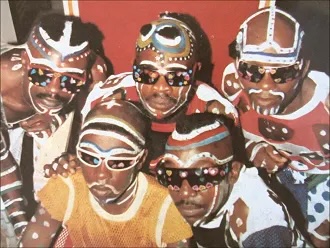
The era of pioneers extends from the 1970s to the early 1990s. Bébé Manga (1948-2006) explodes with “Ami O” (1982), a song sold to more than one million copies18. Sam Fan Thomas (born 1952), guitarist and composer, reaches the international market with “African Typic Collection” (1984), a planetary hit on the dancefloors of Paris, the Caribbean, and West Africa19. Les Têtes Brûlées, formed in 1980, export bikutsi by fusing it with rock and electronic music, becoming the most known Cameroonian group internationally in the 1990s20.
The Golden Age and its Collapse: Piracy and Industrial Fracture
The 1980s and early 1990s constitute the golden age of continental makossa. Records by Dibango, Sam Fan Thomas, Moni Bile, Ben Decca and Petit Pays sold throughout the Francophone world. Cameroon was a musical powerhouse: studios in Douala and Yaoundé attracted Antillean sessions, and the makossa genre rivalled Nigerian hi-life and Congolese rumba on pan-African waves21.
The collapse occurred in two stages. First, digital piracy of the 1990s–2000s. Blank CDs, recorders and cheap computers imported from Asia enabled massive duplication of records. By 2000, more than 90% of music distributed in Cameroon was illegal22. Record labels closed one after another — Sonodisc, Angoula Angoula, Mc Pop Music — and producers withdrew23. The year 2001 marked a symbolic turning point: the group Macase, winner of the RFI Découvertes award, refused its prize to protest conditions imposed on Cameroonian artists24.
Next, the lack of syndication. « There are no longer structures to manage the music business today », declares Serge Maboma of Macase. « All the names you speak of — Dibango, Bona — they made their names when the industry was organized »25. Current Cameroonian artists have neither dedicated performance venues nor effective copyright protection26. Radio stations play established names, and young artists must survive on concerts, which are increasingly rare27.
In 2015, the Cameroonian government allocated one billion CFA francs (approximately €1.5 million) to culture28.
The New Wave: Self-Funding and Internationalization
Facing the institutional void, a new generation of Cameroonian artists found their own path. Streaming and Internet replaced physical distributors. Cameroonian platforms like CamFM and social networks allow artists to reach their audience directly29.
Charlotte Dipanda embodies this movement. Born in Douala and trained in Canada, she sings in douala, English and French. Her track « Coucou » became a transcontinental phenomenon, and her concert at the Olympia in Paris in May 2024 (2,000 seats sold out, with Richard Bona and Blick Bassy as guests) confirmed her status as a global ambassador30.
Blick Bassy (born 1979), former member of Macase, moved to France in 2005. His album Mádíbá (2023) — « water » in the Duala language — is an ecological fable blending soul, folk, electro and Cameroonian languages. In June 2024, his 3,800 tickets sold at the Montreux Jazz Festival demonstrated international reach. He now founded Africa Prod Fest, a music training festival in Africa focused on technical production31.
Locko (1989) began in the R&B scene of Yaoundé and blends piano, R&B and makossa32. Petit Pays (born 1980) fuses makossa, jazz and funk: his Brussels concert in September 2024 (12,500 seats at Palais 12, with Sam Fan Thomas and Grace Decca as guests) was praised by Le Monde and The Guardian33. Daphne (born 1992 in Douala) exports Cameroonian afropop with « Calée » and sold 4,800 tickets at the Eventim Apollo in London in 202434.
Cameroonian rap also had its moment of glory. Stanley Enow (born 1990) became the voice of Cameroonian rap with « Hein Père » (2013), a track in camfranglais that conquered all of Francophone Africa35. Ko-C, Salatiel, Tzy Panchak, Mr Leo and X Maleya form a generation of creators who, far from limiting themselves to Nigerian afrobeats, cultivate a distinctly Cameroonian sound.
Yamê, born in France to Cameroonian parents, exploded with « Bécane » (2023) — a global hit with more than 70 million views36. His video shot in the family village embodies a return to roots that resonates deeply.
Tomorrow: The Legacy in Motion
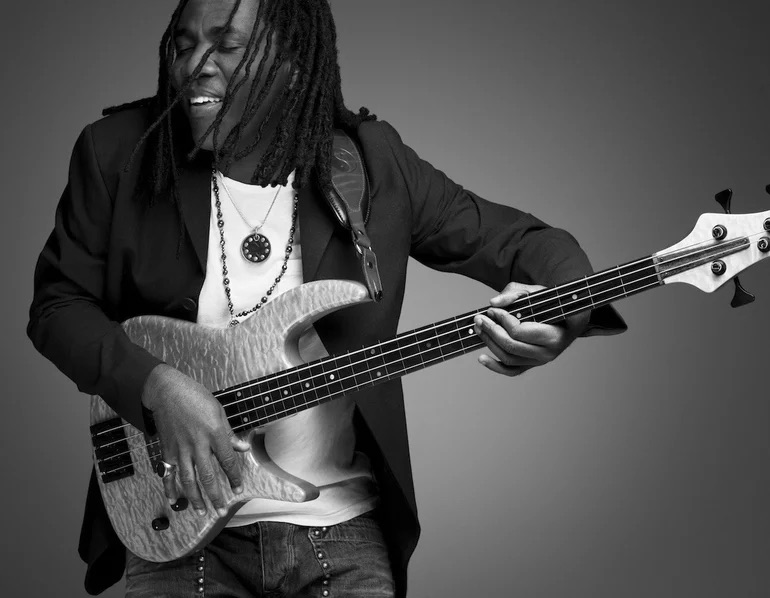
Cameroonian music of the 21st century is not a return to origins, but reinvention. Artists performing in Paris, London, Johannesburg or New York draw on the same hope as Dibango: to make a Cameroonian sound known without diluting it. Makossa lives less in its original recordings than in the rhythmic structure of contemporary Cameroonian pop — that syncopated bass line that earned Cameroon the nickname « the country of bassists »37. Richard Bona, Etienne Mbappé, Aladji Touré and Armand Sabal-Lecco constitute a dynasty of double bassists and electric bassists who have marked the global jazz scene from Chicago to Paris38.
The industry remains fragile — streaming platforms, rare venues and poorly enforced copyright rights continue to exert pressure — but the legacy of pioneers remains intact. Manu Dibango died in 2020 at age 86, but his « Soul Makossa » continues to be sampled and rediscovered39. Bicutsi and makossa, these two pillars of a musical identity born in Douala bars more than a century ago, persist and reinvent themselves in every new track by Dipanda, Locko, Yamê or Petit Pays.
Cameroonian music is a continent in its own right — and it never stops exploring its own borders.
Sources
-
Nyamnjoh, Francis B. & Jude Fokwang, « The Politics of Makossa: Musicians, Power and the State in Cameroon », Africa, vol. 75, no 2, 2005, p. 253-272. JSTOR ↩︎
-
Wikipedia, « Music of Cameroon », accessed October 25, 2024. en.wikipedia.org/wiki/Music_of_Cameroon ↩︎
-
RFI Musique, « Cameroon: land of musical contrasts », March 27, 2007. rfi.fr ↩︎
-
Stern, Ronnie Graham, Stern’s Guide to Contemporary African Music, vol. 1, Zwan Publications, 1988, pp. 163-193 (chapter Cameroon). ↩︎
-
Bibliothèque de Bondy, « African Musics — Makossa ». bibliotheques-estensemble.fr ↩︎
-
Afropop Worldwide, « Soul Makossa Is The Most Sampled African Track Of All Time! » intro.africa ↩︎
-
The Conversation, « Tribute to Manu Dibango: Cameroonian jazz pioneer loved across Africa and the world », March 25, 2020. theconversation.com ↩︎
-
Bender, Wolfgang, Sweet Mother: Modern African Music, University of Chicago Press, 1985, chapter 2 (Francophone Connections). ↩︎
-
Financial Times, « Soul Makossa — Manu Dibango’s track has been called the first disco song », Garth Cartwright, September 2024. ig.ft.com ↩︎
-
Afropop Worldwide, « African Music That Made Money (For U.S. Record Companies) », afropop.org ↩︎
-
MixMag, « How ‘Soul Makossa’ made Manu Dibango a club and pop legend », mixmag.net ↩︎
-
The Guardian, « Rihanna, Michael Jackson and Manu Dibango: the sampling dispute that went to court », February 4, 2009. theguardian.com ↩︎
-
BBC News, « Michael Jackson settles Manu Dibango claim », 1986, bbc.co.uk ↩︎
-
RFI Musique, « Cameroon: land of musical contrasts », op. cit. ↩︎
-
BlueTreeAudio, « Cameroon Music Guide: 24 Recordings, Douala, Yaoundé, Foumban and FAQ ». music.bluetreeaudio.com ↩︎
-
Stern, op. cit. ↩︎
-
BlueTreeAudio, « Cameroon Music Today: Jovi, Women, Bassists, Rap and Pop », music.bluetreeaudio.com ↩︎
-
Stern, op. cit. ↩︎
-
Stern, op. cit. ↩︎
-
Wikipedia, « Bikutsi », en.wikipedia.org/wiki/Bikutsi ↩︎
-
Wikipedia, « Music of Cameroon », op. cit. ↩︎
-
Röschenthaler, Sarah, « Streaming platforms and the music industry crisis in Cameroon », Journal of Contemporary Africa, vol. 11, no 2, 2023, p. 203-220. doi.org/10.3167/jla.2023.070203 ↩︎
-
Music In Africa, « The recording industry in Cameroon », musicinafrica.net ↩︎
-
This is Africa, « Working towards change in Cameroon’s challenging music industry », thisisafrica.me ↩︎
-
This is Africa, op. cit. ↩︎
-
This is Africa, op. cit. ↩︎
-
This is Africa, op. cit. ↩︎
-
Music In Africa, « The recording industry in Cameroon », op. cit. ↩︎
-
Röschenthaler, op. cit. ↩︎
-
Laura Dave Media, « These Cameroonian icons who conquered international stages in 2024 », December 31, 2024. lauradavemedia.com ↩︎
-
RFI, « Cameroon’s Blick Bassy seeks to unite new generation of African music makers », September 29, 2024. rfi.fr ↩︎
-
237Showbiz, « TOP 10 Best Cameroonian Rising Artistes to Watch Out in 2025 », 237showbiz.com ↩︎
-
Laura Dave Media, op. cit. ↩︎
-
Laura Dave Media, op. cit. ↩︎
-
Music In Africa, « Popular music in Cameroon », musicinafrica.net ↩︎
-
OkayAfrica, « Yamê on His Sound, Success of ‘Bécane’ and the Video in Cameroon », Shalom Esene Shalom, June 25, 2024. okayafrica.com ↩︎
-
BlueTreeAudio, « Cameroon Music Today: Jovi, Women, Bassists, Rap and Pop », op. cit. ↩︎
-
BlueTreeAudio, op. cit. ↩︎
-
The Conversation, « Tribute to Manu Dibango », op. cit. ↩︎