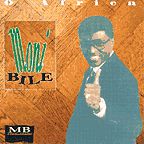
Biography
Moni Bilé: the orchestral makossa that conquered the world
Douala, August 1957. In the hot streets of Cameroon’s largest city, a young guitarist named Adolphe Moni Bilé turned his chords on his instrument. More than forty years later, those same chords would carry the makossa—a Cameroonian music born in the 1960s, a blend of Afro-Cuban and local rhythms—to stages around the world.
In brief
| Full name | Adolphe Moni Bilé |
| Birth | August 1957, Douala, Cameroon |
| Field | Makossa (Cameroonian Afro-Cuban music) |
| Role | Guitar, vocals |
| Signature works | O Si Tapa Lambo Lam, Chagrin d’Amour, Amour & Espérance |
| Awards | 2 gold records, Maracas d’or de la musique moderne africaine |
Key dates
| Year | Event |
|---|---|
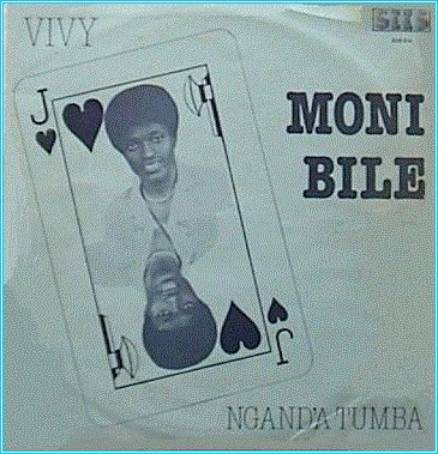
| 1977 | First album, Nganda Tumba (Vivy), recorded in Abidjan (Côte d’Ivoire) |
| 1979 | Move to Paris, start of collaboration with producer Aladji Touré |
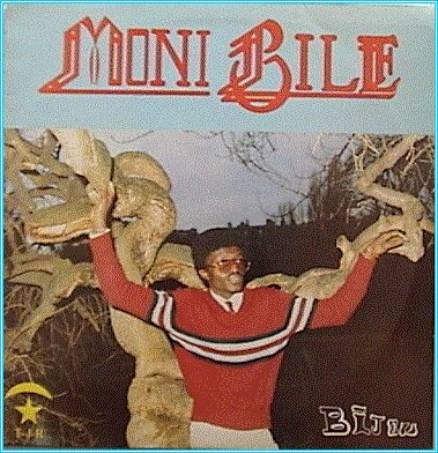
| 1983 | Release of Bijou and O Si Tapa Lambo Lam (TJR label) |
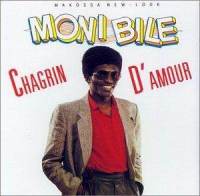
| 1984 | Chagrin d’Amour, first major hit |
| 1985 | Tout ça c’est la vie; separation from Aladji Touré |
| 1987 | Makossa Ambiance, return to emotional simplicity |
| 1990 | Best-selling makossa of the 80s; self-titled album |
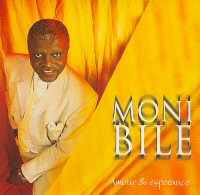
| 2000 | Amour & Espérance, international success |
| 2018 | Comeback with Ô Shame Afrika |
Origins, revelation and mutations
From the age of sixteen, Adolphe Moni Bilé played bass in Saker Pop Clan, a school group. His vocation was there. At twenty-two, he crossed the ocean and settled in Côte d’Ivoire, where he recorded his first album in 1977, Nganda Tumba (also released under the title Vivy). Two years later, Paris welcomed him—the European capital of contemporary African music—and marked the beginning of a fruitful collaboration with Cameroonian producer Aladji Touré.
The duo produced four major albums between 1982 and 1985 for the TJR and Sappa labels: Bijou, O Si Tapa Lambo Lam, Chagrin d’Amour and Tout ça c’est la vie. Moni Bilé’s style began to take shape with clear distinctiveness: luxurious orchestral arrangements that highlighted his characteristic nasal voice, and an Africanized beguine rhythm grafted onto the makossa beat. The guitarist-vocalist quickly became the most serious rival of Manu Dibango in the makossa pantheon.
After their separation in 1985, Moni Bilé went through a period of uncertainty before striking again with Makossa Ambiance in 1987—a conscious turning point, where he renounced Touré’s complex arrangements to embrace raw emotion. The album received a warm welcome. In 1990, a self-titled album was released that re-recorded several hits, including Chagrin d’Amour and O Si Tapa Lambo Lam. He performed in England in 1991, capitalizing on the resonance of the Cameroon-England football confrontation.
Legacy
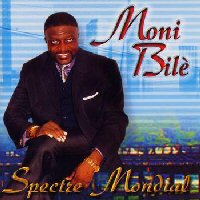
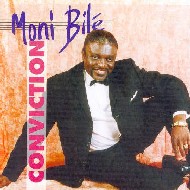
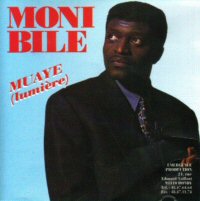
Moni Bilé’s career spans more than four decades and twenty albums. After the two gold records earned for O Si Tapa Lambo Lam and Chagrin d’Amour, and the Maracas d’or de la musique moderne africaine, the artist never stopped evolving: Amour & Espérance (2000) became an international hit that carried the makossa even further; Muaye (Lumière, 1992), Conviction (2002), and Spectre mondial (2004) attest to an undiminished creativity. In 2018, he returned with Ô Shame Afrika, proof that an artist who shaped a genre knows how to remain relevant well beyond his consecration period.
Major works
| Work | Year | Why it is essential |
|---|---|---|
| O Si Tapa Lambo Lam | 1983 | First major hit, gold record |
| Chagrin d’Amour | 1984 | Emblematic hit of orchestral makossa, gold record |
| Makossa Ambiance | 1987 | Creative turning point: emotional simplicity at the heart of makossa |
| Amour & Espérance | 2000 | International success, extended the global popularity of makossa |
Sources and references
- “Moni Bile — Biography”, AllMusic, https://www.allmusic.com/artist/moni-bile-mn0000556188, accessed October 22, 2026.
- “Moni Bilé”, Musiques d’Afrique, https://musiques-afrique.net/cameroon/art-moni-bile.html, accessed October 22, 2026.
- “Moni Bile (Adolphe Moni Bilé)”, Discogs, https://www.discogs.com/artist/1289773-Moni-Bil%C3%A9, accessed October 22, 2026.
- “Moni Bilé”, Wikipedia, https://en.wikipedia.org/wiki/Moni_Bil%C3%A9, accessed October 22, 2026.
- “MONI BILE dans LE BŒUF-BOURGUIGNON DE JACKY MOIFFO”, JMTV Plus, May 3, 2017, https://www.jmtvplus.com/moni-bile-boeuf-bourguignon-de-jacky-moiffo-1ere-partie-jmtv-1151, accessed October 22, 2026.
- “Moni Bile — Vie héroïque d’un artiste toujours jeune”, Canal 2 International, February 17, 2021, https://mboasawa.com/video/watch/moni-bile-vie-h%C3%A9ro%C3%AFque-d-039-un-artiste-toujours-jeune_o6zWsc6ItagV333.html, accessed October 22, 2026.
- “Official Site of Moni Bile”, https://moni-bile.com/, accessed October 22, 2026.
- “Moni Bile”, CodaMusic, https://codamusic.me/artists/moni-bile, accessed October 22, 2026.