Biography
Émile Kangue: the bass that made Cameroon dance
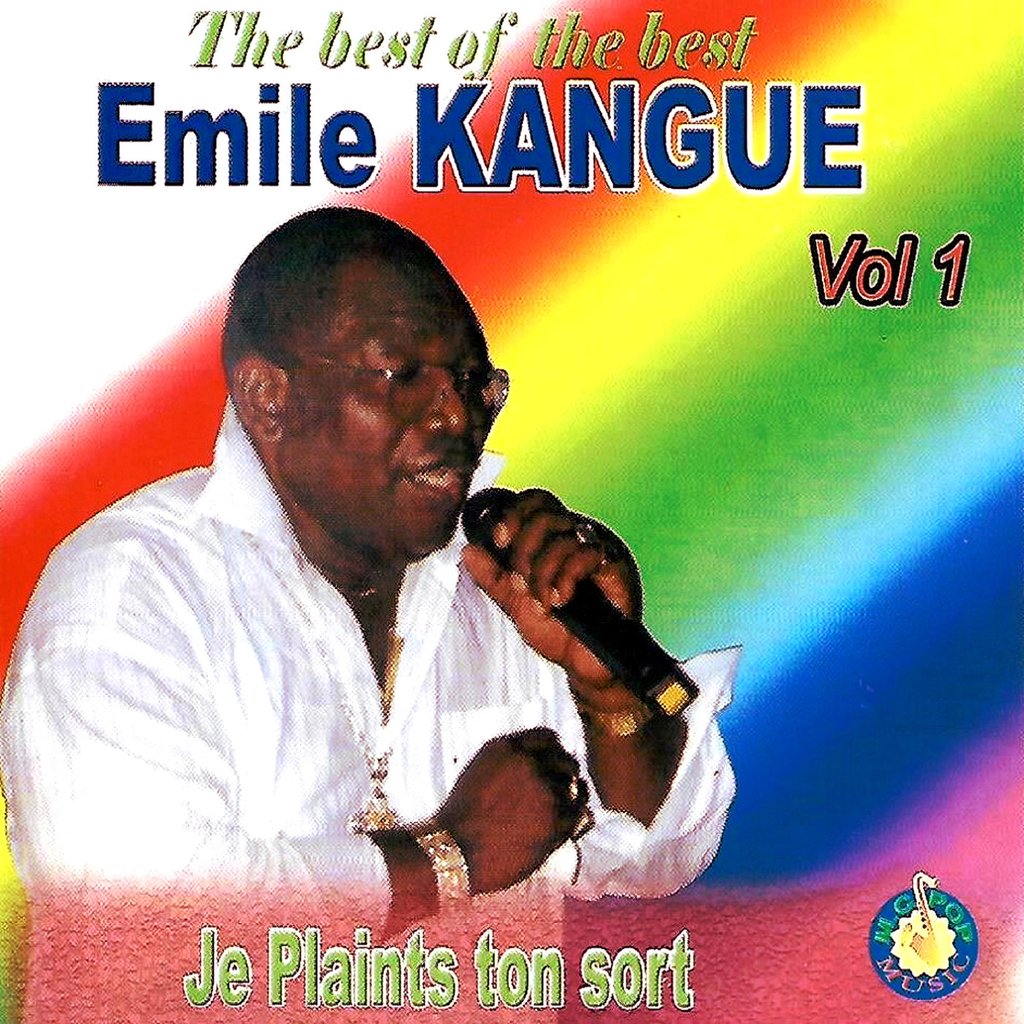
In 1980, on a record pressed by the label Africa Oumba, bassist and singer Émile Kangue released a track that would remain in memory: “Dikom Lam La Moto”. “My very dear friend” murmurs the refrain in bassa. The piece sold over 50,000 copies, earned a gold record, and became a staple in Douala bars1. Twenty-six years later, Massa Chop Chop renewed the experience.
In brief
| Full name | Émile Kangue |
| Birth | April 25, 1953, Édéa, Cameroon |
| Genre | Makossa — fusion of Sawa rhythms (Ambass-bey, Bolobo, Assiko) with Congolese rumba and highlife2 |
| Instruments | Bass, vocals |
| Active years | 1966–present |
| Emblematic group | Black Styl (1970-1985) |
| Emblematic works | “Dikom Lam La Moto”, “Halom”, Douala Infos |
Key dates
| Year | Event |
|---|---|
| 1953 | Birth in Édéa, son of Joseph and Tapita Yaki, eldest of twelve children |
| 1966 | Musical debut: choir and school orchestra Les Bandeaux noirs |
| 1970 | Joined Black Styl, under the direction of Nkotti François |
| 1974 | Tour in France, album Black Styl à Paris |
| 1980 | Solo: Dikom Lam La Moto, gold record |
| 1987 | Track covered by Charlotte Mbango on Nostalgie |
| 2016 | Massa Chop Chop, fiftieth anniversary of career |
| 2020 | AFRIFAMU Career Award (Los Angeles) |
Windows to enter the music
Émile Kangue was born on April 25, 1953, in Édéa, a town on the banks of the Nyong, one hundred kilometers from Douala3. His childhood was immersed in sound: every evening, he accompanied his mother to the choir, where he learned to sing. But his parents considered music a matter for delinquents, and he had to enter through the window to join the rehearsals of the school orchestra Les Bandeaux noirs.
This prohibition did not prevent his vocation. At sixteen, Kangue played in bars in Édéa, then went on to Douala nights at the Ratio Bar, at the Ambiance Bar, and at L’Orfecam Jazz3. He played with the late Epee Mbende Richard and his cousin Mbangue Marcel Theophile. Through the Davum bars in Bonakwamang, destiny led him to the Corniches, a collective close to the makossa pioneer Emmanuel Néllé Eyoum. Two years later, Black Styl opened its doors.
Black Styl: fifteen years of pure makossa
At the beginning of the 1970s, Émile Kangue joined Black Styl, founded by Nkotti François, with Toto Guillaume on guitar. Neither could read sheet music; compositions were built by ear, forging the characteristic sound of modern makossa. Concerts followed one another at the Mermoz bar, which became emblematic. “Black Styl Mwassa” — the anthem track that cites all members — became a reference1. The 1974 tour in France produced the album Black Styl à Paris, proof that makossa transcended borders.
After fifteen years, Kangue retired1. In the 2014 interview with Cameroon Concord, he left a protective mystery hanging: “Black Styl remains united and strong in spirit, today as always.” The departure was neither a rupture nor resentment.
Solo: the gold record and beyond
From 1980, Dikom Lam La Moto was released on the label Africa Oumba1. The five tracks — “Na Ma Yô”, with a remarkable guitar choir — sold over 50,000 copies. Paco Rabanne presented him with a gold record. In 1987, Charlotte Mbango covered the key track on Nostalgie, reigniting the success.
On Douala Infos, Kangue surrounded his tracks with rising voices: Sissi Dipoko, Charlotte Mbango, Penda Dalle4. He called on Toto Guillaume for arrangements. “Sumwa Mulema”, “Diba Di Titi Etom” and “Halom”, composed in bassa, became classics. In 2016, Massa Chop Chop marked his fiftieth anniversary.
Legacy
Émile Kangue carried makossa through two avenues: as bassist for Black Styl, one of the most influential collectives in the genre2, and as a solo artist whose tracks irrigated an entire generation. Makossa, this rhythm born from Sawa dances and nourished by rumba and highlife, owes to figures like his the credit of never being reduced to an epiphenomenon. Douala keeps in memory the nights at the Mermoz where his bass made the floorboards tremble.
Major works
| Work | Year | Why it is essential |
|---|---|---|
| Dikom Lam La Moto | 1980 | 50,000 copies; gold record; covered by Mbango |
| Black Styl à Paris | 1974 | First international recording by Black Styl |
| Douala Infos | 1980-89 | Vocal laboratory: Sissi Dipoko, Charlotte Mbango, Penda Dalle |
| “Halom” | 1980-89 | Composition in bassa; repertoire classic |
| Massa Chop Chop | 2016 | Fiftieth anniversary of career |
Sources and references
-
Wikipédia FR, Émile Kangue; Afro Caribbean Beats, Dikom Lam La Moto, accessed November 1, 2026 ↩︎ ↩︎ ↩︎ ↩︎
-
African Music Library, Émile Kangue Profile, accessed November 1, 2026 ↩︎ ↩︎
-
ESMA Paris 1, À la découverte du Makossa, December 21, 2020 ↩︎ ↩︎
-
Cameroun Web, Interview Great Emile Kangue, November 24, 2014 ↩︎