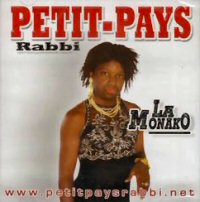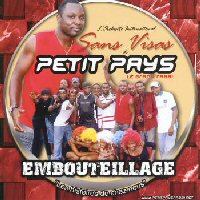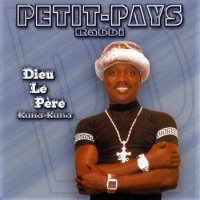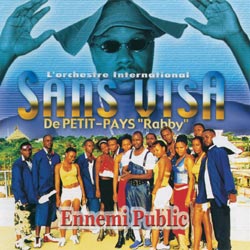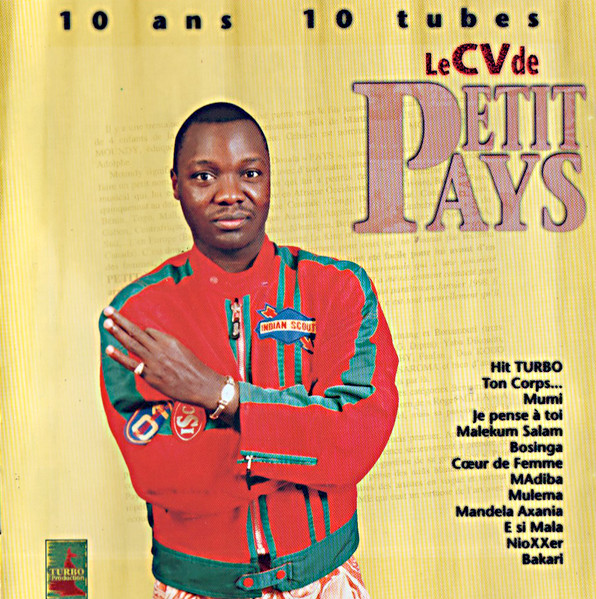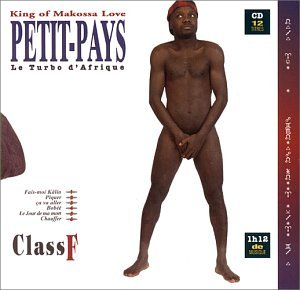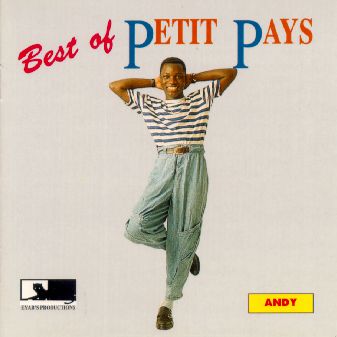
Biography
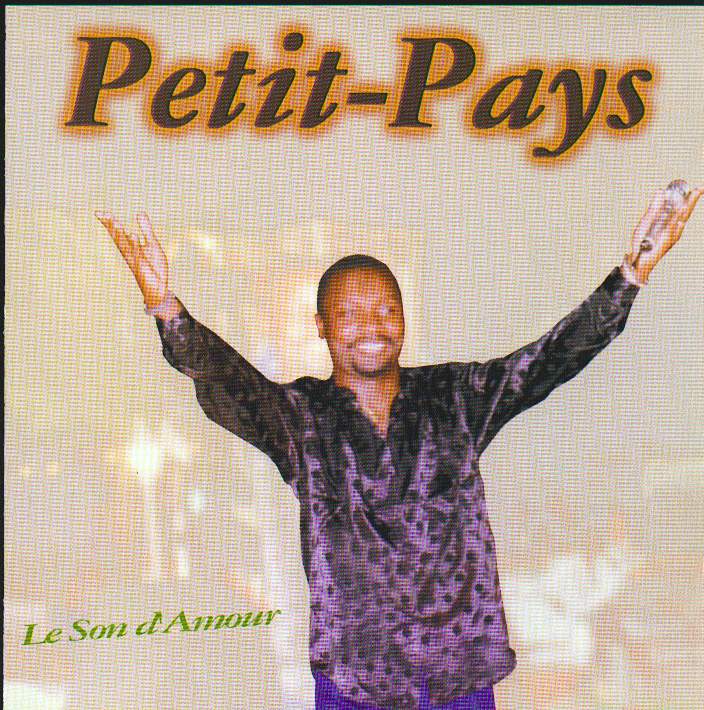
Petit-Pays: the Paris exile who invented Makossa Love
In 1986, Adolphe Claude Moundi finds himself handcuffed on a repatriated flight back to Douala, expelled from France. A year later, the song “Ça fait mal” emerges from this experience: administrative detention, humiliations, and solitude in the Parisian metros. The title propels this 19-year-old to the forefront of the Cameroonian stage, and the public recognizes in him the sound of a new generation of makossa. Four decades and fifty albums later, Petit-Pays remains one of the pillars of African music.
In brief
| Full name | Adolphe Claude Alexandre Moundi |
| Birth | June 5, 1967, Douala, Cameroon |
| Field | Singer, songwriter, producer |
| Genres | Makossa, zouk, pop, African folklore |
| Iconic works | Ça fait mal, Ancien Parigo, Class F, Les Morts ne sont pas morts |
| Honors | Order of the Value (Knight, 2005) |
Key dates
| Year | Event |
|---|---|
| 1967 | Birth in Douala, into a single-parent middle-class family |
| 1985 | Departure for Paris; homeless, expelled in 1986 |
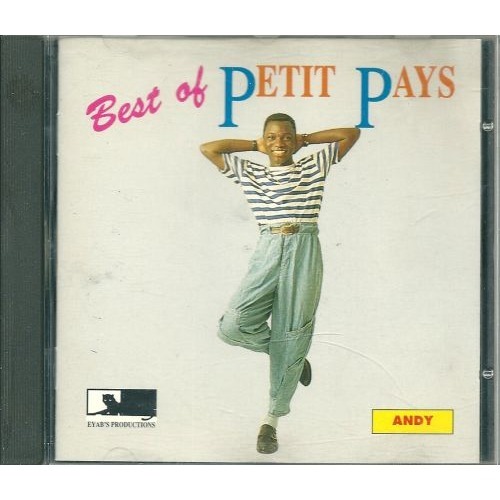
| 1987 | Release of the first album Ça fait mal… on Eyab’s Productions label |
| 1988 | Success of Ancien Parigo, considered a masterpiece of makossa |
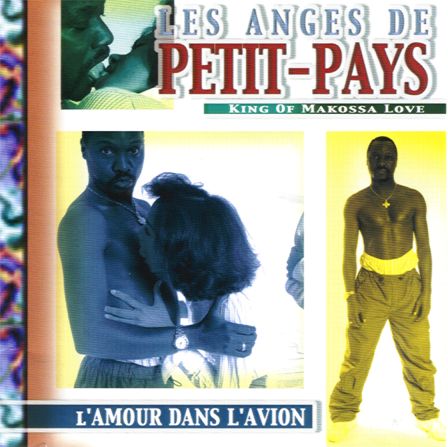
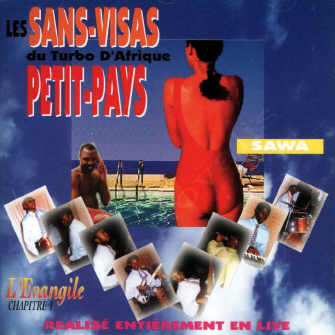
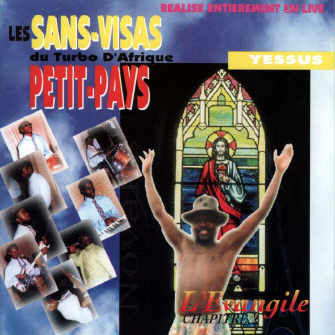
| 1990 | Founding of the group Les Sans Visa; creation of the sub-genre Makossa Love |
| 1996 | Record of at least 50,000 cassettes sold on the release day of the double album Class F / Class M |
| 2005 | Decoration as Knight of the Order of the Value |
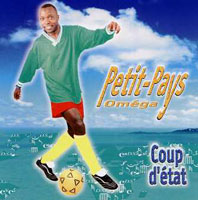
| 2009-2010 | Management of the Caïman Club de Douala football club (promotion to first division) |
| 2019 | Release of Wala Longo’o, an album written following a serious road accident |
| 2025 | Celebration of 40 years of career in Yaoundé; new album Forever in November |
From Douala to Paris: exile as a springboard
Adolphe Claude Moundi, the eldest of four siblings, grew up in Douala without a father. Nicknamed “Petit” by his loved ones, he chose “Pays” as the second part of his stage name: in Duala, the language of Douala, moundy literally means country. A passionate teenager for football and guitar, he spent entire nights rehearsing and drifted away from high school. In 1985, his mother and uncle financed his departure for Paris.
Arriving with no resources, he slept in the metros and found refuge among young musicians. In 1986, during a regularization campaign under Minister Charles Pasqua, he was arrested and expelled. “Ça fait mal,” the song describing this experience, caught the attention of producer Joseph Eyabé Kwedi. The latter launched Petit-Pays’ first album at the end of 1987.
Success and reinvention of makossa
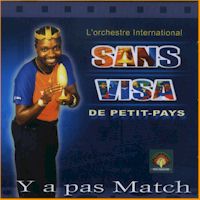
With Ça fait mal… launched, Petit-Pays confirmed himself with Ancien Parigo in 1988, an album praised for its maturity. Convinced he could extend makossa beyond Cameroon, he founded Les Sans Visa—a name paying homage to his expulsion—and turned his formation into a talent pool. Samy Diko, Pakito, Xavier Lagaf, Samantha Fock: several would become makossa figures in their own right.
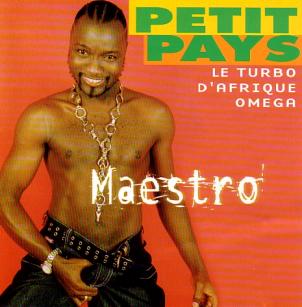
In the early 1990s, Petit-Pays collaborated with Manu Lima, a Cape Verdean musical director, and forged Makossa Love: a marriage of traditional makossa, sentimental zouk, and congo. The album Les Morts ne sont pas morts imposed this sound across Africa. In 1996, the double album Class F / Class M broke a record with at least 50,000 cassettes sold on its release day, making Petit-Pays the Cameroonian artist who produced the greatest number of songs.
Evolutions, resilience, and legacy
Beyond music, Petit-Pays explored other horizons: in 2009 he took the reins of the Caïman Club de Douala and managed to promote the club to the first division in one season. After a serious road accident in 2018, he survived and transformed his ordeal into art: Wala Longo’o, released in January 2019, was entirely written during his convalescence. In 2020, he paid tribute to Manu Dibango and Pape Diouf with Les Baobabs sont tombés. In May 2025, Petit-Pays celebrated forty years of career in Yaoundé, stating: “I know that with time, things will change.” He was then preparing the album Forever, blending makossa, afrobeat, zouk, and rumba. The artist remains attached to Douala, refusing like many of his peers to expatriate, and continues to train new generations.
Major works
| Work | Year | Why it is essential |
|---|---|---|
| Ça fait mal… | 1987 | First album revealing an artist inspired by his expulsion from France |
| Ancien Parigo | 1988 | Masterpiece of classic makossa, affirming Petit-Pays’ pen |
| Class F / Class M | 1996 | Record of 50,000 cassettes sold, propelling the artist to continental summit |
| Wala Longo’o | 2019 | Album written during convalescence after a serious accident, symbol of resilience |
Legacy and influence
Petit-Pays shaped Cameroonian makossa over four decades by renewing it through crossings with zouk, congo, and pop. Les Sans Visa served as a school for a generation of musicians who continue to animate African stages. In 2025, forty years of career mark a turning point: the artist pleads for better consideration of creators and reminds that figures like Manu Dibango died with Cameroon’s hatred and regret. Petit-Pays’ legacy is more than fifty albums, an uninterrupted school of talents, and a music that refuses to freeze.
Sources and references
-
“Petit-Pays”, Wikipedia in French, https://fr.wikipedia.org/wiki/Petit-Pays, accessed October 19, 2026.
-
“Petit-Pays”, Wikipedia (English), https://en.wikipedia.org/wiki/Petit-Pays, accessed October 19, 2026.
-
“Frank Bessem’s Musiques d’Afrique / Cameroon: Petit Pays”, Musiques d’Afrique, https://musiques-afrique.net/cameroon/art-petitpays.html, accessed October 19, 2026.
-
« Petit Pays », Discogs, https://discogs.com/artist/4031152-Petit-Pays, accessed October 19, 2026.
-
« PETIT PAYS, Biography, Music, Lyrics », KamerLyrics, https://kamerlyrics.net/en/artist/petit-pays-18, accessed October 19, 2026.
-
« As 40th Anniversary of Career Approaches: Petit Pays Credits Fans », Medium (Brianmboh), https://medium.com/@brianmboh/as-40th-anniversary-of-career-approaches-petit-pays-credits-fans-ab47b93eac54, accessed October 19, 2026.
-
« Petit Pays is “Forever” », Cameroon Concord News, https://cameroonconcordnews.com/petit-pays-is-forever, accessed October 19, 2026.
-
« Cameroonian music: Petit-Pays calls on Cameroon to offer much forgiveness », Laura Dave Media, https://lauradavemedia.com/musique-camerounaise-petit-pays-appelle-le-cameroun-a-beaucoup-de-pardon-et-denonce-des-decennies-dingratitude, accessed October 19, 2026.
-
« King of Makossa Love Petit Pays pays homage to Manu Dibango, Pape Diouf on new album », Cameroon Intelligence Report, https://cameroonintelligencereport.com/king-of-makossa-love-petit-pays-pays-homage-to-manu-dibango-pape-diouf-on-new-album, accessed October 19, 2026.