Biography
Idrissa Diop
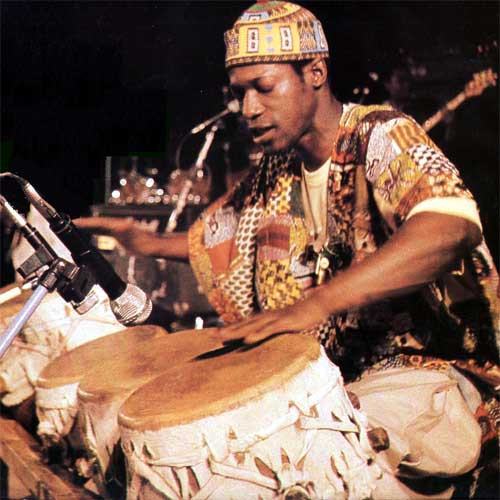
In 1985, on a Parisian stage at the Place de la Concorde, Idrissa Diop struck his sabars toward a crowd of 350,000 people cheering for Fela Kuti, released from prison in Nigeria. The Senegalese percussionist had traveled a long road to get there: from clubs in Dakar to festivals in France, passing through the studios of Paris where he has been shaping an afro-fusion jazz that has never ceased to evolve for over forty years.
In Brief
| Full Name | Idrissa Diop (nicknamed “Idy”) |
| Birth | 1949, Malika (suburb of Dakar), Senegal |
| Domain | Percussion (sabars, tama, djembé), singing; jazz-funk, afro-fusion, mbalax |
| Notable Works | Dioubo, Misaal, Yakar |
| Distinctions | Selected for the BBC millennium broadcast (2000); collaboration with Carlos Santana |
Key Dates
| Year | Event |
|---|---|
| 1965 | Debut with the Rio Orchestra, the first group of teenagers in Dakar |
| 1972 | Founding member of Le Sahel de Dakar |
| 1975 | Recording of the only album by the Sahel, Bamba (Musiclub) |
| 1982 | Moves to Paris; records the album Gorgui with Seydina Insa Wade |
| 1985 | SOS Racisme concert in Paris for Fela Kuti; creation of the Gaïendé group and release of Misaal |
| 1986 | Founded the sextet Sixun, afro-antillean jazz-fusion |
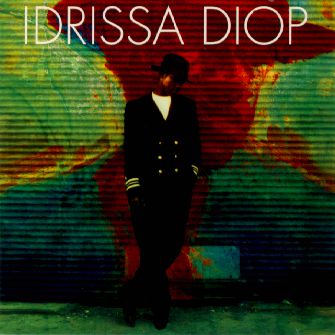
| 2003 | Album Yakar (Tinder Records); opened for Carlos Santana at Paris-Bercy |
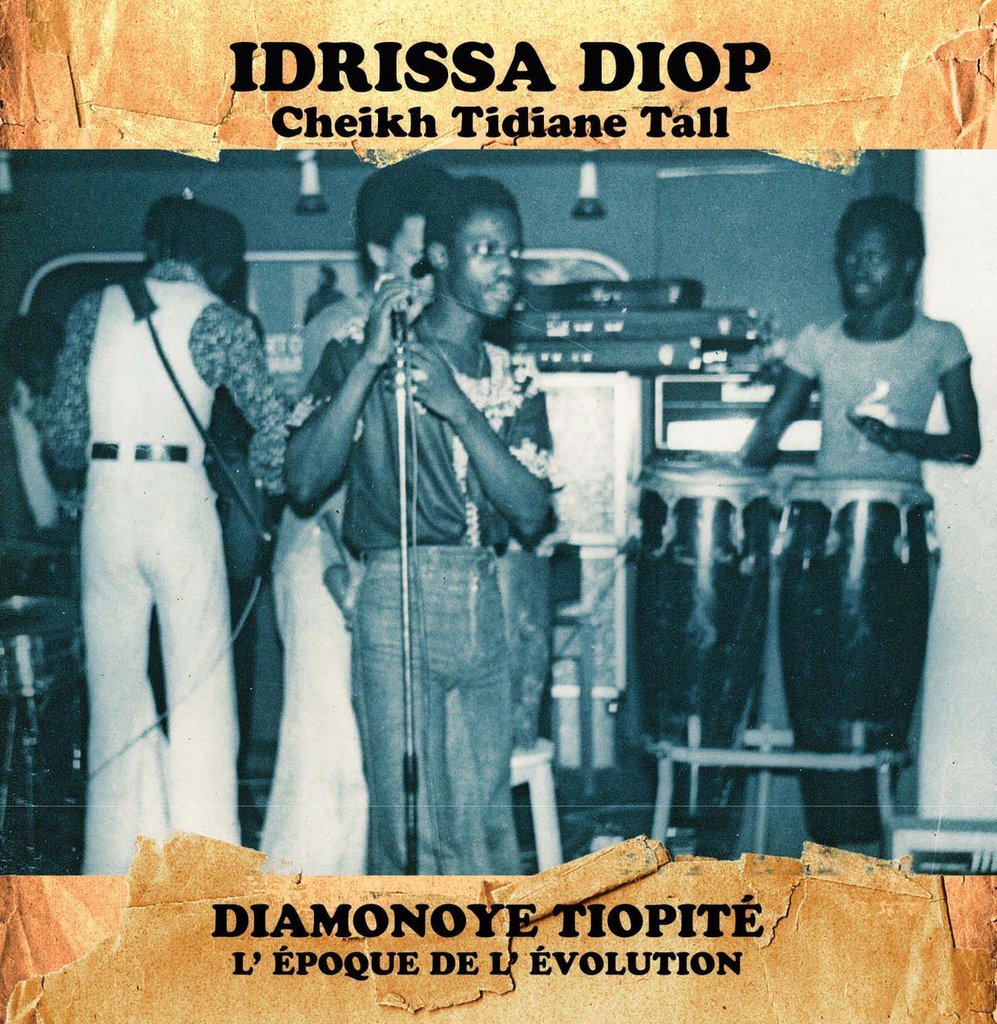
| 2010 | Diamonoye Tiopité (Teranga Beat): reissue of the first album Dioubo (1976) |
The Origins and Formation of a Musical Nomad
Born in 1949 in Malika, the popular suburb of Dakar, Idrissa Diop grew up cradled by the crossed sounds of a Senegal in transition. Son of Serer, Wolof, and Peulh heritage, he inherited a multiple ethnic patrimony that would become the foundation of his art. A musical nomad, as critics call him — it is not surprising that he has explored the most styles possible. From adolescence, music haunted him. His family, concerned about the instability of a musical career, discouraged this love; Idrissa secretly studied percussion by listening to jazz records from his sister, an air hostess. At sixteen, he was already playing professionally with the Rio Orchestra, alongside comrades like Laye Mboup — the latter would later join the Orchestra Baobab.
At sixteen, he joined Xalam 1, the first electro-Senegalese orchestra directed by mathematician Sakhir Thiam. It was here that he forged his style: a percussion game mixing traditional sabars and modern sounds. In 1972, he co-founded Le Sahel de Dakar with Cheikh Tidiane Tall. This group was one of the first to modernize the Senegalese sound by integrating jazz, soul, and traditional African rhythms. Their only album Bamba (1975, Musiclub) marked a turning point in Senegalese popular music. But the group would survive only three years — in 1978, the split.
Revelation and International Consecration
After the Sahel, Idrissa Diop began to shine well beyond Senegal. In 1982, he settled in Paris and recorded the album Gorgui with Seydina Insa Wade, another former member of the Sahel. This Franco-Senegalese collaboration attracted the attention of Youssou N’Dour, who commissioned several compositions from him — tracks that would still feature in his repertoire many years later. It was with this group that Idrissa Diop made a name for himself, opening the door to an international career that would take him on stages around the world.
In 1984, he accompanied Congolese pianist Ray Lema on a European tour playing buggers (percussions from the Casamance bass), then made a stop in Australia with Dutch flutist Chris Hinze. Back in Dakar, he created the acoustic trio Tabala in 1983 with Seydina Insa Wade and guitarist Omar Sow.
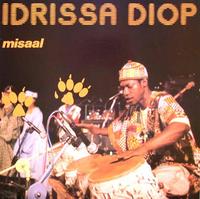
The turning point arrived in 1985. Idrissa joined the Jericho band to accompany the liberation of Fela Kuti, a prisoner in Nigeria. This group performed before 350,000 people in Paris, at the Place de la Concorde, during a concert organized by SOS Racisme in June 1985. The same year, he founded the collective Gaïendé (from Wolof “lion”, emblem of Senegal) and released his first solo album, Misaal, whose title means “world of today”, on Celluloid Records. This afro-Senegalese jazz-funk record, sung in Wolof, introduced mbalax and funk rhythms — a sound that made history.
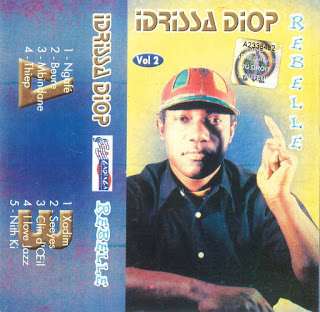
Meanwhile, he actively participated in the creation of Sixun, an afro-jazz-fusion sextet founded in 1986 with Jean-Pierre Como (keyboards), Paco Séry (drums, Côte d’Ivoire), Louis Winsberg (guitar, France), Michel Alibo (bass, Antilles) and Alain Debiossat (saxophone). Sixun recorded several albums for Island Records France (Couleurs, 1989; Rebelle, 1990) and acquired an international reputation. Idrissa also became a sought-after studio musician: he appears on albums by artists such as Ralph Thamar, St Germain (Tourist), Ray Lema and Yannick Noah.
Evolutions and Legacy
From Rebelle (1990) to Tribal Pursuit (2003), Idrissa Diop explored electro-dance and afro-pop turns that testify to an insatiable curiosity. Refusing to limit himself to one style, he alternated with French, Antillean and South African musicians who made him a bridge between cultures.
Idrissa Diop’s solo career culminated with Yakar (2003, Tinder Records), an album discovered and supported by Carlos Santana himself after the latter heard Yakar (“Hope” in Wolof) on BBC waves for their Millennium Broadcast. Santana invited him to open his Paris-Bercy concert, starting a musical collaboration that continues to this day.
Idrissa Diop is today recognized as one of the most important Senegalese percussionists and composers of his generation. His legacy — a jazz fusion that integrates sabars, tama and djembés with modern sounds — paved the way for an entire generation of African musicians.
Major Works
| Work | Year | Why It’s Essential |
|---|---|---|
| Bamba (Le Sahel) | 1975 | First album to modernize the Senegalese sound by fusing jazz, soul, and traditional rhythms |
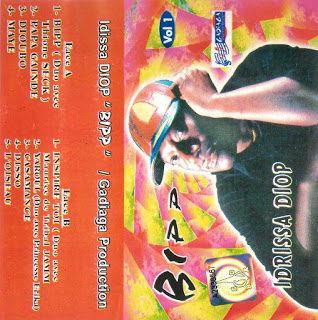
| Dioubo (Idy Diop) | 1976 | First solo album, original Afro-folk by the young Senegalese percussionist |
| Misaal | 1985 | First solo record: jazz-funk in Wolof, mbalax and funk rhythms, released on Celluloid |
| Yakar (Tinder Records) | 2003 | World-fusion album backed by Carlos Santana, selected for the BBC Millennium Broadcast |
Legacy and Influence
Idrissa Diop is a founding figure of the Senegalese afro-jazz scene. His percussive innovations — the marriage of traditional sabar with jazz funk and world music sounds — paved the way for an entire generation of African musicians. Today, young artists are rediscovering his archives thanks to the reissues by Teranga Beat. Far from media-famous stars, he remains a studio musician, rarely in the spotlight but present in dozens of recordings that form the sonic backdrop of modern Senegal.
Sources and References
- “Idrissa Diop”, Wikipedia (FR), https://fr.wikipedia.org/wiki/Idrissa_Diop, accessed November 5, 2026.
- “Idrissa Diop Discography”, Discogs, https://www.discogs.com/artist/408589-Idrissa-Diop, accessed November 5, 2026.
- “Artist Profiles: Idrissa Diop”, World Music Central, https://worldmusiccentral.org/artist-profiles-idrissa-diop/, accessed November 5, 2026.
- “Idrissa Diop”, Afrisson, https://www.afrisson.com/idrissa-diop-5660/, accessed November 5, 2026.
- “Idrissa Diop ‘Yakar’”, 6moons.com, https://6moons.com/worldmusic/yakar.html, accessed November 5, 2026.
- “Idrissa Diop”, Coda Music, https://codamusic.me/artists/idrissa-diop/, accessed November 5, 2026.
- Ronnie Graham, Stern’s Guide to Contemporary African Music, vol. 1, ch. 8 (Senegal), Zwan Publications, 1988, pp. 144–155 (reference file: references/senegal.md from skill sterns-guide-african-music).
- “Diamonoye Tiopité”, Teranga Beat Bandcamp, https://terangabeat.bandcamp.com/album/diamonoye-tiopit, accessed November 5, 2026.