Biography
Dieudonné Larose
PORT-AU-PRINCE, 2025. On a terrace in Pétion-Ville where the final chords of an orchestra resonate, Dieudonné Larose closes his eyes and sings. Not for the crowd but for himself — this deep voice that, forty years earlier, had made the Port-au-Prince parties dance and crossed the ocean to fill Montreal halls. Music chose him, he will say later. « I did not choose music; it was she who chose me », he will confess in an interview with Haiti Inter. Destiny had not planned everything: the voice of the Cabaretais was to elevate konpa to the status of universal music.
In brief
| Full name | Joseph Dieudonné Larose |
| Birth | June 5, 1945, Cabaret, Haiti |
| Death | January 8, 2026, Laval (Quebec), Canada, at age 80 |
| Field | Konpa dirèk (Haitian compas) — singing, composition |
| Iconic works | “Accident”, “Mandela”, “Jolie Minou” |
| Distinctions | Incalculable heritage; tributes from the French Embassy in Haiti, artists such as K-dilak and the Mizik Mizik musicians |
Key dates
| Year | Event |
|---|---|
| 1945 | Born on June 5 in Cabaret, a commune in the northwest, about twenty-five kilometers from Port-au-Prince |
| 1962 | Joins his first group, Africa Express, at age seventeen |
| 1970 | Shoogar Combo — his first professional experience, where he signs his first major hit |
| 1982 | Joins DP Express, marking a stylistic turning point toward a konpa blending Spanish ballads and Afro-Caribbean rhythms |
| 1987 | Exiled to Canada during the Haitian political turmoil; joins the Meridional des Cayes and then co-founds Missile 727 in Montreal |
| 1990s-2000s | Supremacy of Missile 727: more than half a dozen albums, transgenerational hits. Launch of his solo career under his own name |
| 2005 | Publication in France of the book Je Chante pour l’humanité (autobiography) |
| 2015 | Publication of “Guerre Incensée” and stage reappearances with his recording studio opened in Florida |
| 2026 | Death on January 8 in Laval (Quebec); the French Embassy in Haiti and artists from around the world pay tribute |
Origins and mystical vocation
Dieudonné Larose is born in a northwest Haitian commune that, despite its distance from the capital, is never far from the cultural whirlwind beating around Port-au-Prince. His father-in-law organizes parties, his mother listens to salsa, merengue, and cumbia. Music is not a luxury; it is daily breath: it crosses the walls of the house and structures Sunday rhythms. Larose grows up singing in the streets, by the sea, without imagining that this voice could one day bear the name of a generation.
At seventeen, he crosses the threshold of the first real orchestra: Africa Express. Then comes the decisive encounter with Shoogar Combo, where Larose signs his first professional recordings and discovers his vocation. The criticism of the time qualifies him as a man of great talent, and he imposes a stage presence that no song leaves indifferent. He sings love, rupture, courage — universal themes that konpa, this direct compas born in 1955 and become the backbone of Haitian music, knows how to make danceable without impoverishing them.
Revelation and commitment: from DP Express to Missile 727
The year 1982 marks a turning point with DP Express. Larose refines his style there, blending Haitian compas with Spanish ballads and the Afro-Caribbean influence that nourishes his imagination. But it is the political turmoil of 1987 that pushes the artist to leave Haiti for Canada. In Montreal exile, he finds former members of the Meridional des Cayes and together forge a new project: Missile 727.
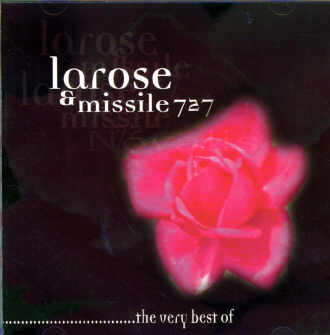
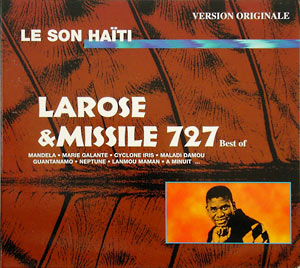
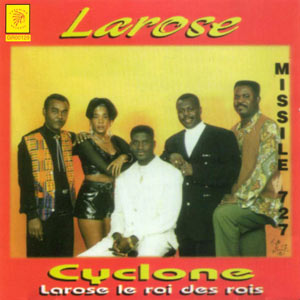
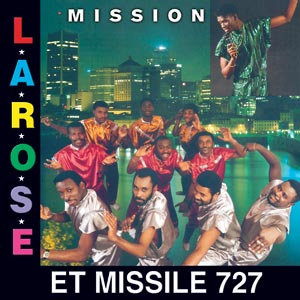
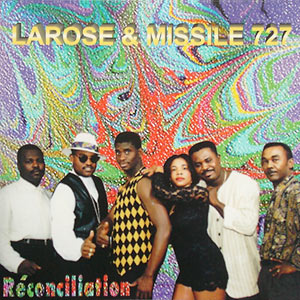
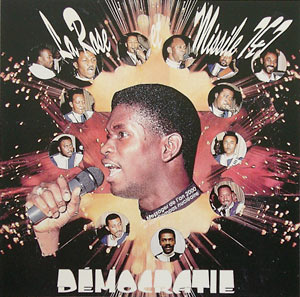
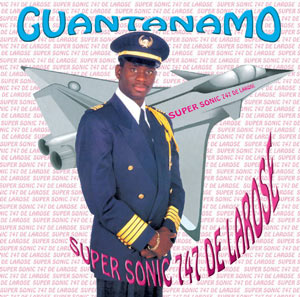
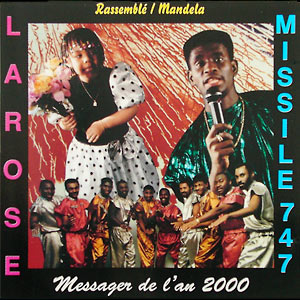
The group is born with the energy of necessary reinvention and transforms into a hit-making machine. Larose discovers there a more committed pen, a microphone that becomes a podium. The album Accident signs a narrative rupture: konpa no longer dances only, it tells the world. Mandela, dedicated to the fight against apartheid, reaches an almost community hymn dimension and earns, Larose himself will say, more money than any other Haitian group had ever earned. With titles like “Jolie Minou”, “Guerre Mondiale” and Rassemblé — this album where the artist launches: « We have a platform. We must say something that serves the young, the old, everyone » — Missile 727 conquers not only the Haitian diaspora but also francophone and anglophone compas listeners.
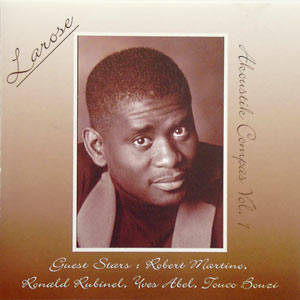
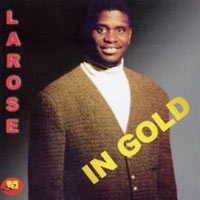
After the dissolution of the group, Larose continues in solo under his own name, publishing acoustic and experimental albums like Akoustik Compas Vol. 1. He opens a recording studio in Boca Raton to train young talents and founds, in Florida, the group Excell Compas.
Major works
| Work | Year | Why it is essential |
|---|---|---|
| “Accident” | ~1988-1990 | First Missile 727 hit that transforms konpa into social testimony music |
| Mandela | ~1990 | Global anti-apartheid hymn; the record that finances the Canadian Haitian diaspora |
| “Jolie Minou” | ~1995 | Pop romance whose melody crosses generations and remains a pillar of Caribbean parties |
| Rassemblé | ~1997 | Program album: social speech at the heart of compas, an ideological and musical turning point |
Heritage and influence
Dieudonné Larose died on January 8, 2026 at the age of eighty years, but his legacy remains present on Haitian dance floors as well as in the memory of the diaspora. The French Embassy in Haiti paid tribute to him: “An inimitable voice and a serene charisma, he marked Haitian music with a rich and inspiring career.” The artist K-dilak dedicated to him on social media a vibrant testimony, describing him as a value, an inheritance and a lasting voice for future generations.
More than forty years after his first steps in the studio, his tracks continue to be covered, remixed and sung by new generations of Haitian musicians. Missile 727 remains, for many Haitians in the diaspora, the school of conscious konpa — that era where the compas could carry at once hope, dance and political speech.
Sources and references
- “Larose, whose signature voice helped shape Haitian music, dies at 80”, Haiti Globe, https://haitianglobe.com/article/larose-whose-signature-voice-helped-shape-haitian-music-dies-at-80, accessed November 10, 2026.
- “Missile 727 and Larose: An Accidental Rise to Fame”, Le Nouvelliste, by Claudel Victor, https://lenouvelliste.com/en/article/258812/missile-727-and-larose-an-accidental-rise-to-fame, accessed November 10, 2026.
- “Interview with Dieudonne Larose”, CSMS Magazine, by Gary Joseph, https://csmsmagazine.org/interview-with-dieudonne-larose/, June 18, 2006.
- “Dieudonné Larose, 48 years of music: portrait of a Haitian legend”, Haiti Inter, https://www.haitiinter.com/dieudonne-larose-48-ans-de-musique-portrait-dune-legende-haitienne/, June 25, 2025.
- “Celebrating Joseph Dieudonne Larose”, OpaMusic / Haitian-American Music Archives, https://opamusic.com/interviews/celebrating-joseph-dieudonne-larose/, March 2004.
- “Dieudonné Larose”, Wikipedia (English version), https://en.wikipedia.org/wiki/Dieudonn%C3%A9_Larose.
- “Dieudonné Larose”, HaitiDJ, https://www.haitidj.com/en/artist/larose.
- Statement by the French Embassy in Haiti, via Facebook, January 9, 2026.