Biography
Fatou Seidi Ghali and Les Filles de Illighadad
Illighadad, an isolated village in the heart of the Nigerien Sahara. It is here that Fatou Seidi Ghali retreats when her brother is not around, her trembling hands on an old blue acoustic guitar patched together by sand. At ten years old, in a society where Tamasheq women play the imzad (V-shaped lute) and the tende drum, but never the guitar, this gesture is a silent act of resistance. More than a decade later, she became the world’s first professional Touareg guitarist.
In Brief
| Group Name | Les Filles de Illighadad |
| Origin | Illighadad, Tahoua region, Niger (Sahara) |
| Genre | Touareg music / tishoumaren (Saharan blues), tende |
| Formed | 2014–2016 |
| Label | Sahel Sounds |
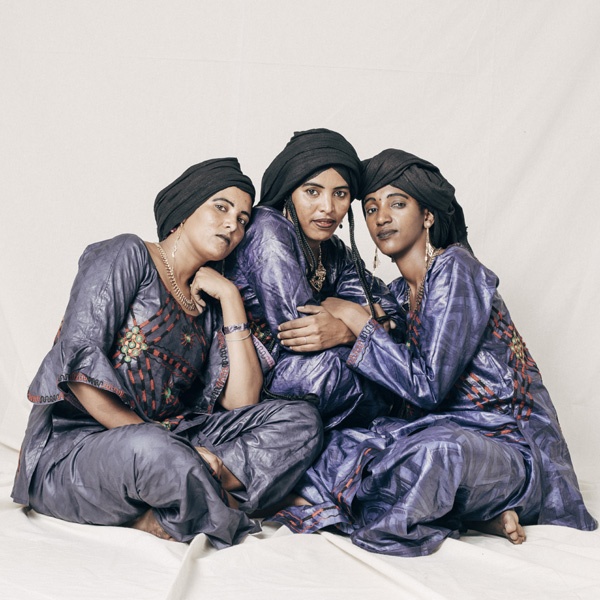
| Current Members | Fatou Seidi Ghali (guitar, vocals), Alamnou Akrouni (vocals, tende), Fatimata Ahmadelher (guitar), Abdoulaye Madassane (rhythm guitar) |
| Notable Works | Les Filles de Illighadad (2016), Eghass Malan (2017) |
| Awards | Nominated for Grammy Awards 2017 (Best Folk Album) |
Key Dates
| Year | Event |
|---|---|
| ~1997–1998 | Fatou discovers a guitar brought back from Libya and practices in secret |
| 2014 | Producer Christopher Kirkley (Sahel Sounds) discovers Fatou while photographing her village concerts |
| 2016 | Release of first album; first European tour |
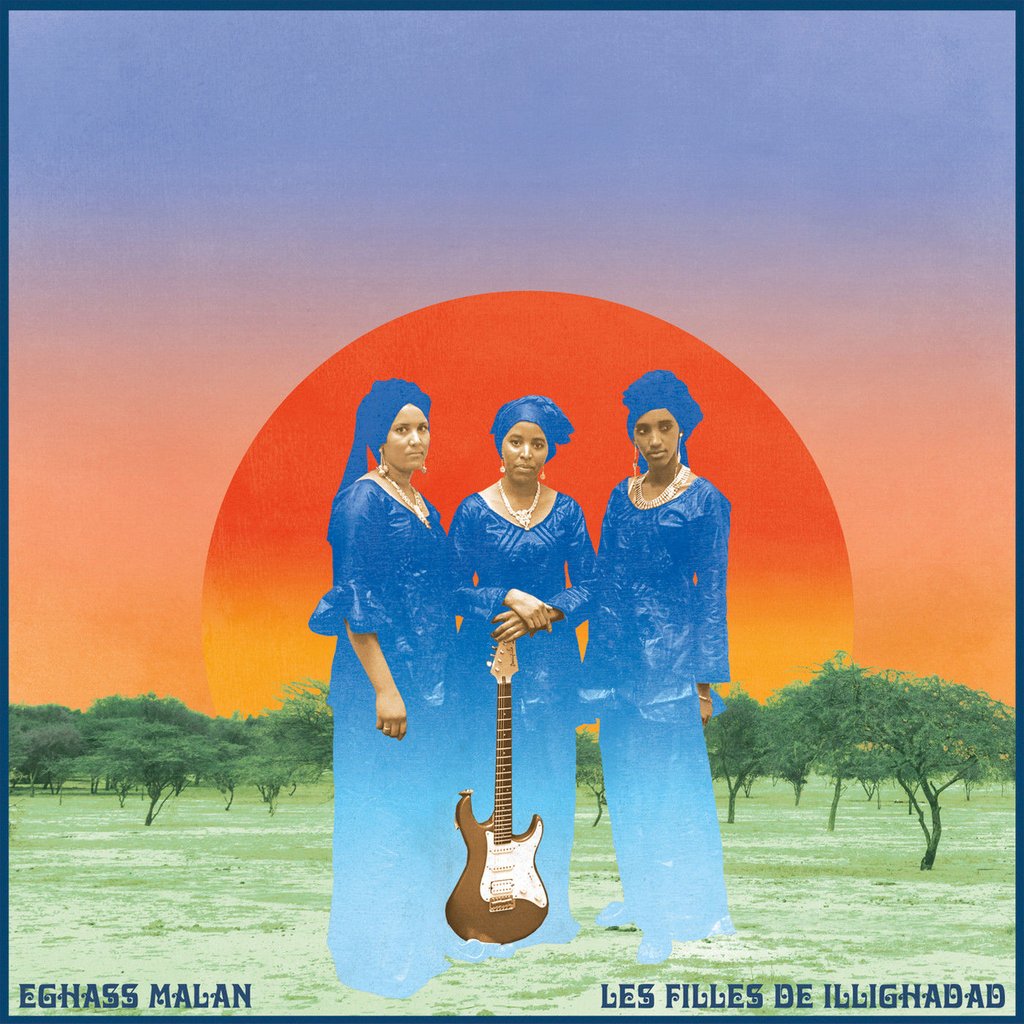
| 2017 | EP Eghass Malan; Grammy nomination (Best Folk Album) |
| 2017–2018 | Replacement of Mariama Salah Aswan by Fatimata Ahmadelher, second female Touareg guitarist |
| Autumn 2019 | American tour (New York, Detroit, Brooklyn); concert at the Library of Congress |
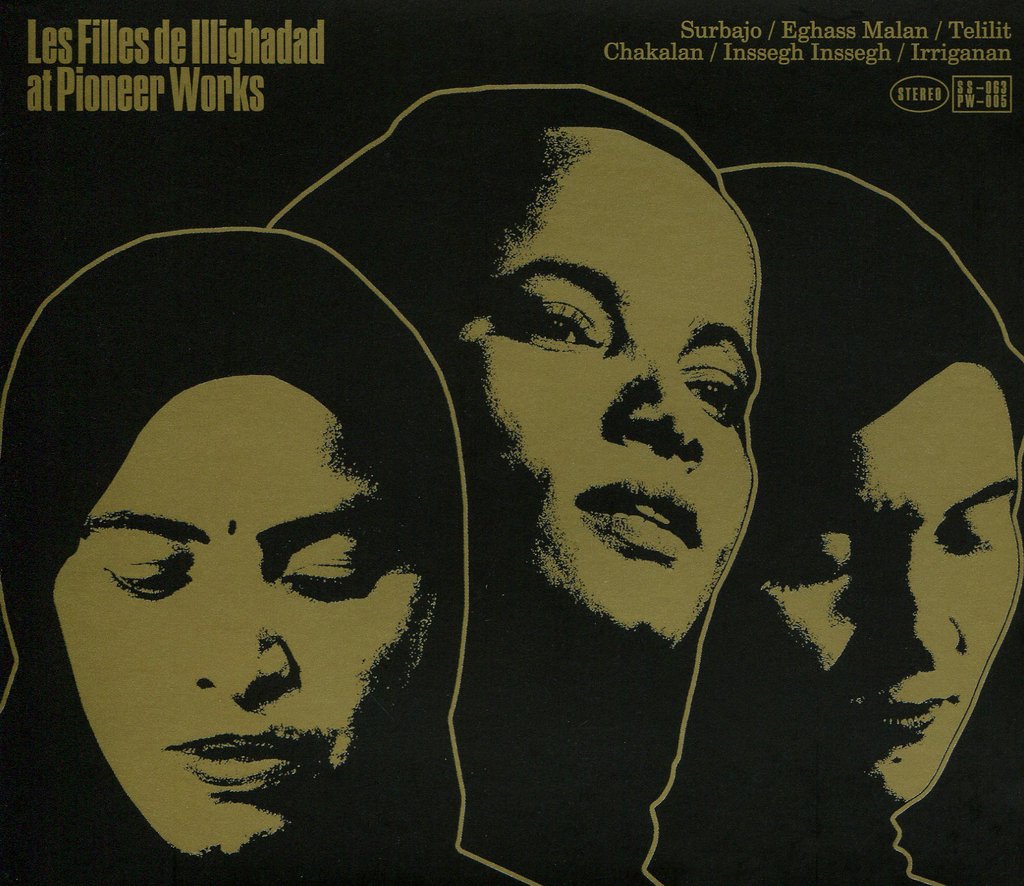
| 2021 | Release of At Pioneer Works (live Brooklyn, October 2019) |
| 2022–2025 | New world tours; album announced for 2025 on Sahel Sounds |
One Guitar, an Act of Resistance
Fatou Seidi Ghali grew up in a hamlet 47 kilometers from Abalak, in the Tahoua region of southwestern Niger. The Touareg — nomads of the Sahara — are known for their tende, this female music centered on a drum made from goat skin, and for their guitar-playing folk tradition. But Touareg women do not play the guitar; they play the imzad, a ritual V-shaped lute, and the tende drum, struck with two hands.
Around 1997, when a brother brought back an old blue acoustic guitar from a trip to Libya, little ten-year-old Fatou did not let the opportunity pass. Her father had told her to stay and watch the cows instead of playing, according to the Guardian. In secret, she imitated her brother’s fingers on the strings. Her family hated it, and she knew that playing guitar was scandalous for a Touareg woman. She persisted, discreetly.
The decisive meeting arrived in 2014. Christopher Kirkley, a musician and archivist from Portland (Oregon), had founded the Sahel Sounds label in 2009 to disseminate music from the Sahel. He had seen on the Internet a photo of Fatou playing at a village festival: he had never seen a Touareg woman hold a guitar. Intrigued, he brought the photo to Ahmoudou Madassane — who turned out to be Fatou’s cousin and the group’s future rhythm guitarist. The meeting was arranged, and Kirkley recorded Fatou in her family courtyard as evening fell, with cousins and children applauding in the background. The sound retains this human warmth, this village intimacy.
Revelation: Woman and Tende on the World Stage
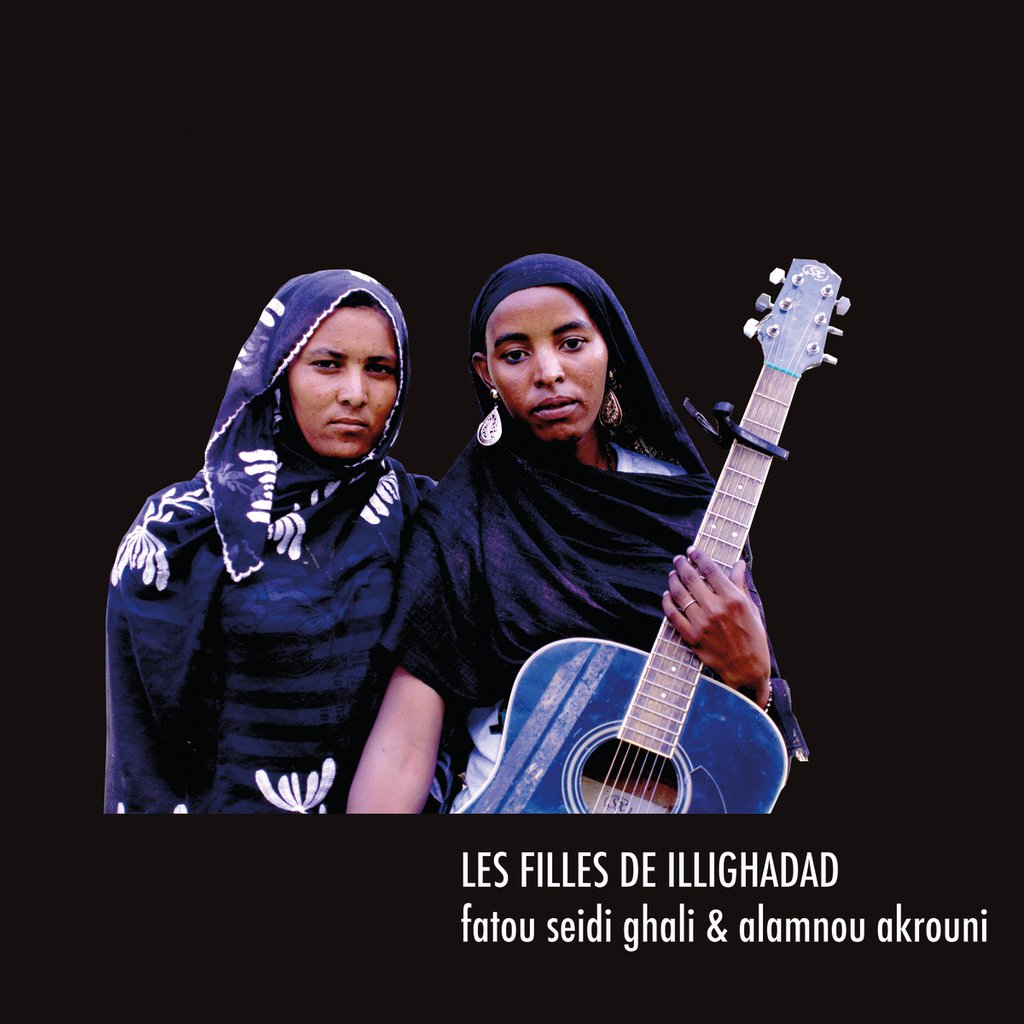
The first album, released in February 2016 under the title Les Filles de Illighadad, made a sensation. Six tracks, twenty minutes where Fatou fingerpicks melodies on the acoustic guitar while Alamnou Akrouni — her cousin, singer and tende player — handles the choral vocals. The tende drum, goat skin stretched over a mortar and struck with two hands, imposes an hypnotic rhythm. The two repertoires — tishoumaren (Saharan blues) and traditional female chants — answer each other without blending, creating an unprecedented musical space.
Amanda Petrusich of the New Yorker describes it as heavy, meditative, and tender. For David Renard of the New York Times, their sound mixes spirituality and joy in a village setting. The nomination for Grammy Awards 2017 (category Best Folk Album) consecrates this discreet but radical work.
In November 2016, first European tour with Fatou, Alamnou, and Abdoulaye Madassane (manager and translator). The three women had never left their village, except for short stays in Niamey. In autumn 2019, it would be the United States: New York, Detroit, and a historic concert at Pioneer Works in Brooklyn. The audience is captivated and almost in a trance, writes Petrusich: spectators abandon their chairs and dance with abandon. In 2022, the quartet — three women and one man — closes a new international tour.
Major Works
| Work | Year | Why It Is Essential |
|---|---|---|
| Les Filles de Illighadad | 2016 | First album; definition of the guitar/tende duo; Grammy nomination 2017 (Best Folk Album) |
| Eghass Malan | 2017 | EP where the dialogue between Fatou and Alamnou reaches rare maturity, between love songs and portraits of nomadic life |
| At Pioneer Works | 2021 | Live recorded in Brooklyn (October 2019); captures the ceremonial energy of the group in concert |
Heritage and influence
Les Filles de Illighadad carry two revolutions: musical and social. On one hand, they prove that the tende, an exclusively female tradition of the Touaregs, can dialogue with the acoustic guitar. On the other hand, they are the first professional female Touareg guitarists — Fatou was the first, and after Mariama Salah Aswan’s departure, Fatimata Ahmadelher became the second. According to Christopher Kirkley, the group is creating something new and exciting by adapting traditional tende songs to a guitar repertoire. For their community, the group is a powerful symbol — the first to represent this region of Niger on global stages. Their music crosses the Sahara and reaches continents they had never imagined, at a time when the Sahel faces major political and humanitarian crises.
Sources and references
- « Les Filles de Illighadad », Wikipédia, https://en.wikipedia.org/wiki/Les_Filles_de_Illighadad, consulté le 17 novembre 2025.
- « ‘My father said I should be looking after the cows’: the first female Tuareg guitarist », The Guardian, 1er août 2019, https://www.theguardian.com/music/2019/aug/01/fatou-seidi-ghali-the-worlds-first-female-tuareg-guitarist.
- « Les Filles de Illighadad: From the Village to the World », Afropop Worldwide, 15 avril 2022, https://www.afropop.org/articles/les-filles-de-illighadad-from-the-village-to-the-world.
- Amanda Petrusich, « The Heavy, Meditative, and Tender Music of Les Filles de Illighadad », The New Yorker, 11 novembre 2019.
- « Les Filles de Illighadad — At Pioneer Works », Bandcamp, https://lesfillesdeillighadad.bandcamp.com/album/les-filles-de-illighadad.
- Cynthia Schemmer, « How Les Filles de Illighadad is Revolutionizing Traditional Tuareg Music », She Shreds Magazine, février 2017, https://sheshreds.com/les-filles-de-illighadad.