Biography
Les Frères Guissé: three guitars, a river of sounds
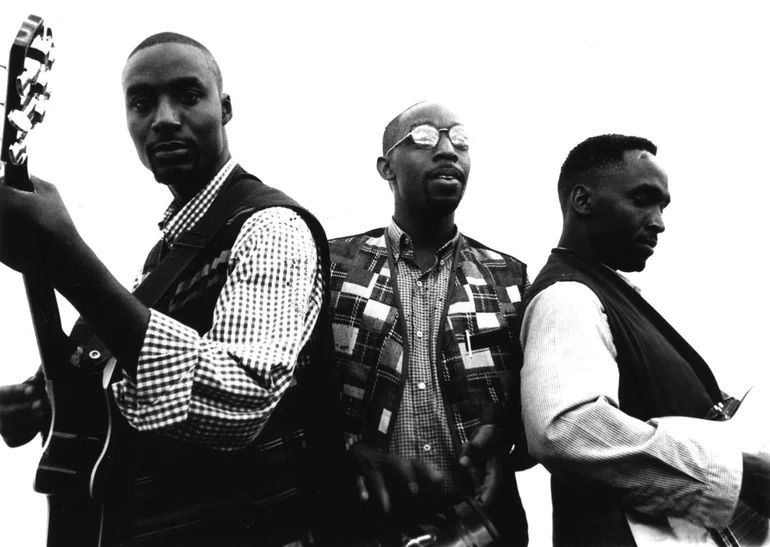
It was in Yaraax, a popular neighborhood in Dakar, that a trio born which would mark Senegalese music. Sons of a muezzin who did not dream for his children of an artistic career, Djiby, Cheikh and Alioune Guissé had to convince, persuade, demonstrate through academic results that music was not a game, but a vocation. Thirty years later, these three brothers from Fouta Tooro continue to carry high the sound of the Senegal River, blending Peulh, Wolof and acoustic in a musical journey that has crossed the four corners of the world.
In brief
| Group name | Les Frères Guissé (sometimes spelled Guisse) |
| Members | Djiby Guissé (guitar, vocals), Cheikh Guissé (guitar, vocals), Alioune Guissé (percussion) |
| Origin | Fouta Tooro, northern Senegal; Yaraax neighborhood in Dakar |
| Genre | Acoustic folk, West African traditions (Peulh, Peul) |
| Emblematic albums | Fama, Siré, Yakaar |
| Distinctions | Award at the Quebec Summer Festival (1997) |
Key dates
| Year | Event |
|---|---|
| 1984 | Djiby Guissé goes on stage for the first time, in Gorée |
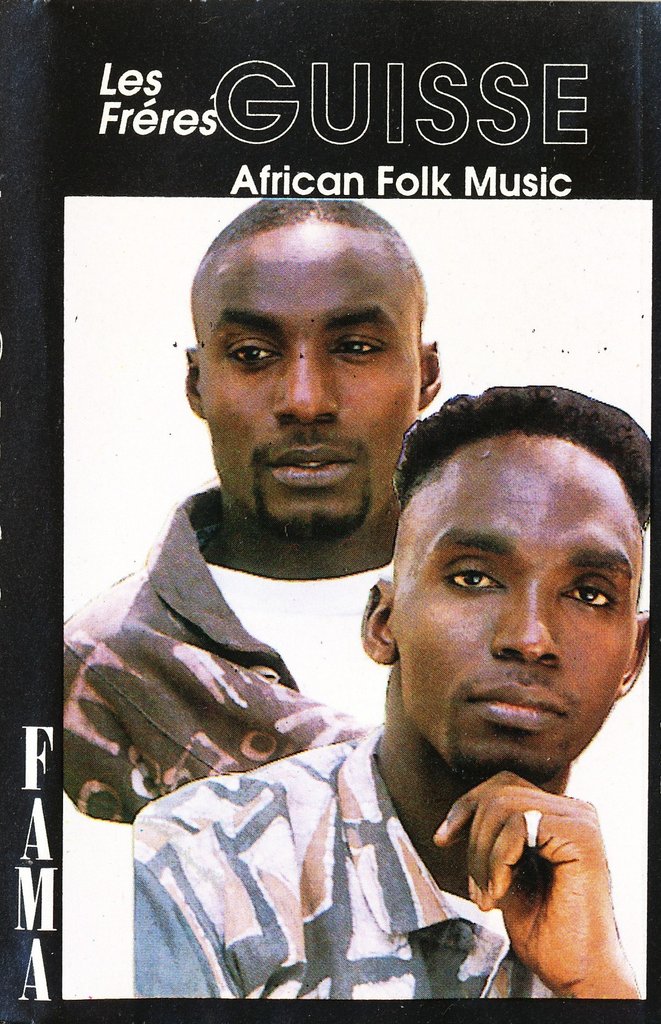
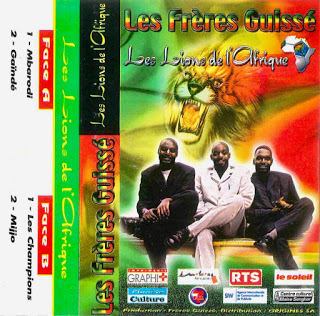
| 1995 | Official debut of the group with the cassette Fama |
| 1997 | Award at the Quebec Summer Festival |
| 1998 | Release of the cassette Ciré |
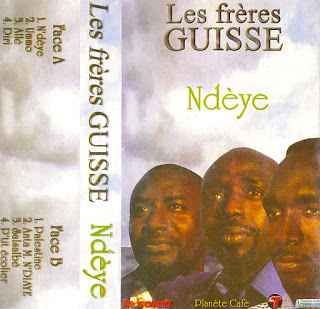
| 2000 | Third cassette, N’déye |
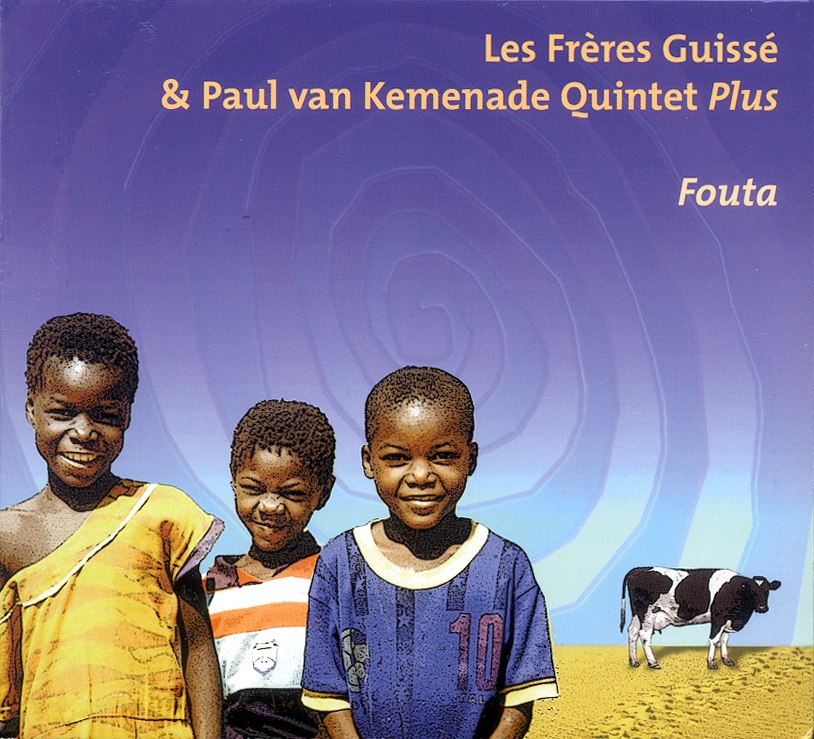
| 2003 | Fouta, recorded with the Paul van Kemenade Quintet in Holland |
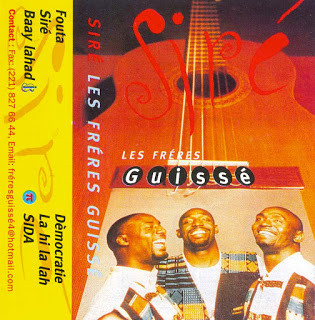
| 2005 | Release of the album Siré |
| 2007 | Collaboration with Leoni Jansen (album Nina); tour in the Netherlands |
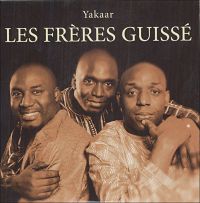
| 2008 | Release of Yakaar (“Hope” in Peulh) on the Mon Slip label |
A sonic river at the crossroads of traditions
Les Frères Guissé draw the strength and beauty of their music from a deep anchoring in Fouta Tooro traditions, this region in northern Senegal bathed by the Senegal River. The Pekaan, a musical style deeply linked to the subalbé fishermen of the region, constitutes their foundation: music where the myth of waters organizes men’s daily lives. But the trio does not limit itself to this tradition. It also draws from Goumbala, the incantatory chant of hunters, from Dilleré of weavers, from Yeela of griots — heritages that its brothers have digested since childhood, immersed in the passages of griots and musicians who paraded at their homes.
Sons of a muezzin who considered music “a game,” the three brothers had to prove their seriousness. Djiby recounts how he obtained a 17 in math to get the first concert ticket of his life, an evening in Gorée in 1984. Cheikh even played mechanics in a garage to preserve the facade while he composed with his brother. Djiby, for his part, spent afternoons at HLMs with a friend to practice the guitar. Their first real troupe was the UDP orchestra, a political party, where Djiby learned the basics with musicians like Lamine Faye Docteur and Moustapha Diop.
Worldwide recognition and engaged music
Recognition came quickly. In 1995, the cassette Fama conquers the Senegalese public and borders. The trio imposes itself in Dakar venues, notably at Tringa, a mythical place of the local musical world. In 1997, the Quebec Summer Festival awards them a prize, opening doors to international stages. Their sound — two acoustic guitars, subtle percussion, harmonies in tight harmony — conquers a cosmopolitan public.
Their music is engaged. The texts denounce child labor, women’s oppression, deadly emigration in the Mediterranean. In Peulh and Wolof, the brothers sing peace, fraternity, joking kinship between Serers, Pulaars and Mandinkas. The release of Yakaar (“Hope” in Peulh), album recorded in December 2007 and mixed by Jean Lamoot — who also worked with Noir Désir and Salif Keita — confirms their artistic ambition.
After a decade of collaboration with Dutch and Slovenian musicians and a relative absence on the Senegalese market, the group returns in 2018 with two new albums, one purely acoustic, the other in big band electric, testimony of a group that never stops evolving.
Major works
| Work | Year | Why it is essential |
|---|---|---|
| Fama | 1995 | Group’s first record, cassette that reveals them to the Senegalese public |
| Siré | 2005 | Emblematic hit that became a hymn of Senegalese acoustic music |
| Fouta | 2003 | Recorded with the Paul van Kemenade Quintet in Holland, international opening |
| Yakaar | 2008 | Mon Slip album mixed by Jean Lamoot; chants for peace and fraternity in Peulh |
Legacy
Les Frères Guissé embody a generation of Senegalese musicians who transformed local traditions into universal language. Their success in Quebec, their tours in the Netherlands, China and North America placed the sound of Fouta Tooro on major world stages. Their engagement for environmental issues through the Festivert festival organized in Hann Bay testifies to a sensitivity that goes beyond simple music. The trio continues to tour, and its disciples explore the bridge between Peulh traditions and international sound.
Sources and references
- « Les Frères Guissé », Wikipedia, https://fr.wikipedia.org/wiki/Les_Fr%C3%A8res_Guiss%C3%A9, accessed October 23, 2026.
- « DJIBY GUISSE DU GROUPE : AU SÉNÉGAL, LA MUSIQUE EST À L’AGONIE », KoldaNews, https://www.koldanews.com/2018/07/01/djiby-guisse-du-groupe-les-freres-guisse-au-senegal-la-musique-est-a-lagonie-a852982.html, accessed October 23, 2026.
- « Parcours – Invités du Pencum Yaraax : Les frères Guissé se racontent », Le Quotidien SN, https://lequotidien.sn/parcours-invites-du-pencum-yaraax-les-freres-guisse-se-racontent/, accessed October 23, 2026.
- « Les Frères Guissé », Safoul Productions, https://safoul-productions.com/2023/01/les-freres-guisse/, accessed October 23, 2026.
- « Les Frères Guissé », Discogs, https://discogs.com/artist/6457783-Les-Fr%C3%A8res-Guiss%C3%A9, accessed 23 October 2026.
- « Les Frères Guissé », BBC Radio 3, https://www.bbc.co.uk/programmes/b00zm53q, accessed 23 October 2026.
- « Les Frères Guissé », Deezer, https://www.deezer.com/fr/artist/74509, accessed 23 October 2026.
- « Les Frères Guissé », WOMEX, https://www.womex.com/virtual/new_african_inc/les_freres_guisse, accessed 23 October 2026.