Biography
Les Grammacks
In 1970, one summer evening in Saint-Joseph, Dominica, a dance hall desperately awaited a band from Roseau. The promised group did not arrive. Disappointed but determined, the young people of the Adonis sports club decided that evening on something crucial: they would form their own group, so as never again to depend on others. Five years later, these same adolescents — without instruments at first, but with the sound in mind — became the fathers of cadence-lypso and the first great independent musical star of Dominica.
In brief
| Group name | Les Grammacks (also Grammacks or Les Gramacks) |
| Formation | 1970, Saint-Joseph, Dominica (Caribbean) originating from |
| Genre(s) | Kadans, cadence-lypso (mix of calypso, reggae and Haitian rhythm) |
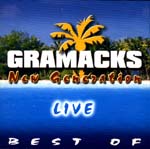
| Active period | 1970 – 1985 (original group), 1997+ (Grammacks New Generation) |
| Emblematic works | “Soukouyant”, “Woo Mi Deba”, Roots Caribbean Rock |
| Major influence | Direct inspiration for Kassav’ and Antillean zouk |
Key dates
| Year | Event |
|---|---|
| 1970 | Formation of the group in Saint-Joseph (Dominica) after the absence of an invited band |
| 1972 | First local success at the Harlem Festival in Newtown; arrival of Jeff Joseph as singer |
| 1974 | Move to Guadeloupe, first single “Soukouyant” and “Soliel Tous Chaud” |
| 1976 | “Woo Mi Deba”, hit that propelled kadans throughout the Caribbean and France |
| 1977 | Historic tour of the Tour de France: 25 cities in 30 days |
| 1978 | Triumphant return to Dominica for independence, with Exile One |
| 1979 | Semi-final of Super Bowl XIII in Miami: first spectacular international stage appearance |
| 1981 | Politik Anthology, album imbued with social commitment |
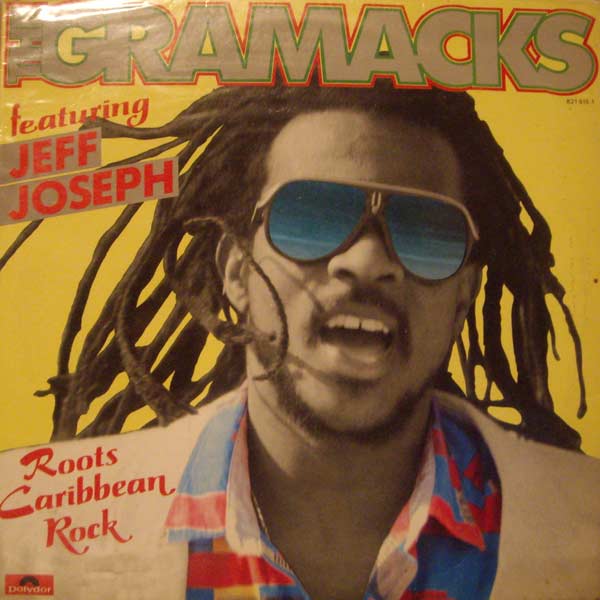
| 1984 | Roots Caribbean Rock, last album of the original line-up |
| 1985 | Group separation, creative divergence and financial problems |
| 1997 | Jeff Joseph reforms the group: Grammacks New Generation |
| 2009 | Reunion of founding members (without Joseph) with the album Get Up |
| 2011 | Death of Jeff Joseph on November 23; Dominica declares a national mourning period |
Origins: schoolboys without instruments, destined for glory
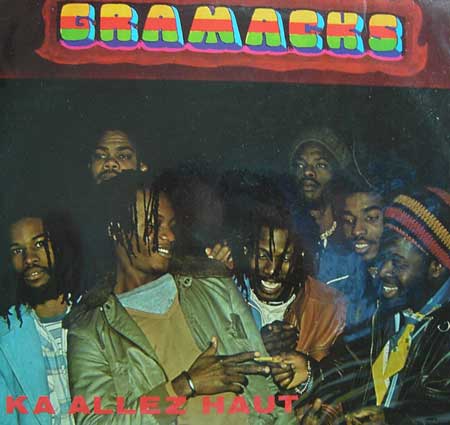
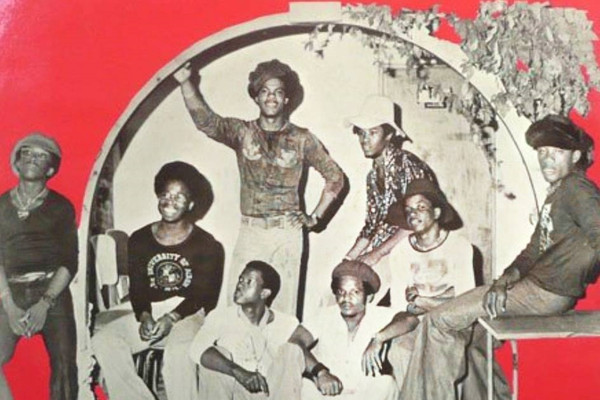
Les Grammacks were born in 1970 in Saint-Joseph (Dominica): five young people, without instruments or experience, decided to form a group. Anthony « Curvin » Serrant (guitar), Anthony « Tepam » George (bass), Elon « Bolo » Rodney (drums, practicing on a desk), Alickson JnoBaptiste (vocals) and Mc Donald « McKie » Prosper (keyboards). Georges « Soul » Thomas completed the lineup shortly after. The name comes from their two high schools: Dominica Grammar School and Saint Mary’s Academy.
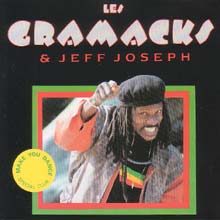
Their first local success, at the Harlem Festival in Newtown in 1972, conquered the Caribbean public. Jeff Joseph was spotted at a singing contest where he performed “Sunday Island”. He replaced JnoBaptiste and led the group towards new horizons.
Revelation and consecration: cadence-lypso conquers the world
In 1974, Jeff Joseph went to Guadeloupe where kadans — that beat fusing calypso, reggae and Haitian rhythm — took off. Producer Henri Debs opened a studio for Les Grammacks who recorded “Soukouyant” and “Soliel Tous Chaud”, immediate hits throughout the region.
“Woo Mi Deba” (1976), recorded in France and remixed in Martinique, became a planetary phenomenon. The song tells of an altercation that took place in French Guiana and dominated Caribbean radios, then Paris. “Bananas”, a radio from the capital, made it its hit of the moment.
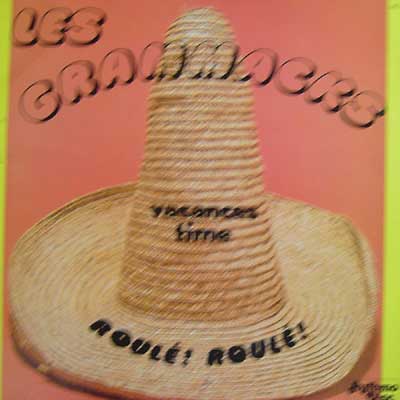
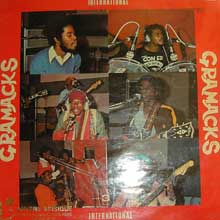
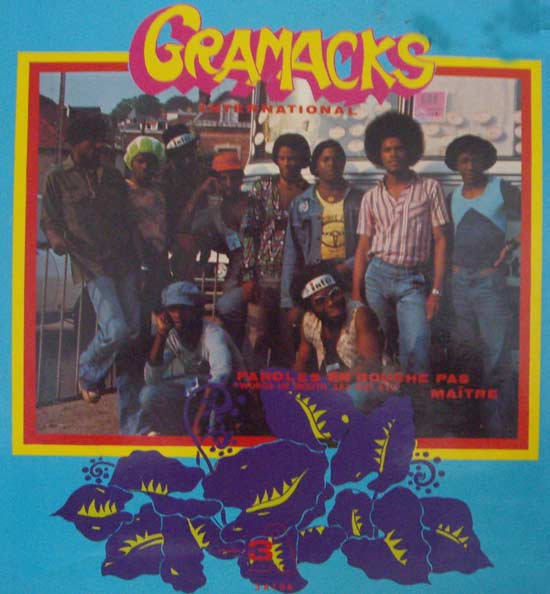
1977 marked the peak: Les Grammacks embarked on a Tour de France tour, 25 cities in 30 days. They released the albums International and Paroles en Bouche Pas Maitre. Jocelyne Béroard, future star of Kassav’, sang backing vocals with them in Paris.
Evolutions, turning points and end: from glory to disavowal amidst divergences
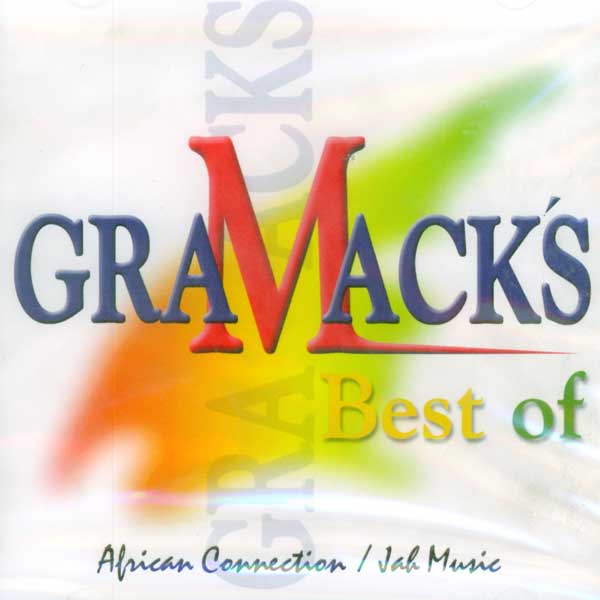
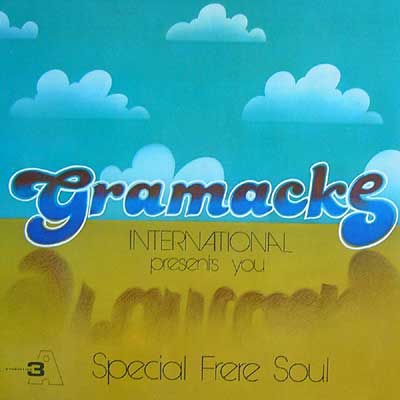
The group settled in Paris. African Connection (1978), Spéciale Frère Soul and Politik Anthology (1981, imbued with social commitment) marked this period. In 1979, Les Grammacks opened the halftime show of Super Bowl XIII in Miami. In 1984, Roots Caribbean Rock was released — last album of the original line-up.
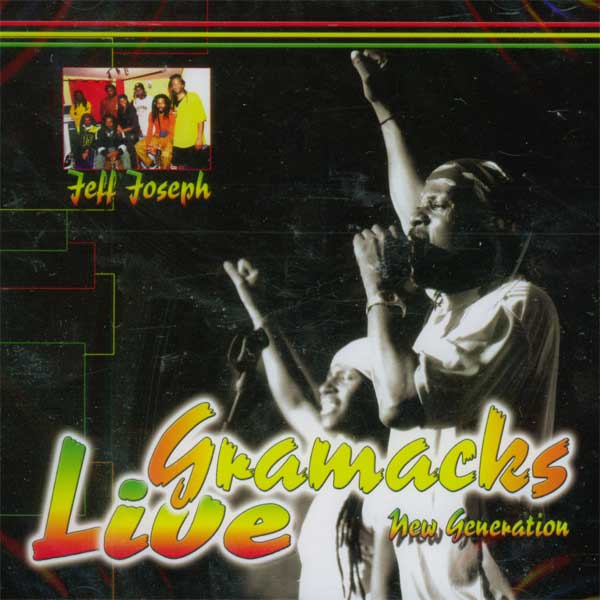
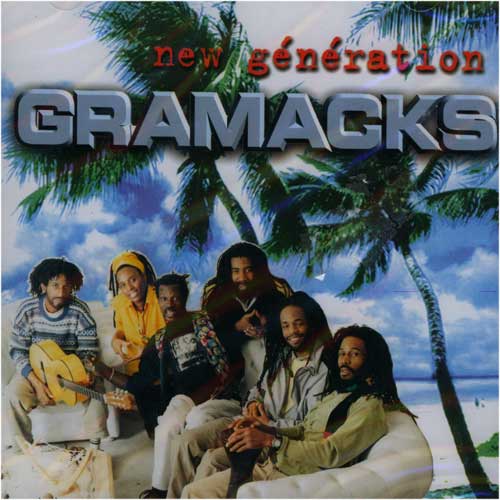
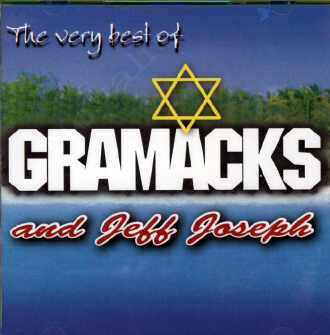
The tensions erupted: creative divergences and fragile financial management weakened the formation. In 1985, Les Grammacks separated. Jeff Joseph went solo in the United States and collaborated with Kassav’ on the project Volte Face. He refounded Les Grammacks in 1997 with young musicians. Les Grammacks New Generation toured the world. In 2009, the founding members reunited (without Joseph) for the album Get Up.
Jeff Joseph died of a stroke on November 23, 2011, at the age of 57. Dominica declared a national mourning period: tribute to the man who propelled cadence-lypso from Saint-Joseph onto the international stage.
Major works
| Work | Year | Why it is essential |
|---|---|---|
| “Soukouyant” / “Soliel Tous Chaud” | 1974 | First singles that launched kadans in Guadeloupe and Martinique |
| “Woo Mi Deba” | 1976 | International hit that made kadans a Caribbean-France phenomenon |
| Tour de France tour | 1977 | 25 cities in 30 days: first Caribbean group on a French stage as vast |
| Politik Anthology | 1981 | Emblematic album of social and political commitment in Antillean music |
| Roots Caribbean Rock | 1984 | Last album of the original line-up: a perfected synthesis of the Grammacks sound |
Heritage and influence
The Grammacks are the silent architects of zouk. Their approach — new synthesizers injected into the Caribbean beat, a brass section that adds height to the sound — directly inspired Kassav’ and all the artists who, in the 80s, went on to revolutionize Antillean music. Kassav’ indeed cites the Grammacks as one of their founding influences, and Jocelyne Béroard herself began her career singing in their choir in Paris.
Today, the Grammacks’ kadans-lypso is part of Caribbean musical heritage. Recent collections have brought their records back into the light, and the World Creole Music Festival, which they themselves inaugurated in Dominica in 1997, perpetuates their legacy.
Sources and references
- « Grammacks », Wikipedia (en), https://en.wikipedia.org/wiki/Grammacks, accessed November 10, 2025.
- « Grammacks », Wikipedia (FR), https://fr.wikipedia.org/wiki/Grammacks, accessed November 10, 2025.
- Thomson Fontaine, « Les Grammacks: the band that took the world by storm », The Dominican Net, https://www.thedominican.net/2010/03/les-grammacksthe-band-that-took-world.html, accessed November 10, 2025.
- « Disparition de Jeff Joseph », RFI Musique, November 24, 2011, https://outremermemory.com/jeff-joseph, accessed November 10, 2025.
- « Jeff Joseph: the man, the music, the legend », Dominica News Online, accessed November 10, 2025.
- Flagrant Soul, « Tropical Tuesdays: The Grammacks – Woo Mi Deba », https://flagrantsoul.com/2017/05/23/tropical-tuesdays-the-grammacks-woo-mi-deba/, accessed November 10, 2025.
- Discogs, « Les Gramacks », https://www.discogs.com/artist/1472204-Les-Gramacks, accessed November 10, 2025.