Musical History of Dominica
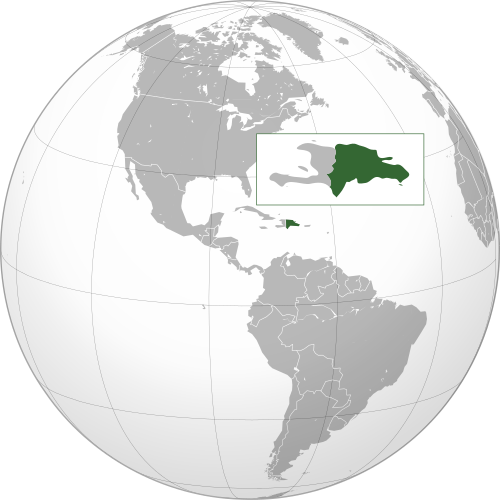
Dominica, nicknamed “Nature Island” of the Antilles, is a 750-square-kilometer rock that shaped several of the most frenetic genres in the Caribbean. Between the bélé — a slave dance inherited from West Africa — and the bouyon, its modern invention of party that makes clubs vibrate from Saint Lucia to Paris1, Dominican music tells how a Kwéyòl-speaking island learned to speak to the whole world. The secret? An ability to constantly fuse — goat-skin drum rhythms with digital beatboxes, quadrille dances with synthesizers2.
Dominica is today the only sovereign Caribbean state where a French heritage and British status coexist (the island gained independence in 1978), which is felt directly in its music3.
African and European Roots: the bélé, jing ping, and plantation dances
Like any Caribbean island, Dominica’s music was born under constraint. For more than two centuries, French and then British colonists made African slaves work on sugar and coffee plantations. These men and women tore instruments and rhythms from their heritage out of prohibition4.
The bélé is one of these forms. A dance and song of West African origin, it is played in the evening during full moon nights, resting on a call-and-response structure (the leader’s song, the chantwèl, is answered by the chorus, the lavwa), on a goat-skin drum called tanbou bèlè, a tingting (triangle) and a chakchak (coconut maracas)5. Dance couples, the danm (female) and the kavalyé (male), execute codified movements there. The bélé is still played today during the Fèt St.-Pierre and Fèt St.-Isidore, where it remains an act of memory5.
The jing ping, for its part, was born in the plantations themselves. This accordion formation replaced the bamboo flutes used by its predecessors in the 1940s. A jing ping consists of an accordion, a boumboum (blown bamboo tube), a syak (scraper-râclée), a tambourine, and sometimes a double bass6. It accompanies the quadrille (French-origin couple dance), the lancer, and the flirtation (circle dance)6.
Another pillar: the chanté mas and the lapo kabwit (goat-skin drums) that rhythmized carnivals before calypso. The chanté mas, in call-and-response, was nourished by satire and social commentary — a tradition that would survive under another form5.
Did you know? Dominica is one of the few Caribbean islands to possess a direct lineage from the Amerindian Carib (or Kalinago) peoples [[7]].
From radio to calypso: music dominates the carnival (1940s-1960s)
In the 1940s-50s, radio penetrated Dominica with Cuban bolero, merengue, samba, and American funk. Dance groups like the Casimir Brothers and the Swinging Stars mixed these styles with local influences6. In 1959, Dominica crowned its first Calypso King: the genre took hold and steelbands (percussions on steel drums, invented in Trinidad) flourished on the island6. The Gaylords emerged as a major figure with “Ti Mako” and “Pray for the Blackman” sung in Kwéyòl or English. Other groups like De Boys an Dem, Los Caballeros and Swinging Busters began recording7. The emergence of WIDBS radio and then Radio Dominica broadcast these recordings well beyond local stages7.
The cadence-lypso revolution (1970s)
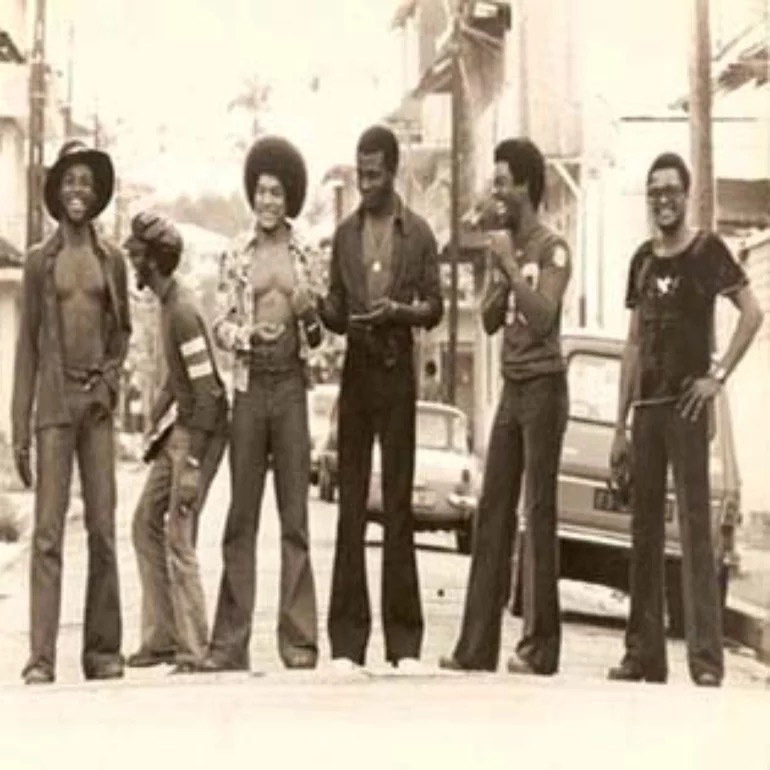
It was at the beginning of the 1970s that Dominican music achieved its international breakthrough. Gordon Henderson founded the group Exile One based in Goadeloupe, inviting musicians from Dominica8. Exile One invented the cadence-lypso: a fusion of the cadence rampa (direct Haitian compas) with Trinidadian calypso, jazz, blues and soul, at around 95 BPM9. First group to use synthesizers in kadans, Exile One enriched the mini-jazz format with brass, keyboards and electric guitars7. Many lyrics are in Kwéyòl and imbued with black identity and Black Power6.
The success of Exile One triggered an explosion of cadence groups: the Grammacks (led by Jeff Joseph), the Midnight Groovers, Belles Combo, Black Affairs, Mantra7. Cadence-lypso conquered the Creole world, from French Antilles to Guyana8. Gordon Henderson defined this sound at the end of the 1970s as “a synthesis of Caribbean and African musical patterns, fusing the traditional with the contemporary”7.
Exile One also played a role in the genesis of zouk: Gordon Henderson collaborated with the founders of Kassav’6. Cadence-lypso is thus one of the fathers of zouk7.
Birth of bouyon (1980s–2000)
Bouyon — today the most emblematic genre of Dominica — succeeded cadence-lypso. The word comes from kwéyòl and means soup or mixture5. The cornerstone recording was made in 1988: the album “One More Sway” by the group WCK (Windward Caribbean Kulture), produced in Grand Bay, south of Roseau5. The founders Derick « Rah » Peters and Cornell « Fingers » Phillip combined lapo kabwit and jing ping rhythms with the Roland TR-505 drum machine, which arrived in Roseau in 19865. Result: 95 BPM in cadence-lypso, 152 BPM in bouyon — a carnivalesque acceleration maintained relentlessly by the digital drum5.
The albums “Follow the Leader” and “Original Hold Dem” made a lasting impression9. Bouyon spread throughout Eastern Caribbean, and in Guadeloupe and Martinique it is known as « jump up »5. The genre spawned sub-genres: bouyon-muffin (dancehall fusion, initiated by Skinny Banton), reketeng (bouyon + rap + trap + drill, carried by Smokiller), bouyon-soca5.
Groups perpetuating the torch include Roots, Stems and Branches (RSB), First Serenade, Triple Kay International and the Signal Band7.
The contemporary scene: bouyon, calypso and new voices
Bouyon is no longer an island phenomenon. It irrigates clubs across Eastern Caribbean and attracts international producers. Calypso, still alive, remains the heart of Dominica’s Carnival7.
Michele Henderson, singer and flutist, navigates between jazz, soul, cadence-lypso and zouk-love. In 2013, she won the CARICOM Song Competition with “Celebration Time”7. Ophelia Marie marked her era with “Aie Dominique” (1978) and continues to influence the youth7.
Trilla-G (Gael Jno Baptiste) has established himself: his track “Someone Else” (2024) won Soca Collaboration of the Year at the Caribbean Music Awards 2025, and he was crowned Calypso King in 202310.
Shelly Alfred (Sheldon Alfred), singer of the Signal Band, received two “Youth of the Year” awards in 202211, earned a master’s degree in acoustic architecture from Harvard, and keeps touring11. Carlyn XP embodies the new generation with “Ice Cream” (2025), illustrating current production where female lead voices reinvent bouyon7. Other recent artists: TriSzy (“Mood”, 2025), Reo (« La vie doux », 2025) — title in kwéyòl, so French quotation marks for the translation, TENSLAY, Asa Bantan7. The world is also arriving: the World Creole Music Festival (founded in 1997) hosts Ne-Yo, Machel Montano, Alkaline, Tabou Combo, Uncle Waffles and Capleton — while keeping Dominica’s artists at the center of the program10.
Heritage: why Dominica sings louder than ever
Dominica has neither the population of Jamaica nor the economic size of Trinidad. And yet, it is she who invented cadence-lypso — father of zouk and bouyon — and bouyon itself, a genre that has been making people dance from Roseau to Paris5. The lesson is clear: Dominica does not copy, it mixes. Jing ping (accordion, boumboum) with the TR-505, calypso with Haitian compas, kwéyòl with English and French6. Each mixture produces a new sound7.
If the scene continues to grow, its roots remain firmly anchored. Fèt St.-Pierre and Fèt St.-Isidore gather around the bélé. The jing ping of Petite Savanne still accompany quadrilles5. Chanté mas survives in the villages5. And every carnival night, the public sings together tracks born of fusion — from Africa to world charts6.
Sources
-
Jovani Davis, « World Creole Music Festival returns to Dominica with star-studded 2026 lineup », Caribbean National Weekly, August 2026. URL: https://www.caribbeannationalweekly.com/posts/world-creole-music-festival-returns-to-dominica-with-star-studded-2026-lineup ↩︎
-
Manuel & Largey, Caribbean Currents, chapter 8 — French and Dutch Caribbean, Temple University Press (2016). Skill reference. ↩︎
-
« Music of Dominica », Wikipedia. URL: https://en.wikipedia.org/wiki/Music_of_Dominica ↩︎
-
Bensignor, Les Musiques du monde, Larousse (2002), chapter 7 — Caribbean. Skill reference. ↩︎
-
TIITII NBA, « Before bouyon: cadence-lypso, sound systems and the TR-505 », 2026. URL: https://tiitii-nba.com/en/bouyon/the-roots ↩︎ ↩︎ ↩︎ ↩︎ ↩︎ ↩︎ ↩︎ ↩︎ ↩︎ ↩︎ ↩︎ ↩︎
-
Gregs Julien, « Voices of Dominica: Musicians Who Shape the Sound of the Nature Island », GuideDM, October 7, 2025. URL: https://guide.dm/2025/10/voices-of-dominica-musicians-who-shaped-the-sound-of-the-nature-island ↩︎ ↩︎ ↩︎ ↩︎ ↩︎ ↩︎ ↩︎ ↩︎
-
« Music of Dominica », Wikipedia, and Caribbean Currents ch08 (Manuel & Largey, 2016). URL: https://en.wikipedia.org/wiki/Music_of_Dominica ↩︎ ↩︎ ↩︎ ↩︎ ↩︎ ↩︎ ↩︎ ↩︎ ↩︎ ↩︎ ↩︎ ↩︎ ↩︎
-
« Exile One », Wikipedia. URL: https://en.wikipedia.org/wiki/Exile_One ↩︎ ↩︎
-
« Cadence-lypso », Wikipedia. URL: https://en.wikipedia.org/wiki/Cadence-lypso ↩︎ ↩︎
-
Kyle Denis, « Trilla-G Is Billboard’s Up-And-Coming Caribbean Artist of the Month », Billboard, April 2025. URL: https://www.billboard.com/music/features/caribbean-up-and-comer-trilla-g-dominica-bouyon-interview-1236232752/ ↩︎ ↩︎
-
Jose Alison Kentish, « Dominica’s “Bouyon” Star », Harvard Magazine, May 2024. URL: https://www.harvardmagazine.com/2024/05/montage-shelly-alfred-musician ↩︎ ↩︎