Biography
Marika Fostin
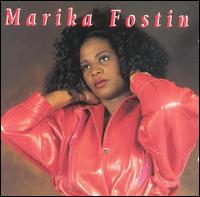
The day a young Antillean woman slipped into the legendary Debs Records studio in Pointe-à-Pitre, Guadeloupe, she did not yet know that her name would remain attached to an entire family of artists. Marika Fostin, the eldest of a sibling group of seven children, placed her voice of pure zouk — Creole, cartoon samples and overflowing brass — on a record that would make history. She is the guardian of a tradition that her sister Jane, more famous, would expand towards R&B and French variety. Marika, for her part, remains faithful to the roots.
In brief
| Stage name | Marika Fostin (sometimes spelled Faustin) |
| Genre | Caribbean music — zouk, compas |
| Origin | Guadeloupe |
| Notable works | “Baye lanmou”, “Si mwen few mal”, album Marika Fostin |
| Status | Active since the 1990s |
Key dates
| Year | Event |
|---|---|
| 1980s-1990s | Birth and musical formation in a family of seven children in Guadeloupe |
| 1992 | Release of the first album Baye lanmou on the Dicktam label |
| 1994-1997 | Continuation of solo career between Guadeloupe and the mainland, albums on Gammes Productions |
| 1997 | Album Marika Fostin with Sonodisc, where she takes on the roles of arranger, mixer and composer |
| 1998-2001 | Collaborations with Experience 7 (Extreme Tendresse), Kamplis, and release of the album Fos with Disques Debs International |
| Since the 2010s | Presence on digital platforms, catalogue remastered by Henri Debs et Fils |
A voice at the heart of the Fostin sibling group
Marika Fostin grew up in a household where music was not a curiosity, but the common language. Her father is a musician in Guadeloupe; the sibling group counts seven children, and several of them turned towards the stage. Marika is the eldest, followed by Klod, and even younger, Jane — the latter who would become the most publicized of the three. The family is well known in the local music scene: they perform, record and collaborate with the names that make up the history of Antillean music, from Luc Léandry to Gilles Floro passing through Rigobert Montpierre.
Zouk is Marika’s natural genre. This style, born at the end of the 1970s in French Antilles and mixing kalinda, Haitian compas and Western rhythms, reached its golden age in the 1980s-1990s with groups like Kassav’ and Zouk Machine. Marika takes this path, but with a personal signature: she dares surprising arrangements, sound samples inspired by cartoons, unexpected effects that cross a traditionally conventional music. Under respectable appearances, she lets “boings-boings” escape, Anglo-Saxon female voices in the background, a rewind that emerges from nowhere — sound inventions that yield nothing to the conformity of mainstream zouk.
Revelation and consecration on Antillean ground
In 1992, Marika signs her first album Baye lanmou on the Dicktam label. The album, published on vinyl then CD, includes tracks like “Baye lanmou” (in the literal sense a goodbye to love), “Si mwen few mal”, “Ekwi mwen” or “Pa abandoneye”. The record is a manifesto of pure zouk, sung in Guadeloupean Creole, with staccato brass and a firm voice that immediately inserts itself into the Caribbean musical landscape. The title “Pour te rendre fou”, released later in French with an accordion in the foreground, shows that she also masters Francophone variety, with an explicit dedication to comrade Kulpinski.
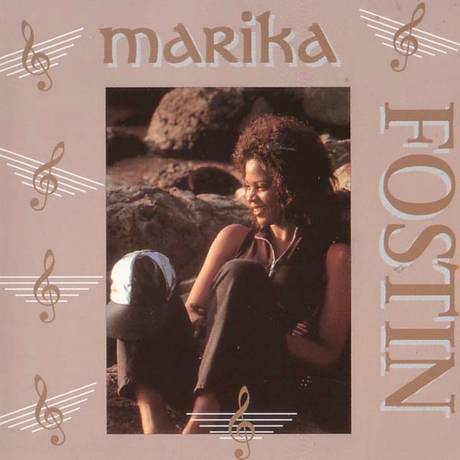
In 1997, Marika publishes her second self-titled album Marika Fostin with Sonodisc. The credit is remarkable: she is the lead singer, but also the arranger, composer, mixer and mastering engineer. Total autonomy in a field where female producers are rare, especially in the Antilles. This album confirms her maturity as a complete artist — she does not just sing, she shapes the sound from A to Z.
In the wake of this, Marika multiplies collaborations. She sings backing vocals on records by her close ones — Experience 7, Kamplis, Dave Martial — and appears on zouk compilations through the labels Henri Debs Production, Sonodisc and Disques Debs International. In 2001, she publishes the album Fos with Disques Debs International, continuing to nourish her repertoire. In October 2000, she lends her voice to a magnificent duo with Dave Martial in homage to the late Gilles Floro, one of the greatest names of Guadeloupean zouk.
Legacy and influence
Marika Fostin never knew the public glory of her sister Jane, revealed by the planetary hit Maldòn from Zouk Machine. Her career was built on more intimate ground, that of a Guadeloupe where every album counts, where every collaboration resonates. She represents the traditional branch of zouk — that which respects the brief while introducing its own sound inventions.
With Klod and Jane, Marika forms an exceptional sibling group in the history of Caribbean music. Three sisters, three different paths within the same musical universe, who constantly reinvent the variety that is danced. Their legacy is not counted in millions of albums sold, but in a musical vitality that crosses decades: even today, their records circulate on digital platforms, carefully remastered by Henri Debs et Fils, the son of the producer who launched everything.
Major Works
| Work | Year | Why It’s Essential |
|---|---|---|
| Baye lanmou (album) | 1992 | First record, a manifesto of pure zouk sung in Creole with unexpected brass and samples |
| “Si mwen few mal” | 1992 | Fetish title still listened to today, an Antillean anthem with millions of streams on Spotify |
| Marika Fostin (album) | 1997 | Album where the artist handles arrangements, mixing and mastering — total autonomy of a female producer in the Antilles |
| “Pour te rendre fou” | 1997 | Compas in French with accordion, dedication to comrade Kulpinski — proof of stylistic mastery |
| Duo with Dave Martial (tribute to Gilles Floro) | 2000 | Poignant ballad paying tribute to one of the greatest names in Guadeloupean zouk |
Sources and References
- « Marika, Klod et Jane — Les sœurs Fostin », Musique Journal, https://musique-journal.fr/2025/05/20/marika-klod-et-jane/, accessed 13 November 2026.
- « Marika Fostin — Biography, Discography », AllMusic, https://www.allmusic.com/artist/marika-fostin-mn0001740428, accessed 13 November 2026.
- « Marika Fostin — Discography », Discogs, https://discogs.com/master/3642075-Marika-Fostin-Marika-Fostin, accessed 13 November 2026.
- « Fostin Marika — Online Catalogue », Médiathèques Nord-Guadeloupe, https://mediathequesnordguadeloupe.bibli.fr/index.php?id=18780&lvl=author_see, accessed 13 November 2026.
- « Jane Fostin », Wikipedia (encyclopedic article on the younger sister, family and historical context), https://fr.wikipedia.org/wiki/Jane_Fostin, accessed 13 November 2026.
- « Disques Debs », Wikipedia (label and Guadeloupean record company, contextual for the career), https://fr.wikipedia.org/wiki/Disques_Debs, accessed 13 November 2026.
- « Zouk — Genres & Styles », AllMusic, https://www.allmusic.com/style/zouk-ma0000014917, accessed 13 November 2026.
- « Marika Fostin », Spotify (listening and streaming data), https://open.spotify.com/artist/7ClVpBetiiOb1rojomRVA8, accessed 13 November 2026.